
In today’s fast-paced world, convenience and efficiency define how we interact with technology. For many urban commuters, travelers, and multitaskers, pulling out a phone from a crossbody bag means fumbling, delayed responses, and missed opportunities. But what if you could operate your smartphone without opening your bag at all? With the growing popularity of crossbody bags featuring transparent touchscreen windows, this is not only possible—it can be perfected.
These smart design features allow users to answer calls, check notifications, or even navigate maps while keeping their device secure inside the bag. However, simply owning a bag with a touchscreen window doesn’t guarantee smooth functionality. Poor positioning, incompatible materials, or incorrect technique can turn a helpful feature into a frustrating gimmick. This guide breaks down everything you need to know to master touchscreen interaction through your crossbody bag’s window—ensuring reliability, responsiveness, and real-world utility.
Understanding Touchscreen Window Technology
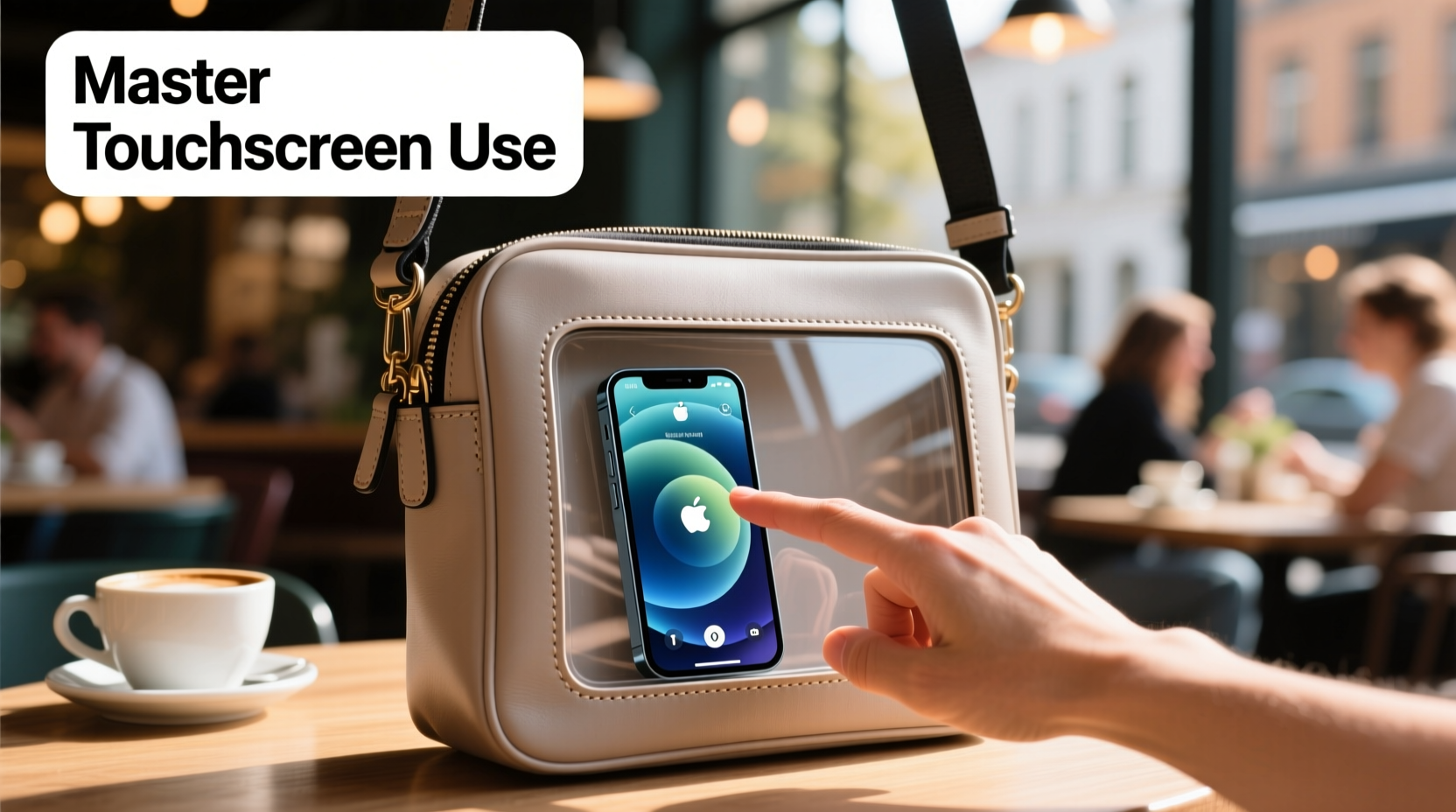
Most modern smartphones rely on capacitive touchscreens, which detect electrical changes caused by the conductivity of human skin. When you press the screen, your finger disrupts the device’s electrostatic field, registering as input. The challenge with using these screens through fabric or plastic barriers lies in whether that material allows sufficient conductivity transmission.
Crossbody bags with touchscreen windows typically use thin, conductive polyester or specially treated TPU (thermoplastic polyurethane) films embedded with microscopic conductive threads. These materials are engineered to mimic the conductivity of skin, enabling signal transfer between your fingertip and the screen beneath. However, not all window materials perform equally. Thickness, coating quality, and alignment with the phone’s screen area significantly affect performance.
“Only about 30% of so-called ‘touchscreen-compatible’ bag windows actually deliver consistent responsiveness. It comes down to material science and precise manufacturing tolerances.” — Dr. Lena Park, Human-Computer Interaction Researcher, MIT Media Lab
Optimizing Your Setup for Maximum Responsiveness
The effectiveness of a touchscreen window depends heavily on setup. Even high-quality materials fail when misaligned or obstructed. Follow these steps to ensure optimal function:
- Position your phone correctly: Align the top edge of your phone with the top of the window. Most interactions begin near the notification bar or lock screen swipe zone.
- Use a slim case: Thick or metallic cases interfere with touch sensitivity. Opt for a minimalist silicone or TPU case no thicker than 1mm.
- Keep the window clean: Oils, dust, and moisture reduce conductivity. Wipe the interior and exterior of the window weekly with a microfiber cloth.
- Avoid double-layering: Don’t place your phone behind other items like wallets or notebooks within the compartment. Direct contact between the screen and the window is crucial.
Practical Use Cases and Real-World Scenarios
Consider Sarah, a freelance photographer navigating Tokyo’s subway system during rush hour. Her hands are full with camera gear, and her crossbody holds her passport, wallet, and phone. As her ride ends, she receives a message from a client asking for location confirmation. Instead of digging through her bag, she uses two fingers on the bag’s window to open Messages, type a quick reply, and silence the notification—all in under 15 seconds.
This scenario illustrates the true value of mastering touchscreen access: reducing friction in dynamic environments. Whether you're cycling through a city, walking a dog, or balancing groceries, being able to respond instantly enhances both productivity and safety. Emergency alerts, navigation prompts, and time-sensitive messages become manageable without compromising personal security or situational awareness.
Do’s and Don’ts: A Quick Reference Table
| Do’s | Don’ts |
|---|---|
| Use light, consistent pressure when tapping | Press too hard—this can damage the window over time |
| Wear thin gloves made of conductive fabric | Use regular winter gloves or fingernails |
| Store your phone screen-facing toward the window | Place the phone upside-down or sideways unless necessary |
| Choose apps with large tap targets (e.g., Maps, Phone) | Attempt complex typing or small-button interactions |
| Practice gestures like swiping and scrolling regularly | Expect flawless handwriting recognition or detailed drawing |
Step-by-Step Guide to Mastering Touch Through Fabric
Becoming proficient takes practice. Use this five-day training plan to build muscle memory and confidence:
- Day 1 – Unlock Practice: Stand in front of a mirror and repeatedly swipe up to unlock your phone through the window. Focus on accuracy and minimal pressure. Repeat 10 times.
- Day 2 – Call Handling: Simulate incoming calls by setting alarms. Practice answering and ending calls using the window interface. Aim for consistency.
- Day 3 – Navigation Drill: Open your map app and attempt to zoom in/out using pinch gestures. Adjust finger placement until gesture recognition improves.
- Day 4 – Message Response: Send yourself test messages. Respond using predictive text taps (selecting suggestions rather than typing).
- Day 5 – Real-World Trial: Take a walk or commute using only window access for any phone interaction. Note pain points and adjust accordingly.
Frequently Asked Questions
Can I type messages effectively through the window?
Yes, but with limitations. Typing full sentences is inefficient due to reduced tactile feedback. Instead, rely on voice-to-text (activated via assistant commands) or tap on auto-suggested replies. For best results, keep responses short and use predictive input.
Why does my screen sometimes register random touches?
This usually happens when the window film is scratched, dirty, or statically charged. Clean both sides with a dry microfiber cloth and avoid storing the bag near synthetic fabrics that generate static. Also, disable “Tap to Wake” if enabled, as it increases false inputs.
Are all phones compatible with bag touchscreen windows?
Virtually all modern smartphones support this functionality, but older models or those with damaged digitizers may struggle. iPhones from XR onward and Android devices with OLED screens tend to offer the best sensitivity. Always test compatibility before relying on it in critical situations.
Enhancing Performance with Accessories
While your bag’s built-in window does most of the work, certain accessories can enhance performance:
- Conductive stylus pens: Short, rubber-tipped styluses designed for gloves work well through thin window layers.
- Screen boosters: Some users apply ultra-thin conductive screen overlays (not recommended long-term due to potential residue).
- Anti-static sprays: Light application on the inner lining reduces interference from static buildup.
However, avoid third-party films or adhesives unless verified safe for your phone model. Permanent modifications may void warranties or degrade screen clarity.
Final Thoughts and Moving Forward
Mastering touchscreen access through your crossbody bag window isn’t just about convenience—it’s about reclaiming moments. Each second saved from digging, unlocking, and repacking adds up over days, weeks, and months. More importantly, it fosters a sense of control in environments where attention is fragmented and distractions abound.
The key is intentionality: choosing the right bag, configuring your phone properly, practicing consistently, and refining your habits. Like learning to type without looking or driving a manual transmission, proficiency comes with repetition. Once mastered, this skill becomes second nature—silent, seamless, and surprisingly empowering.




 浙公网安备
33010002000092号
浙公网安备
33010002000092号 浙B2-20120091-4
Comments
No comments yet. Why don't you start the discussion?