
Traveling light doesn’t mean sacrificing security or accessibility. A well-chosen crossbody bag can be the cornerstone of a stress-free journey—offering hands-free mobility, quick access to essentials, and protection against theft. Yet many travelers underutilize this compact companion or make small mistakes that undermine its benefits. The right approach transforms your crossbody from an afterthought into a strategic asset.
From navigating crowded train stations to exploring narrow alleyways in foreign cities, the crossbody bag keeps your passport, phone, and cash within reach while minimizing risk. But success depends on more than just strapping it on. It’s about selection, organization, positioning, and awareness. With thoughtful habits, you’ll move through airports, markets, and museums with confidence and ease.
Choose the Right Bag for Your Travel Style
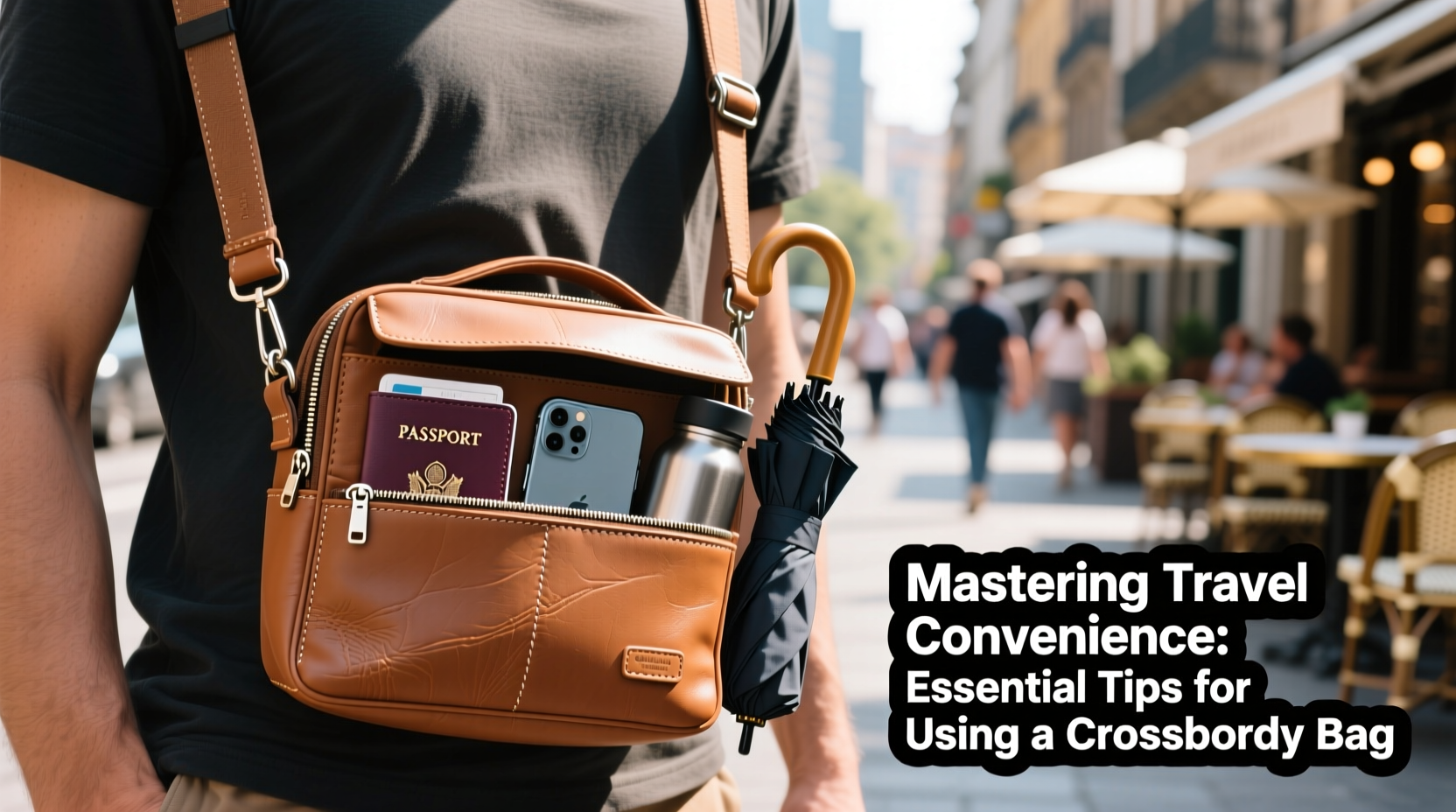
Not all crossbody bags are created equal. The ideal one balances size, material, closure type, and comfort. A bag too large defeats the purpose of minimalism; one too small forces constant trips back to your main luggage. Look for dimensions between 9” x 6” x 3” and 11” x 7” x 4”—enough space for daily essentials without becoming a burden.
Durable materials like water-resistant nylon, waxed canvas, or full-grain leather withstand weather and wear. Zippers should be robust and ideally hidden or covered to deter pickpockets. Anti-theft features such as slash-proof straps, RFID-blocking pockets, and lockable zippers add peace of mind in high-risk areas.
Organize Smartly: What to Carry (and What to Leave Behind)
Overpacking turns even the most ergonomic crossbody into a liability. Limit contents to items needed within the next few hours. This prevents constant opening, reduces strain, and lowers the chance of losing something mid-transit.
“Efficiency in travel comes not from carrying more, but from knowing exactly what you need—and where it is.” — Lena Torres, International Travel Organizer
| Essential Items | Optional/Contextual | Avoid Carrying |
|---|---|---|
| Passport (in RFID sleeve) | Guidebook or map | Laptop/tablet |
| Phone + portable charger | Snacks | Excess cash |
| Local currency & card | Sunglasses | Jewelry |
| Ticket printouts or QR codes | Face mask/hand sanitizer | Large keys |
| Lip balm/tissues | Earbuds | Unnecessary documents |
Use interior dividers or small pouches to separate categories: money, tech, hygiene. This reduces fumbling and keeps sensitive items secure. Consider a dedicated slot for your boarding pass or transit card if you're flying or using public transport frequently.
Wear It Right: Positioning for Security and Comfort
How you wear your crossbody matters as much as what’s inside. In crowded areas—markets, subways, tourist attractions—wear the bag across your front, diagonally over your torso, with the flap facing inward. This makes it harder for thieves to unzip or slip in a hand unnoticed.
When seated, especially in cafes or waiting areas, keep the bag on your lap or loop the strap around your leg or chair arm. Never drape it over the back of a chair. Even a momentary distraction can result in loss.
Step-by-Step Guide: Daily Crossbody Routine
- Before leaving accommodation: Transfer only necessary items from your main bag.
- During transit: Wear the bag across your chest with zipper facing body.
- In busy zones: Keep hand lightly on the bag when moving through crowds.
- At checkpoints: Open outer pockets early to avoid digging during security.
- After use: Reassess contents and return unused items to main luggage.
Real-World Scenario: Navigating Tokyo’s Subway System
Sophia, a solo traveler in Tokyo, relied on her crossbody bag during a day of temple visits and subway transfers. She kept her Suica transit card in an exterior pocket, her phone charged with offline maps loaded, and her wallet secured in an inner RFID sleeve. During rush hour on the Yamanote Line, she noticed someone brushing too closely behind her. Because her bag was worn across her front and zipped shut, she remained unbothered. Later, at Senso-ji Temple, she used the top compartment to store receipts and a small omamori charm without disrupting her core items.
Her strategy? Minimalism paired with intentional placement. She avoided shoulder-swinging motions that draw attention and resisted the urge to store snacks or souvenirs long-term. By day’s end, her back wasn’t sore, nothing was missing, and she hadn’t once rummaged through a larger backpack.
Maintain Awareness Without Paranoia
Vigilance shouldn’t equate to anxiety. Instead, cultivate subtle habits that reinforce safety. Scan reflections in storefront windows to monitor who’s behind you. When entering shops, briefly check that your zipper remains closed. Use tactile cues—resting a hand on the bag when pausing—to stay grounded in your surroundings.
Avoid common distractions: scrolling endlessly on your phone, wearing both earbuds, or reading maps at street level. These behaviors signal vulnerability. Instead, step into a doorway or café to reorient. Keep your crossbody visible and within muscle memory—so any unexpected tug triggers an immediate response.
“Security isn’t about fear—it’s about flow. When your bag integrates seamlessly into your movement, you’re less likely to become a target.” — Rajiv Mehta, Urban Safety Consultant
FAQ: Common Questions About Travel Crossbody Bags
Can I use a crossbody bag as a personal item on flights?
Yes, most airlines allow one personal item (like a crossbody) in addition to a carry-on. Ensure it fits under the seat in front of you—typically under 18” x 14” x 8”. Avoid bulky designs that may be flagged at the gate.
Is it safe to sleep with a crossbody bag on during travel?
Not recommended. While some travelers do this on overnight buses or trains, it limits circulation and reaction time. If necessary, tuck the bag beneath your arm or between you and the window, but never rely solely on it for rest.
How do I clean my crossbody bag after a long trip?
Spot-clean fabric bags with mild soap and water. For leather, use a damp cloth and specialized conditioner. Always air-dry away from direct heat. Check manufacturer instructions, especially for technical or treated materials.
Final Checklist Before You Go
- ✅ Bag has secure zippers and anti-theft features
- ✅ Strap is adjustable and comfortable for extended wear
- ✅ Contents limited to daily essentials only
- ✅ RFID protection for cards and passport
- ✅ Practice wearing it before departure to adjust fit
- ✅ Know airline size limits for personal items
- ✅ Share a photo of contents with a trusted contact for backup
Travel Light, Stay Alert, Move Freely
The crossbody bag is more than a fashion statement—it’s a tool for smarter travel. When chosen wisely and used intentionally, it supports agility, security, and simplicity. Whether you're boarding a flight, hiking a coastal trail, or wandering a night market, this small bag can carry the weight of your confidence.
Start refining your system now. Pack your crossbody for a local outing as if it were a foreign city. Test access, balance, and awareness. Small adjustments today prevent frustration tomorrow. Your next journey deserves not just preparation, but precision.




 浙公网安备
33010002000092号
浙公网安备
33010002000092号 浙B2-20120091-4
Comments
No comments yet. Why don't you start the discussion?