
UNO is more than just a colorful card game—it’s a battle of wits, timing, and psychological strategy. While many treat it as a casual pastime, seasoned players know that mastering UNO requires foresight, discipline, and a few clever tricks. Whether you're playing with family, friends, or in competitive settings, the right approach can dramatically increase your win rate. This guide dives deep into expert-level tactics, from hand management to high-stakes bluffing, so you can dominate the deck and play like a true pro.
1. Master Hand Management: Quality Over Quantity
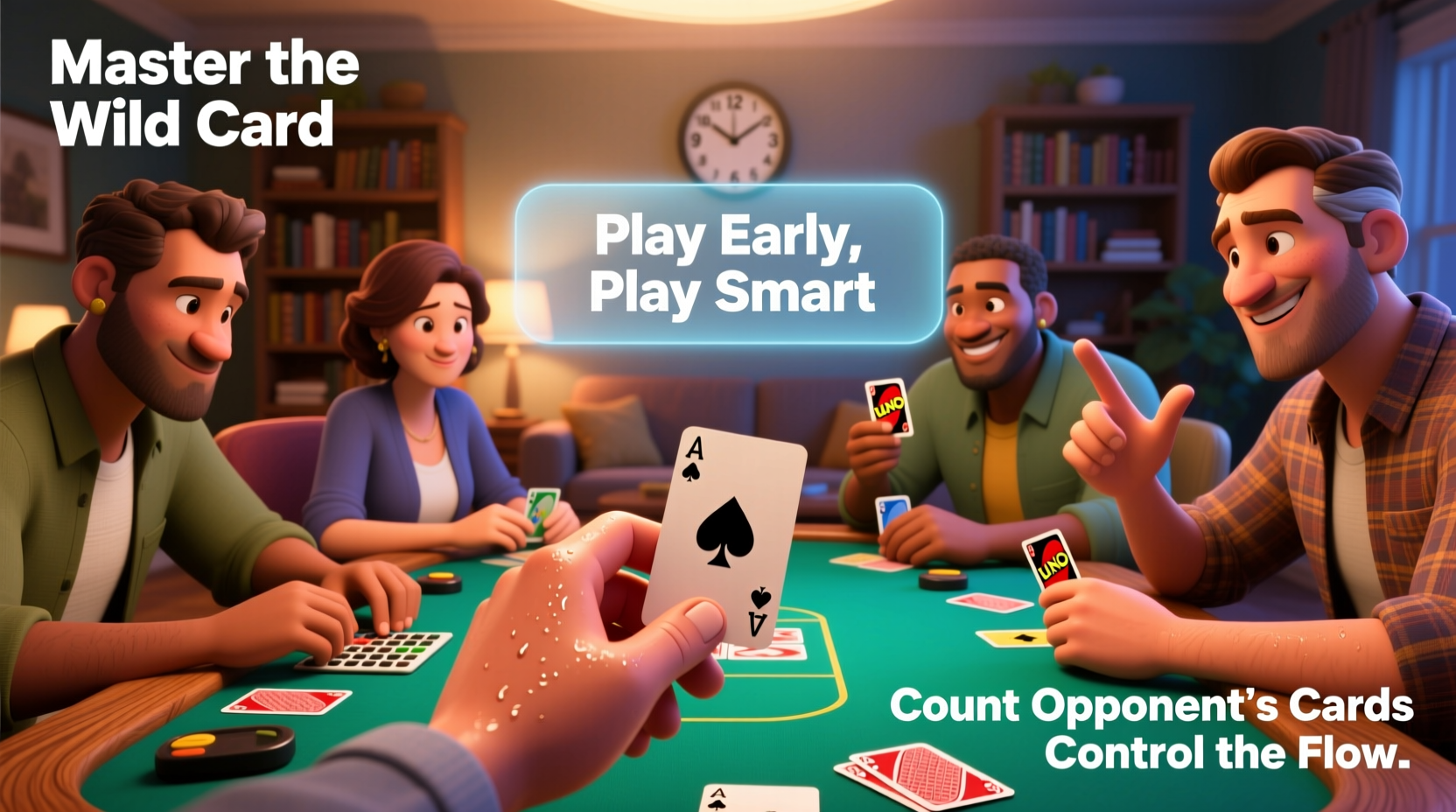
One of the most overlooked aspects of UNO is hand control. Beginners often focus on getting rid of cards quickly, but experts prioritize minimizing risk while maximizing flexibility. The goal isn’t just to go out first—it’s to do so at the optimal moment.
Keep a balanced hand. Holding too many cards increases your vulnerability, especially if an opponent plays a Draw Four or Draw Two late in the game. However, discarding too aggressively can leave you without options when the pile shifts unexpectedly.
Retain one card of each color when possible. This reduces your dependence on a single suit and makes you less predictable. If you’re forced to draw, having diverse colors improves your chances of being able to play immediately.
2. Strategic Use of Power Cards
Wilds, Draw Fours, Skips, and Reverses are not just tools to shed cards—they’re instruments of control. How and when you use them determines whether you lead the game or merely react to it.
Save Draw Fours for critical moments. Playing a Draw Four early may feel powerful, but it reveals your hand’s weakness (lack of matching color) and invites retaliation. Wait until an opponent is down to one or two cards before deploying it. Even better—bluff it strategically (more on that later).
Skip and Reverse Timing Matters. Use skips to halt an opponent who’s building momentum, especially if they’ve just played a Draw Two. Reverses can be used defensively to redirect penalties back toward aggressive players in multi-person games.
| Power Card | Best Use Case | Avoid When |
|---|---|---|
| Wild Card | Changing to a color you have multiple cards in | You’re unsure of others’ holdings |
| Draw Four | Opponent is near winning; you lack matching color | You actually have a playable color |
| Skip | Stopping a player who just played a penalty card | Game flow favors you; no immediate threat |
| Reverse | Redirecting Draw Twos in multiplayer rounds | Only two players remain (minimal impact) |
3. The Art of Bluffing and Psychological Play
Unlike chess or Scrabble, UNO has a strong psychological component. Players react not just to rules, but to perceived intentions. This opens the door for bluffing—especially with the controversial Draw Four Wild.
According to tournament player Marcus Tran, “The best UNO players aren’t the ones with the luckiest draws—they’re the ones who make others *think* they’re lucky.”
“Bluffing a Draw Four isn’t cheating—it’s strategy. If you can make three players hesitate before challenging, you’ve already won the mental game.” — Marcus Tran, Competitive Card Games Specialist
To bluff effectively:
- Play the Draw Four with confidence. Hesitation signals doubt.
- Choose moments when opponents are unlikely to challenge—typically when they’re holding high-point cards or fear drawing four themselves.
- If challenged and caught, accept the penalty without frustration. A good bluffer knows when to fold.
In official rules, a challenged Draw Four results in the challenger drawing six cards—if the player was truthful—or the user drawing four and losing their turn if lying. But in casual play, house rules vary. Know your audience: some groups tolerate bluffing; others ban it outright.
4. Step-by-Step: Building a Winning Game Plan
Winning consistently requires more than reacting—it demands planning. Follow this timeline to structure your approach across different phases of the game:
- Opening Phase (First 5–7 turns): Observe which colors are being played most. Gradually shed less useful colors and consolidate around one or two suits.
- Middle Game: Monitor opponents’ hand sizes. If someone drops to two cards, consider using a Skip or Reverse to delay their momentum.
- Transition to Endgame: Retain at least one power card if possible. Avoid playing your last Skip or Reverse too early.
- Closing Moves: Only go for \"UNO\" when safe. Announce it only after placing your second-to-last card. If interrupted by a Draw Two, you’ll draw four instead of two—a costly mistake.
- Final Turn: If you win, reflect on what worked. If you lost, analyze whether poor luck or flawed strategy was the cause.
5. Common Mistakes Even Experienced Players Make
Even skilled players fall into traps. Recognizing these pitfalls is half the battle:
- Calling UNO too early: Saying it before your penultimate card means nothing. Say it only after playing that card—and loudly.
- Overusing Wilds: Don’t waste them just because you can. Save them for when they shift the game in your favor.
- Ignoring score tracking: In multi-round games, points matter. Letting an opponent rack up 300+ points while you hover near 250 can cost you the match even if you win more hands.
- Forgetting reverse dynamics: In four-player games, a Reverse changes turn order significantly. Use it to break chains of penalty cards.
Mini Case Study: Turning the Tide with a Bluff
Jessica was in a five-player UNO game, trailing by nearly 100 points. With only three cards left, she held two greens and a Draw Four. Green hadn’t been dominant, but she noticed one opponent, Tom, had been hoarding reds and looked close to going out.
She played the Draw Four, declaring blue. No one challenged—Tom feared drawing four and losing his lead. He passed, and the next player skipped Jessica due to the penalty. But on her next turn, she played a green Skip, then a green number card, winning the round.
Though she’d broken the official rule (she had a green card), the bluff worked because she read the room. Her calculated risk shifted momentum, and she went on to win the overall match by prioritizing psychology over strict adherence to ethics.
FAQ
Can you play a Draw Four on another Draw Four?
Yes, in standard rules. If a player places a Draw Four, the next player can stack their own Draw Four (if they don’t have the called color), forcing the following player to draw eight cards unless they also play a Draw Four. This is known as “stacking” and is allowed in many house rules, though some groups ban it for fairness.
What happens if you forget to say UNO?
If another player catches you before the next person plays a card, you must draw two penalty cards. If no one notices until after the next move, you’re safe. Pro tip: Watch opponents closely when they’re down to two cards—many forget in the heat of the moment.
Is bluffing with Draw Four allowed?
Official Mattel rules state you must not have any cards of the current color to play a Draw Four legally. However, many casual players allow bluffing as part of the fun. Always clarify house rules before starting a game.
Checklist: Play Like a Pro in Your Next Game
- ✔ Balance your hand between 3–5 cards during mid-game
- ✔ Hold onto at least one power card until late game
- ✔ Track opponents’ hand sizes and color tendencies
- ✔ Save Draw Fours for when an opponent is near winning
- ✔ Bluff strategically—but know your group’s tolerance
- ✔ Call UNO only after playing your second-to-last card
- ✔ Keep score meticulously in multi-round matches
Conclusion
Mastering UNO isn’t about luck—it’s about control, timing, and reading the table. The difference between an average player and a pro lies in preparation, restraint, and the courage to make bold moves at the right moment. Now that you’ve learned how to manage your hand, leverage power cards, and employ psychological tactics, it’s time to put theory into practice.




 浙公网安备
33010002000092号
浙公网安备
33010002000092号 浙B2-20120091-4
Comments
No comments yet. Why don't you start the discussion?