
For decades, luminous watch dials have been essential tools for professionals and enthusiasts alike—military personnel, divers, pilots, and everyday wearers who value precision in all conditions. A well-lit dial isn’t just about aesthetics; it’s a functional necessity when visibility drops. Yet, many owners of luminous watches fail to fully utilize or maintain this feature. Understanding how luminescence works, how to read it effectively in darkness, and how to preserve its performance can transform your experience with timekeeping after sunset.
Luminous materials on watch hands and markers absorb ambient light and re-emit it slowly over time. This allows you to read the time without relying on external sources like flashlights or phone screens. But not all lume is created equal, nor is its use intuitive at first. With proper knowledge, you can maximize brightness, extend glow duration, and interpret the display accurately—even in total darkness.
The Science Behind Luminous Watch Dials
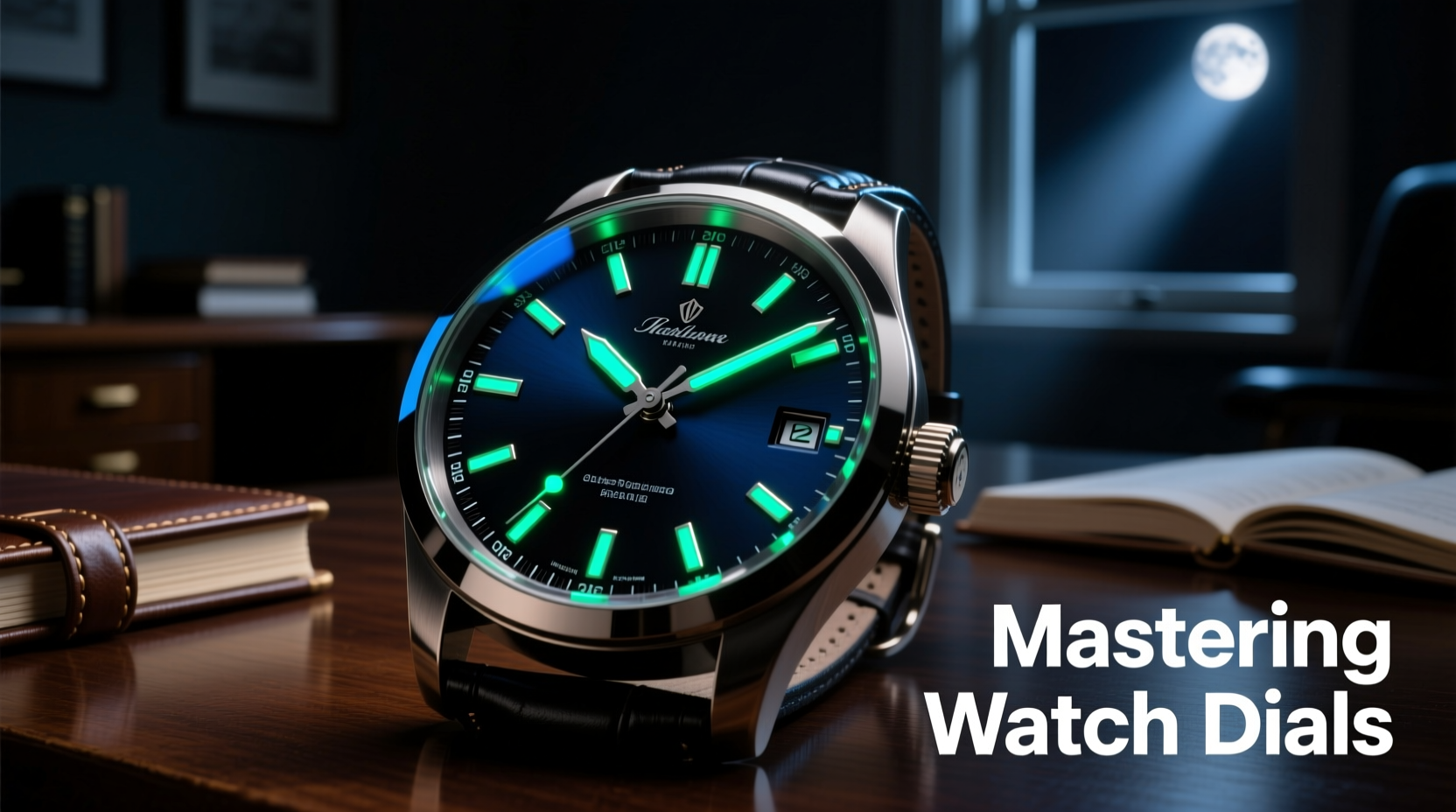
Luminous compounds used in modern watches fall into two main categories: photoluminescent and radioluminescent materials. Today, most high-quality timepieces use photoluminescent pigments such as Super-LumiNova or LumiBrite—non-radioactive substances that charge under light and emit a soft glow.
These materials work through a process called phosphorescence. When exposed to light (natural sunlight or artificial sources), electrons in the pigment become excited and store energy. Once the light source is removed, these electrons gradually return to their ground state, releasing energy in the form of visible light. The quality, thickness, and color of the applied lume determine both initial brightness and longevity of the glow.
“Modern photoluminescent compounds can remain readable for up to eight hours after full charging, depending on application and exposure.” — Dr. Henrik Madsen, Materials Scientist & Horology Consultant
Older watches may contain tritium-based lume, which uses beta radiation from tritium gas to excite phosphor. While self-powered and consistent, tritium has largely been replaced due to regulatory and environmental concerns, though some niche brands still use GTLS (gaseous tritium light sources) in sealed tubes for long-term reliability.
How to Read Time Accurately in Low Light
Reading a luminous dial requires more than just seeing glowing elements—it demands pattern recognition and spatial awareness. In near-total darkness, only the hands and hour markers are visible, making it easy to confuse the hour and minute hands if you're not practiced.
Most watches use distinct shapes to differentiate hands: the hour hand is shorter and broader, while the minute hand is longer and often thinner. The second hand, if luminous, typically features a slim design or a small lume dot. Familiarizing yourself with your specific watch’s layout during daylight improves nighttime accuracy.
Another key factor is orientation. Always ensure your wrist is level and rotated so the 12 o’clock marker aligns vertically. Misalignment distorts perception, especially when only glowing points are visible. Some dive watches include a single distinctive marker (often at 12 o’clock) shaped like a triangle or double rectangle to help orient the dial quickly.
Step-by-Step Guide to Reading Time in the Dark
- Position your wrist correctly: Rotate until the topmost lume marker is at 12.
- Identify the longest glowing hand: This is usually the minute hand.
- Find the shortest or thickest glowing hand: This indicates the hour.
- Estimate between markers: If the minute hand is between two indices, round to the nearest five-minute increment.
- Verify with context: Cross-reference with known events (e.g., bedtime, meeting start times) to confirm accuracy.
Caring for Your Luminous Dial: Best Practices
Luminous material degrades over time, especially if improperly maintained. While Super-LumiNova doesn't wear off chemically under normal conditions, physical abrasion, prolonged UV exposure, or moisture infiltration can diminish performance.
To keep your lume effective, expose your watch regularly to bright light. Sunlight is most efficient, but fluorescent or LED lighting also works. Just 5–10 minutes of direct sun can provide several hours of post-glow visibility. Avoid leaving your watch face-down on surfaces, as this blocks charging.
| Care Factor | Do | Avoid |
|---|---|---|
| Charging | Expose to natural light daily | Leaving in drawers or under sleeves |
| Cleaning | Use microfiber cloth and mild soap | Harsh chemicals or ultrasonic cleaners |
| Storage | Store face-up in open air | Facedown in closed boxes |
| Usage | Wear regularly to maintain lume health | Long periods of disuse without charging |
Real-World Example: A Night Hiker’s Reliance on Lume
Consider Mark, an experienced hiker navigating a remote trail in the Rockies after sunset. His GPS signal dropped, and his phone battery was low. He relied solely on his dive watch with full Super-LumiNova treatment. Before starting the descent, he held his watch under his headlamp for 30 seconds. The dial glowed brightly enough to read every ten minutes for nearly two hours. By recognizing the triangular 12-marker and tracking the long minute hand’s movement, he estimated time accurately and timed his rest breaks without needing additional light sources.
This scenario underscores the importance of preparation and familiarity. Had Mark never charged his watch or practiced reading it in darkness, those critical minutes could have led to disorientation. Instead, his routine maintenance and confidence in his tool made all the difference.
Frequently Asked Questions
Why does my watch’s lume fade so quickly?
Most factory-applied lume lasts 3–6 hours post-charge, with peak brightness fading within the first 30 minutes. If your lume disappears almost immediately, it may be aged, poorly applied, or covered in dirt. Ensure it's clean and exposed to strong light sources regularly.
Can I recharge lume with a flashlight?
Yes, but effectiveness depends on intensity and spectrum. LED flashlights work better than incandescent ones. For fastest charging, use a bright white LED or direct sunlight. Blue and UV-rich lights activate lume pigments more efficiently.
Is it safe to touch luminous paint on vintage watches?
No. Vintage watches made before the 1970s may contain radium-based lume, which emits alpha particles and poses health risks if disturbed. Never attempt to open, sand, or clean old dials without professional guidance.
Maximizing Longevity and Performance: A Checklist
- ✅ Charge your watch daily with sunlight or bright indoor light
- ✅ Keep the crystal clean to allow maximum light absorption
- ✅ Avoid storing the watch face-down or in enclosed spaces
- ✅ Inspect for cracks or fogging that might indicate moisture damage
- ✅ Learn your watch’s hand configuration and marker layout in daylight
- ✅ Replace degraded gaskets to prevent internal condensation
- ✅ Consider upgrading to modern lume during servicing if original has dimmed significantly
Conclusion: Shine Confidently Through the Night
Mastery of luminous watch dials goes beyond owning a timepiece with glowing hands—it’s about understanding its capabilities, maintaining its function, and trusting it when you need it most. Whether you’re descending a mountain trail, checking the time during a midnight flight, or simply reaching for your wrist in bed, a well-maintained lume system offers independence from electronics and reliability in silence.
Take a moment tonight to charge your watch under a lamp and observe how clearly you can read it in the dark. Adjust your habits, refine your technique, and appreciate the quiet brilliance engineered into your timepiece. With consistent care and intentional use, your luminous dial will remain a dependable companion through countless nights ahead.




 浙公网安备
33010002000092号
浙公网安备
33010002000092号 浙B2-20120091-4
Comments
No comments yet. Why don't you start the discussion?