
A well-fitting watch should feel like an extension of your wrist—not a distraction. Yet many people overlook the importance of strap comfort, settling for tightness, pinching, or slippage simply because they assume it’s part of wearing a timepiece. The truth is, optimal comfort isn’t left to chance. With the right adjustments, materials, and awareness of fit principles, you can transform your watch from a functional accessory into a seamless part of your daily life.
Whether you’re wearing a luxury chronograph, a sporty smartwatch, or a minimalist dress piece, the strap plays a critical role in both performance and perception. A poorly fitted band affects not only comfort but also accuracy—especially with fitness tracking—and can even cause skin irritation over time. This guide breaks down the science and art of achieving a truly customized, secure fit that feels effortless.
Understanding Wrist Anatomy and Fit Dynamics
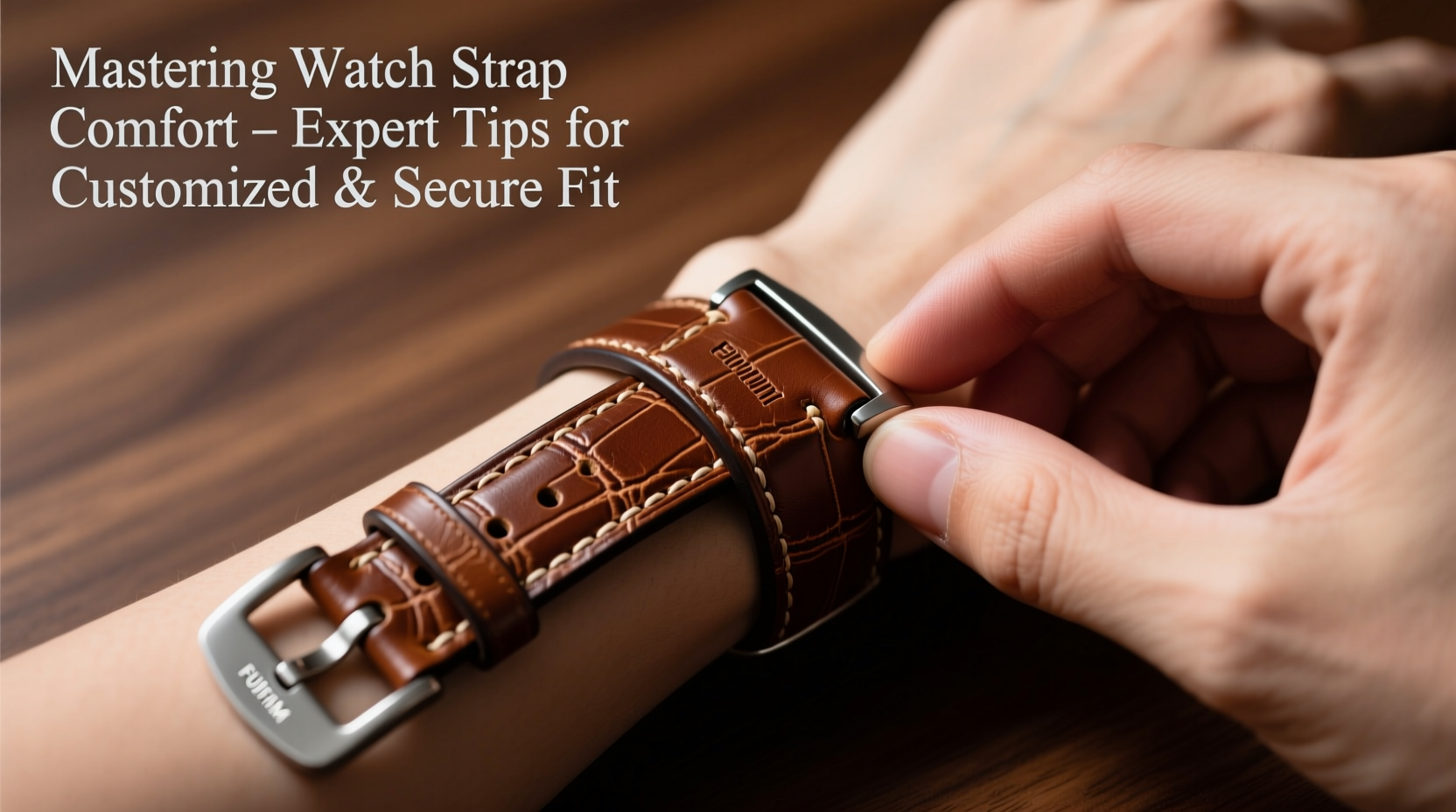
Your wrist isn’t uniform in shape or size across individuals. Bone structure, tendon placement, skin sensitivity, and even temperature-related swelling vary significantly. A one-size-fits-all approach fails most wearers. Instead, consider three key dimensions of fit:
- Width: The lug-to-lug measurement must align with your wrist circumference without overhang or excessive gap.
- Tension: The strap should hold the watch firmly enough to prevent rotation but allow slight movement and circulation.
- Clearance: There should be minimal space between the case back and your skin—ideally no more than the thickness of a business card.
For example, someone with slender wrists may find standard 20mm straps too wide, causing pressure points. Conversely, broad wrists may require longer straps or adjustable links to avoid constant tightening.
“Fit is personal. Two people wearing the same model may need entirely different strap configurations based on anatomy and activity.” — Daniel Reyes, Horology Consultant at Precision Timeworks
Selecting the Right Strap Material for Your Lifestyle
The material of your watch strap directly influences breathability, flexibility, weight distribution, and long-term comfort. Each has strengths and trade-offs depending on how and when you wear your watch.
| Material | Best For | Pros | Cons |
|---|---|---|---|
| Stainless Steel Bracelet | Dress watches, formal settings | Durable, precise micro-adjustments, premium feel | Heavy, can snag clothing, prone to metal fatigue |
| Silicone/Rubber | Sports, swimming, active use | Water-resistant, flexible, hypoallergenic | Can retain odor, less breathable in heat |
| Leather (Full-grain) | Casual, office, vintage styles | Molds to wrist, soft texture, elegant appearance | Not water-resistant, degrades with sweat exposure |
| NATO/Textile | Outdoor activities, military-inspired looks | Lightweight, secure (double-pass design), easy swap | May fray over time, absorbs moisture |
| Fabric Mesh (Milanese) | All-day wear, sensitive skin | Breathable, adjustable, sleek profile | Requires careful cleaning, delicate construction |
Step-by-Step Guide to Achieving a Customized Fit
Even the highest-quality strap won’t deliver comfort without proper adjustment. Follow this five-step process to fine-tune your fit:
- Measure Your Wrist: Use a soft tape measure around the bone just below the wrist joint. Note the exact circumference in millimeters.
- Check Lug Width: Refer to your watch specifications or measure the space between lugs where the strap attaches. Common widths are 18mm, 20mm, 22mm.
- Choose Adjustable Options: Opt for straps with multiple holes, sliding buckles, or deployant clasps for incremental control.
- Test for Movement: Put on the watch and move your hand through natural motions—typing, lifting, flexing. The watch should stay stable without shifting more than 15 degrees.
- Assess Skin Contact: After 30 minutes of wear, check for red marks or indentations. These indicate excessive pressure or poor ergonomics.
For metal bracelets, remove links using a spring bar tool until the band conforms snugly without gaps. Some high-end models offer micro-adjustment systems that let you expand or contract the fit by fractions of a millimeter—ideal for temperature fluctuations during the day.
Real-World Example: From Discomfort to All-Day Wear
James, a software developer in Seattle, loved his titanium dive watch but found it slipped constantly while typing and left a red line across his wrist by noon. He assumed the issue was unavoidable due to his narrow frame. After consulting a watch specialist, he switched from a rigid rubber strap to a perforated silicone NATO-style band with a double keeper. The new configuration held the watch securely against his ulna bone, eliminated rotation, and improved airflow. Within days, he forgot he was wearing it—a hallmark of true ergonomic integration.
This case illustrates that discomfort is rarely inherent to the watch itself, but often stems from mismatched components or incorrect setup.
Expert Tips for Long-Term Comfort and Maintenance
Comfort isn’t static—it evolves with wear patterns, environmental conditions, and material aging. Proactive care keeps your strap performing optimally.
- Clean sweat-prone straps weekly with mild soap and water; rinse thoroughly and air dry flat.
- Condition full-grain leather every 6–8 weeks with a pH-balanced balm to prevent cracking.
- Inspect metal bracelet pins and clasp mechanisms quarterly for looseness or corrosion.
- Store watches flat or on a roll to prevent strap warping when not in use.
Frequently Asked Questions
How tight should my watch strap be?
Your watch should stay in place without restricting blood flow. You should be able to slide one finger comfortably underneath the strap. Excessive tightness can lead to numbness or skin irritation, especially during physical activity.
Why does my watch rotate on my wrist?
Rotation usually occurs when the strap is too loose or lacks sufficient contact points. Consider shorter straps, dual-pass designs (like NATO), or adding a secondary loop or anchor point to stabilize positioning.
Can I customize a strap if I have sensitive skin?
Absolutely. Look for straps labeled “hypoallergenic” or made from non-porous materials like ceramic-coated metals, fluoro-rubber, or organic cotton blends. Avoid cheap alloys containing nickel, which commonly trigger dermatitis.
Final Checklist for Optimal Strap Comfort
- ✅ Measured wrist size accurately
- ✅ Matched lug width to new strap
- ✅ Selected material appropriate for daily activities
- ✅ Adjusted tension to allow one-finger clearance
- ✅ Tested stability during movement (typing, lifting, etc.)
- ✅ Checked for skin irritation after initial wear
- ✅ Established a cleaning and maintenance routine
Conclusion: Make Comfort a Priority
Mastering watch strap comfort transforms the way you experience time. It’s not about chasing trends or collecting models—it’s about crafting a personal relationship with a tool you rely on every day. When your watch fits perfectly, it disappears into your routine, enhancing confidence without demanding attention.
Take a moment today to reassess your current strap. Is it serving you—or holding you back? Small changes yield significant returns in comfort, health, and enjoyment. Whether you swap a band, adjust a clasp, or invest in a custom solution, prioritize fit as seriously as you would the movement inside the case.




 浙公网安备
33010002000092号
浙公网安备
33010002000092号 浙B2-20120091-4
Comments
No comments yet. Why don't you start the discussion?