
Selecting the ideal woolen jacket online can feel like navigating a maze without a map. Unlike in-store shopping, you can’t try on styles or drape fabrics over your shoulders to assess how they fall. Yet, with rising e-commerce trends, mastering remote sizing is no longer optional—it’s essential. Woolen jackets, prized for their warmth, structure, and timeless elegance, demand precision in fit. A poorly sized piece not only compromises comfort but undermines the garment’s aesthetic and functional value. This guide breaks down the process into clear, actionable steps so you can confidently choose the right woolen jacket—every time.
Understand Wool Fabric Behavior and Fit Expectations
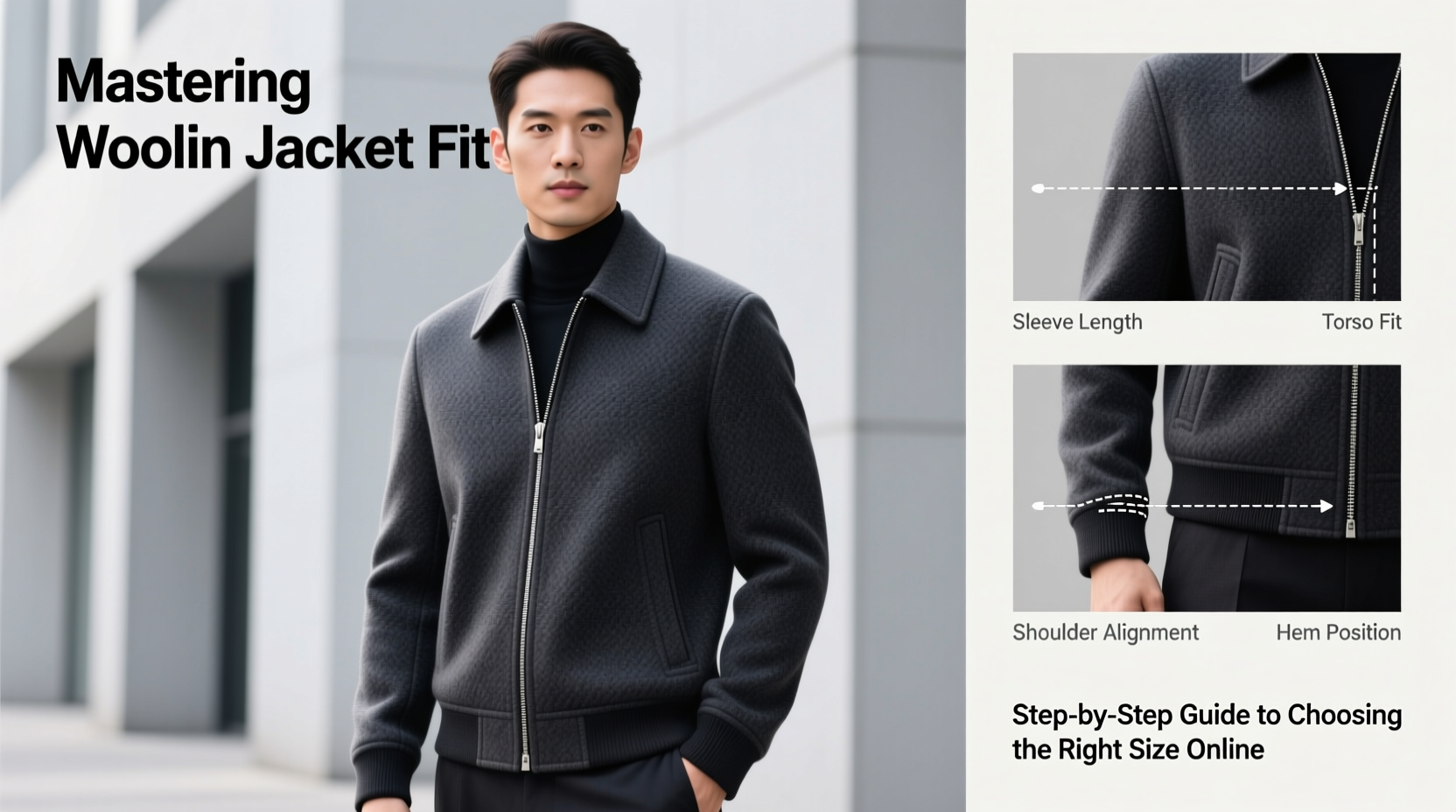
Wool behaves differently than cotton, polyester, or denim. It has natural elasticity, resists wrinkling, and retains heat efficiently. However, it also tends to felt or shrink if improperly cared for. More importantly, wool garments often have structured tailoring, especially in blazers, pea coats, and trench-style wool jackets. The fit must balance shoulder alignment, sleeve length, chest room, and waist suppression (if applicable).
Fit preferences vary: some favor a slim, modern silhouette; others prefer a relaxed, traditional cut. Understanding your preferred style—and how wool responds to it—is the first step toward accuracy. For example, a tightly woven virgin wool may stretch slightly over time, while a heavier melton wool remains rigid and unforgiving if too snug.
“Wool is forgiving in texture but demanding in structure. A 1cm shoulder misalignment can make an otherwise premium jacket look off.” — Julian Reed, Menswear Tailor & Textile Consultant
Step-by-Step Guide to Measuring Yourself Accurately
The foundation of correct sizing lies in precise body measurements. Use a soft measuring tape and wear form-fitting clothing or undergarments to avoid inaccuracies. Have a friend assist you when possible, especially for shoulder and back measurements.
- Chest: Wrap the tape around the fullest part of your chest, keeping it parallel to the ground. Do not pull too tight—allow a finger’s width of space for breathability.
- Shoulders: Measure from the edge of one shoulder bone to the other, across the upper back. This determines whether the jacket’s seam will sit correctly at the shoulder point.
- Sleeve Length: With your arm slightly bent, measure from the base of your neck (where the collar sits) through the shoulder, down to your wrist bone. Alternatively, measure an existing well-fitting jacket from shoulder seam to cuff.
- Length: From the base of the neck down the spine to your desired hemline (usually just below the hip).
- Waist: Measure around the narrowest part of your torso, typically just above the navel, for tailored or double-breasted styles.
Record all measurements in centimeters and inches. Always refer to the brand’s specific size chart—do not assume standardization across labels. European brands often run smaller than American ones; British tailoring leans trim.
Decoding Size Charts and Brand Variability
One of the biggest pitfalls in online shopping is assuming “medium” means the same thing everywhere. It doesn’t. A medium in Brand A might match a large in Brand B due to regional standards or design philosophy (e.g., minimalist vs. oversized fashion).
Always locate the official size guide on the product page. Look for detailed garment measurements—not just body size recommendations. Garment measurements tell you the actual dimensions of the jacket laid flat, which allows for direct comparison with a jacket you already own.
| Measurement Type | Why It Matters | How to Compare |
|---|---|---|
| Chest (laid flat) | Determines overall fit across torso | Double the number and compare to your chest measurement + 2–4 inches for ease |
| Shoulder width | Ensures seams align with your shoulders | Match within ±0.5 inch of your shoulder measurement |
| Sleeve length | Prevents riding up or excess bunching | Compare to your measured sleeve or existing jacket |
| Front length | Affects proportion and coverage | Measure from high shoulder point to hem; ideal ends near mid-buttock |
Real Example: Sarah’s Successful Online Purchase
Sarah, a professional based in Chicago, needed a warm wool coat for winter commutes but disliked mall crowds. She found a camel-hair blend single-breasted jacket online—praised for its craftsmanship—but hesitated at sizing. Instead of guessing, she followed a methodical approach:
- Measured her chest (38”), shoulders (17.5”), and sleeve length (33”) using a tailor’s tape.
- Downloaded the brand’s PDF size guide, noting that a size 10 had a 20” flat chest (40” total), 17.2” shoulders, and 32.5” sleeves.
- Compared these specs to her favorite wool blazer at home, confirming proportional similarity.
- Chose size 10, knowing the slight chest ease would accommodate layering.
The jacket arrived fitting impeccably—structured yet comfortable, sleeves ending just above her knuckles. Her success wasn’t luck; it was preparation.
Checklist: How to Buy a Woolen Jacket Online with Confidence
Before clicking “Add to Cart,” go through this checklist to eliminate guesswork:
- ✅ I’ve taken accurate body measurements using a soft tape.
- ✅ I’ve checked the product’s garment measurements, not just size labels.
- ✅ I’ve compared the listed sleeve and shoulder dimensions to a current favorite jacket.
- ✅ I understand the wool blend (e.g., 100% merino vs. wool-polyester mix) and its stretch potential.
- ✅ I’ve reviewed return policies in case adjustments are needed.
- ✅ I’ve read customer reviews mentioning fit (e.g., “runs small” or “generous cut”).
Frequently Asked Questions
Can I rely on size conversion charts?
Use them as a starting point, but never a final authority. Conversion charts generalize and often overlook brand-specific cuts. Always cross-reference with actual garment measurements.
What if the jacket fits in the chest but is tight in the shoulders?
This is a critical red flag. Shoulder fit cannot be altered easily by tailors. If the shoulder seams ride up or dig in, the jacket won’t drape properly, regardless of chest fit. Choose a different size or style.
Do wool blends fit differently than pure wool?
Yes. Blends with elastane or nylon offer more stretch and recovery, allowing for a closer fit. Pure wool maintains structure but offers minimal give. Adjust your expected ease accordingly—add 1–2 inches for pure wool, 0.5–1 inch for stretch blends.
Final Tips for Long-Term Wear and Satisfaction
Beyond initial fit, consider how the jacket will perform over time. Wool resists odors and wrinkles but requires proper care. Avoid frequent washing; instead, air it out after use. Store on a wide wooden hanger to preserve shoulder shape. Rotate wear to prevent fiber fatigue.
Also, think about layering. Will you wear a sweater underneath? Add 2–3 inches to your chest measurement when evaluating fit if heavy layering is intended. A jacket that fits perfectly over a shirt may strain over a chunky knit.
“The best wool jacket isn’t the most expensive—it’s the one that fits your life, body, and climate.” — Lena Choi, Sustainable Fashion Stylist
Conclusion
Mastering woolen jacket fit online is less about luck and more about discipline in measurement, research, and self-awareness. By treating each purchase as a data-driven decision rather than a hopeful gamble, you’ll build a wardrobe of pieces that look tailored, feel comfortable, and last for years. Stop guessing. Start measuring. Your next perfect wool jacket is just a few accurate numbers away.




 浙公网安备
33010002000092号
浙公网安备
33010002000092号 浙B2-20120091-4
Comments
No comments yet. Why don't you start the discussion?