
In environments where temperature swings, moisture, altitude, or physical stress threaten equipment reliability, the ability to record information by hand becomes both a necessity and a challenge. Whether you're a mountaineer documenting a summit attempt, a field researcher in Arctic conditions, or a prepper preparing for off-grid scenarios, standard pens fail when it matters most. Enter the titanium pen: engineered for resilience, precision, and longevity under duress. This guide explores how to use these robust tools effectively—maximizing their potential while avoiding common pitfalls.
The Science Behind Titanium Pens
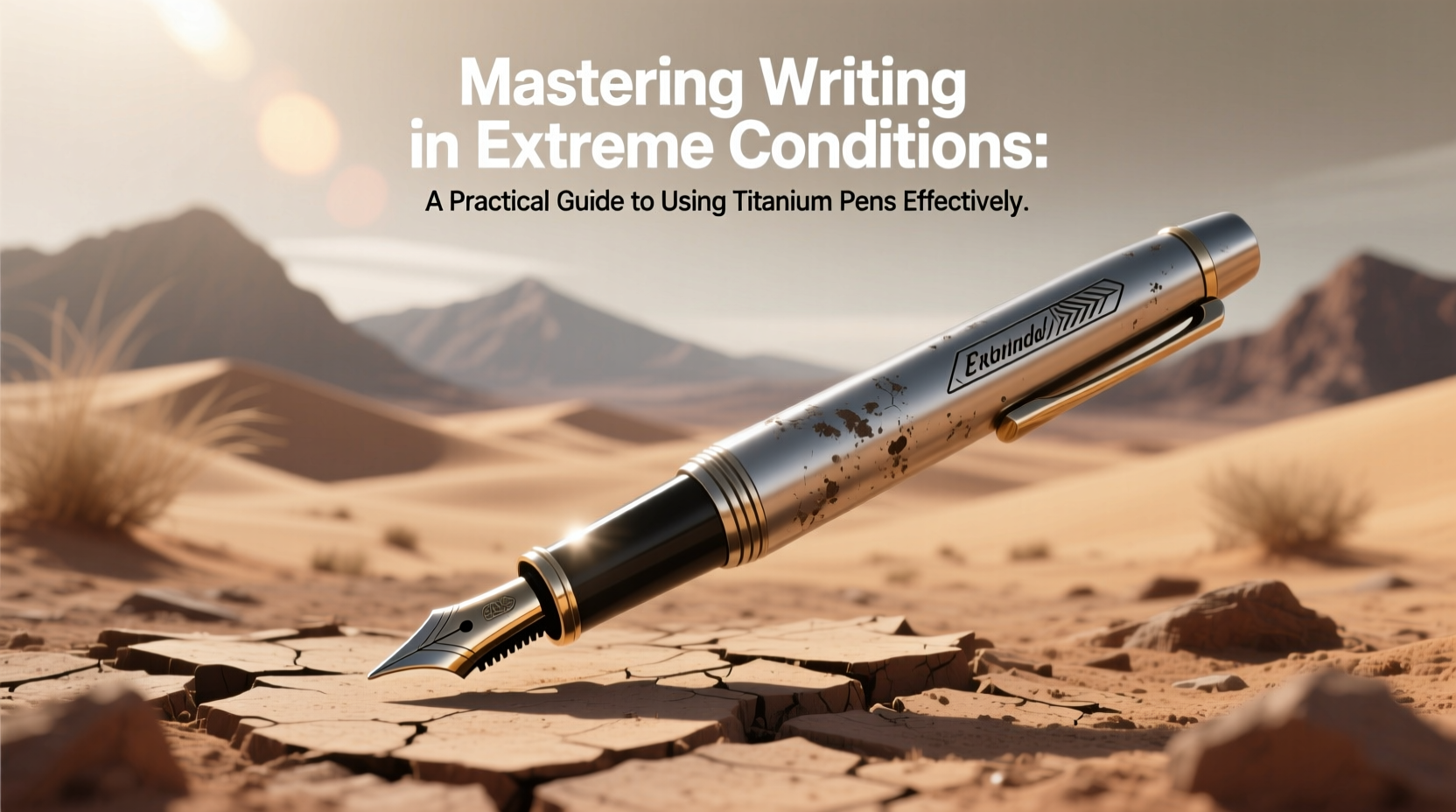
Titanium is prized in aerospace, medical implants, and military hardware for its strength-to-density ratio and corrosion resistance. When applied to pens, these properties translate into lightweight durability that withstands drops, submersion, and exposure to chemicals or extreme temperatures. Unlike aluminum or plastic-bodied pens, titanium resists warping and pitting even after prolonged exposure to saltwater, sand, or freezing conditions.
Most high-performance titanium pens use pressurized ink cartridges (like Fisher Space Pen refills) that function in zero gravity, underwater, and at temperatures ranging from -30°F to 250°F (-34°C to 121°C). The combination of a titanium body and pressurized refill creates a writing instrument capable of surviving—and functioning—where others cannot.
“Reliability in the field isn’t about convenience—it’s about mission continuity. A failed pen can mean lost data, miscommunication, or incomplete logs.” — Dr. Lena Reyes, Field Equipment Specialist, National Outdoor Research Group
Choosing the Right Titanium Pen for Your Environment
Not all titanium pens are built equally. Some prioritize aesthetics over utility; others sacrifice ergonomics for compactness. For extreme use, consider the following criteria:
- Threaded cap design: Prevents accidental opening during transit.
- Knurled grip section: Ensures control even with gloves or wet hands.
- Refill compatibility: Must accept Fisher Space Pen PRx or similar pressurized cartridges.
- Weight distribution: Balanced pens reduce hand fatigue during extended note-taking.
- Corrosion-resistant finish: Look for bead-blasted or anodized surfaces to prevent oxidation.
Comparison of Top-Tier Titanium Pens for Extreme Use
| Model | Weight (g) | Max Temp Tolerance | Glove-Friendly Grip | Refill Type |
|---|---|---|---|---|
| Tactile Turn Bolt 7 | 82 | 250°F / 121°C | Yes (deep knurling) | Fisher PRx |
| Nite Ize SigSafe | 34 | 200°F / 93°C | Limited (smooth body) | Fisher AG7 |
| Machined Titanium Tactical Pen | 96 | 250°F / 121°C | Yes (textured grip zone) | Fisher PRx |
| EDC Titan Write | 78 | 230°F / 110°C | Yes (angled grooves) | Fisher PRx/AG7 |
Step-by-Step Guide: Using a Titanium Pen in Harsh Conditions
Simply owning a durable pen isn't enough. Effective use requires deliberate technique and preparation. Follow this sequence to ensure legible, reliable writing in adverse environments.
- Pre-Condition Check: Before deployment, verify the pen clicks smoothly (if retractable), the cap seals tightly, and the refill has no visible leaks.
- Storage Protocol: Keep the pen vertically in an inner pocket or chest pouch to minimize condensation and maximize accessibility.
- Temperature Acclimation: If moving from cold to warm zones rapidly (e.g., exiting a tent), allow the pen to warm gradually to avoid internal fogging or ink pressure shifts.
- Gripping Technique: Use a tripod grip with moderate pressure—titanium pens require less force than ballpoints due to precise tip engineering.
- Writing Surface Stabilization: Place notebooks on rigid surfaces. In wind or motion, brace your arm against your body or a fixed object.
- Post-Use Inspection: After exposure to dust, water, or extreme temps, wipe the pen with a dry microfiber cloth and store it capped.
Real-World Application: Antarctic Field Log Incident
During a 2022 British Antarctic Survey expedition, researcher Eliot Grant found his standard gel pens frozen solid within minutes of stepping outside the research module. Temperatures hovered around -40°F (-40°C), and even insulated pockets failed to keep writing tools functional. He switched to a Tactile Turn Bolt 7 loaded with a Fisher PRx refill. Despite wearing thick neoprene gloves, the pen’s knurled grip allowed him to twist the mechanism and write critical ice-core depth measurements directly onto a laminated log sheet.
“It was the only tool that didn’t let us down,” Grant reported. “We had digital devices, but batteries died fast. Paper notes with that titanium pen were our only consistent record method.”
Dos and Don’ts of Titanium Pen Maintenance
| Do | Don’t |
|---|---|
| Regularly inspect O-rings for cracks or compression wear. | Submerge non-rated models without checking seal integrity. |
| Clean threads with a soft brush to remove grit. | Use solvents like acetone that may degrade seals. |
| Replace refills proactively every 18 months, even if unused. | Leave the pen uncapped in sandy or dusty environments. |
| Store vertically to maintain even ink distribution. | Drop the pen on hard surfaces repeatedly—titanium is tough, but tips can shear. |
Checklist: Preparing Your Titanium Pen for Extreme Deployment
- ☐ Confirm refill is pressurized (Fisher PRx or equivalent)
- ☐ Test cap seal by gently shaking inverted pen
- ☐ Verify grip texture allows glove use
- ☐ Pack spare refill in waterproof vial
- ☐ Mark pen with identifying tape or engraving
- ☐ Store in shock-resistant compartment away from sharp tools
- ☐ Practice one-handed deployment and capping
Frequently Asked Questions
Can titanium pens write underwater?
Yes—but only if they use a pressurized ink system like the Fisher Space Pen cartridge. Standard rollerballs or ballpoints will not function submerged. The titanium body protects the mechanism, but the refill type determines underwater capability.
Are titanium pens worth the cost compared to rugged plastic alternatives?
For occasional use, a quality plastic tactical pen may suffice. However, for long-term reliability, repeated sterilization, or extreme thermal cycles, titanium’s inertness and structural integrity justify the investment. Users report 5–10 years of service with proper care—far exceeding plastic counterparts.
Can I fly with a titanium pen in my carry-on?
Absolutely. Unlike liquids or sharp objects, metal pens are permitted by TSA and most international aviation authorities. Their durability also makes them ideal for inflight journaling or emergency documentation at high altitudes.
Final Thoughts: Writing as a Survival Skill
In an age of digital dependency, handwriting in extreme conditions remains a vital analog safeguard. When GPS fails, power dies, or networks collapse, a working pen and notebook become lifelines. The titanium pen is not a luxury—it’s a precision tool designed for moments when clarity, permanence, and reliability are non-negotiable.
Choose wisely, prepare deliberately, and practice consistently. Whether you’re charting unexplored terrain or securing personal records during a blackout, mastering the use of your titanium pen ensures that your voice—and your data—endures.




 浙公网安备
33010002000092号
浙公网安备
33010002000092号 浙B2-20120091-4
Comments
No comments yet. Why don't you start the discussion?