
A chronograph watch is more than a timepiece—it’s a precision instrument that combines elegance with functionality. Whether you're timing a lap, measuring heart rate, or simply appreciating the engineering behind its subdials and pushers, understanding how to use your chronograph properly elevates both performance and enjoyment. Yet many owners underutilize these features, treating them as decorative rather than functional. With the right knowledge, you can unlock the full potential of your watch and use it confidently in everyday scenarios.
Understanding the Chronograph: More Than Just a Stopwatch
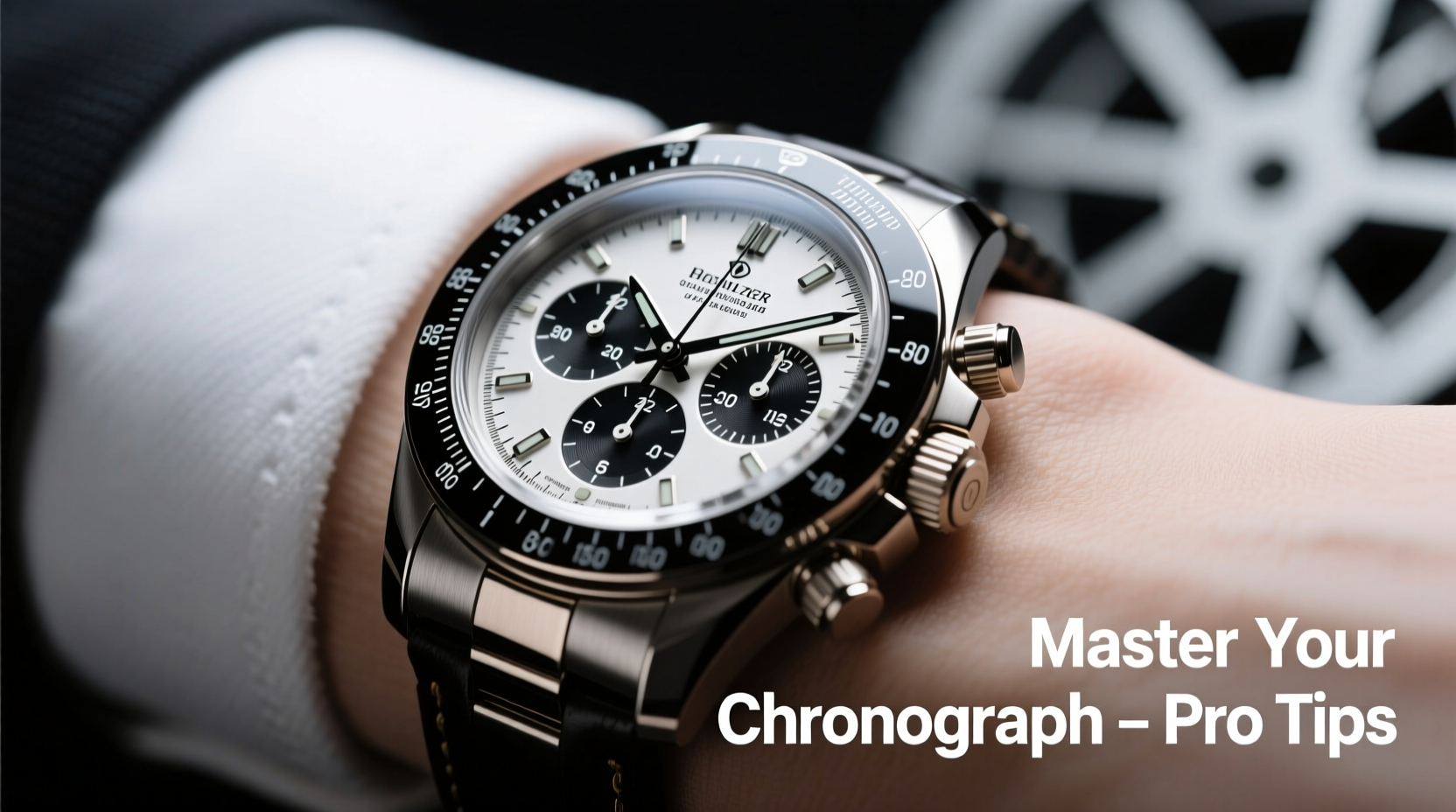
The term \"chronograph\" comes from the Greek words *chronos* (time) and *graph* (writer), originally referring to devices that recorded elapsed time. In modern watches, a chronograph functions as a stopwatch integrated into the main timekeeping mechanism. Most feature two or three pushers on the side of the case and multiple subdials—typically for seconds, minutes, and hours of elapsed time.
Despite their widespread availability, chronographs are often misunderstood. Some users hesitate to press the buttons, fearing damage or misalignment. But when operated correctly, these mechanisms are robust and designed for regular use. The key is knowing when and how to engage them without compromising accuracy or longevity.
Step-by-Step Guide to Operating Your Chronograph
Using a chronograph may seem intimidating at first, but the process follows a simple sequence. Follow this universal method for most analog chronographs:
- Reset: Ensure the chronograph hands are at zero. If not, press the bottom pusher (reset) after stopping the timer.
- Start: Press the top pusher to begin timing. The central chronograph hand will move, while subdials track minutes and sometimes hours.
- Stop: Press the same top pusher again to halt the measurement.
- Record: Note the elapsed time using the central hand (seconds), 30-minute subdial, and hour counter if present.
- Reset Again: Press the bottom pusher to return all hands to zero. Do this only after stopping the timer.
Mistakes often occur when users attempt to reset while the chronograph is still running, which can strain the internal mechanism. Patience and proper sequencing protect the movement and ensure long-term reliability.
Practical Applications: Using Your Chronograph in Real Life
Chronographs aren’t just for racetracks or pilot checklists—they offer real utility in daily routines. Consider timing workouts, cooking intervals, or even tracking productivity during focused work sessions. A chef might use it to monitor simmering times; a runner could measure split times without needing a phone.
One lesser-known technique is using the tachymeter scale around the bezel to calculate speed based on travel time over a fixed distance. For example, if you drive one mile and the chronograph stops at 30 seconds, the tachymeter shows approximately 120 mph (since 3600 seconds ÷ 30 = 120). This works best between 7 and 60 seconds for accuracy.
“Chronographs were born out of necessity—in sports, medicine, and aviation. Their value isn’t nostalgia; it’s enduring utility.” — Daniel Reeves, Horological Historian and Curator at the Geneva Watch Museum
Mini Case Study: Timing a Morning Routine
Sophia, a project manager in Zurich, wanted to optimize her morning efficiency. She began using her chronograph to time each segment: shower (7 min), breakfast (12 min), commute prep (9 min). After a week, she noticed she was spending nearly 45 minutes longer than intended. By adjusting small habits—like laying out clothes the night before—she reduced her routine by 15 minutes. Her watch became a tool for personal optimization, not just punctuality.
Common Mistakes and How to Avoid Them
Even experienced wearers make errors that degrade performance over time. Below is a comparison of recommended practices versus common pitfalls.
| Do’s | Don’ts |
|---|---|
| Use the chronograph regularly to keep the mechanism lubricated | Leave the chronograph running indefinitely |
| Press pushers gently and fully to avoid partial engagement | Press both pushers simultaneously unless instructed otherwise |
| Service your watch every 5–7 years, especially if frequently used | Neglect servicing due to fear of cost or downtime |
| Check water resistance before exposing to moisture during activity | Operate pushers underwater, even on water-resistant models |
Advanced Techniques for Enthusiasts
For those ready to go beyond basic operation, several advanced methods enhance precision and expand functionality:
- Heart Rate Measurement: Some vintage chronographs include a pulsometer scale. Start the chronograph, count 30 heartbeats, then stop. The hand points to beats per minute directly on the scale.
- Telemeter Function: Found on certain models, this estimates the distance of a distant event (like thunder) by timing the gap between sight and sound. Divide the seconds by 3 to get kilometers (or by 5 for miles).
- Flyback Chronographs: High-end versions allow instant reset and restart with a single push, useful for back-to-back measurements in aviation or racing.
These features require practice but offer tangible benefits in specific environments. Pilots, medical professionals, and athletes have historically relied on such capabilities when electronic devices weren’t available—or allowed.
Care and Maintenance Checklist
To ensure your chronograph continues performing flawlessly, follow this essential maintenance checklist:
- ✅ Wind automatic models regularly if not worn daily
- ✅ Clean the case and bracelet monthly with a soft cloth
- ✅ Avoid magnetic fields near speakers, phones, or tablets
- ✅ Have water resistance tested annually if used in wet conditions
- ✅ Schedule full service every 5–7 years with a certified technician
- ✅ Store in a dry place away from direct sunlight and temperature extremes
FAQ
Can I use my chronograph every day?
Yes, moderate daily use is healthy for the movement. However, avoid leaving it running for days at a time, as this increases wear on the escapement and consumes power faster, especially in mechanical models.
Why won’t my chronograph hand return to zero?
This is called “zero deviation” and often occurs due to minor misalignment or lack of service. While slight offsets are normal, consistent drifting suggests the need for professional adjustment. Never manually adjust the hand yourself.
Is it safe to set the time while the chronograph is running?
No. Changing the time or date while the chronograph is active can interfere with gear alignment. Always stop and reset the chrono before adjusting the main time.
Conclusion: Become the Master of Your Time
Your chronograph is a blend of artistry and engineering, designed not just to be seen but to be used. From precise timing to measuring speed or heart rate, its functions remain relevant in a digital age. Mastery comes not from owning an expensive model, but from understanding its mechanics, applying it thoughtfully, and maintaining it with care.




 浙公网安备
33010002000092号
浙公网安备
33010002000092号 浙B2-20120091-4
Comments
No comments yet. Why don't you start the discussion?