
Wearing a Megir watch is more than a fashion statement—it’s an appreciation for precision, design, and functionality. Among the standout features of many Megir models is the use of luminous hands and markers, engineered to provide visibility in low-light conditions. However, simply owning a luminescent timepiece doesn’t guarantee you’re using it to its full potential. Many wearers struggle to interpret the glow correctly or misunderstand how long it lasts. This guide demystifies the science and practicality behind luminous hands, empowering you to read your Megir watch with accuracy and confidence—day or night.
Understanding Luminous Technology in Megir Watches
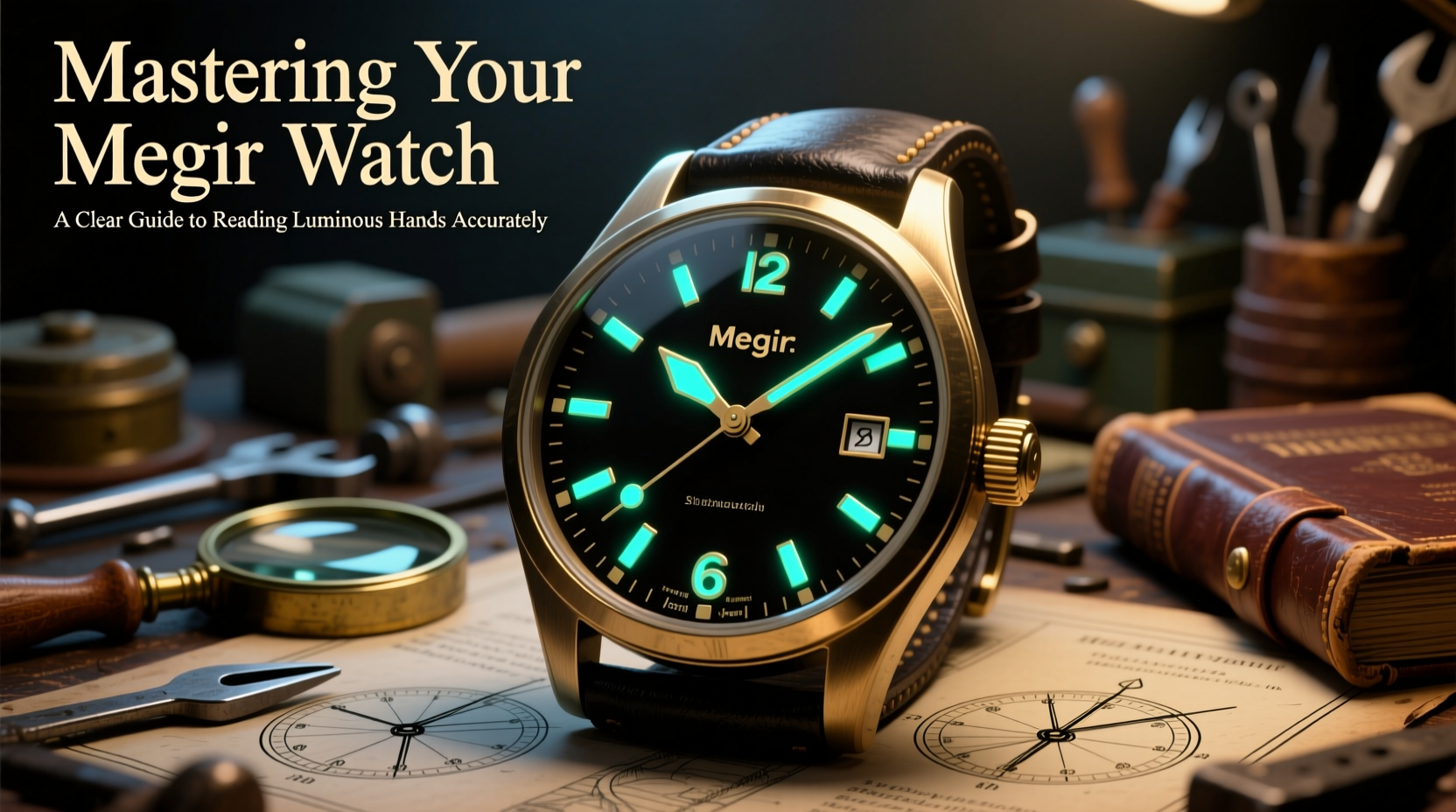
Megir watches often employ photoluminescent materials such as Super-LumiNova or similar compounds on their hands and hour markers. These materials absorb ambient light—natural or artificial—and re-emit it slowly in darkness. Unlike tritium-based systems found in high-end dive watches, which emit constant light without charging, Megir’s luminous elements require exposure to light before they can glow.
The brightness and duration of the glow depend on several factors: the intensity and duration of prior light exposure, the quality of the luminescent coating, and environmental conditions like temperature and humidity. Most Megir watches offer a glow duration between 30 minutes to two hours after full charge, with peak brightness fading within the first 15–20 minutes.
“Lume performance isn’t just about the material—it’s about how users interact with it daily. A quick glance under desk lighting won’t charge it enough for nighttime readability.” — Daniel Reed, Watch Materials Analyst
How to Properly Charge Your Watch’s Luminous Elements
To get the most out of your Megir watch’s luminosity, active charging is essential. Simply wearing the watch indoors under dim lighting won’t provide sufficient energy for strong glow retention.
For optimal results, expose the watch face directly to a bright light source for at least 2–3 minutes. Natural sunlight is most effective due to its broad spectrum, but LED or fluorescent lights also work well. Hold the watch about 6 inches from the source, ensuring all markers and hands are illuminated evenly.
Step-by-Step Guide to Charging & Testing Lume
- Place your Megir watch under direct sunlight or bright artificial light.
- Ensure the entire dial is exposed; rotate slightly if needed.
- Wait 2–3 minutes for full absorption (longer for weaker light sources).
- Move to a dark room immediately after charging.
- Observe the intensity and clarity of the hands and markers.
- Note how long key indicators remain readable (e.g., minute hand tip).
This routine helps you understand your specific model’s lume behavior and builds familiarity with its performance limits.
Reading Luminous Hands Accurately in Low Light
In darkness, your eyes rely on contrast and shape recognition. The human eye struggles with fine detail in low light, so interpreting time by faint glowing slivers demands technique.
Start by identifying the longest glowing element—the minute hand. On most Megir dials, this hand has an extended luminescent section or a distinctively shaped tip. The hour hand is typically shorter and broader, often with a rectangular or trapezoidal glow patch. The second hand, if luminous, usually glows only near the tip and moves too quickly to serve as a primary reference.
Avoid staring directly at the dial in total darkness. Instead, use peripheral vision—a technique called averted vision. The retina’s rod cells, responsible for low-light detection, are denser outside the central field. Glancing slightly to the side of the watch face can make faint glows appear brighter and clearer.
| Hand Type | Glow Pattern | Identification Tip |
|---|---|---|
| Hour Hand | Short, thick bar of light | Closest to center; aligns with markers |
| Minute Hand | Longer strip, often tapered | Extends to outer edge; critical for precision |
| Second Hand | Small dot or tip glow | Use for movement confirmation, not time reading |
Practice reading the time in dim settings during controlled conditions. For example, turn off bedroom lights after charging the watch and estimate the time every 10 minutes, verifying accuracy afterward. This builds muscle memory and improves real-world reliability.
Common Misinterpretations and How to Avoid Them
One of the most frequent errors is mistaking the hour hand for the minute hand, especially when both have similar glow strength. This often leads to misreading the time by tens of minutes. Another issue arises when only partial segments glow—such as when the minute hand’s base is lit but not the tip—causing confusion about its actual position.
- Don’t assume symmetry: Not all hour markers glow equally. Some models only illuminate every third marker (e.g., 12, 3, 6, 9), using them as reference points.
- Avoid motion reliance: Don’t wait to see the second hand move to confirm time. In true darkness, its glow may be too faint.
- Don’t ignore aging effects: Over years, luminescent paint can degrade, flake, or lose potency, especially if exposed to moisture or chemicals.
Luminescence Care Checklist
Maintaining your watch’s glow longevity requires simple but consistent habits. Follow this checklist monthly:
- ✔ Clean the crystal gently with a microfiber cloth to maximize light transmission.
- ✔ Avoid prolonged submersion unless your model is rated water-resistant.
- ✔ Store in a well-lit area during the day to passively charge lume.
- ✔ Never use abrasive cleaners or ultrasonic baths that could damage luminescent coatings.
- ✔ Inspect for chipped or faded markers, especially after impacts.
Real-World Example: Nighttime Navigation with Confidence
Consider Marco, a weekend hiker who relies on his Megir 3127 for trail timing. During a recent evening descent, cloud cover plunged the path into near-total darkness. His phone battery was low, and turning on a flashlight disrupted night vision. Recalling his practice sessions, Marco charged his watch briefly under his headlamp before switching it off. Using averted vision, he glanced at his wrist and clearly saw the elongated minute hand pointing just past the 8, while the shorter hour hand hovered near the 7. He confidently estimated the time as 7:42 PM, allowing him to adjust his pace and reach the trailhead safely before complete darkness set in.
This scenario underscores that accurate lume reading isn’t just convenient—it can be functional, even critical, in real-life situations.
Frequently Asked Questions
Why does my Megir watch glow green?
The green hue is typical of strontium aluminate-based pigments (like Super-LumiNova), which emit a greenish-yellow light visible to the human eye in darkness. Green is chosen because our eyes are most sensitive to this wavelength at night.
Can I recharge the lume with UV light?
Yes, UV light can charge luminous materials, but standard white light (especially daylight) is more effective and safer. Prolonged UV exposure may degrade plastics or adhesives over time.
Is the glow supposed to last all night?
No. Most affordable luminous systems, including those in Megir watches, provide short-term visibility—typically up to 2 hours—with diminishing brightness. They are designed for intermittent checks, not continuous illumination.
Final Thoughts and Call to Action
Mastering your Megir watch goes beyond telling time—it’s about understanding its capabilities and limitations. The luminous hands are a functional tool, not just a visual gimmick. With proper charging techniques, deliberate reading strategies, and regular care, you can trust your watch in any lighting condition.
Take a few minutes tonight to test your watch’s lume performance. Charge it properly, step into a dark room, and read the time without hesitation. Share your experience or tips with fellow enthusiasts—because true mastery grows through practice and community.




 浙公网安备
33010002000092号
浙公网安备
33010002000092号 浙B2-20120091-4
Comments
No comments yet. Why don't you start the discussion?