
For many watch enthusiasts, the appeal of a chronograph lies in its precision, versatility, and mechanical elegance. The Megir brand has earned a reputation for offering affordable yet stylish timepieces that often include functional chronographs—features that go beyond simple timekeeping. However, many owners underutilize their watches because they don’t fully understand how to operate or benefit from the chronograph function. This guide demystifies the process, equipping you with practical knowledge to use your Megir chronograph confidently and accurately.
Understanding the Chronograph: More Than Just a Stopwatch
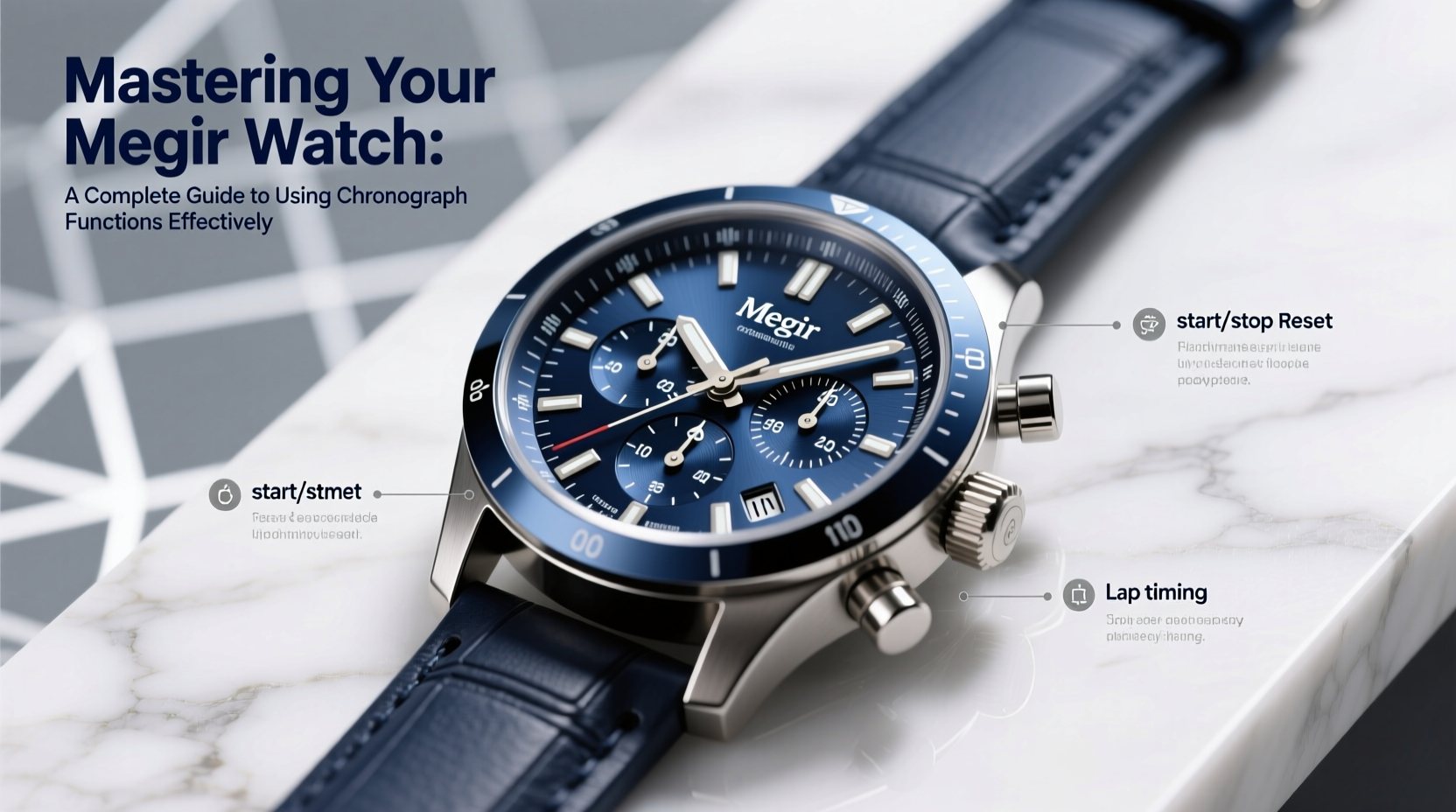
A chronograph is essentially a stopwatch integrated into a wristwatch. It measures elapsed time without interfering with the primary time display. On most Megir models, the chronograph is controlled by two pushers on the side of the case: one at 2 o’clock to start and stop timing, and another at 4 o’clock to reset. The central seconds hand (often colored red or distinctively styled) tracks elapsed seconds, while subdials typically record minutes and hours.
It’s important to distinguish between a true chronograph and a chronometer. A chronometer refers to a timepiece certified for precision by an official body like COSC. A chronograph, by contrast, refers to functionality—the ability to measure intervals. Your Megir may not be a chronometer, but if it has stopwatch capabilities, it’s a chronograph.
Step-by-Step Guide to Using Your Megir Chronograph
Using a chronograph correctly ensures accuracy and prolongs the life of the internal mechanism. Follow this sequence to operate your Megir watch effectively:
- Prepare the Watch: Ensure the crown is pushed in and fully sealed. Check that the hands are aligned at 12 o’clock before beginning.
- Start Timing: Press the top pusher (at 2 o’clock). The central chronograph hand will begin moving, tracking elapsed seconds.
- Stop Timing: Press the same pusher again to halt the timer. The hand freezes, showing the exact duration measured.
- Read the Elapsed Time: Note the position of the central hand for seconds, the minute counter (usually at 3 o’clock), and the hour counter (if present, often at 6 or 9 o’clock).
- Reset the Function: Press the lower pusher (at 4 o’clock) to return all hands to zero. Only press this after stopping the timer.
Never reset a running chronograph. Doing so can damage the gear train over time. Always stop first, then reset.
Practical Applications: Making the Most of Your Chronograph
The chronograph isn’t just for show—it serves real-world purposes. Whether timing workouts, cooking intervals, or monitoring productivity, this feature adds utility to your daily routine.
- Fitness Tracking: Use the chronograph to time sprints, laps, or circuit training. For example, set intervals of 30 seconds of work followed by 15 seconds of rest.
- Kitchen Precision: Boiling eggs, simmering sauces, or proofing dough becomes more accurate with precise timing.
- Work & Study: Apply the Pomodoro Technique by timing 25-minute focus blocks followed by 5-minute breaks.
Mini Case Study: Timing a Morning Run
Carlos, a fitness enthusiast, uses his Megir chronograph to track his weekly runs. Instead of relying on his phone, he starts the timer as he leaves his building and stops it upon returning. After several weeks, he noticed improved consistency in his pace. By reviewing his average times recorded on the subdials, he adjusted his warm-up routine and increased stamina. The tactile feedback of pressing the pushers became part of his ritual—simple, reliable, and distraction-free.
| Scenario | How to Use Chronograph | Benefit |
|---|---|---|
| Cooking Pasta | Start at boil, stop when al dente | Precise texture control |
| Meeting Duration | Time agenda segments | Better time management |
| Gym Sets | Track rest periods between lifts | Optimize recovery |
| Board Games | Limit player turns | Keep gameplay fair and fast |
Common Mistakes and How to Avoid Them
Even experienced users make errors that reduce performance or wear down components prematurely. Awareness is key to preserving your watch’s longevity.
- Mistake: Resetting while the chronograph is still running.
Solution: Always stop first, then reset. - Mistake: Overusing the pushers with excessive force.
Solution: Press gently and deliberately; these are precision mechanisms. - Mistake: Ignoring water resistance limits during outdoor use.
Solution: Most Megir chronographs are splash-resistant, not dive-rated. Avoid submersion.
“Mechanical design matters even in affordable watches. Proper operation prevents unnecessary strain on the movement.” — Daniel Ruiz, Horology Technician
Chronograph Maintenance Checklist
To keep your Megir chronograph functioning smoothly, follow this maintenance checklist every six months:
- ✅ Clean the case and crystal with a soft, dry cloth
- ✅ Verify pusher responsiveness—no sticking or looseness
- ✅ Confirm all chronograph hands return precisely to zero
- ✅ Check battery level (for quartz models)—low power affects timing accuracy
- ✅ Avoid exposure to strong magnetic fields (e.g., speakers, phones)
- ✅ Store in a cool, dry place away from direct sunlight
FAQ: Frequently Asked Questions
Why does my chronograph second hand jump in small increments instead of sweeping?
If your Megir uses a quartz movement, the chronograph hand advances in short ticks—typically four times per second. This is normal. Mechanical watches offer a smoother sweep, but quartz provides superior accuracy at a lower cost.
Can I use the chronograph continuously for long periods?
It’s best to avoid prolonged continuous use. Extended operation increases wear on the mechanism, especially in budget movements. Use it for short intervals and reset promptly.
What should I do if the subdials aren’t working?
First, ensure the chronograph was properly started and stopped. If the issue persists, the watch may require servicing. Accumulated dirt or low battery (in quartz models) can impair subdial function.
Conclusion: Take Control of Your Time
Your Megir chronograph is more than an accessory—it’s a tool designed for precision and purpose. By understanding how to start, stop, read, and reset the chronograph correctly, you unlock its full potential. Whether you're measuring a morning jog, managing work sessions, or simply appreciating the mechanics of time, mastering this function enhances both utility and enjoyment.
Consistent care and mindful usage extend the life of your watch and deepen your connection to it. Don’t let those pushers sit idle. Use them with confidence, accuracy, and intention.




 浙公网安备
33010002000092号
浙公网安备
33010002000092号 浙B2-20120091-4
Comments
No comments yet. Why don't you start the discussion?