
YouTube is no longer just a platform for entertainment—it’s a powerful tool for education, influence, and income. With over 2.7 billion logged-in monthly users, the opportunity to reach an audience has never been greater. But visibility doesn’t come from uploading videos alone. Success hinges on strategic planning, consistent execution, and deep understanding of what keeps viewers watching. The most successful creators don’t rely on luck; they follow repeatable systems that turn casual viewers into loyal subscribers.
Define Your Niche and Audience
Before recording a single frame, clarity about your niche is essential. A focused topic builds authority and attracts a dedicated audience. Broad channels often struggle to stand out, while specific ones—like “budget vegan cooking” or “beginner guitar lessons”—create strong viewer alignment.
Ask yourself: Who am I creating for? What problems do they have? What kind of content would genuinely help or entertain them? Use tools like Google Trends, YouTube search suggestions, and competitor analysis to validate demand. For example, typing “how to” followed by your topic in YouTube’s search bar reveals real-time queries people are actively seeking.
Create a Content Strategy That Converts
A strategy transforms random uploads into a growth engine. Start with a content pillar framework: identify 3–5 core themes that align with your expertise and audience interests. Under each, develop subtopics to ensure variety without straying off course.
For instance, a fitness channel might use these pillars: home workouts, nutrition guides, mindset tips, equipment reviews, and progress tracking. This structure prevents creative burnout and ensures balanced content delivery.
Next, plan your upload schedule. Consistency matters more than frequency. Whether it’s once a week or twice a month, stick to a realistic rhythm. Use a content calendar to map out titles, thumbnails, and publishing dates three months in advance.
| Content Type | Purpose | Recommended Length |
|---|---|---|
| Tutorial | Educate with actionable steps | 8–15 minutes |
| Vlog | Build connection and authenticity | 6–12 minutes |
| Review | Provide value through comparison | 7–10 minutes |
| Top 10 List | Engage with quick, scannable insights | 5–9 minutes |
The Step-by-Step Video Production Process
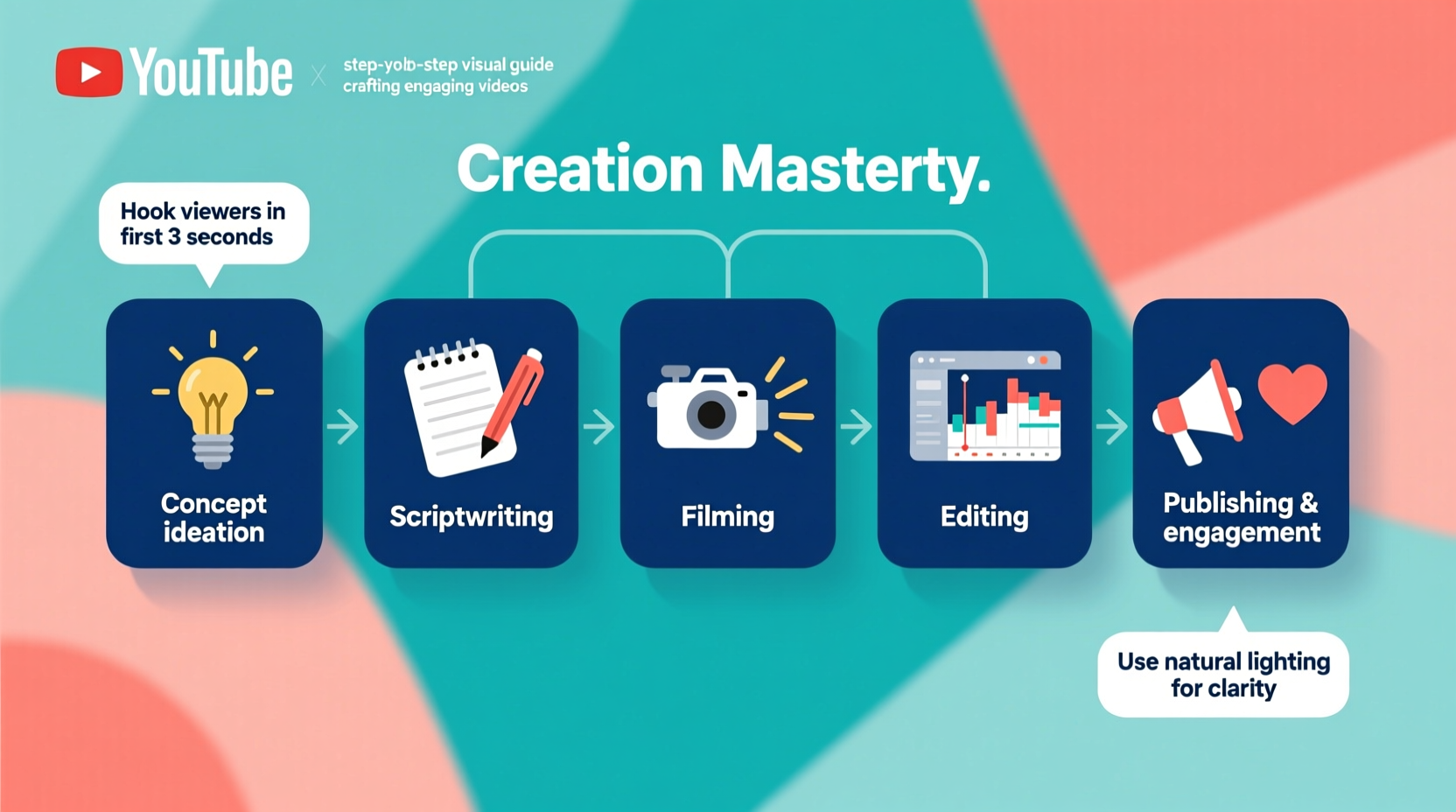
Professional quality isn’t reserved for big budgets. Anyone can produce compelling videos by following a disciplined workflow.
- Research & Scripting: Spend time gathering facts, structuring your message, and writing a clear script. Even conversational vlogs benefit from bullet-point outlines.
- Pre-Production: Gather equipment, set up lighting (natural light works well), choose a quiet location, and test audio levels.
- Recording: Film multiple takes if needed. Speak clearly, maintain eye contact with the lens, and avoid rushing.
- Editing: Trim dead space, add background music (keep volume low), insert text overlays for emphasis, and include subtle transitions. Tools like DaVinci Resolve (free) or Adobe Premiere Pro offer professional results.
- Thumbnail & Title Optimization: Design custom thumbnails using contrasting colors and readable fonts. Pair them with curiosity-driven titles that promise value.
- Publishing: Add detailed descriptions with keywords, relevant hashtags (3–5), and timestamps for longer videos. Link to related content and encourage comments.
“Your first 15 seconds determine whether someone stays or scrolls away.” — Kevin Deters, YouTube Creator Academy Instructor
Optimize for Retention and Algorithm Performance
YouTube rewards videos that keep people watching. High retention signals quality, prompting the algorithm to recommend your content more widely. To improve watch time:
- Start with a strong hook: pose a question, state a surprising fact, or preview a key takeaway.
- Use visual cues like on-screen text and b-roll footage to maintain engagement.
- Structure your video with mini-cliffhangers between segments to sustain interest.
- End with a clear call-to-action: ask viewers to comment, like, or watch another video.
Study your analytics regularly. Focus on the Audience Retention graph in YouTube Studio. Identify where people drop off and revise those sections in future videos. If most viewers leave after 30 seconds, your intro may lack urgency. If retention dips at the midpoint, consider pacing or content relevance.
Real Example: From Zero to 10K Subscribers in Six Months
Sarah Kim, a former teacher turned language educator, launched her YouTube channel “Easy Korean Daily” with no equipment beyond her smartphone. She focused exclusively on 10-minute beginner lessons using simple animations and real-life examples.
Her first few videos gained little traction. But after analyzing top-performing content in her niche, she refined her approach: shorter intros, clearer subtitles, and consistent branding. She also began responding to every comment, fostering community.
Within six months, her average view duration increased from 1:48 to 6:23. By uploading every Tuesday and Friday, optimizing thumbnails, and using playlists to group lessons, she reached 10,000 subscribers—without paid promotion.
Sarah’s success wasn’t accidental. It came from treating YouTube as a craft, not a gamble.
Essential Checklist for Every YouTube Upload
Before publishing, run through this checklist to maximize impact:
- ✅ Hook in the first 10 seconds
- ✅ Clear audio with minimal background noise
- ✅ Well-lit scene (face clearly visible)
- ✅ Custom thumbnail with readable text
- ✅ Keyword-rich title (under 60 characters)
- ✅ Detailed description with links and timestamps
- ✅ At least 3 relevant tags
- ✅ End screen with suggested video or subscription prompt
- ✅ Call-to-action encouraging comments
Frequently Asked Questions
How long should my YouTube videos be?
There’s no universal ideal length. Focus on delivering value efficiently. Tutorials and deep dives can run 10–15 minutes, while quick tips may only need 3–5. Prioritize retention—if you can convey your message in less time without cutting corners, do it.
Do I need expensive equipment to start?
No. Many top creators began with smartphones, built-in microphones, and natural lighting. Invest incrementally: prioritize audio quality first (a $30 lavalier mic makes a huge difference), then lighting, then camera upgrades.
Why aren’t my videos getting views?
New videos rarely gain immediate traction. It often takes 4–8 uploads to refine your style and understand your audience. Check your CTR (click-through rate) and retention in YouTube Studio. Low CTR? Improve thumbnails and titles. Low retention? Work on pacing and content clarity.
Conclusion: Turn Passion Into Progress
Mastering YouTube isn’t about going viral. It’s about showing up consistently, serving a specific audience, and improving with every upload. The technical skills can be learned. The creativity can be nurtured. What sets successful creators apart is persistence—the willingness to publish before they feel ready and to learn from every result.
You don’t need perfection. You need practice, purpose, and a plan. Start small, stay focused, and let your content evolve naturally. Over time, engagement compounds. Subscribers grow. Opportunities emerge.




 浙公网安备
33010002000092号
浙公网安备
33010002000092号 浙B2-20120091-4
Comments
No comments yet. Why don't you start the discussion?