
In the quest for sustained mental clarity and productivity, caffeine is a go-to fuel for millions. But not all caffeine sources are created equal—especially when it comes to maintaining focus without triggering the infamous 3 PM energy nosedive. Coffee has long been the default stimulant of choice, but matcha, a finely ground green tea powder, is gaining ground as a smarter alternative. The question isn’t just about which gives you more energy—it’s about which one supports clean, consistent cognitive performance throughout the day.
The difference lies not only in caffeine content but in how that caffeine is delivered, what other compounds accompany it, and how your body responds over time. While coffee can spike alertness quickly, it often leads to jitteriness and a sharp drop. Matcha, on the other hand, offers a smoother ride—one that may be better suited for deep work, mental endurance, and avoiding the crash altogether.
The Science of Caffeine and Cognitive Performance
Caffeine works by blocking adenosine receptors in the brain. Adenosine is a neurotransmitter that builds up throughout the day and signals fatigue. By inhibiting its effects, caffeine delays the perception of tiredness, promoting wakefulness and improved concentration.
However, the rate at which caffeine enters your system—and how long it stays—plays a crucial role in whether you experience a smooth boost or a turbulent rollercoaster. Coffee delivers a rapid influx of caffeine, typically peaking in blood concentration within 30 to 45 minutes. This sudden surge can enhance reaction time and vigilance but may also trigger anxiety, elevated heart rate, and a subsequent energy plunge once levels drop.
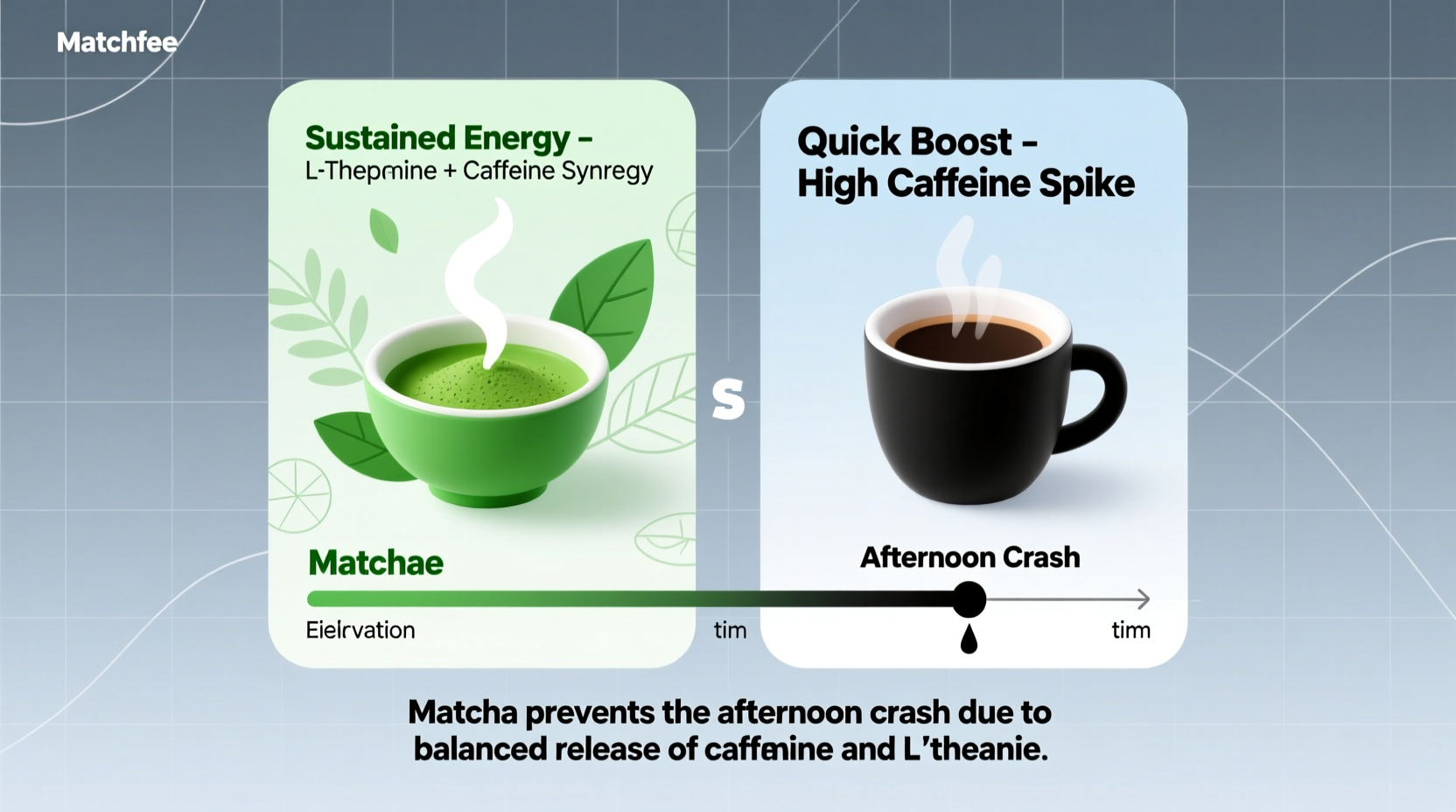
Matcha contains less caffeine per serving than a typical cup of coffee—about 30–70 mg compared to 95 mg in an 8 oz brewed coffee—but it releases this caffeine more gradually. This slower release is due to the presence of L-theanine, an amino acid unique to tea, particularly green tea. L-theanine promotes alpha brain wave activity, associated with relaxed alertness, and modulates the stimulatory effects of caffeine.
“Caffeine alone can overstimulate the nervous system, but when paired with L-theanine—as in matcha—you get focused calm rather than frenetic energy.” — Dr. Sarah Chen, Neuroscientist and Cognitive Researcher at Boston Brain Institute
How Matcha Delivers Sustained Focus Without the Crash
The synergy between L-theanine and caffeine in matcha is well-documented. A 2017 study published in *Pharmacology Biochemistry and Behavior* found that participants who consumed both compounds showed improved attention, faster processing speed, and reduced mental fatigue compared to those who took caffeine alone.
Unlike coffee, where caffeine absorption is fast and unmodulated, matcha's caffeine binds to catechins and other polyphenols in the tea matrix. These compounds slow down the release of caffeine into the bloodstream, resulting in a steady rise in alertness over 3–6 hours. This extended timeline aligns closely with the demands of knowledge workers, students, and creatives who need prolonged concentration without distraction.
Additionally, because matcha is consumed as a whole leaf suspension (you drink the powdered tea itself), you ingest a broader spectrum of beneficial compounds—including antioxidants like EGCG—that support mitochondrial function and reduce oxidative stress in brain cells. This biochemical environment helps sustain neuronal health during long cognitive tasks, reducing mental fatigue over time.
Coffee’s Role in Focus: Strengths and Drawbacks
Coffee excels in delivering immediate alertness. Its high caffeine content can be ideal for overcoming grogginess, enhancing physical performance, or powering through short bursts of intense work. For many, the ritual of brewing and drinking coffee also serves as a psychological cue for entering “work mode.”
But this rapid onset comes at a cost. The steep spike in cortisol and adrenaline that follows coffee consumption can lead to nervous energy, shaky hands, and difficulty concentrating for some individuals. More importantly, the crash—often occurring 2–4 hours after consumption—is a common complaint. As caffeine levels decline, adenosine floods back, sometimes amplified by rebound fatigue.
Regular coffee drinkers may also develop tolerance, requiring higher doses to achieve the same effect. This can create a dependency cycle: morning reliance, midday slump, afternoon refill, disrupted sleep, and next-day fatigue.
While adding creamers, sugar, or syrups worsens the crash by spiking insulin, even black coffee lacks the balancing compounds found in matcha. No natural equivalent to L-theanine exists in coffee, meaning there’s nothing to buffer the neurochemical impact of caffeine.
Comparative Analysis: Matcha vs Coffee for Focus and Energy Stability
| Factor | Matcha | Coffee |
|---|---|---|
| Average Caffeine (per serving) | 30–70 mg | 80–100 mg |
| Onset of Effects | 20–40 minutes | 10–20 minutes |
| Duration of Alertness | 3–6 hours (gradual decline) | 1.5–3 hours (sharp drop-off) |
| L-Theanine Content | High (15–25 mg) | None |
| Antioxidant Profile | Rich in catechins, EGCG, chlorophyll | Moderate (mainly chlorogenic acids) |
| Crash Risk | Low | Moderate to High |
| Mental State Produced | Focused calm, clarity | Vigilance, potential jitters |
This comparison highlights why matcha is increasingly favored in environments demanding sustained attention—such as coding, writing, or studying—where mental stability matters more than sheer stimulation.
A Real-World Example: The Writer Who Switched to Matcha
James, a freelance copywriter based in Portland, used to rely on two strong coffees each morning to power through client projects. By 2 PM, he’d hit a wall: headaches, irritability, and an inability to concentrate. He’d reach for a third cup, only to find himself wide awake at midnight despite exhaustion.
After reading about L-theanine and cognitive performance, he decided to try ceremonial-grade matcha. He started with one bowl at 9 AM, prepared traditionally with hot water and a bamboo whisk. The change was subtle at first—less jittery, more grounded—but within a week, his workflow transformed.
Instead of surging through the first few hours and collapsing afterward, he maintained a steady pace of writing from 9 to 3. His afternoon editing sessions, once a struggle, became productive. Most notably, he stopped experiencing the 3 PM crash entirely. After six weeks, he cut coffee out completely and reported better sleep, fewer migraines, and higher-quality output.
James’ experience isn’t unique. Many professionals report similar shifts when replacing coffee with matcha for cognitive tasks requiring endurance rather than urgency.
How to Use Matcha Strategically for Maximum Focus
To harness matcha’s full potential for mental performance, timing and preparation matter. Here’s a step-by-step guide:
- Choose high-quality ceremonial-grade matcha. Look for vibrant green color, origin from Japan (Uji or Nishio regions), and organic certification. Avoid culinary-grade for daily cognitive use.
- Prepare it correctly. Whisk 1/2 to 1 teaspoon (1–2 grams) with 70–80°C (160–180°F) water using a bamboo whisk until frothy. This preserves delicate compounds and ensures even dispersion.
- Consume early in the work session. Drink your matcha 20–30 minutes before starting focused work to allow for gradual onset.
- Avoid adding sugar or dairy. These can blunt cognitive benefits and contribute to energy fluctuations. If needed, use a small amount of MCT oil or a non-insulin-spiking sweetener like monk fruit.
- Limit to 1–2 servings per day. Exceeding 150 mg of caffeine from matcha may disrupt sleep or cause mild GI discomfort in sensitive individuals.
When Coffee Might Still Be the Better Choice
Matcha isn’t universally superior. There are scenarios where coffee remains the more effective tool:
- Pre-workout energy: Coffee’s rapid caffeine delivery enhances physical performance and endurance.
- Overcoming severe sleep inertia: When waking up extremely groggy, coffee’s aggressive kick can be necessary.
- Short deadlines requiring hyper-vigilance: In time-sensitive situations, the intensity of coffee may outweigh the risk of a later crash.
The key is intentionality. Using coffee as a tactical stimulant—rather than a daily crutch—can preserve its effectiveness while minimizing dependency and crashes.
Frequently Asked Questions
Can I drink matcha every day?
Yes, moderate daily consumption (1–2 cups) of high-quality matcha is safe for most people. Due to its concentrated nature, ensure your matcha is tested for heavy metals and pesticides, especially if sourced from areas with industrial pollution.
Does matcha keep you awake longer than coffee?
No. While matcha’s effects last longer, they don’t extend into the night if consumed in the morning. Because peak caffeine levels are lower and delayed, matcha is less likely to interfere with sleep than coffee, especially if consumed after noon.
Is matcha better for anxiety than coffee?
For many, yes. The combination of L-theanine and moderate caffeine promotes alertness without overstimulation. People prone to anxiety or caffeine sensitivity often find matcha easier to tolerate.
Final Recommendation: Matcha Wins for Sustainable Focus
If your goal is consistent mental clarity, reduced crash risk, and long-term brain health, matcha outperforms coffee as a daily focus aid. It doesn’t offer the instant punch of espresso, but it provides something more valuable: reliable, jitter-free concentration that lasts.
Coffee still has its place—particularly for acute stimulation or physical performance—but for the majority of knowledge workers seeking to avoid the afternoon crash, matcha represents a smarter, more sustainable caffeine strategy.
“The future of cognitive enhancement isn’t just about staying awake—it’s about staying balanced. Matcha offers a model of neuromodulation we should be paying attention to.” — Dr. Lena Patel, Integrative Neuroscience Fellow at Stanford University
Take Action Today
Experiment with replacing your mid-morning coffee with a bowl of ceremonial-grade matcha. Track your energy, focus, and mood over five workdays. You might discover that true productivity isn’t about maximum stimulation—but about sustained equilibrium. Share your experience in the comments below and help others make informed choices about their daily rituals.




 浙公网安备
33010002000092号
浙公网安备
33010002000092号 浙B2-20120091-4
Comments
No comments yet. Why don't you start the discussion?