
As skin ages, its texture, hydration levels, and elasticity change—requiring a thoughtful approach to makeup. One of the most critical decisions in building a flattering base is choosing between matte and dewy foundation. While both finishes have their place in a beauty routine, the choice can significantly impact how youthful, radiant, and fresh your complexion appears. Understanding the unique needs of aging skin helps determine which formula will enhance your natural beauty without emphasizing fine lines or dry patches.
Mature skin typically experiences reduced oil production, slower cell turnover, and decreased collagen, leading to increased dryness, visible fine lines, and a loss of natural luminosity. These changes mean that the wrong foundation finish can accentuate imperfections rather than smooth them. This article breaks down the pros and cons of matte and dewy foundations, evaluates their performance on aging skin, and offers actionable guidance for making the best choice based on your skin type, lifestyle, and aesthetic goals.
The Science Behind Aging Skin and Foundation Interaction
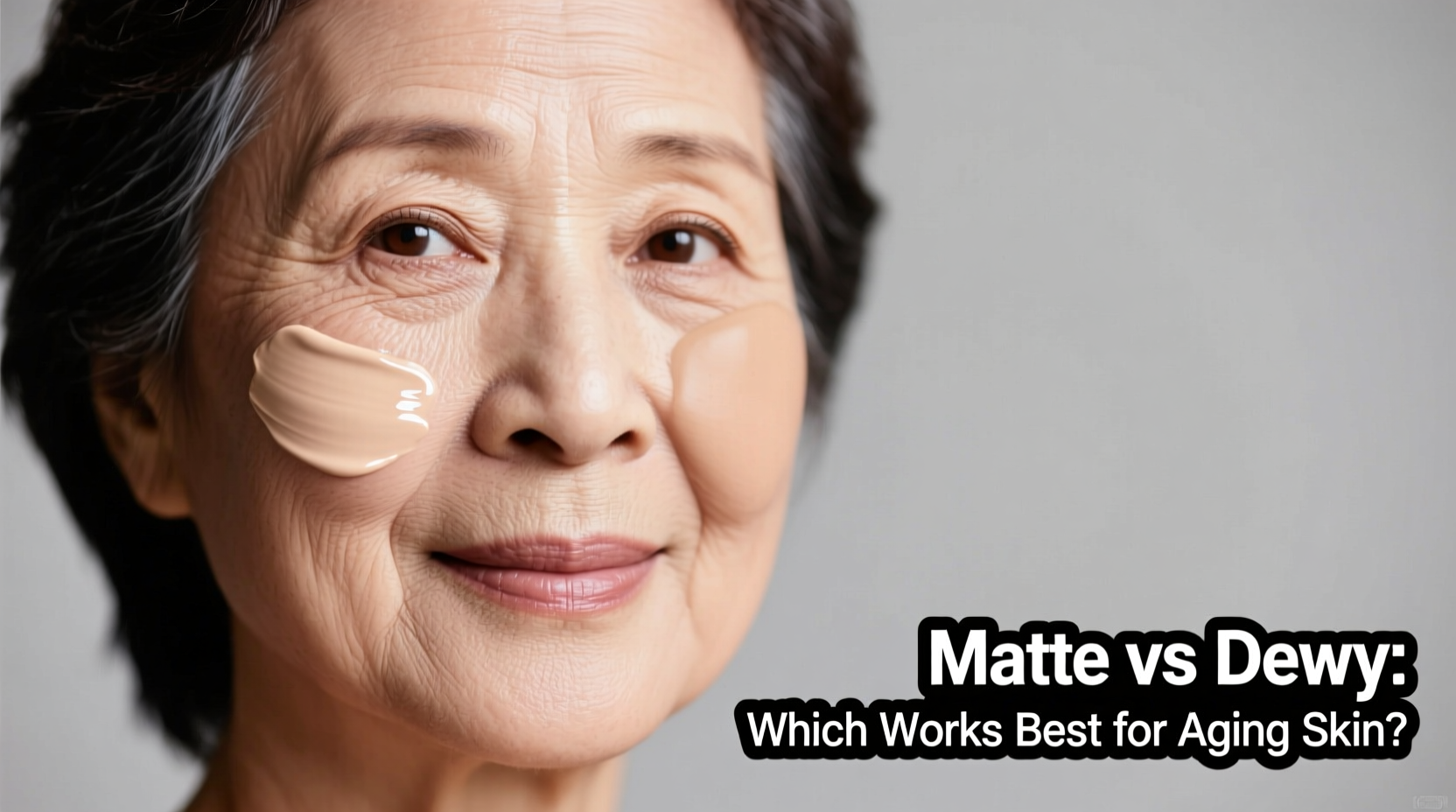
Aging skin undergoes several physiological transformations that directly affect how makeup adheres and appears. The sebaceous glands produce less oil, resulting in drier skin that may flake or settle into creases. The epidermis thins, making fine lines and wrinkles more prominent. Additionally, diminished microcirculation can lead to a dull, ashen complexion—often mistaken for fatigue or poor health.
Foundation interacts with these characteristics differently depending on its finish:
- Matte foundations are formulated to absorb oil and minimize shine, often containing silica or powders that create a flat, even surface.
- Dewy foundations contain light-reflecting particles, oils, or humectants that mimic hydration and give the illusion of plump, healthy skin.
While matte formulas excel at longevity and oil control, they can appear chalky or emphasize dryness on mature skin. Dewy finishes, on the other hand, enhance radiance but may highlight uneven texture if not applied correctly.
“With aging skin, the goal isn’t just coverage—it’s optical rejuvenation. A foundation should blur, not broadcast, the signs of time.” — Dr. Lena Peterson, Dermatologist & Cosmetic Formulation Expert
Matte Foundation: Pros and Cons for Mature Skin
Matte foundations have long been favored for their staying power and ability to create a polished, camera-ready finish. However, their suitability for aging skin depends heavily on formulation and application technique.
Advantages
- Longevity: Ideal for all-day wear, especially in warm climates or during events where touch-ups aren’t feasible.
- Pore-minimizing effect: Blurs enlarged pores and reduces the appearance of uneven texture.
- Oil control: Beneficial for those with combination skin who experience midday shine on the T-zone.
Drawbacks
- Drying effect: Can cling to dry patches and accentuate fine lines, particularly around the eyes and mouth.
- Flat appearance: May drain vitality from already dull complexions, giving a “tired” look under artificial lighting.
- Requires meticulous prep: Without thorough moisturizing, matte foundation can pill or look patchy.
Dewy Foundation: Why It Often Wins for Aging Skin
Dewy foundation has gained popularity among skincare-conscious consumers, especially those over 40, due to its ability to simulate youthful glow. Unlike high-shine metallic finishes, modern dewy bases use subtle light diffusers and emollients to create a natural, lit-from-within effect.
Benefits
- Enhances radiance: Mimics the natural sheen of younger skin, counteracting dullness.
- Blurs imperfections: Light reflection softens the appearance of fine lines and mild sagging.
- Hydration support: Many dewy formulas include glycerin, hyaluronic acid, or squalane to nourish while wearing makeup.
- Seamless blending: Tends to integrate better with skincare, reducing the risk of cakiness.
Potential Downsides
- Shine confusion: Poorly formulated dewy bases can appear greasy, especially on oily-prone areas.
- Less longevity: May require blotting or setting in humid conditions.
- Texture emphasis: Over-applied or too-illuminating formulas might draw attention to enlarged pores or rough patches.
The key is selecting a **natural dewy** or **luminous** finish—not one loaded with glitter or heavy shimmer. Look for terms like “skin-like,” “serum-infused,” or “glass skin” on labels, which suggest a focus on realism over theatrical glow.
Comparative Analysis: Matte vs Dewy for Aging Skin
| Feature | Matte Foundation | Dewy Foundation |
|---|---|---|
| Best For | Oily/combination skin, hot climates, long events | Dry/mature skin, dull complexions, indoor lighting |
| Texture Impact | Can emphasize dryness and fine lines | Softens lines, enhances plumpness |
| Finish Longevity | 8–12 hours with minimal touch-up | 4–7 hours; may need blotting or powdering |
| Skin-Friendly Ingredients | Rare; often alcohol-heavy or drying | Frequent inclusion of hyaluronic acid, ceramides, oils |
| Photogenic Performance | Excellent under flash; reduces glare | Beautiful in natural light; may reflect harsh studio lights |
| Application Ease | Forgiving on texture; requires good prep | Better adhesion to hydrated skin; less forgiving on flakiness |
This comparison underscores a central truth: dewy foundations generally align better with the biological realities of aging skin. Their ability to impart moisture and luminosity addresses common concerns like flatness and dehydration, whereas matte options often demand trade-offs in comfort and visual youthfulness.
Actionable Tips for Choosing and Applying Foundation After 40
Selecting the right foundation isn’t just about finish—it’s about integration with your skincare, environment, and daily routine. Follow this step-by-step guide to achieve a seamless, age-appropriate result.
- Assess your skin’s current state: Is it primarily dry, combination, or dehydrated (oily but lacking water)? This determines whether you can tolerate matte or need dewy support.
- Hydrate thoroughly before makeup: Use a serum with hyaluronic acid followed by a rich moisturizer. Wait 5 minutes before applying foundation to prevent pilling.
- Prime strategically: For dewy finishes, use a hydrating primer. For matte, opt for a blurring primer that won’t overdry.
- Test the finish in natural light: Swatch two shades—one matte, one dewy—on your jawline. Observe how they react after 30 minutes.
- Apply with the right tool: Use a damp sponge for dewy foundation to sheer out product and avoid heaviness. A dense brush works well for matte, allowing controlled build-up.
- Set selectively: Only powder areas that get shiny (like the T-zone). Avoid dusting over dry areas or smile lines.
- Touch up wisely: Carry a hydrating mist instead of powder for midday refreshment. Reapply concealer if needed, not full foundation.
Mini Case Study: Transforming a Client’s Makeup Routine
Claire, a 58-year-old professional, had used matte foundation for over two decades, believing it gave her a “clean” look. However, she noticed increasing complaints that her face looked “tired” or “ashen,” especially in evening meetings. Upon consultation, a makeup artist observed that her foundation was settling into fine lines around her mouth and lacked vibrancy under office lighting.
The solution? She transitioned to a lightweight, dewy-finish foundation with SPF and added a weekly exfoliating toner to her routine. Within three weeks, her skin appeared smoother and brighter. Her colleagues commented on her “great skin,” unaware she was still wearing full coverage. By prioritizing luminosity over flatness, Claire achieved a more youthful and energetic appearance without changing her skincare regimen drastically.
Checklist: Foundation Selection for Aging Skin
Use this checklist before purchasing or applying foundation:
- ✅ Skin is prepped with hydrating serum and moisturizer
- ✅ Formula contains skin-benefiting ingredients (e.g., peptides, antioxidants)
- ✅ Finish complements skin type (dewy for dry, satin-matte for combo)
- ✅ Shade matches neck and jawline in natural light
- ✅ Product doesn’t settle into lines after 30 minutes
- ✅ Breathable—doesn’t feel tight or mask-like
- ✅ Can be layered without caking
Frequently Asked Questions
Can I use matte foundation if I have mature skin?
Yes, but only if it’s a hydrating matte formula. Avoid full-matte powders or alcohol-heavy liquids. Instead, look for “soft matte” or “satin” finishes that control shine without drying. Always prep skin well and avoid over-applying.
Won’t dewy foundation make me look oily?
Not if chosen correctly. Dewy does not mean greasy. Modern dewy foundations use micro-pearls and emollients to create a healthy glow, not excess shine. If you’re concerned, apply a mattifying primer only on the T-zone while keeping cheeks dewy for balance.
How do I keep dewy foundation from sliding off?
Start with a gripping primer, let moisturizer absorb fully, and set only problem areas with translucent powder. Consider using a setting spray with a hydrating formula to lock in moisture and extend wear.
Conclusion: Embrace Luminosity for Timeless Radiance
When it comes to aging skin, the goal of foundation should be enhancement, not erasure. While matte finishes offer durability, they often come at the cost of vitality—exaggerating dryness and muting natural glow. Dewy foundations, particularly those designed with mature skin in mind, provide a more harmonious solution by restoring luminosity, improving texture perception, and supporting skin health through beneficial ingredients.
The best foundation isn’t the one that hides your skin, but the one that honors its evolution. By choosing a radiant, hydrating formula and applying it with care, you can achieve a look that’s polished, youthful, and unmistakably you.




 浙公网安备
33010002000092号
浙公网安备
33010002000092号 浙B2-20120091-4
Comments
No comments yet. Why don't you start the discussion?