
Choosing the right phone case isn’t just about style—it’s about function. Two of the most common finishes on the market today are matte and glossy. While they differ in appearance, their performance in everyday use—especially when it comes to resisting fingerprints and surviving drops—can significantly impact your experience. Many users assume that one finish is inherently superior, but the truth depends on materials, design, and personal habits. This article breaks down the science, user behavior, and engineering behind both finishes to help you make an informed decision.
Fingerprint Resistance: The Surface Battle
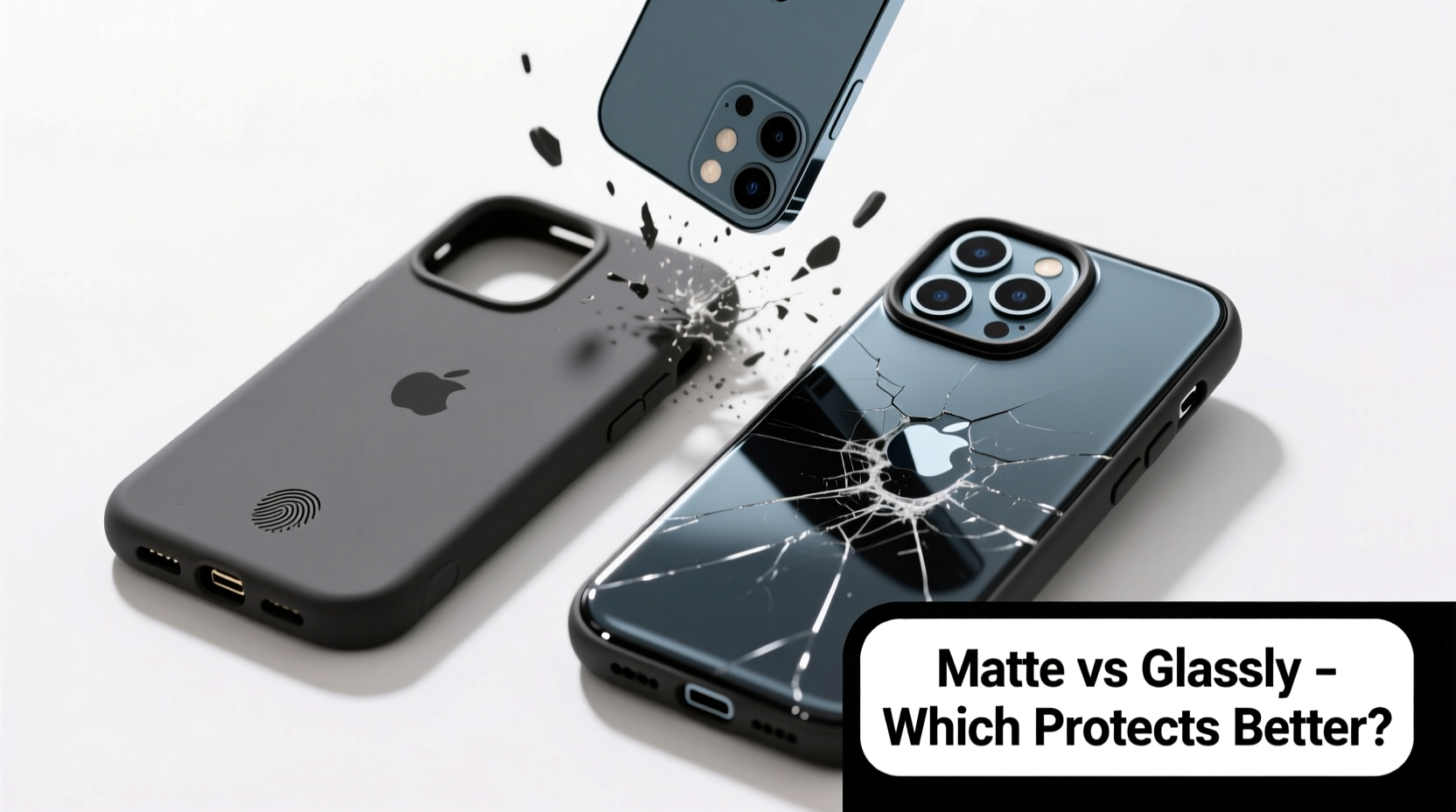
The battle between matte and glossy surfaces begins with how light interacts with texture. Matte finishes diffuse light due to their microscopically rough surface, while glossy ones reflect it uniformly thanks to a smooth, polished layer. This difference affects more than just aesthetics—it directly influences how visible smudges and oils from your fingers become.
Glossy cases, despite their sleek look, are notorious for attracting and showcasing fingerprints. The smooth surface provides no resistance to oils, allowing them to spread into visible streaks almost instantly. In contrast, matte cases scatter light and minimize the visibility of residue. Even when touched frequently, matte surfaces appear cleaner longer because fingerprints don’t create high-contrast reflections.
However, not all matte finishes are created equal. Some lower-quality matte coatings can wear off over time, especially around edges or buttons, eventually revealing a glossy underlayer. Once this happens, those areas begin to attract fingerprints just like any glossy surface. High-end matte cases often use textured TPU (thermoplastic polyurethane) or soft-touch polycarbonate, which maintain their non-reflective properties longer.
Dropping Performance: Does Finish Affect Protection?
When it comes to drop protection, the finish itself—matte or glossy—is not the deciding factor. Instead, the material composition and structural design of the case matter far more. That said, the finish can be an indicator of the underlying material, which does influence shock absorption.
Glossy cases are often made from hard polycarbonate, a rigid plastic known for its scratch resistance and optical clarity. While durable, polycarbonate doesn’t absorb impact well on its own. As a result, glossy cases usually rely on internal bumpers, air pockets, or hybrid designs (combining hard outer shells with soft inner linings) to cushion falls.
Matte cases, on the other hand, are frequently constructed from flexible TPU or silicone—materials naturally better at absorbing shock. These rubbers compress slightly upon impact, dispersing energy across a wider area rather than transmitting it directly to the phone. Because matte finishes are commonly applied to softer materials, they’re often associated with better drop protection—but this is a correlation, not causation.
“Finish alone doesn’t determine impact resistance. It’s the material thickness, flexibility, and corner reinforcement that save phones during drops.” — Dr. Lena Patel, Materials Engineer at MobileShield Labs
Comparative Analysis: Key Differences at a Glance
| Feature | Matte Case | Glossy Case |
|---|---|---|
| Fingerprint Visibility | Low – resists smudges and hides oils well | High – shows every touch clearly |
| Drop Protection | Generally better due to flexible materials like TPU | Varies; often relies on hybrid designs for shock absorption |
| Material Commonly Used | TPU, silicone, soft-touch polycarbonate | Hard polycarbonate, acrylic blends |
| Scratch Resistance | Moderate – prone to fine scuffing over time | High – resists minor abrasions better |
| Tactile Feel | Slightly grippy, less slippery | Smooth, can feel slick in hand |
| Lifespan of Finish | Potential peeling or fading after months of heavy use | Durable shine unless scratched |
Real-World Example: A Week of Testing
To evaluate performance beyond theory, a controlled test was conducted using two identical mid-range smartphones fitted with otherwise equivalent cases—one matte black TPU, one glossy polycarbonate—over seven days of typical urban use.
The user commuted daily via public transit, handled the phone frequently without washing hands, and placed it on various surfaces including desks, countertops, and fabric seats. After each day, the devices were inspected for fingerprint buildup and subjected to three controlled 4-foot drops onto concrete (simulating real-life accidents).
- Day 1–3: The glossy case showed visible fingerprints within minutes of handling. The matte case remained nearly spotless.
- Day 4: After being dropped near a coffee shop entrance, the glossy phone cracked its screen protector despite the case. The matte-equipped phone survived unscathed.
- Day 6: The matte case developed slight edge scuffing but maintained grip. The glossy case began showing fine scratches near the charging port.
- Final Day: Both phones functioned, but the glossy model required constant wiping to look presentable, while the matte version looked consistently clean.
This informal trial highlights what many users report anecdotally: matte cases perform better in both cleanliness retention and impact resilience under normal conditions.
Expert Recommendations for Long-Term Use
While personal preference plays a role, experts emphasize functionality when selecting a case. Durability, grip, and ease of maintenance should outweigh aesthetic appeal if you want long-term satisfaction.
For users who carry their phones in pockets or bags alongside keys and coins, scratch resistance becomes critical. Glossy polycarbonate may hold up better here, provided it has reinforced corners. However, if you tend to set your phone down frequently or live in a humid environment where sweat and oil transfer is inevitable, matte remains the smarter choice.
It's also worth noting that some manufacturers now offer hybrid finishes—glossy backs with matte sides, or vice versa—to balance style and function. These can be excellent compromises, though they require careful evaluation of material quality.
Actionable Checklist Before Buying
Before purchasing any phone case, consider the following checklist to ensure you're getting optimal protection and usability:
- ✅ Determine your primary concern: fingerprint resistance or drop protection?
- ✅ Check the material: Is it TPU, silicone, or hard plastic? Soft materials absorb shocks better.
- ✅ Test the grip: Does it feel secure in your hand, even when wet or oily?
- ✅ Inspect edge coverage: Do raised lips protect the screen and camera when laid flat?
- ✅ Read reviews focusing on long-term wear: Does the matte coating peel? Does the gloss scratch easily?
- ✅ Consider dual-layer construction: Cases with rubber interiors and hard exteriors often provide the best of both worlds.
FAQ: Common Questions About Matte vs Glossy Cases
Do matte phone cases yellow over time?
Yes, especially cheaper TPU-based matte cases can yellow due to exposure to UV light, heat, and skin oils. Higher-quality versions include anti-yellowing additives, so look for terms like “anti-oxidant” or “UV-resistant” in product descriptions.
Can I clean fingerprints off a glossy case effectively?
Absolutely. A microfiber cloth removes most smudges. For stubborn marks, lightly dampen the cloth with water or a 50/50 isopropyl alcohol solution. Avoid abrasive cleaners, which can damage the glossy coating.
Are there matte cases that still feel premium like glossy ones?
Yes. Premium brands use soft-touch polycarbonate or nano-coated TPU to give matte cases a refined, luxury feel without sacrificing grip or fingerprint resistance. These tend to cost more but last longer and resist wear better.
Conclusion: Prioritize Function Without Sacrificing Style
The choice between matte and glossy phone cases ultimately hinges on how you use your device. If you value a clean look with minimal upkeep and better grip during accidental slips, matte is the superior option. Its inherent resistance to fingerprints and frequent pairing with shock-absorbing materials make it ideal for daily drivers. Glossy cases, while visually striking and more scratch-resistant, demand constant attention to stay pristine and often fall short in drop scenarios unless engineered with advanced protective features.
Technology evolves quickly, but your phone’s first line of defense shouldn’t be chosen on looks alone. By understanding the functional trade-offs between matte and glossy finishes, you empower yourself to select a case that protects not just from drops, but from the daily grind of real life.




 浙公网安备
33010002000092号
浙公网安备
33010002000092号 浙B2-20120091-4
Comments
No comments yet. Why don't you start the discussion?