
A sagging mattress can turn restful nights into restless ones. You wake up with stiffness, notice visible dips, or feel springs poking through. When this happens, the immediate question arises: should you invest in a new mattress or try a topper first? It’s a common dilemma, especially given the significant cost difference between the two options. While a mattress topper can enhance comfort and extend the life of your current bed, it isn’t always the solution—particularly when structural support has failed. Understanding the limitations and benefits of each option is essential to making an informed decision that protects both your spine and your wallet.
Understanding Sagging: What Causes It and Why It Matters
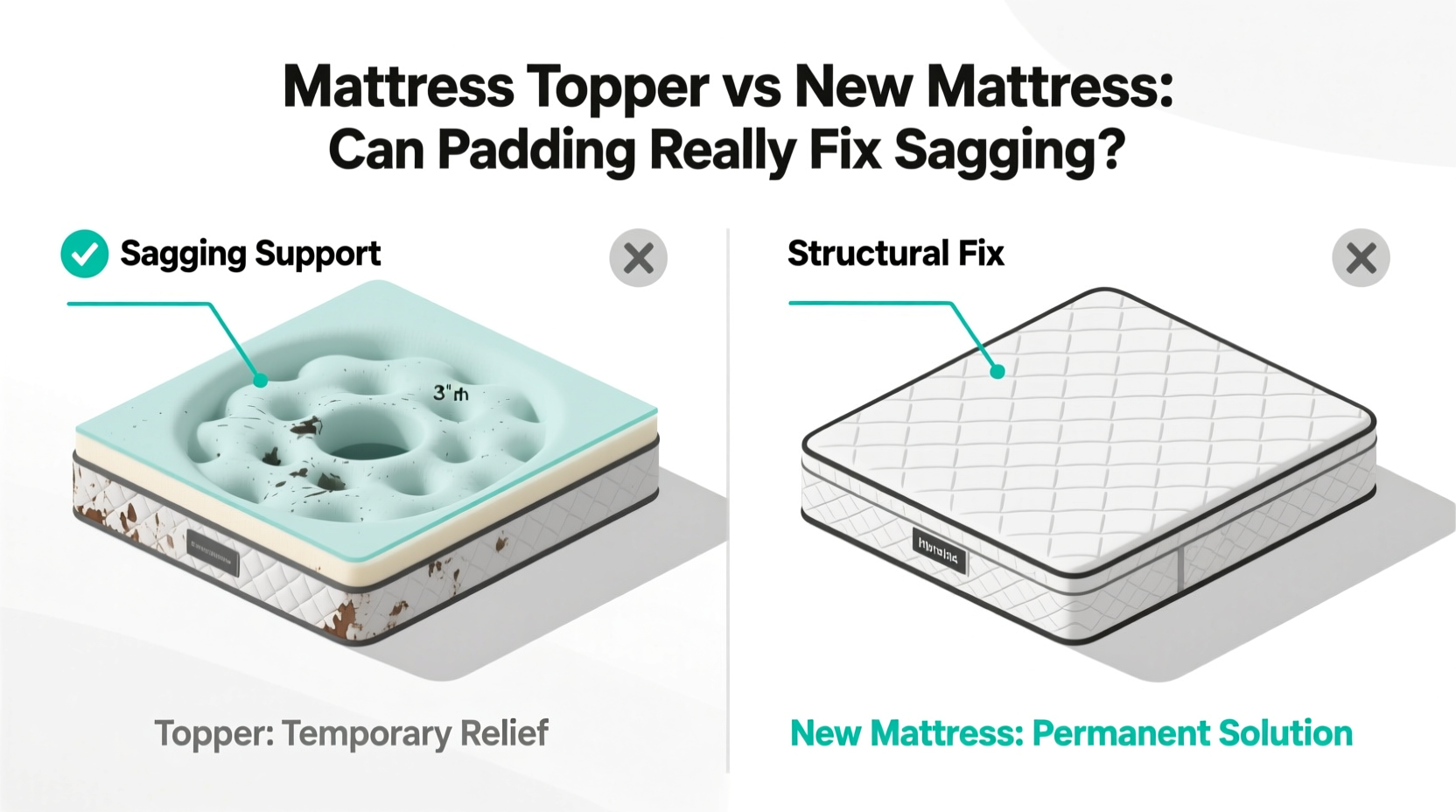
Sagging occurs when a mattress loses its ability to maintain even support across its surface. Over time, materials compress, coils weaken, and foam breaks down, leading to noticeable indentations—especially in areas where body weight concentrates, like the hips and shoulders. A dip of more than 1.5 inches is generally considered problematic and may indicate the mattress is beyond repair.
The root causes of sagging include:
- Material fatigue: Memory foam and latex degrade over time, losing resilience.
- Poor foundation: An unsupportive box spring or slatted base accelerates wear.
- Body weight and usage: Heavier individuals or frequent use increases compression.
- Lack of rotation: Failing to rotate or flip (if applicable) leads to uneven wear.
Sagging isn’t just uncomfortable—it can compromise spinal alignment. When your hips sink too deeply, your spine curves unnaturally, potentially causing back pain, shoulder strain, and disrupted sleep cycles.
Mattress Toppers: What They Can and Cannot Fix
A mattress topper is a removable layer, typically 2–4 inches thick, placed on top of your existing mattress. Made from memory foam, latex, wool, or down alternatives, toppers are designed to enhance comfort, regulate temperature, or add softness. But can they truly fix a sagging bed?
In short: a topper can mask mild discomfort but cannot restore structural integrity. If your mattress has only minor compression (under 1 inch) and still provides adequate support, a high-density foam or latex topper may improve comfort and delay replacement. However, if the sag exceeds 1.5 inches or you feel springs or coils, a topper will only add temporary cushioning—not real support.
Think of it like putting a pillow on a broken chair. The pillow feels soft at first, but the underlying instability remains. Similarly, a topper on a severely sagging mattress may worsen pressure points by creating an uneven sleeping surface.
“While a quality topper can extend the usability of a slightly worn mattress, it won’t correct alignment issues caused by deep sagging. Support must come from the core.” — Dr. Lena Reyes, Sleep Health Specialist
When a Mattress Topper Makes Sense
There are specific scenarios where a topper is a smart, cost-effective solution:
- Mild Comfort Issues: Your mattress is relatively new (under 5 years) but feels too firm. A plush memory foam or down-alternative topper can soften the surface without replacing the entire unit.
- Temperature Regulation Needs: You sleep hot, and your current mattress traps heat. A gel-infused foam or breathable wool topper can improve airflow and reduce night sweats.
- Allergy Protection: Hypoallergenic toppers with barrier fabrics protect against dust mites and spills, adding hygiene without altering support.
- Trial Period Extension: If you're unsure about committing to a new mattress, a topper allows you to test a different feel before investing $1,000+.
- Budget Constraints: At $100–$300, a topper is significantly cheaper than a new mattress and can buy time until you’re ready to upgrade.
For best results, choose a topper with a density of at least 3 pounds per cubic foot (for foam) and ensure it’s compatible with your mattress type. Avoid ultra-thin pads (under 2 inches), as they offer minimal benefit.
When You Need a New Mattress Instead
There are clear signs that no amount of padding can fix your sleep situation. These indicators mean it’s time to retire your old mattress:
- Visible sagging over 1.5 inches in the center or primary sleep zones.
- You feel coils, springs, or lumps through the fabric.
- Waking up with consistent back or joint pain that wasn’t present before.
- Excessive motion transfer—your partner’s movements disrupt your sleep due to worn-out edge support.
- Age of the mattress exceeds 7–8 years, especially for innerspring or lower-density foam models.
- Odors or mold development, indicating material breakdown or moisture retention.
Replacing a mattress is a bigger investment, but it addresses the root cause of poor sleep. Modern mattresses are engineered with zoned support, edge reinforcement, and adaptive materials that respond to body shape. Unlike a topper, a new mattress restores proper spinal alignment and distributes weight evenly.
Comparison: Topper vs. New Mattress
| Factor | Mattress Topper | New Mattress |
|---|---|---|
| Cost | $80–$300 | $800–$3,000+ |
| Lifespan | 3–5 years | 7–10 years |
| Support Restoration | Limited; masks symptoms | Full; corrects structure |
| Back Pain Relief | Possible if mild | High likelihood if properly chosen |
| Installation | Easy—lay on top | Requires removal of old mattress |
| Better for Allergies? | Yes, with hypoallergenic covers | Yes, especially latex or hybrid models |
| Best For | Minor comfort tweaks, budget fixes | Chronic pain, severe sagging, long-term health |
Real-World Example: Sarah’s Decision
Sarah, a 42-year-old teacher, noticed her queen mattress had developed a deep valley in the middle. She’d owned it for eight years and recently started waking up with lower back pain. After reading online reviews, she bought a 3-inch memory foam topper for $180, hoping it would solve the issue.
At first, the bed felt softer and more comfortable. But after three weeks, the pain returned. The topper had simply conformed to the sag, creating a “hammock effect” that pulled her spine out of alignment. She consulted a chiropractor, who advised replacing the mattress entirely.
Sarah eventually purchased a hybrid model with reinforced edge support and zoned coils. Within a week, her morning stiffness decreased significantly. Her experience illustrates a common mistake: using a topper as a band-aid for a structurally unsound foundation.
Step-by-Step Guide: How to Decide Between a Topper and Replacement
Follow this practical timeline to determine the best course of action:
- Inspect the mattress: Remove sheets and look for visible dips, tears, or lumps. Use a ruler to measure indentation depth.
- Test for support: Lie down in your usual sleep position. Do your hips sink below your shoulders? Is your spine curved?
- Evaluate age: If the mattress is older than 7 years, replacement is likely necessary.
- Assess pain levels: Are you consistently sore upon waking? Does changing positions provide no relief?
- Try a temporary fix: Rent or borrow a topper for a few nights. If comfort improves without pain, it may be sufficient.
- Consult a professional: A physical therapist or sleep specialist can assess whether your mattress contributes to musculoskeletal issues.
- Make a decision: If the core is failing, invest in a new mattress. If only comfort is lacking, a high-quality topper may suffice.
Frequently Asked Questions
Can a mattress topper fix a sagging memory foam mattress?
Only if the sag is minor (under 1 inch). Deep compression indicates material breakdown, and no topper can restore lost support. In such cases, replacement is recommended.
How long does a mattress topper last?
Most last 3–5 years, depending on material and usage. High-density latex or memory foam toppers tend to outlast cheaper polyfoam versions.
Will a topper make my bed too hot?
Some foams retain heat. If you sleep hot, opt for a breathable material like wool, gel-infused foam, or open-cell latex to avoid overheating.
Checklist: Should You Buy a Topper or Replace Your Mattress?
- ☐ Measure sag depth – is it over 1.5 inches?
- ☐ Can you feel springs or coils?
- ☐ Have you had the mattress for more than 7 years?
- ☐ Do you wake up with consistent back or neck pain?
- ☐ Is the foundation (box spring or frame) in good condition?
- ☐ Have you tried rotating the mattress to see if comfort improves?
- ☐ Are you on a tight budget but need a short-term solution?
- ☐ Do you primarily want softer feel, not structural fix?
If you answered “yes” to the first four questions, a new mattress is likely necessary. If your concerns are comfort-related and your bed is still structurally sound, a topper could be a smart stopgap.
Final Recommendation
A mattress topper is a valuable tool for fine-tuning comfort, regulating temperature, or extending the life of a slightly worn bed. But it is not a permanent fix for sagging support. Once your mattress has lost its foundational integrity, no amount of padding can restore proper spinal alignment or prevent chronic pain.
Your sleep surface plays a critical role in long-term health. Investing in a new mattress when needed isn’t an indulgence—it’s a necessity. On the other hand, if your bed is relatively new and only lacks softness or cooling features, a well-chosen topper offers excellent value.
Don’t gamble with your rest. Assess your mattress honestly, prioritize support over temporary comfort, and make the choice that aligns with both your body’s needs and your lifestyle.




 浙公网安备
33010002000092号
浙公网安备
33010002000092号 浙B2-20120091-4
Comments
No comments yet. Why don't you start the discussion?