
Sleep is not a luxury—it’s a biological necessity. And the foundation of restful, restorative sleep often begins with your bed. Over time, even the most supportive mattress can degrade, leaving you tossing and turning or waking up sore. When comfort starts slipping, many people consider a mattress topper as a quick fix. But how do you know whether a topper will truly solve the problem—or if it’s actually time to invest in a new mattress?
Understanding the difference between a temporary enhancement and a necessary replacement can save you money, discomfort, and years of poor sleep. This guide breaks down the key factors that determine whether a topper will suffice or if upgrading to a new mattress is the smarter, healthier choice.
What Is a Mattress Topper—And What Can It Do?
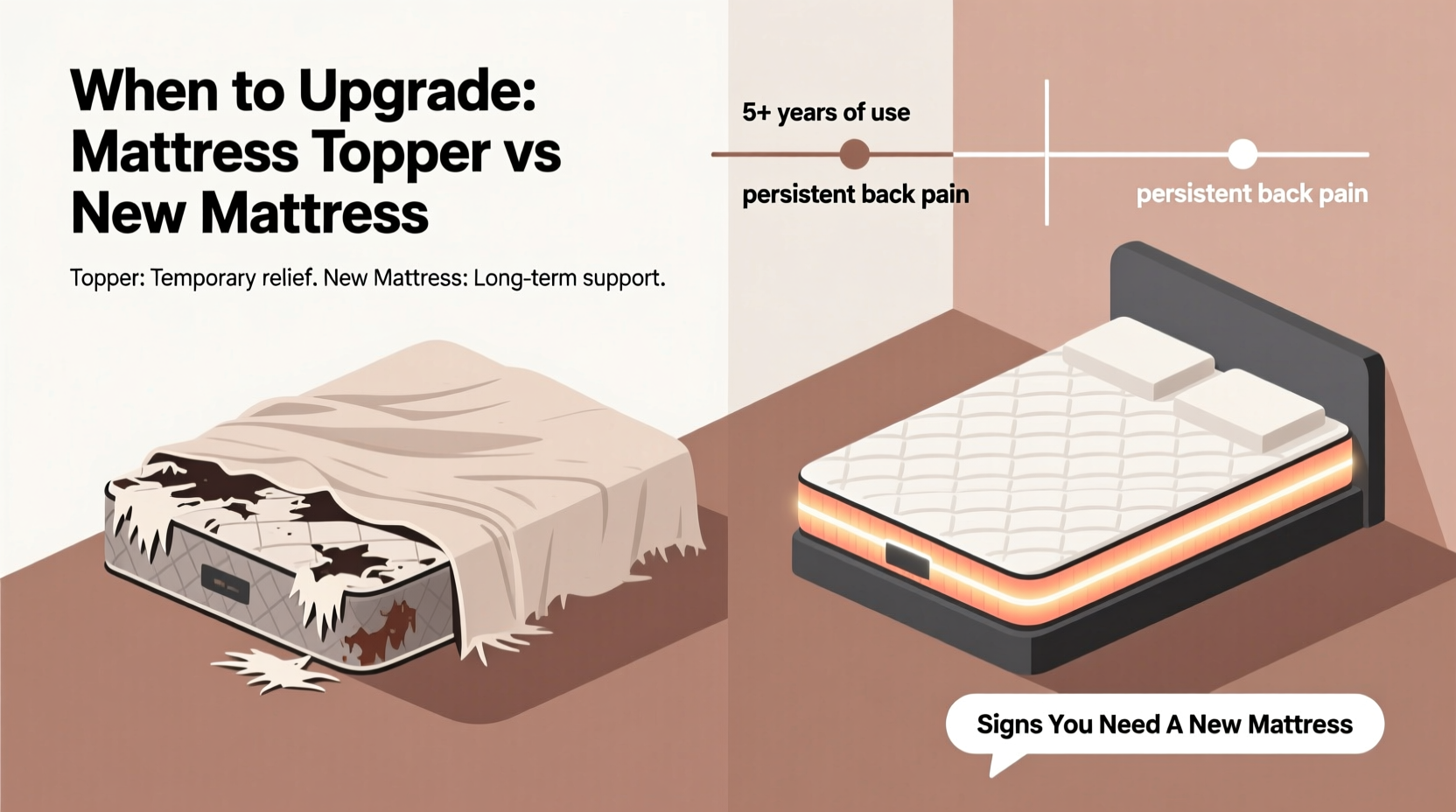
A mattress topper is a removable layer, typically 2 to 4 inches thick, placed on top of your existing mattress. Made from materials like memory foam, latex, wool, or gel-infused foam, toppers are designed to enhance comfort, improve temperature regulation, or add extra cushioning.
Their primary function is to modify the feel of your current mattress without replacing it. For example:
- Adding softness to a firm or aging mattress
- Reducing pressure points for side sleepers
- Improving breathability in hot sleepers
- Extending the lifespan of a still-functional mattress
Top quality toppers can significantly improve sleep comfort, especially if your mattress is relatively new but no longer feels quite right. However, they are not structural fixes. A topper cannot correct sagging, deep indentations, or compromised support systems.
Signs Your Mattress Needs More Than a Topper
There comes a point when no amount of padding can compensate for an exhausted mattress. Recognizing these red flags early can prevent chronic back pain, disrupted sleep, and long-term health issues.
Visible Sagging or Indentations
If you notice body impressions deeper than 1.5 inches, especially around the hips and shoulders, your mattress has likely lost its structural integrity. A topper might mask the dip temporarily, but it won’t restore support. Over time, the topper itself will conform to the sag, reducing its effectiveness.
Pain Upon Waking
Waking up with stiffness, lower back pain, or neck discomfort—especially if it improves during the day—is a strong indicator that your mattress no longer aligns your spine properly. While a topper can soften the surface, it can't realign a collapsed core.
Excessive Motion Transfer or Noise
If you hear springs creaking or feel every movement your partner makes, your mattress’s internal structure is failing. These symptoms suggest worn coils or deteriorating foam layers—issues a topper can’t resolve.
Age of the Mattress
Most mattresses last between 7 and 10 years. After this point, materials break down regardless of brand or initial quality. Even high-end models lose resilience and hygiene over time. If yours is older than eight years, a topper is more of a stopgap than a solution.
“After eight years, the average mattress loses up to 73% of its original support. At that stage, adding a topper is like putting a bandage on a broken bone.” — Dr. Lena Patel, Sleep Health Specialist
Mattress Topper vs. New Mattress: A Practical Comparison
Choosing between a topper and a new mattress isn’t just about comfort—it’s about cost, longevity, and health. The table below outlines key differences to help you decide.
| Factor | Mattress Topper | New Mattress |
|---|---|---|
| Cost | $50–$250 | $800–$3,000+ |
| Lifespan | 3–5 years | 7–10 years |
| Support Restoration | Limited (surface-level only) | Full structural and spinal support |
| Built-in Cooling | Yes, in advanced models | Varies by model; newer tech available |
| Allergy & Hygiene Control | Helps protect surface; doesn’t eliminate dust mites in core | Fresh, hypoallergenic materials |
| Best For | Minor comfort tweaks, short-term solutions | Chronic pain, aging mattresses, long-term investment |
While a topper offers immediate relief at a fraction of the cost, it doesn’t address underlying wear. A new mattress, though pricier upfront, provides comprehensive support, improved sleep hygiene, and lasting value—especially if you struggle with allergies, mobility issues, or chronic pain.
Real-Life Example: When a Topper Wasn’t Enough
Consider Sarah, a 42-year-old teacher who had been using the same innerspring mattress for nine years. She began experiencing morning back pain and noticed a visible dip in the center. Hoping for a budget-friendly fix, she purchased a 3-inch gel memory foam topper.
Initially, the difference was noticeable—her bed felt softer, and she slept more comfortably for a few weeks. But within three months, the pain returned. The topper had compressed into the existing sag, creating an uneven sleeping surface. Her chiropractor confirmed that her spine wasn’t aligning properly during sleep.
Reluctantly, Sarah invested in a hybrid mattress with zoned support. Within two weeks, her back pain decreased significantly, and her energy levels improved. “I wish I hadn’t waited so long,” she said. “The topper gave me false hope, but only a new mattress fixed the real problem.”
Sarah’s story reflects a common scenario: temporary fixes can delay—but not prevent—the need for a proper upgrade.
Step-by-Step Guide: How to Decide What You Really Need
Follow this decision-making process to determine whether a topper or a new mattress is right for your situation.
- Evaluate your mattress age. If it’s older than 7–8 years, assume it’s nearing end-of-life. Write down the purchase date or check manufacturer tags.
- Perform the flat-surface test. Place a flat object (like a board or ruler) across the mattress. If there’s a visible gap between the surface and the object, especially in the center, you have significant sagging.
- Assess your pain levels. Track how you feel upon waking for one week. Note any consistent aches in your back, hips, or neck. Persistent discomfort suggests inadequate support.
- Check for allergens. Does your mattress trap dust, emit odors, or trigger sneezing? Older mattresses accumulate dead skin cells, dust mites, and mold—problems a topper can’t eliminate.
- Determine your budget and timeline. If you’re planning to move soon or need a short-term solution, a topper may suffice. For long-term health and comfort, prioritize a new mattress.
- Try before you commit. Many brands offer sleep trials. Test both options if possible—one with a topper, then a new mattress—to compare results objectively.
Expert Tips for Maximizing Sleep Quality
Whether you choose a topper or a new mattress, small changes can amplify your results. Consider these evidence-based recommendations:
- Match your sleep position. Side sleepers benefit from softer surfaces that cushion shoulders and hips. Back and stomach sleepers need firmer support to maintain spinal alignment.
- Invest in breathable materials. Look for phase-change fabrics, open-cell foams, or natural latex if you tend to sleep hot.
- Replace pillows simultaneously. An upgraded sleep surface means little if your pillow fails to support your head and neck properly.
- Use a protective cover. A waterproof, hypoallergenic protector extends the life of both your mattress and topper while improving hygiene.
“Sleep posture begins at the base. No matter how good your pillow or sheets are, if your foundation is compromised, your body pays the price.” — Dr. Marcus Lin, Chiropractic Sleep Advisor
Frequently Asked Questions
Can a mattress topper fix a sagging mattress?
No. A topper can temporarily mask minor dips, but it cannot restore structural support. On a severely sagging mattress, the topper will eventually conform to the uneven shape, worsening pressure points.
How long does a mattress topper last?
Most high-quality toppers last 3 to 5 years. Lower-density foams may compress faster, especially under heavy use. Replace your topper when it shows signs of thinning, lumpiness, or reduced comfort.
Is it okay to use a topper on a very old mattress?
It’s generally not recommended. If your mattress is over 8 years old, combining it with a topper may increase heat retention, motion transfer, and allergen exposure. You’re better off replacing the entire unit.
Final Recommendation: Upgrade with Confidence
The decision between a mattress topper and a new mattress ultimately hinges on honesty—with yourself and your bed. If your mattress is still structurally sound but slightly too firm or soft, a well-chosen topper can refresh your sleep experience affordably. But if you’re dealing with deep sagging, chronic pain, or a decade-old foundation, don’t settle for a compromise.
Think of your mattress as an investment in your health. Just as you wouldn’t wear worn-out shoes daily, you shouldn’t sleep on a failed support system night after night. Modern mattresses offer advanced pressure relief, cooling technologies, and motion isolation that far surpass what a topper can provide.
Upgrade when the signs are clear: persistent discomfort, visible wear, or declining sleep quality. Your future self—more energized, pain-free, and well-rested—will thank you.




 浙公网安备
33010002000092号
浙公网安备
33010002000092号 浙B2-20120091-4
Comments
No comments yet. Why don't you start the discussion?