
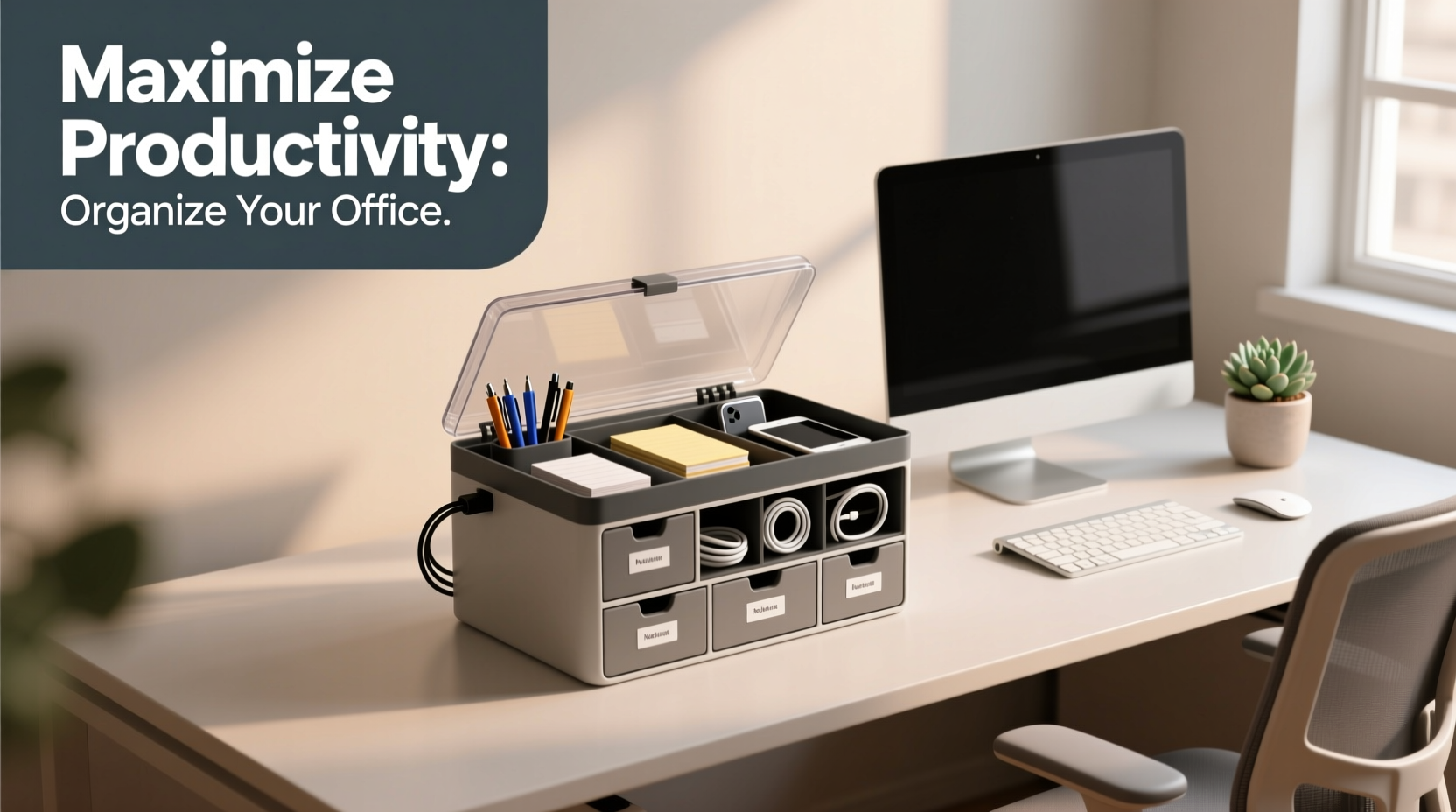
A cluttered workspace doesn’t just look unprofessional—it actively hinders focus, slows down task execution, and increases mental fatigue. In modern work environments where time is a premium, even small inefficiencies compound into lost hours each week. One of the most overlooked yet powerful tools for reclaiming that time is the multifunctional storage box. More than just a container, it’s a system in disguise: compact, adaptable, and capable of transforming chaos into order. When used strategically, this simple tool can become the backbone of an efficient office setup—whether you're working from home or managing a corporate desk.
Why Office Organization Directly Impacts Productivity
Disorganization leads to wasted time. According to research from the National Association of Professional Organizers, the average worker spends up to 4.3 hours per week searching for misplaced items. That’s over 220 hours annually—nearly six full workweeks lost to avoidable clutter. Physical clutter also contributes to cognitive overload, making it harder to concentrate and make decisions.
A well-organized space reduces decision fatigue by creating predictable systems. When every item has a designated place, routines become automatic. The multifunctional storage box supports this principle by offering customizable compartments, portability, and scalability across different types of supplies—from cables and stationery to files and tech accessories.
“Organization isn’t about perfection; it’s about reducing friction in your daily workflow.” — David Allen, author of *Getting Things Done*
Choosing the Right Multifunctional Storage Box
Not all storage boxes are created equal. To maximize utility, select one based on your specific needs rather than aesthetics alone. Look for features such as modular dividers, stackability, durable materials (like ABS plastic or reinforced fabric), and secure latches if mobility is required.
Consider these criteria when selecting:
- Size: Should fit comfortably on your desk or within a drawer without crowding essential tools.
- Compartments: Adjustable or removable trays allow reconfiguration as needs change.
- Portability: Handles or lightweight design help if you move between workspaces.
- Accessibility: Top-opening lids or flip-top designs offer faster access than side drawers.
Step-by-Step Guide to Organizing Your Office Using a Multifunctional Storage Box
Effective organization follows a logical sequence. Jumping straight into placement without sorting often leads to temporary fixes. Follow this five-step process to build a sustainable system:
- Empty and Assess: Remove everything from your current workspace. Lay out all items so you can see what you’re working with.
- Categorize Supplies: Group similar items—pens, sticky notes, USB drives, paper clips, chargers, etc.—into piles.
- Declutter Ruthlessly: Discard dried-up pens, broken cables, outdated labels, and duplicate tools you rarely use.
- Assign Zones in the Box: Use adjustable dividers to create dedicated sections. For example, dedicate one quadrant to electronics, another to writing instruments.
- Label and Position: Label each compartment clearly. Place the box within arm’s reach of your dominant hand for optimal accessibility.
This method ensures that only necessary, frequently used items remain visible and accessible, minimizing distractions and retrieval time.
Smart Ways to Use Your Storage Box Across Work Functions
The versatility of a multifunctional storage box allows adaptation beyond basic supply storage. Here are several advanced applications:
- Digital Cable Management: Store phone chargers, HDMI cables, and adapters in labeled pouches or wrapped neatly with Velcro ties inside separate compartments.
- Task-Specific Kits: Create mini-kits for recurring tasks—e.g., a “meeting prep” kit with notepad, business cards, and pen; or a “shipping” kit with tape, labels, and scissors.
- Travel Ready Setup: If you work remotely, keep a fully stocked box ready to grab and go, eliminating last-minute scrambling.
- Client Presentation Organizer: Store brochures, samples, and presentation tools together so they’re always presentation-ready.
| Use Case | Contents | Benefit |
|---|---|---|
| Daily Essentials | Pens, highlighters, sticky notes, scissors | Reduces reaching across desk; keeps tools centralized |
| Electronics Hub | Chargers, USB sticks, earbuds, power bank | Prevents cable tangles; easy device setup |
| Project Kit | Files, reference sheets, project-specific tools | Enables quick context switching between tasks |
| Emergency Backup | Batteries, spare mouse, backup drive, flashlight | Maintains continuity during tech failures |
Real Example: How Sarah Streamlined Her Home Office Workflow
Sarah, a freelance graphic designer, struggled with constant interruptions due to misplaced styluses, mismatched cables, and disorganized client files. Her desk was cluttered with open containers and loose papers, leading to frequent delays during client calls.
She introduced a single 12-compartment multifunctional storage box. She categorized her tools: top row for digital accessories (tablet pen, micro-USB cables), middle for everyday stationery, and bottom for backup SD cards and software dongles. She added small adhesive labels and placed the box directly to the right of her keyboard.
Within a week, she reported saving nearly 30 minutes per day previously spent searching for tools. More importantly, her mental clarity improved—she felt more in control, which translated into faster project turnaround times and higher client satisfaction.
Common Mistakes to Avoid
Even with the right tools, poor habits can undermine organization efforts. Watch out for these pitfalls:
- Overfilling Compartments: Crowded spaces make retrieval difficult and defeat the purpose of categorization.
- Neglecting Labels: Without clear identification, others (or future you) may misplace items back incorrectly.
- Ignoring Maintenance: Reassess contents every 4–6 weeks. Needs evolve; your system should too.
- Using One Box for Too Many Roles: If your box becomes overloaded, consider adding a second unit instead of compromising structure.
“Productivity isn't about doing more—it's about removing obstacles so the right things happen effortlessly.” — Cal Newport, productivity researcher
Frequently Asked Questions
How many storage boxes do I need for optimal organization?
Start with one well-organized box focused on high-frequency items. Add more only if distinct categories (e.g., personal vs. professional supplies) require separation. Over-multiplying containers can lead to new forms of clutter.
Can I use household containers instead of buying a specialized box?
You can, but multifunctional storage boxes offer precision engineering—adjustable dividers, durability, and ergonomic access—that repurposed containers often lack. For long-term efficiency, investing in a quality product pays off.
How often should I reorganize my storage box?
Every 4 to 6 weeks is ideal. Schedule a brief 10-minute review to remove unused items, adjust dividers, and update labels based on recent workflow patterns.
Checklist: Setting Up Your Productivity-Optimized Storage System
- ☐ Clear your desk or drawer completely
- ☐ Sort all items into functional categories
- ☐ Discard duplicates, broken, or obsolete tools
- ☐ Choose a multifunctional box with adjustable compartments
- ☐ Assign zones based on frequency of use
- ☐ Label each section clearly
- ☐ Place the box within easy reach
- ☐ Review and refine the system monthly
Conclusion
Maximizing productivity starts with intentionality—not just in how you manage time, but in how you manage space. A multifunctional storage box is more than a container; it’s a framework for consistency, speed, and mental clarity. By thoughtfully assigning homes to your tools, eliminating clutter, and maintaining the system over time, you reduce friction in every task you perform.
Don’t wait for the perfect moment to organize. Start today with one box, one drawer, one step. The cumulative effect of small improvements transforms not only your workspace—but how you experience work itself.




 浙公网安备
33010002000092号
浙公网安备
33010002000092号 浙B2-20120091-4
Comments
No comments yet. Why don't you start the discussion?