
Traveling with only carry-on luggage isn’t just convenient—it’s often faster, cheaper, and less stressful than checking bags. But to truly maximize efficiency, you need to rethink how you use every inch of allowed space. One of the most underutilized strategies is treating your rucksack not as a second bag, but as your designated personal item. When done right, this approach gives you flexibility, comfort, and more room for essentials without crossing airline size limits.
Airlines typically allow one carry-on bag plus one personal item—such as a backpack, purse, or laptop bag. By choosing a compact, well-organized rucksack as your personal item, you free up your larger roller bag for bulkier items while keeping valuables, tech, and in-flight needs within easy reach. This guide walks through how to do it effectively, avoid common pitfalls, and make the most of your carry-on capacity.
Why Your Rucksack Should Be Your Personal Item
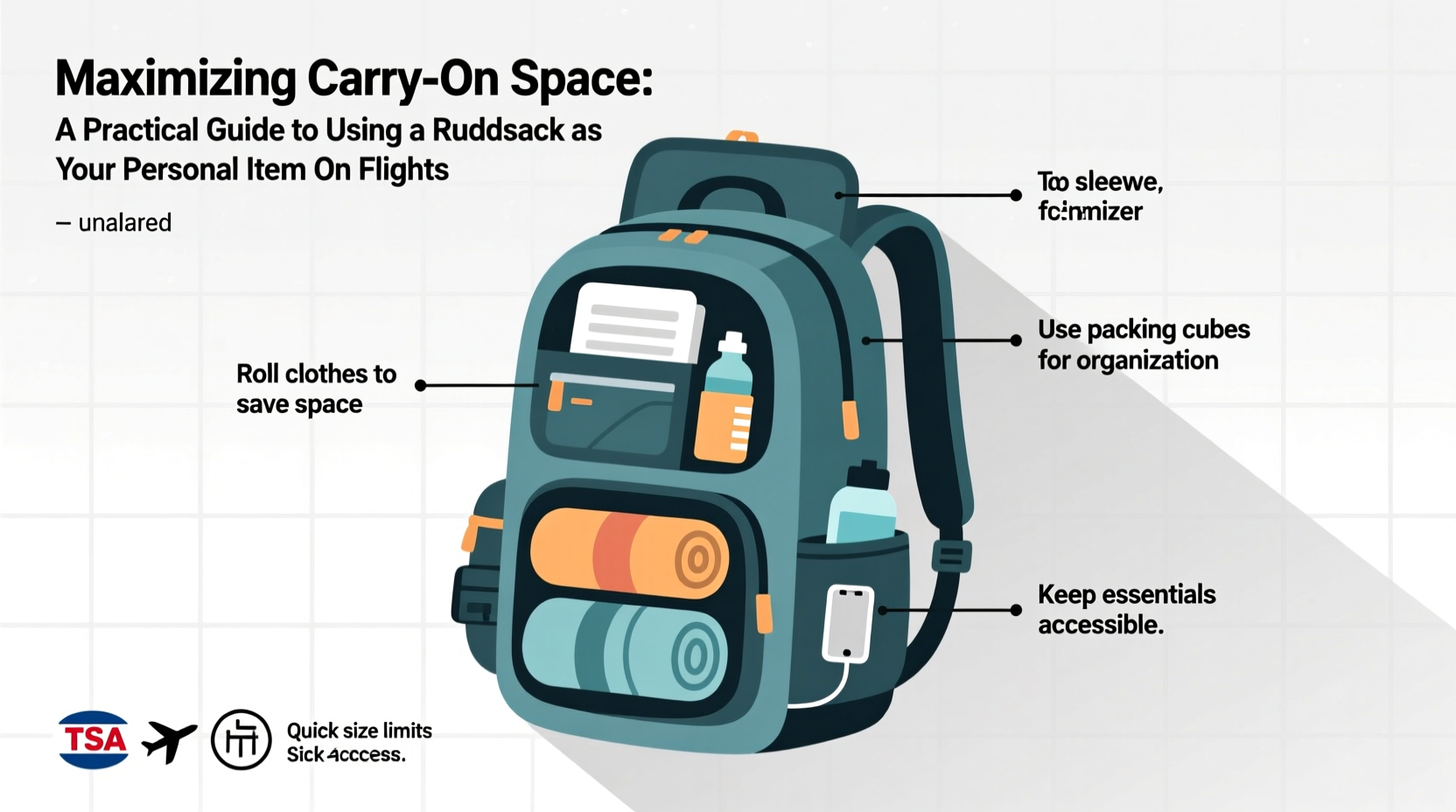
The distinction between “carry-on” and “personal item” is more than semantics—it’s about access, weight distribution, and compliance. A rucksack worn on your back stays with you from curb to gate, reducing the risk of loss or theft. It also allows hands-free movement through security, terminals, and boarding queues.
Using a rucksack as your personal item makes particular sense for travelers who:
- Carry sensitive electronics (laptops, cameras, tablets)
- Want quick access to medications, documents, or snacks
- Prefer hiking-style comfort over rolling luggage strain
- Travel frequently and value consistency in packing systems
When sized correctly—a typical limit is 18 x 14 x 8 inches across most major airlines—a rucksack fits neatly under the seat in front of you, leaving overhead bins for larger carry-ons. That means smoother boarding and no last-minute bin scrambles.
Smart Packing: What Belongs in Your Rucksack
Not everything should go into your personal rucksack—only what you’ll need during transit or can’t afford to lose. The goal is balance: useful but not overloaded.
Prioritize these categories:
- Essentials Access Kit: Passport, wallet, phone, earbuds, hand sanitizer, lip balm, face wipes.
- Electronics: Laptop, charger, power bank, noise-canceling headphones.
- In-Flight Comfort: Neck pillow, eye mask, lightweight blanket (rolled inside), reading material.
- Medications & Toiletries: Prescription meds, motion sickness tablets, mini toothbrush, deodorant.
- Security-Friendly Items: TSA-approved liquids in a clear pouch; keep under 3.4 oz each.
Avoid stuffing bulky clothing, shoes, or souvenirs into your rucksack unless absolutely necessary. These belong in your main carry-on where they won’t throw off your center of gravity.
Packing Checklist: Rucksack Essentials
- ✅ Boarding pass / ID
- ✅ Phone + portable charger
- ✅ Noise-canceling headphones
- ✅ Lightweight jacket or sweater (for layering)
- ✅ Reusable water bottle (empty pre-security)
- ✅ Snacks in sealable bags
- ✅ Small first-aid kit (blister pads, pain relievers)
- ✅ Foldable tote (in case of extra purchases post-flight)
Airline Rules: Know Before You Go
While most U.S. carriers follow similar guidelines, international airlines may impose stricter interpretations. Always verify dimensions and weight policies before departure.
| Airline | Personal Item Size Limit | Rucksack Notes |
|---|---|---|
| Delta, United, American | 18 x 14 x 8 in (45 x 35 x 20 cm) | Fits under seat; must be stowed during takeoff/landing |
| JetBlue | 17 x 13 x 8 in | Slightly smaller footprint; measure carefully |
| Alaska Airlines | 17 x 10 x 9 in | Narrower requirement; avoid wide-frame packs |
| Lufthansa | 40 x 30 x 10 cm (~15.7 x 11.8 x 3.9 in) | Stricter enforcement; roll-top packs often exceed depth |
| EasyJet | 45 x 36 x 20 cm | Allows one large cabin bag under seat if small enough |
Step-by-Step: Optimizing Your Rucksack for Flight Use
Follow this sequence before every trip to ensure smooth sailing:
- Select the Right Pack: Choose a rucksack that meets your airline’s personal item dimensions. Look for features like padded laptop sleeves, external pockets, and clamshell opening.
- Pre-Load Non-Perishables: Keep permanent items like chargers, adapters, and travel documents in dedicated compartments.
- Layer Smartly: Place heavier items (laptop, power bank) close to your back and centered. Lighter items (clothing, snacks) go toward the outer edges.
- Use Compression: Roll clothes instead of folding. Use packing cubes or compression sacks to reduce air volume.
- Test Fit Weekly: Once packed, slide the rucksack under a chair or table at home. If it doesn’t fit comfortably, repack.
- Wear It Through Security: Keep your rucksack on during screening unless instructed otherwise. Removes temptation to misplace it.
“We’ve seen a 30% increase in passengers using technical daypacks as personal items—especially those with anti-theft zippers and RFID-blocking pockets.” — Sarah Lin, Airline Customer Experience Analyst, SkyPassenger Research Group
Real Traveler Example: A Weekender’s Strategy
Consider Maya, a digital marketer who flies weekly between Chicago and Denver for client meetings. She travels with only a carry-on suitcase and a 20L Osprey Talon rucksack she uses as her personal item.
Her system:
- Rolls two shirts, one pair of pants, underwear, and toiletries into vacuum bags inside her carry-on.
- Keeps her rucksack stocked with: MacBook Pro, tablet, noise-canceling headphones, reusable coffee cup, granola bars, and a foldable down vest.
- Uses a slim passport wallet with boarding pass QR code always on top.
At security, she removes her laptop but keeps the pack on. On board, she slips it under the seat, pulls out her neck pillow from an outer pocket, and starts working immediately. No gate-checking, no baggage claim delays. Over six months, she saved over four hours of waiting time and avoided $380 in checked bag fees.
Frequently Asked Questions
Can I bring both a backpack and a purse?
Technically, yes—but only if one clearly qualifies as the personal item and the other as the carry-on. Most airlines consider a backpack + small crossbody bag acceptable. However, if both appear full or oversized, gate agents may require one to be checked. When in doubt, consolidate.
What if my rucksack is slightly too big?
Even half an inch over can trigger scrutiny. Some low-cost carriers (like Spirit or Ryanair) enforce limits aggressively and may charge gate-check fees ranging from $35–$60. Always measure your loaded pack—not just the manufacturer’s specs.
Is a hydration bladder allowed in my rucksack?
No—once filled, hydration bladders exceed the 3.4 oz liquid rule and are not permitted through TSA checkpoints. Empty bladders are allowed, but you’ll need to refill after security.
Final Thoughts: Travel Light, Move Fast
Using a rucksack as your personal item isn’t just a packing tactic—it’s a mindset shift toward smarter, more agile travel. By focusing on accessibility, compliance, and intelligent load distribution, you gain control over your journey from start to finish.
The key is preparation: choose the right bag, pack with purpose, and respect airline boundaries. With practice, this method becomes second nature—and the benefits compound with every flight. Less stress. Fewer fees. More freedom.




 浙公网安备
33010002000092号
浙公网安备
33010002000092号 浙B2-20120091-4
Comments
No comments yet. Why don't you start the discussion?