
A large beach towel is more than just a post-swim essential. Its generous size, absorbent fabric, and portability make it one of the most versatile items you can pack for any outdoor adventure. Yet most people underutilize this simple tool, treating it only as a surface to lie on or dry off with. With a bit of creativity and planning, a single oversized towel can serve multiple roles—from sun shelter to emergency blanket, picnic mat to privacy curtain.
The key lies in understanding how to leverage its dimensions, material properties, and foldability to meet various needs efficiently. Whether you're at the beach, camping, traveling, or simply lounging in a park, optimizing your towel’s potential enhances both comfort and convenience.
1. Beyond Drying Off: The Multi-Functional Potential of a Large Towel
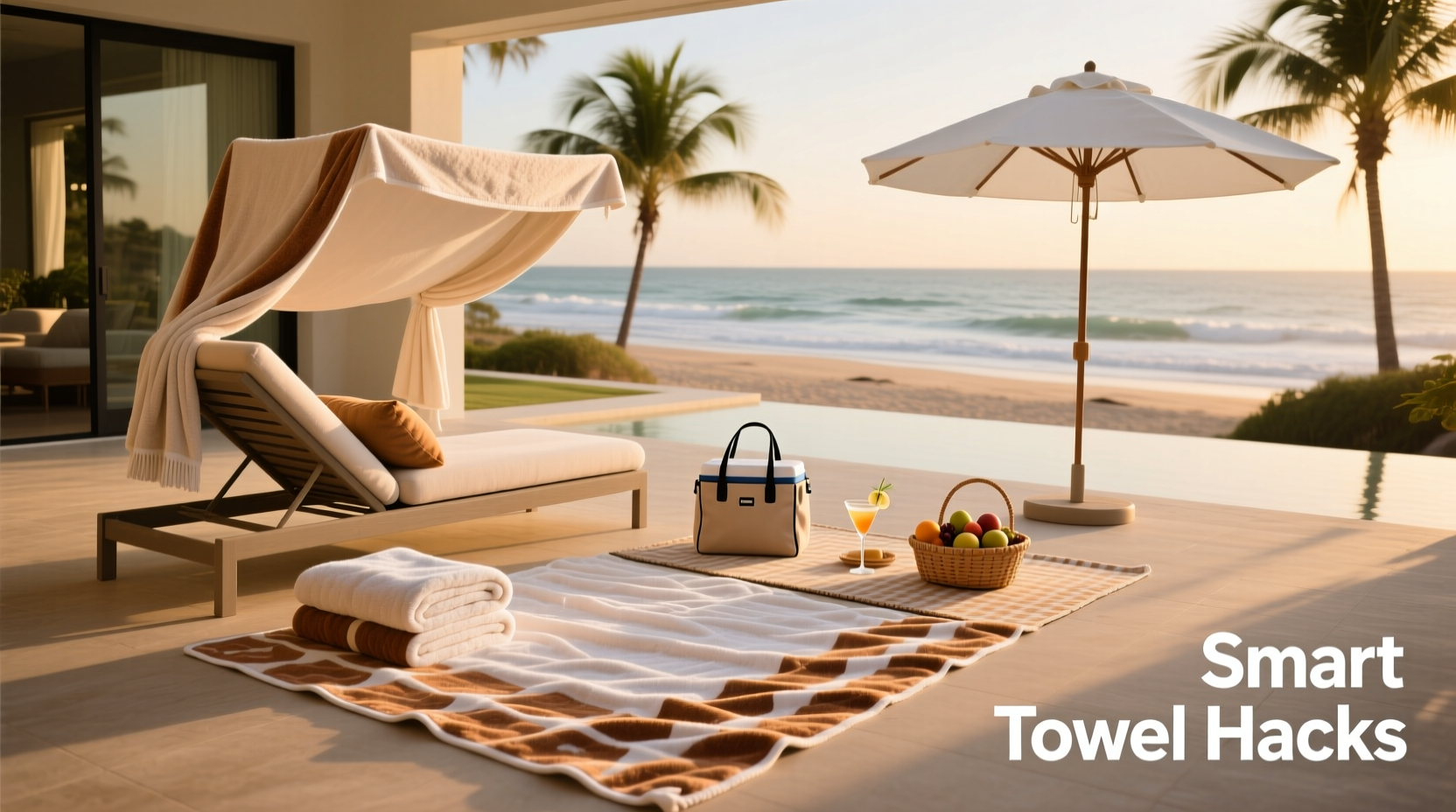
Standard beach towels measure approximately 30 x 60 inches, while larger versions often reach 40 x 70 inches or more. This extra surface area opens up possibilities far beyond basic drying. Consider these alternative functions:
- Ground Cover: Provides a clean, sand-free zone for sitting, eating, or playing games.
- Windbreak or Sun Shield: When anchored properly, it can reduce exposure to wind or intense sunlight.
- Changing Room: Wrapping yourself fully offers modesty when changing clothes in open areas.
- Emergency Blanket: In cooler weather or unexpected conditions, a dry towel adds warmth.
- Car Seat Protector: After swimming, place it over car seats to prevent wet upholstery.
2. Smart Folding and Packing Techniques
How you fold and store your towel affects both accessibility and functionality. A bulky, tangled towel is harder to carry and slower to deploy when needed.
- Roll for Compactness: Roll tightly from one end to the other. This minimizes volume and allows the towel to fit into smaller bags. Rolling also reduces creasing, which helps maintain fabric integrity over time.
- Fold into Quarters for Instant Use: If space isn’t an issue, folding the towel into quarters keeps it ready to lay down immediately upon arrival.
- Use a Waterproof Pouch Post-Use: Once damp, place the used towel in a mesh or waterproof bag to avoid soaking other items in your tote.
For travelers, consider pairing your towel with a carabiner clip. Attach it to the outside of your backpack for quick access and air drying during transit.
3. Creative Uses That Maximize Comfort and Utility
With minimal effort, a large towel transforms into functional gear that improves your outdoor experience.
Picnic Base or Sand Barrier
Lay the towel flat and place a small tablecloth or tray on top. The towel absorbs moisture from below and cushions uneven ground. For sandy beaches, flip the towel over periodically to keep the top side clean.
Improvised Shade Canopy
In the absence of umbrellas or trees, create a mini-shade structure. Tie opposite corners of the towel to chairs, poles, or stakes using paracord or strong clips. Angle it above your seating area to block direct sunlight. While not UV-proof, it significantly reduces glare and heat exposure.
Privacy Screen for On-the-Spot Changes
Stand inside a fully wrapped towel like a cocoon. Hold the top edges at shoulder height and twist the ends together overhead. This self-standing “tent” gives enough coverage to change swimsuits or clothing discreetly—even in crowded areas.
Seat Upgrade on Hard Surfaces
Bench seating at parks or bus stops is often dirty or uncomfortably cold/hot. Fold your towel into thirds and drape it over the seat. It insulates against temperature extremes and provides cushioning for longer sits.
“A beach towel is one of the most underrated multipurpose tools in outdoor recreation. Its utility scales directly with user ingenuity.” — Dr. Lena Torres, Outdoor Recreation Specialist, University of Coastal Studies
4. Care and Maintenance for Long-Term Performance
To ensure your towel remains soft, absorbent, and odor-free, follow proper care practices. Many users neglect maintenance until mildew or stiffness sets in.
| Care Step | Best Practice | Common Mistake to Avoid |
|---|---|---|
| Washing Frequency | After every 3–5 uses, especially after saltwater or sunscreen exposure | Leaving it crumpled in a bag for days before washing |
| Detergent Type | Mild, fragrance-free detergent; avoid fabric softeners | Using softeners that coat fibers and reduce absorbency |
| Drying Method | Air dry flat or hang in shade; tumble dry low if necessary | High-heat drying that causes shrinkage and fiber damage |
| Storage | Fold neatly once completely dry; store in breathable cotton bag | Storing damp—leads to mildew and musty smells |
5. Real-World Example: A Day at the Family Beach Outing
Sarah, a mother of two, heads to the coast every weekend during summer. She used to carry separate blankets, tarps, and stroller covers—until she streamlined her kit around one oversized 40x70-inch microfiber towel.
On a recent outing:
- She laid the towel flat for her kids to play on, shielding them from hot sand.
- When lunchtime came, she placed a reusable placemat on top—using the towel as a sanitary base.
- After swimming, each family member used a section to dry off before heading back to the car.
- During a sudden breeze, she clipped two corners to her beach chair and another to a cooler, creating a wind barrier.
- Finally, she draped the still-damp towel over the stroller handle to protect it from sun exposure on the walk back.
By maximizing one item’s roles, Sarah reduced clutter, saved space, and stayed comfortable throughout the day.
Checklist: Getting the Most From Your Large Beach Towel
Before your next outdoor trip, run through this checklist to ensure optimal use:
- ✅ Choose a quick-dry, sand-resistant material (microfiber or tightly woven cotton)
- ✅ Pre-fold or roll for easy access
- ✅ Pack a small carabiner or clips for anchoring
- ✅ Bring a separate bag for wet storage
- ✅ Test shade or windbreak setup at home
- ✅ Wash promptly after saltwater, chlorine, or sunscreen use
- ✅ Inspect for wear—repair loose edges before they unravel
Frequently Asked Questions
Can I use a beach towel as a blanket in cool weather?
Yes, but with limitations. While not as insulating as a fleece or wool blanket, a large cotton towel can provide moderate warmth in mild conditions. Layer it over a jacket or combine with a light poncho for added thermal protection. Microfiber towels retain some heat and are better suited than thin terry cloth.
How do I stop my towel from blowing away in the wind?
Use natural anchors: place heavy items like bags, coolers, or shoes in each corner. Alternatively, attach small sandbags or reusable weights. Some travelers use foldable tent stakes with loops to pin corners into the ground. Avoid relying solely on smooth rocks—they can shift and release.
Is a bigger towel always better?
Not necessarily. Oversized towels offer more coverage but are heavier and take longer to dry. Balance size with your needs: a 35x70 inch towel suits solo travelers well; families may prefer larger spreads. Prioritize packability and material quality over sheer dimensions.
Conclusion: Turn a Simple Towel Into Your Go-To Outdoor Ally
A large beach towel doesn’t need advanced technology to be effective—it just needs thoughtful use. By reimagining its role beyond drying off, you unlock layers of comfort, protection, and convenience. From impromptu shelters to hygiene barriers and travel organizers, the applications are limited only by imagination.




 浙公网安备
33010002000092号
浙公网安备
33010002000092号 浙B2-20120091-4
Comments
No comments yet. Why don't you start the discussion?