
In an era where smartphones are central to communication, productivity, and entertainment, every small design feature can make a significant difference in daily usability. One such innovation gaining widespread popularity is the bracket ring—a small, circular metal or plastic loop attached to the back of many modern phone cases. While it may appear decorative, this compact addition offers functional benefits that extend far beyond aesthetics. When used effectively, a bracket ring enhances grip, doubles as a kickstand, secures your device during travel, and even improves selfie angles. Yet, many users underutilize or misuse this feature. This guide explores how to fully leverage the bracket ring on your phone case to maximize convenience, safety, and efficiency in real-world scenarios.
Understanding the Bracket Ring: More Than Just a Loop
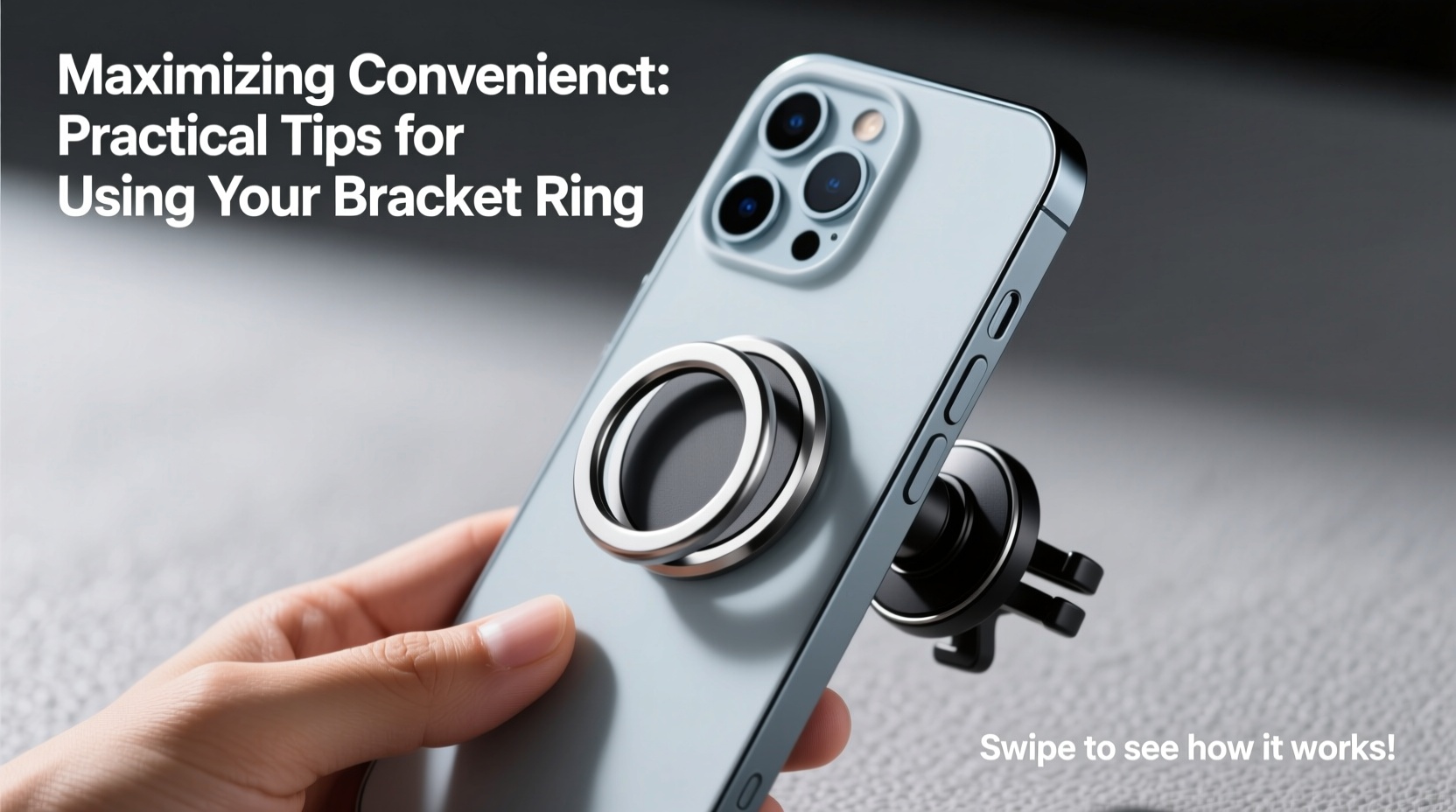
The bracket ring—also known as a phone ring holder, grip ring, or pop socket alternative—is typically mounted at the center or lower half of a phone case’s rear panel. It allows users to slip one or more fingers through it for improved handling, reducing the risk of accidental drops. Unlike adhesive-mounted rings, bracket rings integrated into cases are sturdier and less likely to detach over time.
Beyond basic grip support, these rings offer multi-functionality. They can rotate (on certain models), double as viewing stands, and provide anchor points for lanyards or wrist straps. The key to unlocking their full potential lies in understanding both their physical capabilities and the contexts in which they’re most useful.
“Ergonomic accessories like bracket rings reduce hand strain and drop incidents by up to 40% in frequent smartphone users.” — Dr. Lena Torres, Human Factors & Ergonomics Researcher
Optimizing Grip and Reducing Drop Risk
One of the primary purposes of a bracket ring is to improve grip, especially when using larger phones with one hand. Without proper support, reaching across the screen increases finger strain and the likelihood of slipping.
To optimize grip:
- Adjust the angle of the ring if it's rotatable—align it toward your palm for natural hand positioning.
- Avoid forcing multiple fingers through smaller rings, which can cause discomfort and weaken control.
- Use the ring as a pivot point when typing or scrolling, allowing your hand to rest securely without squeezing the device tightly.
This enhanced grip is particularly valuable in dynamic environments—such as commuting, walking, or standing in crowded spaces—where balance and attention are divided.
Using the Bracket Ring as a Stand for Hands-Free Viewing
Many users overlook the fact that a well-placed bracket ring can function as a makeshift kickstand. By folding the phone backward against a flat surface, the ring creates a stable incline ideal for watching videos, video calls, or following recipes in the kitchen.
For best results:
- Place your phone on a firm, level surface like a table or desk.
- Tilt the phone backward until the ring makes contact and supports the weight evenly.
- Adjust the rotation of the ring (if applicable) to fine-tune the viewing angle between 30° and 60°.
This method works best when the ring is located near the center-bottom of the case. If positioned too high, the phone may tip forward; if too low, it won’t recline sufficiently.
| Scenario | Benefit of Using Ring as Stand |
|---|---|
| Video Calls | Keeps hands free for note-taking or gesturing naturally |
| Streaming Content | Reduces neck strain from holding the phone upward |
| Cooking | Allows eyes-free access to step-by-step instructions |
| Work Desks | Minimizes clutter by eliminating need for separate stands |
Enhancing Portability with Lanyards and Straps
The bracket ring serves as an excellent attachment point for wrist straps, neck lanyards, or crossbody cords—especially beneficial for travelers, event photographers, or those working in high-movement environments.
Secure a thin, durable strap through the ring to keep your phone accessible yet safe from falls. This is particularly helpful in situations like:
- Riding public transit
- Attending outdoor festivals
- Photographing in busy areas
- Walking pets or jogging
A real-world example: Sarah, a freelance photographer based in Portland, uses a woven wrist strap threaded through her phone’s bracket ring while shooting street scenes. “I’m constantly shifting between camera and phone,” she explains. “Having my phone secured but instantly reachable means I don’t miss moments—and I’ve stopped worrying about dropping it.”
Practical Checklist: Getting the Most From Your Bracket Ring
To ensure you're leveraging every advantage, follow this actionable checklist:
- ✅ Confirm the ring is securely attached and doesn’t wobble or spin excessively.
- ✅ Test grip comfort with your dominant hand; adjust finger placement for optimal reach.
- ✅ Experiment with stand mode on different surfaces to find ideal angles.
- ✅ Attach a lightweight lanyard for added security in motion-heavy settings.
- ✅ Clean around the ring regularly to prevent dust buildup that could weaken structural integrity.
- ✅ Avoid placing thick protective films or bulky add-ons behind the ring that might interfere with its function.
Common Mistakes and How to Avoid Them
Despite its simplicity, improper use of the bracket ring can diminish its effectiveness or even pose risks. Below are common pitfalls and solutions:
| Mistake | Consequence | Solution |
|---|---|---|
| Using excessive force to rotate a non-rotatable ring | Damage to casing or internal mounting | Check manufacturer specs before adjusting |
| Attaching heavy accessories (e.g., large charms) | Increased stress leading to breakage | Limit attachments to lightweight, functional items |
| Holding phone only by the ring without hand support | Potential bending or snapping under pressure | Always combine ring use with hand contact |
| Ignoring signs of loosening over time | Sudden detachment and loss of phone | Inspect monthly and replace case if needed |
Frequently Asked Questions
Can I remove the bracket ring if I don’t want it?
Integrated bracket rings are built into the case structure and cannot be removed without damaging the case. If you prefer a minimalist design, choose a case without a ring. For adhesive versions, removal is possible but may leave residue.
Does the ring interfere with wireless charging?
In most cases, no. As long as the ring is made of non-metallic materials or designed with charging clearance, it won’t block Qi charging signals. However, all-metal rings may cause overheating or inefficiency—check product specifications before purchase.
Is the bracket ring suitable for all phone sizes?
Yes, though benefits increase with larger devices. Users of phones 6.5 inches and above often report greater comfort and utility due to increased weight and screen span. Smaller phones benefit less but still gain drop protection and stand functionality.
Final Thoughts: Turn a Small Feature Into a Daily Advantage
The bracket ring on your phone case is a prime example of micro-engineering with macro impact. What begins as a simple loop evolves into a versatile tool for grip, viewing, mobility, and peace of mind. By integrating thoughtful habits—like adjusting your grip, utilizing stand mode, or adding a secure strap—you transform routine interactions with your phone into smoother, safer experiences.
Technology should adapt to life, not complicate it. With just a few intentional adjustments, the bracket ring becomes more than an accessory—it becomes an extension of your daily rhythm.




 浙公网安备
33010002000092号
浙公网安备
33010002000092号 浙B2-20120091-4
Comments
No comments yet. Why don't you start the discussion?