
Small headphone bags are essential for portability, but their compact size often makes organization a challenge. Whether you're commuting, traveling, or simply moving between workspaces, efficiently using the limited space ensures your gear stays protected and easily accessible. With thoughtful planning and smart techniques, even the smallest bag can accommodate headphones, cables, adapters, and accessories—without clutter or damage.
Understand Your Bag’s Layout and Limitations
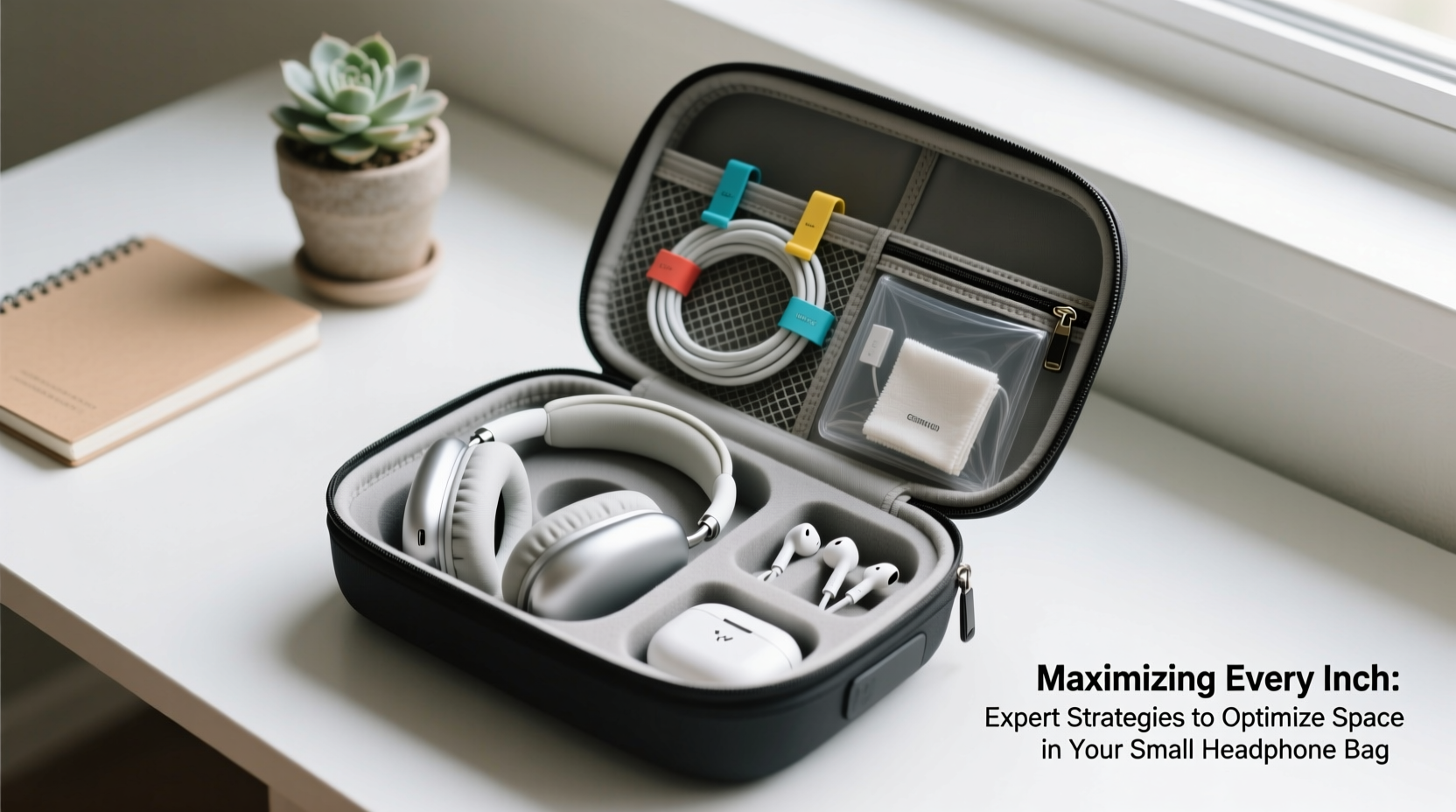
Before organizing, assess your bag’s interior dimensions, compartments, and material flexibility. Most small headphone cases range from 8x6 inches to 10x8 inches, offering minimal depth. These constraints demand precision in how items are placed and secured.
Begin by identifying key zones: main cavity, zippered pockets, mesh sleeves, and external flaps. Each serves a distinct purpose. The central area should house your primary item—the headphones—while secondary spaces manage smaller accessories. Overlooking these divisions leads to haphazard packing and inefficient use of space.
Choose the Right Accessories for Compact Storage
Not all accessories are created equal when space is tight. Bulky cable reels, oversized adapters, or multiple ear tip cases consume valuable real estate. Streamlining your kit starts with selecting minimalist, multi-functional tools.
- Flat coil cables: Replace thick, round cables with flat, tangle-resistant designs that lie flush against surfaces.
- Multi-port USB-C hubs: Instead of carrying separate dongles, opt for a slim hub combining charging, audio, and data ports.
- Compact ear tip organizers: Use a tiny silicone case or repurpose a mint tin instead of full-sized containers.
- Foldable headphone stands: Only include if absolutely necessary; otherwise, rely on the bag’s padding to protect the headband.
“Efficiency isn’t about fitting more—it’s about carrying only what adds value.” — Marcus Lin, Audio Gear Organizer & Tech Lifestyle Consultant
Step-by-Step Guide to Packing Efficiently
Follow this sequence to ensure maximum utility and minimal stress each time you pack:
- Empty the bag completely. Remove all contents and wipe down the interior with a dry microfiber cloth.
- Lay out everything you plan to carry. Evaluate necessity: do you really need three different adapters?
- Place headphones first. Position them centrally with ear cups folded inward to reduce width.
- Wrap cables neatly using the over-under method. This prevents tangling and reduces volume by up to 30%.
- Slide wrapped cables into side pockets or beneath headphones. Avoid stacking heavy items on top.
- Store small items in designated slots. Use inner mesh pockets for eartips, cleaning cloths, or warranty cards.
- Zip closed gently. If resistance occurs, reevaluate placement—forcing the zipper damages stitching over time.
Do’s and Don’ts of Space Optimization
| Do | Don’t |
|---|---|
| Use labeled mini-ziplock bags for eartips or screws | Pack loose cables without securing them |
| Invest in modular magnetic cable organizers | Stack batteries directly against metal components |
| Roll soft items like microfiber cloths to fill gaps | Overstuff the main compartment beyond padding capacity |
| Rotate gear seasonally (e.g., noise-canceling vs. open-back) | Leave moisture-prone items like damp wipes inside |
| Label external tags for quick identification | Ignore wear on seams or zippers—repair early |
Real Example: How a Music Producer Optimized His On-the-Go Kit
Daniel Reyes, a touring sound engineer based in Austin, TX, relied on a 9x7-inch neoprene headphone pouch for daily gigs. Initially, he struggled with tangled cables, lost adapters, and pressure marks on his high-end open-back headphones. After adopting a structured system, his workflow improved dramatically.
He began by removing redundant items—keeping only one balanced XLR cable, a single universal power adapter, and a foldable cleaning brush. He replaced his coiled audio cable with a flat, shielded version and used a magnetic wrap to secure it. Inside the bag, he added a removable foam divider to create two zones: one for headphones, another for accessories.
The result? Faster setup times, zero cable snags during transitions, and no physical damage after six months of weekly travel. “I used to dread opening my old bag,” Daniel said. “Now, I know exactly where everything is—and it fits perfectly.”
Checklist: Optimize Your Headphone Bag in 5 Minutes
Quick Optimization Checklist:
- ☐ Empty and clean the interior
- ☐ Remove unnecessary or duplicate items
- ☐ Fold headphones properly (ear cups inward)
- ☐ Wrap cables using the over-under technique
- ☐ Assign zones: headphones, cables, small parts
- ☐ Test closure—ensure no strain on zippers
- ☐ Label pockets or add color-coded tags
Maintain Long-Term Efficiency
Optimization isn’t a one-time task. Habits matter. After each use, take 60 seconds to reset the bag. Unwrap cables, return items to their zones, and check for debris. This prevents the gradual accumulation of clutter that undermines your initial system.
Every few weeks, perform a deeper review. Ask: Has your usage pattern changed? Are certain accessories never used? Is there wear on protective padding? Proactive maintenance extends both the life of your gear and the usability of your bag.
FAQ
Can I fit wireless earbuds and over-ear headphones in the same small bag?
Yes, but only if you prioritize vertical stacking and use dividers. Place the larger headphones at the base, then position the earbud case in an upper mesh pocket. Avoid placing hard cases directly on padded ear cushions.
How do I prevent cable fraying in tight spaces?
Use fabric-wrapped or braided cables for durability. Always coil loosely using the over-under method, and avoid sharp bends near connectors. Consider adding silicone strain reliefs for extra protection.
Is it worth modifying a bag with custom inserts?
If you own a premium bag used frequently, yes. DIY foam inserts or 3D-printed trays can maximize every millimeter. For occasional use, focus on smart packing instead.
Final Thoughts: Small Space, Big Impact
Maximizing every inch of your small headphone bag isn’t just about convenience—it reflects respect for your equipment and attention to detail. A well-organized case protects your investment, saves time, and enhances your experience whether you're recording, traveling, or enjoying music on the move. The strategies outlined here transform cramped chaos into streamlined functionality.




 浙公网安备
33010002000092号
浙公网安备
33010002000092号 浙B2-20120091-4
Comments
No comments yet. Why don't you start the discussion?