
In an age where digital data often overshadows physical records, the importance of securing handwritten notes is frequently underestimated. Whether you're a student jotting down lecture insights, an entrepreneur sketching business ideas, or a professional tracking confidential meetings, your notebook can contain highly sensitive information. The simple act of closing it with a buckle may seem sufficient—but true security goes beyond that snap closure. Without proper safeguards, a lost or stolen notebook can lead to identity exposure, intellectual property theft, or corporate espionage. This guide outlines actionable, real-world strategies to ensure your notebooks remain physically secure, tamper-evident, and organizationally resilient.
Understanding the Risks: Why Notebook Security Matters
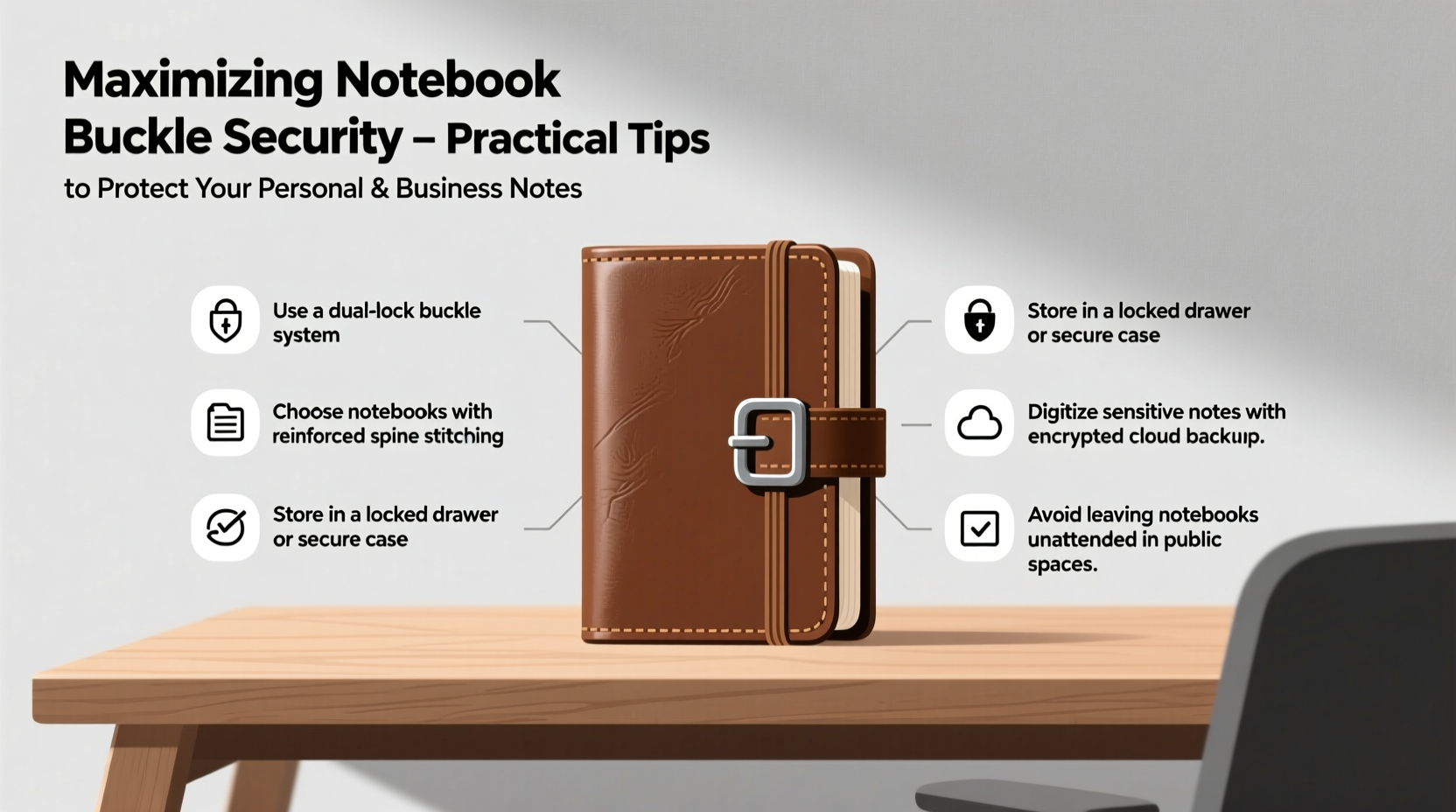
Notebooks are more than just paper and binding—they're repositories of thought, strategy, and sometimes legally protected data. A misplaced journal could expose passwords, client names, financial projections, or personal reflections. Unlike digital files, physical notebooks lack encryption, remote wipe capabilities, or access logs. Once compromised, there’s no way to retrieve or erase the information. According to a 2023 report by the International Association of Privacy Professionals (IAPP), over 17% of data breaches in small businesses originated from lost or stolen physical documents—many of which were informal notes or planners.
The notebook buckle, while functional, is not inherently secure. Most are made of plastic or thin metal, easily forced open. Worse, many users assume that because a notebook looks closed, it's safe. That false sense of protection can lead to careless handling—leaving it on café tables, unattended in meeting rooms, or stored in unlocked drawers.
“Physical note-taking remains one of the most vulnerable yet overlooked vectors for data leakage. A single notebook in the wrong hands can unravel months of strategic planning.” — Dr. Lena Torres, Information Security Consultant at SecureDocs Inc.
Choosing the Right Notebook for Maximum Security
Not all notebooks offer the same level of protection. When selecting a notebook for sensitive content, consider these features:
- Durable Materials: Opt for covers made of reinforced leather, ballistic nylon, or hard plastic that resist tearing and tampering.
- Reinforced Buckles: Look for metal clasps or locking mechanisms instead of flimsy plastic snaps.
- Concealed Closure Design: Some premium notebooks feature hidden magnetic closures or zipper seals that don’t draw attention.
- Interior Pockets with Flaps: Useful for storing USB drives, ID cards, or folded documents that shouldn't be left exposed.
Comparison: Notebook Security Features
| Feature | Secure Option | Non-Secure Option |
|---|---|---|
| Closure Type | Metal clasp or zipper | Plastic snap or elastic band |
| Cover Material | Leather, synthetic armor | Cardboard or soft fabric |
| Visibility | No external pockets/windows | Clear front pocket |
| Internal Storage | Locked flap or RFID-blocking sleeve | Open envelope pocket |
| Portability | Fits in briefcase with padding | Bulkier design, prone to slipping out |
Step-by-Step Guide to Securing Your Notebook Daily
Security isn’t a one-time setup—it’s a routine. Follow this daily protocol to minimize risk:
- Inspect the Closure: Before leaving your workspace, ensure the buckle is fully engaged. Test it with a light tug.
- Use a Cover Sleeve: Slide the notebook into a padded, non-transparent sleeve or folio when carrying it in public.
- Avoid Public Display: Refrain from taking detailed notes in crowded areas like trains or coffee shops. Use shorthand or code if necessary.
- Store Securely: At work or home, keep the notebook in a locked drawer or cabinet when not in use.
- Conduct Weekly Audits: Review entries and redact any overly sensitive details using a permanent marker or tape overlay.
- Implement a Disposal Plan: Shred or burn pages containing confidential data; never discard them in public bins.
Enhancing Security Through Smart Habits and Tools
Behavior plays a critical role in physical security. Even the most robust notebook is compromised by poor habits. Consider integrating these practices:
- Adopt a Coding System: Use symbols, abbreviations, or ciphers for sensitive terms. For example, “Client X” instead of full names, or “Q3 Rev” for revenue figures.
- Leverage Tamper-Evident Seals: Apply wax seals or security stickers across the buckle. If broken, you’ll know someone accessed it.
- Carry Only What You Need: Don’t bring your master notebook to every meeting. Use disposable notepads for low-risk discussions.
- Register Your Notebook: Add a discreet identifier (e.g., employee ID) inside the cover. This aids recovery if lost and deters casual theft.
Mini Case Study: The Stolen Startup Journal
Jamal, a tech startup founder, regularly used a leather-bound notebook to draft product roadmaps and investor pitches. One afternoon, he left it on a conference room table during a break. It disappeared. Two weeks later, a competitor launched a nearly identical feature roadmap. Though Jamal couldn’t prove intellectual theft, the timing and specificity were suspicious. He switched to a locked journal with a combination clasp, began coding key terms, and started scanning pages into an encrypted cloud drive nightly. Since then, he’s maintained full control—even when temporarily misplacing the notebook in an airport lounge. It was returned unopened, thanks to a “Reward if Found” label with a P.O. box, not his name.
Essential Security Checklist
Use this checklist weekly to maintain notebook integrity:
- ✅ Inspect buckle and closure mechanism for wear or weakness
- ✅ Verify no sensitive info is written on exterior surfaces
- ✅ Confirm notebook is stored in a locked space overnight
- ✅ Redact or remove outdated confidential entries
- ✅ Update personal coding system to prevent pattern recognition
- ✅ Test tamper-evident seal (if used) for integrity
- ✅ Backup critical notes digitally with encryption
Frequently Asked Questions
Can I use a regular notebook for business notes?
You can, but it’s not advisable for sensitive material. Standard notebooks lack tamper resistance and visual discretion. Upgrade to a model with secure closure and durable materials if handling proprietary or personal data.
What should I do if my notebook is lost or stolen?
Immediately assess what information was inside. Notify relevant parties (e.g., clients, employers) if data exposure is likely. Change any passwords or codes recorded in the notebook. Consider reporting the loss internally, especially in regulated industries like finance or healthcare.
Are digital backups safer than physical notes?
Digital notes offer encryption and access controls, making them generally more secure. However, they depend on device safety and cybersecurity. A hybrid approach—using secure physical notebooks backed by encrypted digital copies—is often the most resilient strategy.
Final Thoughts: Make Security Second Nature
Protecting your notebook isn’t about paranoia—it’s about responsibility. Every idea, contact, and calculation you record represents time, trust, and often, tangible value. By upgrading your notebook choice, adopting disciplined habits, and treating the buckle as just one layer of defense, you create a culture of security that extends beyond paper. Start today: inspect your current notebook, implement one new safeguard, and commit to reviewing your practices monthly. In doing so, you’re not just protecting pages—you’re preserving privacy, professionalism, and peace of mind.




 浙公网安备
33010002000092号
浙公网安备
33010002000092号 浙B2-20120091-4
Comments
No comments yet. Why don't you start the discussion?