
In modern work environments—whether in a corporate office or a home setup—comfort plays a critical role in productivity, focus, and long-term physical well-being. One often-overlooked tool that can significantly enhance workplace comfort is the humble throw blanket. Lightweight, versatile, and easily stored, a throw blanket offers more than just warmth; it's a functional accessory that supports ergonomics, mental clarity, and personal style. When used intentionally, it transforms an ordinary desk into a personalized sanctuary of comfort.
Why Office Comfort Matters More Than You Think
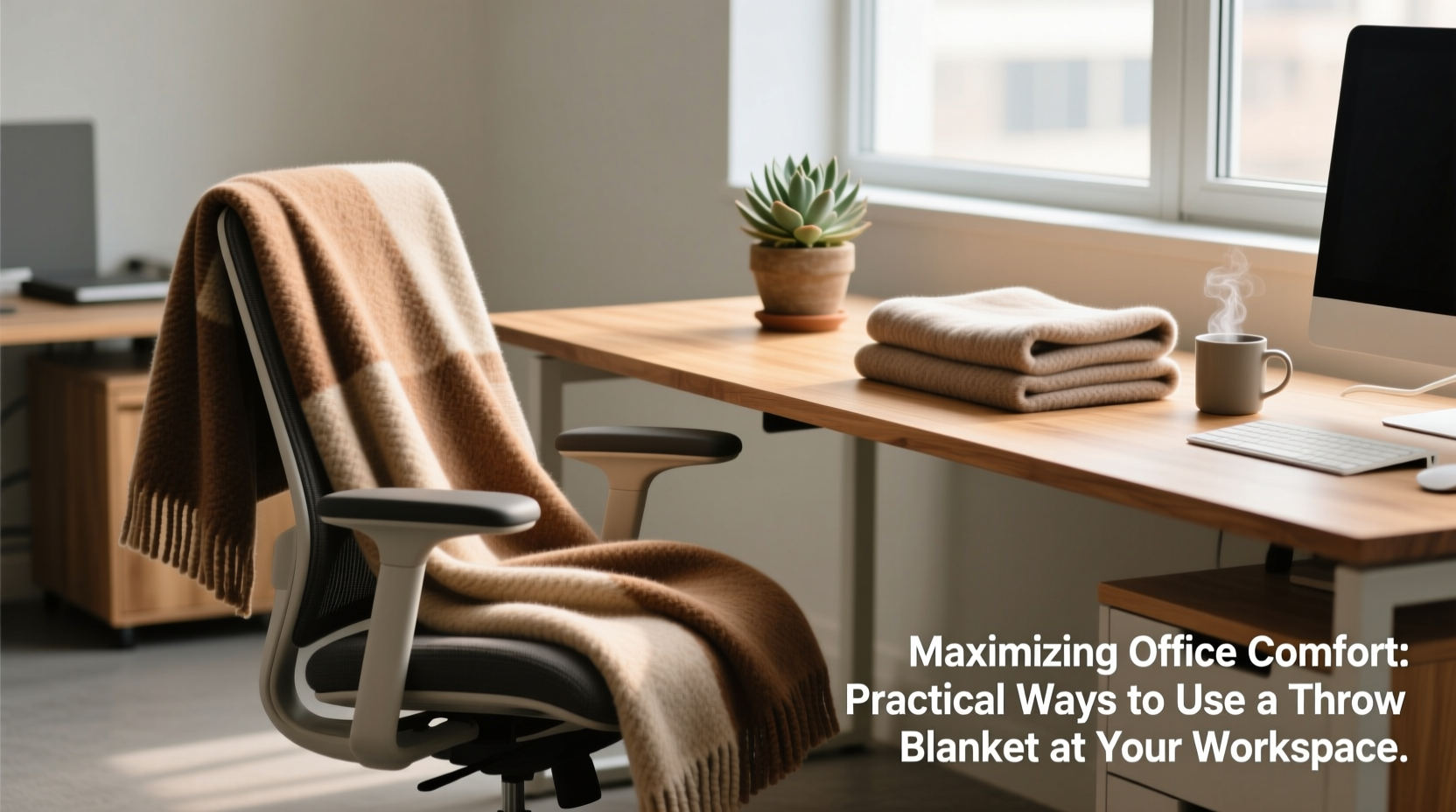
Comfort isn’t just about feeling cozy—it’s directly linked to performance. Studies show that employees in comfortable environments report higher job satisfaction, reduced stress, and improved concentration. Temperature regulation alone can influence cognitive function: being too cold causes distraction, shivering, and fatigue, while consistent mild warmth promotes alertness without drowsiness.
The challenge? Many offices maintain temperatures optimized for active movement, not sedentary desk work. Add air conditioning drafts, poorly insulated buildings, or seasonal shifts, and it’s no surprise that workers reach for sweaters, hoodies, or space heaters. A throw blanket provides a smarter, more elegant solution—one that doesn’t interfere with posture or mobility but delivers steady thermal support exactly where needed.
“Microclimate control at the workstation—like using a lightweight blanket—can reduce thermal discomfort by up to 40%, leading to fewer distractions and better task retention.” — Dr. Lena Patel, Occupational Health Researcher, Human Factors Institute
How to Use a Throw Blanket Effectively at Your Desk
A throw blanket isn’t just something to drape over a couch. At your workspace, it becomes a multi-functional tool. The key is strategic placement and material selection. Here are five practical applications:
- Lap Wrap for Lower Body Warmth: Drape the blanket across your lap to prevent leg cooling, especially under desks with open space or near HVAC vents.
- Back Support Layer: Fold the blanket and place it behind your lower back for added lumbar cushioning if your chair lacks ergonomic support.
- Armrest Cover: Use it to soften hard armrests, reducing pressure on forearms during long typing sessions.
- Neck Relaxation Drape: Loosely loop a corner around your shoulders during breaks to ease neck tension caused by screen gazing.
- Desk Mat Alternative: Place a folded throw under your wrists when using a mouse or keyboard to create a soft, non-slip surface.
Choosing the Right Blanket for Your Workspace
Not all throw blankets are created equal. To maximize both comfort and utility, consider weight, size, texture, and care requirements. Below is a comparison of common materials suited for office use:
| Material | Weight | Warmth Level | Care | Best For |
|---|---|---|---|---|
| Cotton | Light | Moderate | Machine washable | All-season use, sensitive skin |
| Fleece | Medium | High | Easy wash, may pill | Cold offices, winter months |
| Wool (Merino) | Medium | Very High | Hand wash recommended | Thermal regulation, premium feel |
| Bamboo Blend | Light-Medium | Moderate | Machine wash, eco-friendly | Hypoallergenic needs, sustainability |
| Micropolar | Light | Low-Moderate | Durable, quick-dry | Travel desks, shared workspaces |
For most office environments, a mid-weight cotton or bamboo blend offers the ideal balance: breathable enough for year-round use, soft to the touch, and easy to clean. Avoid overly bulky knits or heavy wools unless you're in a consistently cold environment.
Step-by-Step Guide: Integrating a Throw Blanket Into Your Daily Routine
Adopting a new habit requires consistency and intention. Follow this simple timeline to make your throw blanket a seamless part of your workday:
- Morning Setup (2 minutes): Unfold the blanket and drape it over the back of your chair or lay it flat across your lap before logging in.
- Mid-Morning Adjustment (30 seconds): If you feel a draft or slight chill, reposition the blanket to cover your legs fully or add a fold behind your back.
- Lunch Break Reset: Fold and store the blanket neatly during meals to keep it clean and free from crumbs.
- Afternoon Re-energize (1 minute): During a short break, wrap the blanket loosely around your shoulders to promote relaxation and reset mental fatigue.
- End-of-Day Care: Shake out dust, fold properly, and store in a drawer or on a hook to maintain freshness and appearance.
Real-World Example: How Sarah Improved Her Focus With a Simple Swap
Sarah, a data analyst working remotely in Portland, Oregon, struggled with afternoon fatigue during winter months. Despite wearing layers, she frequently felt cold from the waist down due to hardwood floors and a drafty window near her desk. She began using a medium-weight fleece throw blanket each morning, draping it over her lap and folding a corner behind her lower back for extra support.
Within a week, she noticed fewer distractions from shivering and discomfort. Her posture improved as she stopped hunching forward to stay warm. After tracking her productivity, she found her average task completion time dropped by 12%, and she reported feeling “more grounded” throughout the day. The blanket became a non-negotiable part of her routine—not just for warmth, but as a psychological cue that it was time to focus.
Common Mistakes to Avoid
Even a simple item like a throw blanket can be misused. Watch out for these pitfalls:
- Using it as a substitute for proper ergonomics: A blanket shouldn’t compensate for a poor chair or incorrect desk height.
- Leaving it unfolded overnight: This attracts dust and reduces longevity. Always store it folded or hung.
- Choosing overly decorative styles: Fringes, beads, or slippery fabrics can snag on chairs or distract during work.
- Ignoring hygiene: Skin oils, lint, and environmental debris accumulate quickly. Wash every 2–3 weeks.
Quick Checklist: Optimize Your Throw Blanket Use
Use this checklist to ensure you’re getting the most from your workspace blanket:
- ☑ Select a breathable, low-pile fabric suitable for indoor use
- ☑ Measure your chair to ensure proper drape (typically 50\" x 60\" works best)
- ☑ Position it over your lap or lower back during seated work
- ☑ Keep it clean with regular washing according to care labels
- ☑ Store it neatly when not in use to maintain professionalism
- ☑ Pair with supportive footwear or a footrest for full lower-body comfort
Frequently Asked Questions
Can I use a heated throw blanket at my desk?
Yes, but with caution. Heated throws can provide deep warmth, especially in unheated spaces, but ensure the model has auto-shutoff and low-voltage safety features. Avoid using them unattended or while sleeping at your desk.
Are throw blankets appropriate in professional office settings?
Absolutely—if used discreetly. Opt for neutral colors and minimalist designs. Drape it over the chair when not in use to maintain a tidy appearance. In shared offices, treat it like any personal item: clean, contained, and respectful of communal space.
How do I prevent my blanket from slipping off my lap?
Choose a slightly heavier weave or place a small non-slip mat underneath. Alternatively, look for blankets with textured backing or anti-slip stitching along the edges.
Final Thoughts: Small Change, Big Impact
Maximizing office comfort doesn’t require expensive upgrades or major renovations. Sometimes, the most effective solutions are the simplest. A thoughtfully chosen throw blanket can bridge the gap between physical discomfort and sustained focus, turning an average workstation into a haven of calm and efficiency. It supports both body and mind—keeping muscles relaxed, circulation steady, and attention sharp.
Whether you're working from home, in a cubicle, or rotating through hot desks, integrating a throw blanket into your daily routine is a low-cost, high-return investment in well-being. Start today: pick a quality fabric, position it with purpose, and notice the difference in how you feel—and perform.




 浙公网安备
33010002000092号
浙公网安备
33010002000092号 浙B2-20120091-4
Comments
No comments yet. Why don't you start the discussion?