
In an age where technology evolves at breakneck speed, the wristwatch has undergone a radical transformation. Once a symbol of precision engineering and timeless elegance, the watch now splits into two distinct categories: the enduring mechanical timepiece and the rapidly advancing smartwatch. While both serve to tell time—and much more—their roles as accessories diverge sharply when it comes to long-term value retention. For collectors, fashion enthusiasts, and tech adopters alike, understanding which type of watch holds value over time is essential for making informed decisions.
The question isn’t merely about functionality or style; it’s about legacy, craftsmanship, and economic staying power. A well-chosen mechanical watch can appreciate in value over decades, while even the most advanced smartwatch may become obsolete within a few years. This article explores the factors that influence longevity and value in both categories, offering a clear-eyed comparison grounded in market trends, collector behavior, and material permanence.
The Nature of Value in Watches
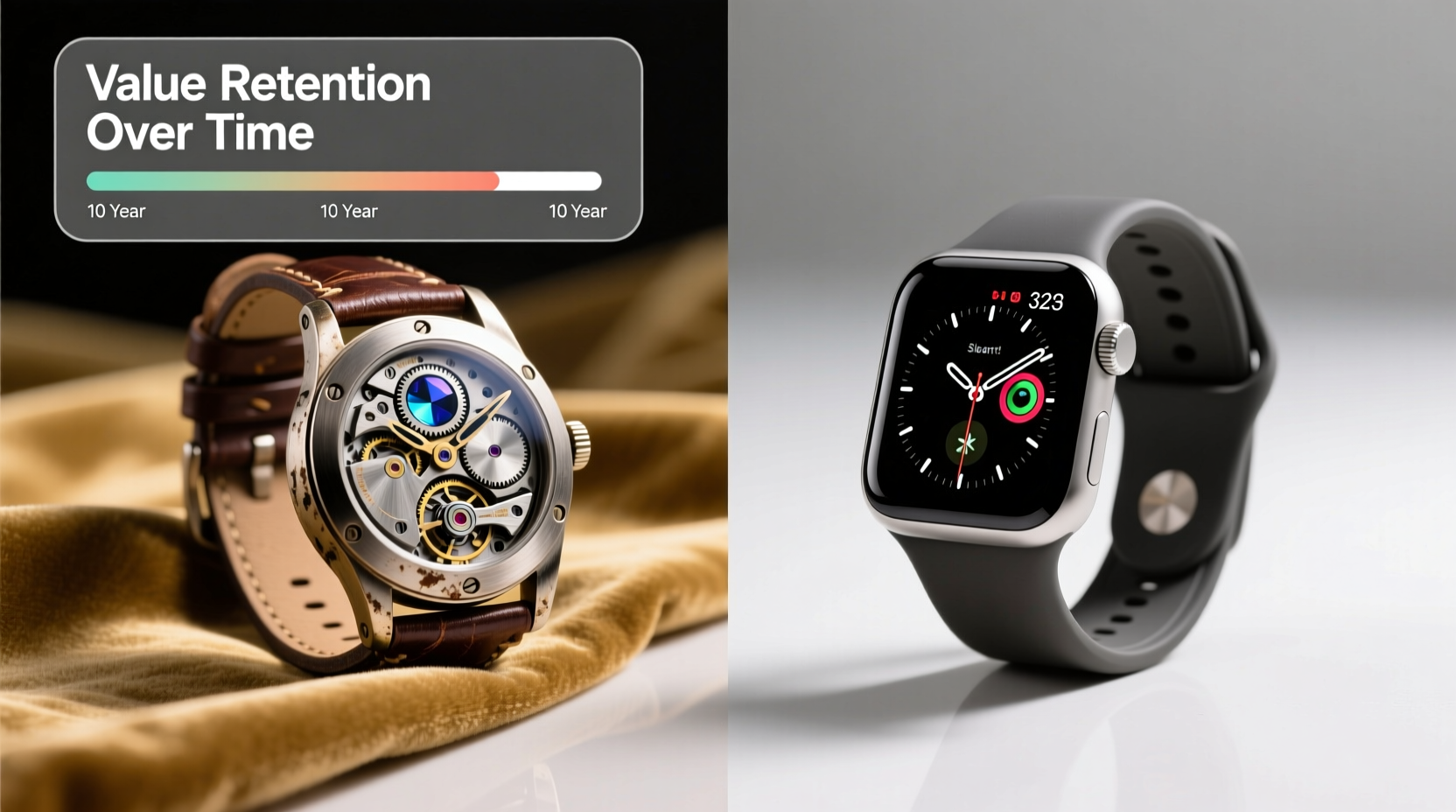
When discussing \"value,\" we must distinguish between utility value and collectible or investment value. Smartwatches excel in utility—fitness tracking, notifications, GPS, and seamless integration with smartphones—but their usefulness is tightly bound to software ecosystems and hardware lifecycles. Mechanical watches, on the other hand, offer limited practical features but deliver emotional resonance, artistry, and historical continuity.
Value in mechanical watches often grows from scarcity, brand heritage, and horological significance. Brands like Patek Philippe, Rolex, and Audemars Piguet have cultivated reputations not just for quality, but for creating heirloom objects. In contrast, smartwatches are designed within a consumer electronics framework, where newer models render older ones functionally redundant.
“Timepieces that outlive their creators are rare in any field. Mechanical watches achieve this through craftsmanship; smartwatches do so only if preserved as cultural artifacts.” — Dr. Elias Renner, Horology Historian, Geneva Institute
Longevity and Obsolescence: A Fundamental Divide
The core difference lies in obsolescence. Mechanical watches, powered by springs and gears, require no software updates, battery replacements (beyond servicing), or compatibility with external devices. A 1950s Rolex Submariner, properly maintained, still functions today and commands tens of thousands at auction. Compare that to the first Apple Watch (Series 0, 2015), which no longer receives software support and cannot pair with current iPhones beyond iOS 14.
Smartwatches face three major challenges to longevity:
- Software decay: Operating systems evolve, leaving older devices unsupported.
- Battery degradation: Lithium-ion batteries degrade over time and are often not user-replaceable.
- Hardware limitations: Sensors, processors, and connectivity standards quickly become outdated.
Even premium smartwatches like the Apple Watch Hermès or TAG Heuer Connected, which blend luxury design with tech, suffer from the same fate. After five years, they’re typically non-functional or relegated to drawer status.
Resale Market Comparison
The secondary market tells a revealing story. Platforms like Chrono24, WatchBox, and Bob's Watches specialize in pre-owned mechanical watches, where rare models often sell above retail. The Rolex Daytona “Paul Newman,” for example, once sold for $17.8 million at auction. Even modern stainless steel sports watches like the Rolex GMT-Master II or Patek Philippe Nautilus command significant premiums.
Conversely, the resale market for smartwatches is thin and declining. eBay listings for used Apple Watches show prices dropping 50–70% within two years. Refurbished units are common, but demand is driven by budget-conscious buyers, not collectors. There is no emerging culture of vintage smartwatch collecting comparable to mechanical watch connoisseurship.
| Aspect | Mechanical Watches | Smartwatches |
|---|---|---|
| Typical lifespan | 50+ years (with servicing) | 3–5 years (functional) |
| Resale value after 5 years | Often retains or exceeds original price | 10–30% of original price |
| Maintenance needs | Service every 5–10 years (~$300–$800) | Frequent charging; eventual battery failure |
| Upgrade cycle | Rarely upgraded; passed down generations | Annual or biennial upgrades |
| Collector interest | High; global auction markets | Negligible; no major collector base |
Case Study: The Rolex Submariner vs. Apple Watch Edition
Consider two luxury watches released within a decade of each other: the Rolex Submariner Date (Ref. 126610LN), introduced in 2020, and the Apple Watch Edition (titanium, 2019). Both retail around $12,000 depending on configuration and availability.
The Submariner, crafted from Oystersteel with a Cerachrom bezel, is built to last. It requires minimal maintenance and benefits from Rolex’s global service network. On the secondary market, it trades at a 20–40% premium due to high demand and controlled supply. Owners treat it as a long-term asset.
The Apple Watch Edition, while elegant and technologically advanced, runs watchOS, which dropped support for its S5 chip by 2024. Its titanium case may endure, but its functionality is crippled without updates. Resale value hovers around $300–$500, less than 5% of its original cost. Few buyers seek it for anything beyond curiosity.
This contrast illustrates how material permanence and technological dependency shape value trajectories. One is engineered to endure; the other, to be replaced.
Factors That Influence Long-Term Value Retention
Several key elements determine whether a watch maintains or increases its worth over time:
- Brand Prestige: Legacy brands with proven track records (Rolex, Omega, Jaeger LeCoultre) inspire trust and demand.
- Limited Production: Scarcity drives desirability. Many mechanical watches are produced in limited numbers.
- Handcraftsmanship: Movement finishing, engraving, and assembly by skilled artisans add irreplaceable value.
- Provenance: Ownership history, original packaging, and service records enhance resale appeal.
- Design Timelessness: Classic dials and cases avoid dating, unlike tech designs tied to era-specific aesthetics.
Smartwatches generally score poorly on all these fronts. They are mass-produced, software-dependent, and lack artisanal construction. Even collaborations with luxury brands (e.g., Louis Vuitton Tambour) fail to confer lasting value because the underlying technology limits usability.
Are There Exceptions? The Niche Appeal of Vintage Tech
While smartwatches don’t hold financial value, they may gain cultural or nostalgic significance. Early digital watches like the Casio F-91W or the original Seiko T001 (1983) are now sought after by retro-tech collectors. Similarly, future generations might preserve the first Apple Watch or Samsung Gear S3 as symbols of a transformative era.
However, this is curation, not appreciation. These items become museum pieces—not functional investments. Their value remains sentimental or historical, not monetary. Unlike a Patek Philippe that pays for a grandchild’s education, a preserved smartwatch won’t fund retirement.
Actionable Checklist: Choosing a Watch for Long-Term Value
If your goal is to acquire a timepiece that lasts and appreciates, follow this checklist:
- ✅ Prioritize mechanical movements (automatic or manual-wind).
- ✅ Choose established brands with strong secondary markets.
- ✅ Look for models with waiting lists or limited editions.
- ✅ Keep original box, papers, warranty card, and service history.
- ✅ Service every 5–7 years with authorized providers.
- ❌ Avoid smartwatches if long-term value is your primary concern.
- ❌ Don’t buy based solely on trends—focus on timeless design.
Expert Insight: What Collectors Know
“The difference between a tool and a treasure isn’t complexity—it’s endurance. A smartwatch tells you the weather. A mechanical watch tells you that human ingenuity can transcend time itself.” — Clara Montes, Watch Collector & Author of *Timeless Steel*
Montes, who owns over 60 vintage timepieces, notes that emotional attachment plays a critical role. “People form bonds with watches that survive wars, travels, and generations. You don’t get that with a device that dies when the app store changes.”
Frequently Asked Questions
Can a smartwatch ever be a good long-term investment?
No—not in the financial sense. While some early prototypes or celebrity-owned units might fetch high prices at auction (e.g., Steve Jobs’ prototype), these are outliers. Functionally, smartwatches depreciate rapidly and lose utility, making them poor candidates for investment.
Do all mechanical watches increase in value?
No. Only select models from reputable brands with strong demand appreciate. Mass-market mechanical watches from lesser-known manufacturers may retain modest value but rarely grow significantly. Research is essential before treating a watch as an asset.
What should I do with my old smartwatch?
Donate it for recycling, repurpose it as a dedicated fitness tracker (if still functional), or preserve it as a personal memento. Some tech museums accept early wearable devices, though public interest remains limited.
Conclusion: Choosing Legacy Over Convenience
The choice between a mechanical watch and a smartwatch ultimately reflects deeper values. Do you seek immediate utility and connectivity, or timeless craftsmanship and enduring legacy? As accessories, both have merit. But when it comes to holding value—financially, emotionally, historically—the mechanical watch stands unchallenged.
It transcends its function to become a statement of patience, precision, and permanence. While smartwatches mirror the fleeting nature of digital progress, mechanical watches embody the human desire to create something that lasts. For those building a wardrobe of meaningful possessions, the answer is clear: invest in mechanics, wear technology casually, and let time decide what endures.




 浙公网安备
33010002000092号
浙公网安备
33010002000092号 浙B2-20120091-4
Comments
No comments yet. Why don't you start the discussion?