
For years, memory foam has been praised for its contouring comfort and pressure relief—yet criticized just as fiercely for trapping body heat. In response, manufacturers introduced “cooling technology” into memory foam and hybrid spring models alike. But how much of it is science, and how much is marketing? As sleep temperatures become a central concern in mattress selection, it’s time to examine whether these cooling claims hold up under scrutiny—and what actually makes a mattress sleep cool.
The Heat Problem with Traditional Memory Foam
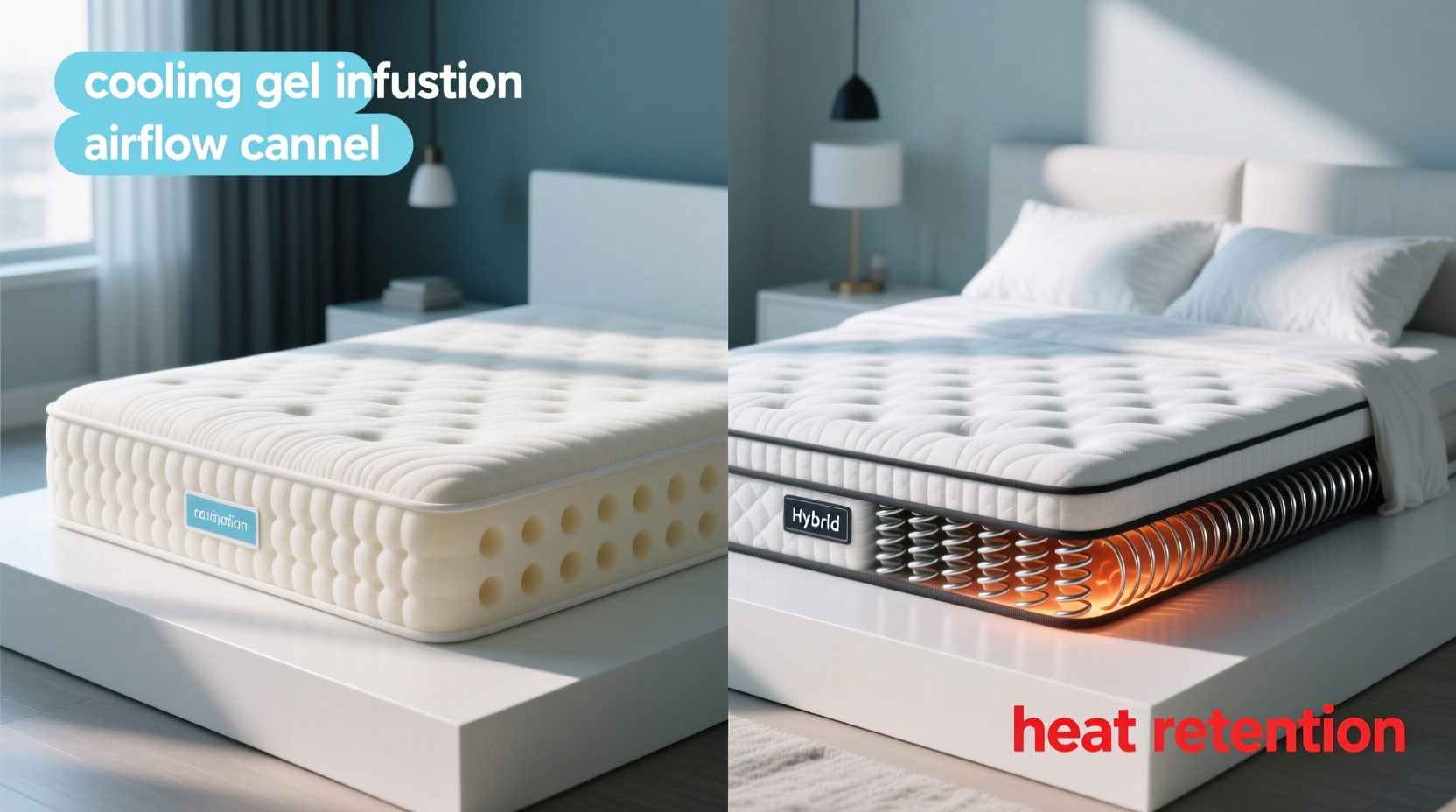
Originally developed by NASA in the 1970s, viscoelastic memory foam gained popularity in consumer mattresses during the early 2000s. Its ability to mold precisely to the body’s shape offers exceptional support and motion isolation. However, this same density that provides comfort also limits airflow. Traditional memory foam is made from polyurethane with added chemicals to increase viscosity and responsiveness. This dense cellular structure absorbs and retains body heat, leading many sleepers to wake up overheated, especially in warmer climates or during summer months.
A 2015 study published in *Sleep Medicine Reviews* found that core body temperature significantly influences sleep onset and quality. When a mattress impedes natural thermoregulation, even slightly, it can disrupt sleep cycles over time. This is where the promise of “cooling technology” enters the conversation—but not all solutions are created equal.
How Cooling Technology Works: Separating Fact from Hype
Today’s market is flooded with terms like “gel-infused,” “graphite-doped,” “phase-change material (PCM),” and “airflow channels.” While some innovations are genuinely effective, others offer marginal benefits at best. Let’s dissect the most common cooling technologies:
- Gel Infusion: Small beads or liquid gel are mixed into the foam during production. These absorb and disperse heat more efficiently than standard foam. Early versions had inconsistent dispersion, but modern formulations show measurable improvements in surface temperature.
- Copper or Graphite Infusion: Both materials are highly conductive. Copper-infused foams claim to pull heat away from the body faster, while graphite enhances thermal dissipation. Independent lab tests suggest a 10–15% improvement in heat transfer compared to traditional foam.
- Open-Cell Structure: Unlike closed-cell foam (which traps air), open-cell designs allow better airflow within the foam itself. This structural change reduces heat buildup and increases breathability. It's one of the most effective passive cooling methods.
- Phase-Change Materials (PCM): These microcapsules absorb excess heat when your body warms the surface and release it back when temperatures drop. They don’t make the mattress cold—they regulate temperature. Real-world user feedback is mixed; PCM works well in controlled environments but may degrade after several years.
- Cooling Covers: Many brands use TENCEL™, bamboo-derived rayon, or moisture-wicking polyester blends in their quilted tops. These fabrics feel cooler to the touch and wick sweat, improving perceived comfort. However, they only affect the topmost layer.
“Thermal regulation in mattresses isn't about eliminating heat—it's about managing it effectively. The best designs combine breathable materials with structural ventilation.” — Dr. Lena Patel, Sleep Biomechanics Researcher, Stanford Sleep Center
Hybrid Spring Mattresses: Built-In Breathability?
Hybrid mattresses combine innerspring coils with one or more layers of foam or latex. The coil system inherently promotes airflow, creating a natural chimney effect that allows warm air to escape. This structural advantage gives hybrids an edge over all-foam models when it comes to staying cool.
Most hybrids use pocketed coils—individually wrapped springs that minimize motion transfer while maintaining independent support. The gaps between coils allow air to circulate vertically through the core of the mattress, reducing heat accumulation. When paired with a breathable foam top layer (such as open-cell or plant-based foam), hybrids often outperform all-foam beds in side-by-side cooling tests.
That said, not all hybrids are cool-sleeping. Some budget models use dense memory foam overlays that negate the airflow benefits of the coil base. Always check the composition of the comfort layers—not just the presence of coils.
Comparing Thermal Performance: Memory Foam vs Hybrid
| Feature | Traditional Memory Foam | Cooling-Enhanced Memory Foam | Hybrid Spring |
|---|---|---|---|
| Heat Retention | High | Moderate | Low to Moderate |
| Airflow Through Core | Poor | Poor to Fair | Good to Excellent |
| Surface Cooling Feel | Warm | Cool (with advanced cover) | Cool to Neutral |
| Durability of Cooling Features | Gel may degrade in 3–5 years | Varies by formulation | Consistent (passive design) |
| Best For | Side sleepers needing pressure relief | Hot sleepers who love foam feel | Back/stomach sleepers, couples, hot sleepers |
Real-World Test: One Hot Sleeper’s Experience
Sarah K., a 38-year-old nurse from Phoenix, AZ, struggled with night sweats on her all-foam memory mattress for two years. Despite using fans and lightweight bedding, she consistently woke up drenched around 3 a.m. After researching alternatives, she switched to a hybrid model with individually wrapped coils, a 2-inch open-cell foam comfort layer, and a TENCEL™ cover.
Within the first week, Sarah noticed a difference. “It wasn’t instantly cold like sleeping on a slab of marble,” she said, “but I didn’t feel that slow build-up of heat anymore. I stayed dry through the night, even during monsoon season.” She attributes the improvement primarily to airflow through the coil system rather than any single ‘cooling’ feature.
Her experience reflects broader trends in consumer reviews: while infused foams help, structural ventilation remains the most reliable method for long-term temperature control.
Choosing the Right Mattress: A Step-by-Step Guide
Selecting a mattress based on cooling performance requires more than trusting marketing labels. Follow this sequence to make an informed decision:
- Assess Your Sleep Style: Side sleepers often benefit from pressure-relieving foam, but should prioritize open-cell or hybrid designs. Back and stomach sleepers typically run hotter and do better on breathable hybrids.
- Check Layer Composition: Look beyond “cooling foam” claims. Ask: Is the foam open-cell? What percentage of gel or copper is used? How thick is the comfort layer?
- Evaluate the Support Core: All-foam beds rely entirely on chemical and structural modifications for breathability. Hybrids with coils offer inherent airflow. Latex hybrids are even more breathable but come at a premium.
- Read Third-Party Reviews: Sites like Sleep Foundation, Consumer Reports, and Reddit threads often include thermal testing data or user experiences with heat retention.
- Test the Return Policy: Many online brands offer 100-night trials. Use them. Sleep hot? Wait until summer to test if the mattress truly sleeps cool.
Common Misconceptions About Cooling Tech
Despite advances, several myths persist:
- Myth: Gel foam stays cool forever. Reality: Gel beads can lose effectiveness over time, especially in high-humidity environments.
- Myth: All “cooling covers” make a big difference. Reality: While they improve initial feel, they don’t address deep heat buildup in the core.
- Myth: More cooling features = cooler sleep. Reality: Over-engineering can compromise support. A simple, breathable design often outperforms heavily marketed “climate-control” systems.
What Experts Recommend for Hot Sleepers
Sleep specialists increasingly advise patients with insomnia or night sweats to consider mattress thermal properties as part of their overall sleep hygiene. According to Dr. Rajiv Patel, a board-certified sleep physician:
“We now recognize that environmental factors—including bedding—are legitimate contributors to sleep disorders. For patients with unexplained awakenings, I routinely ask about their mattress type. Switching from solid memory foam to a breathable hybrid has resolved symptoms in several cases.” — Dr. Rajiv Patel, MD, FCCP
Experts generally recommend hybrids for individuals who:
- Suffer from night sweats or hormonal fluctuations (e.g., menopause)
- Live in humid or hot climates
- Use electric blankets or heated throws regularly
- Are overweight (higher body mass generates more heat)
FAQ
Do cooling technologies really work, or is it just marketing?
Some do—especially open-cell foam, coil-based ventilation, and moisture-wicking covers. Gel and PCM offer moderate, short-term benefits. The most effective cooling is passive (via design) rather than reactive (via additives).
Can I make my memory foam mattress sleep cooler?
Yes. Use a breathable cotton or bamboo sheet set, add a slatted bed base for under-mattress airflow, and avoid placing the mattress directly on a solid platform. A cooling mattress topper with gel or charcoal infusion may also help, though results vary.
Are hybrid mattresses worth the extra cost for cooling?
If you’re a hot sleeper, yes. The upfront cost is higher, but the long-term comfort and durability often justify the investment. Hybrids typically last longer than all-foam beds and maintain consistent airflow throughout their lifespan.
Final Checklist Before Buying
Before committing to a new mattress, verify these points:
- ✅ Does the product specify open-cell foam or airflow channels?
- ✅ Are cooling claims backed by third-party testing (e.g., CertiPUR-US®, Intertek)?
- ✅ Is the coil count and gauge disclosed for hybrids?
- ✅ Does the brand offer a sleep trial of at least 90 nights?
- ✅ Can you return it free of charge if it sleeps too hot?
Conclusion: Cool Sleep Starts With Smart Design
The question isn’t whether cooling technology exists—it’s whether it delivers lasting, meaningful results. While advancements like gel infusion and PCM have improved memory foam’s thermal profile, they still operate within the limitations of a dense, heat-retentive material. Hybrid spring mattresses, by contrast, leverage physics: open structures breathe naturally, requiring no special additives to stay cool.
Ultimately, the most reliable cooling isn’t found in a buzzword—it’s built into the mattress’s architecture. If you prioritize temperature regulation, lean toward hybrids with breathable foams and strong airflow. Read beyond the label. Test thoroughly. And remember: no amount of “cooling tech” can override poor ventilation or unsuitable materials.




 浙公网安备
33010002000092号
浙公网安备
33010002000092号 浙B2-20120091-4
Comments
No comments yet. Why don't you start the discussion?