
For side sleepers, choosing the right mattress isn't just about comfort—it's a critical decision that affects spinal alignment, joint health, and long-term sleep quality. The hips and shoulders bear most of the body’s weight when sleeping on one’s side, making pressure relief and targeted support essential. Two popular options dominate the market: memory foam and hybrid mattresses. While both claim to deliver restful sleep, they differ significantly in structure, responsiveness, and performance for side sleepers. Understanding these differences helps make an informed decision based on body type, sleeping habits, and personal preferences.
How Side Sleeping Impacts Mattress Needs
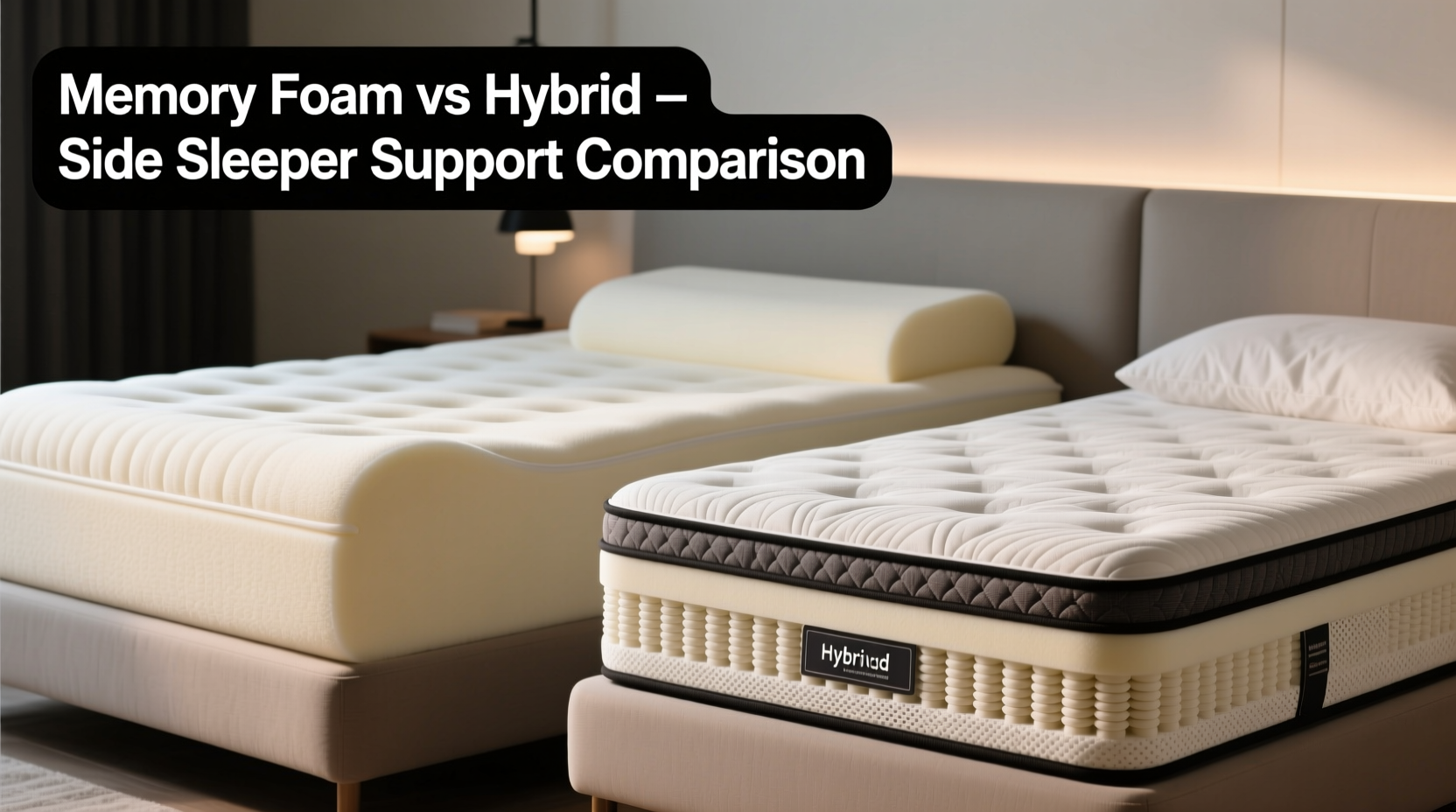
Side sleeping is the most common sleep position, used by an estimated 60–70% of adults. This posture places concentrated pressure on the shoulders and hips, requiring a mattress that contours closely to the body while maintaining proper spinal alignment. If the mattress is too firm, it fails to cushion bony areas, leading to discomfort and frequent tossing. If too soft, the spine may sink out of alignment, causing back pain over time.
The ideal mattress for side sleepers balances three key elements:
- Pressure Relief: Absorbs impact at shoulder and hip joints.
- Contouring Support: Cradles the natural curves of the body.
- Spinal Alignment: Keeps the neck, back, and pelvis in a neutral line.
These requirements set the foundation for evaluating memory foam and hybrid models.
Memory Foam Mattresses: Deep Contouring and Pressure Relief
Memory foam mattresses are known for their ability to conform precisely to the sleeper’s shape. Originally developed by NASA, viscoelastic foam responds to body heat and weight, softening in contact areas to reduce pressure points. For side sleepers, this means the material molds around the shoulders and hips, allowing them to sink slightly while supporting the midsection.
High-density memory foam provides consistent support, especially beneficial for individuals with chronic pain or arthritis. Many modern memory foam models also incorporate gel infusions or open-cell technology to improve breathability, addressing the traditional drawback of heat retention.
However, not all memory foam is created equal. Lower-density foams may degrade faster and lack the resilience needed for long-term support. Additionally, some users report a \"stuck\" feeling when moving, which can be problematic for those who shift positions frequently during the night.
Hybrid Mattresses: Balanced Support with Responsive Comfort
Hybrid mattresses combine the contouring benefits of memory foam with the structural support of individually wrapped coils. Typically, they feature a top layer of memory or latex foam (1–3 inches) over a base of pocketed springs. This design aims to deliver both cushioning and bounce, offering a more dynamic sleep surface.
For side sleepers, hybrids provide several advantages:
- Better Edge Support: Coils reinforce the perimeter, reducing roll-off risk.
- Improved Airflow: Gaps between coils enhance ventilation, keeping sleepers cooler.
- Faster Response Time: Springs allow easier movement and repositioning.
The combination of foam and coils allows the mattress to cushion pressure points while preventing excessive sinkage. This makes hybrids particularly effective for combination sleepers—those who start on their side but shift to back or stomach positions during the night.
Still, hybrids vary widely in quality. A thin foam layer over stiff coils may not offer enough give for side sleepers, especially lighter individuals (under 130 lbs). Conversely, heavier side sleepers (over 230 lbs) benefit from the reinforced support that coils provide, helping prevent bottoming out.
Comparative Analysis: Memory Foam vs Hybrid for Side Sleepers
| Feature | Memory Foam | Hybrid |
|---|---|---|
| Pressure Relief | Excellent – deep contouring reduces joint stress | Good to excellent – depends on foam thickness and coil system |
| Spinal Alignment | Very good – conforms precisely to body curves | Excellent – balanced support from coils and foam |
| Cooling Performance | Fair – prone to heat retention unless gel-infused | Good – coils promote airflow and reduce heat buildup |
| Motion Isolation | Excellent – minimal disturbance transfer | Good – pockets reduce motion, but not as isolated as foam |
| Durability | Good – high-density lasts 7–10 years | Very good – coils add longevity, typically 8–10+ years |
| Best For | Light to average-weight side sleepers seeking deep cushioning | Heavier side sleepers or combo sleepers needing responsive support |
“Side sleepers need a mattress that cushions the hips and shoulders without letting the spine sag. Hybrids often strike the best balance, especially for those over 180 pounds.” — Dr. Lena Patel, Chiropractor & Sleep Posture Specialist
Real-World Example: Choosing the Right Mattress Based on Body Type
Consider Sarah, a 34-year-old office worker who sleeps primarily on her side and suffers from occasional lower back pain. At 115 lbs, she initially purchased a firm hybrid mattress recommended for support. However, she found her shoulder sank too deeply into the thin foam layer while her hip didn’t get enough cushioning, leading to numbness and disrupted sleep.
After consulting a sleep therapist, she switched to a medium-soft all-foam mattress with 4-inch gel-infused memory foam. The deeper contouring allowed her hips and shoulders to align naturally, relieving pressure. Her back pain diminished within two weeks, and she reported fewer nighttime awakenings.
In contrast, Mark, a 260-lb construction worker and side sleeper, tried a budget memory foam mattress but felt he was “bottoming out” by the third month. His hips sank too far, misaligning his spine. He upgraded to a luxury hybrid with a 3-inch memory foam top and dual-coil support system. The added lift from the coils kept his pelvis level with his spine, and the thicker foam still provided shoulder relief. His morning stiffness disappeared.
This illustrates a crucial point: there is no universal solution. Body weight, temperature sensitivity, and existing pain conditions must inform the choice.
Actionable Checklist: How to Choose the Best Mattress for Side Sleeping
Use this checklist before purchasing to ensure you select the right model:
- ✅ Determine your weight category: under 130 lbs, 130–230 lbs, or over 230 lbs.
- ✅ Prioritize a medium to medium-soft firmness (between 4–6.5 on a 10-point scale).
- ✅ Ensure the comfort layer is at least 2–3 inches of high-density memory foam.
- ✅ Test for spinal alignment: when lying on your side, have someone check if your spine forms a straight line from ear to hip.
- ✅ Evaluate cooling features—look for gel infusion, copper particles, or breathable covers.
- ✅ Check trial period and return policy—aim for at least 100 nights.
- ✅ Read verified reviews focusing on side-sleeper experiences.
Step-by-Step Guide to Evaluating Mattress Options
Follow this timeline to confidently choose between memory foam and hybrid:
- Week 1: Assess Your Sleep Habits
Track your primary sleep position, frequency of pain, and temperature issues. Note any partner disturbances. - Week 2: Research Models by Weight and Firmness
Narrow down options based on your body weight. Lighter sleepers lean toward memory foam; heavier ones consider hybrids. - Week 3: Compare Key Features
Evaluate foam density, coil count (for hybrids), cooling tech, and edge support. Eliminate models with poor motion isolation if sharing the bed. - Week 4: Utilize Trial Periods
Order one memory foam and one hybrid (if possible) from brands with free returns. Test each for at least 3–4 nights. - Week 5: Make a Decision
Choose the mattress that provides the best combination of comfort, support, and uninterrupted sleep. Return the other.
Frequently Asked Questions
Can a hybrid mattress be too firm for side sleepers?
Yes. Some hybrids prioritize support over cushioning, featuring stiff coils and thin foam layers. These can create pressure on the shoulders and hips. Opt for hybrids labeled “plush” or “medium-soft,” with at least 2 inches of quality memory foam on top.
Do memory foam mattresses lose support over time?
Lower-density foams (below 3 lb/ft³) tend to soften and develop body impressions within 2–3 years. High-density memory foam (4–5 lb/ft³) maintains integrity longer, typically lasting 7–10 years with proper care.
Are hybrids worth the extra cost for side sleepers?
If you weigh over 180 lbs, sleep hot, or move frequently at night, yes. The added ventilation, responsiveness, and durability often justify the higher price. For lighter side sleepers focused on pressure relief, premium memory foam may offer comparable benefits at a lower cost.
Final Recommendation and Conclusion
When comparing memory foam and hybrid mattresses for side sleepers, the answer depends on individual needs. Memory foam excels in pressure relief and motion isolation, making it ideal for lightweight to average-weight individuals seeking deep contouring. Its ability to cradle the body precisely helps maintain spinal alignment and reduce joint pain.
Hybrid mattresses, however, offer a more balanced solution. They combine the cushioning of foam with the structural integrity of coils, delivering superior support for heavier sleepers and those who value breathability and ease of movement. The enhanced edge support and longer lifespan further strengthen their appeal.
Ultimately, the best choice aligns with your body type, sleep habits, and comfort priorities. Don’t assume one type is universally better—test both if possible. Invest time in research, use trial periods wisely, and prioritize long-term health over short-term savings.




 浙公网安备
33010002000092号
浙公网安备
33010002000092号 浙B2-20120091-4
Comments
No comments yet. Why don't you start the discussion?