
For many people, a good night’s sleep begins with the right pillow. But when you tend to overheat during the night, the choice becomes more than just about comfort—it’s about temperature regulation. Two popular options dominate the market: memory foam and down alternative pillows. While both offer distinct advantages in support and softness, their performance in keeping you cool can vary significantly. Understanding how each material responds to body heat, airflow, and moisture is essential for anyone who sleeps hot or lives in a warm climate.
This article dives deep into the thermal properties of memory foam and down alternative pillows, comparing their construction, breathability, durability, and real-world cooling performance. Whether you're a side sleeper needing firm support or someone who craves a fluffy, cloud-like feel, you'll gain clear insights to help you make an informed decision.
How Pillow Materials Affect Sleep Temperature
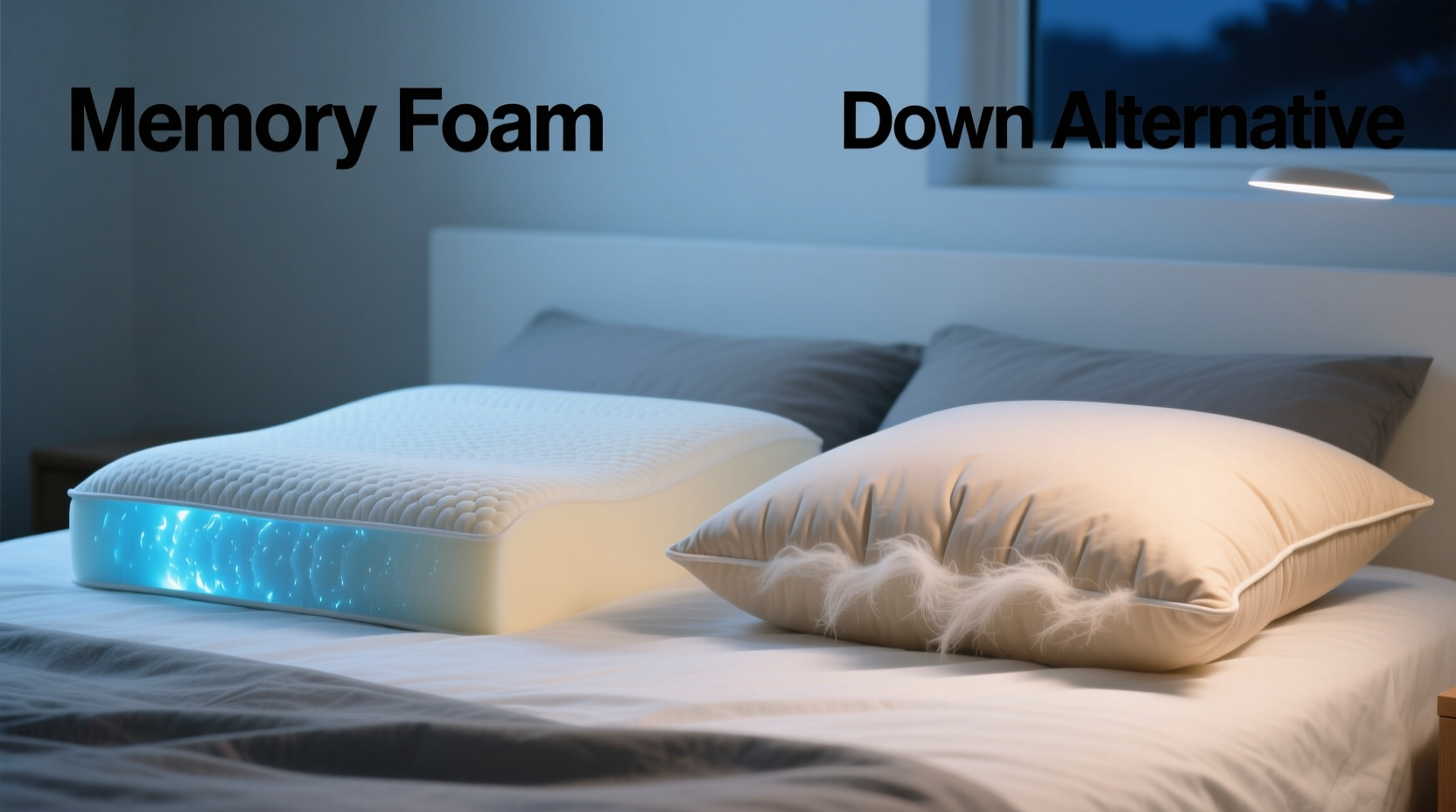
The surface temperature of your pillow plays a surprisingly large role in overall sleep quality. The human head releases a significant amount of heat—up to 40% of total body heat loss occurs through the head and neck area. When a pillow traps that heat instead of allowing it to dissipate, it can raise your core temperature, disrupt REM cycles, and lead to frequent awakenings.
Pillow materials differ dramatically in their ability to manage this heat. Some are inherently insulating, while others promote airflow and wick moisture. The key factors influencing a pillow’s cooling performance include:
- Density: Higher density materials like traditional memory foam often retain more heat due to reduced air circulation.
- Breathability: Open-cell structures or loosely filled fibers allow air to move freely, reducing heat buildup.
- Moisture-wicking: Fabrics and fillings that draw sweat away from the skin help maintain a dry, cool sleeping surface.
- Thermal conductivity: How well a material transfers heat away from the body (e.g., gel-infused foams conduct heat better than standard foam).
These characteristics directly influence whether a pillow will contribute to overheating—or help keep you comfortable all night.
Memory Foam Pillows: Supportive but Heat-Retentive?
Memory foam has long been praised for its contouring support, especially for side and back sleepers. Originally developed by NASA, viscoelastic foam molds precisely to the shape of your head and neck, helping maintain spinal alignment and reduce pressure points.
However, traditional memory foam has a well-known drawback: it tends to trap heat. Because of its dense, closed-cell structure, airflow is limited, and body heat gets absorbed rather than released. This can create a “warm pocket” effect, where the pillow gradually heats up as the night progresses.
Manufacturers have responded with several innovations designed to improve cooling:
- Gel-infused memory foam: Tiny gel beads are embedded in the foam to absorb and disperse heat.
- Open-cell technology: Alters the internal structure to allow better air circulation.
- Phase-change materials (PCMs): These advanced coatings absorb excess heat when temperatures rise and release it when they drop.
- Perforated foam cores: Strategically placed holes increase ventilation throughout the pillow.
Despite these improvements, even the most advanced cooling memory foam pillows generally don’t match the breathability of natural or synthetic down alternatives. They may stay cooler than older models, but they still rely on engineered solutions rather than inherent airflow.
“While modern memory foam has made strides in breathability, its fundamental chemistry makes it slower to release heat compared to fibrous fills.” — Dr. Lena Peterson, Sleep Research Scientist at the National Sleep Foundation
Down Alternative Pillows: Lightweight and Naturally Breathable
Down alternative pillows are typically filled with polyester-based microfibers designed to mimic the softness and loft of real goose down—without the allergens or animal products. Unlike dense foam, these fibers are lightweight and loosely packed, creating natural air channels that facilitate heat dissipation.
The loose fill allows warm air to escape and cooler air to circulate, making down alternative pillows naturally more breathable. Many are also encased in cotton or bamboo-derived covers, which are moisture-wicking and further enhance cooling.
Because they don’t conform tightly to the head, down alternative pillows offer less pressure-point relief than memory foam, but they excel in temperature regulation. Sleepers who toss and turn frequently often appreciate the fluffiness and ease of reshaping, which helps maintain airflow throughout the night.
Some high-end models now use hollow-core fibers that trap less heat and improve ventilation. Others incorporate cooling technologies like TENCEL™ fabric covers or antimicrobial treatments that prevent odor buildup without compromising breathability.
One common concern with down alternatives is flatting over time. However, regular fluffing and proper care can extend their loft and cooling performance for years.
Real Example: Sarah’s Switch from Memory Foam to Down Alternative
Sarah, a 38-year-old nurse working night shifts, struggled with night sweats and disrupted sleep. She initially used a premium gel-infused memory foam pillow, believing it would solve her overheating issues. While she appreciated the neck support, she found herself waking up with a damp forehead and flipping the pillow repeatedly to find a cool spot.
After switching to a down alternative pillow with a bamboo cover, she noticed a dramatic difference within two nights. “It feels lighter, almost airy,” she said. “I don’t wake up feeling like my head is in a sauna anymore. I still get good support because I fluff it before bed, and it stays cool the whole night.”
Her experience reflects a common trend among hot sleepers: even advanced memory foam often falls short in sustained cooling compared to well-designed down alternatives.
Comparative Analysis: Cooling Performance at a Glance
| Feature | Memory Foam Pillow | Down Alternative Pillow |
|---|---|---|
| Inherent Breathability | Low (dense structure) | High (loose fiber fill) |
| Natural Heat Dissipation | Poor without enhancements | Good to excellent |
| Motion Isolation / Conformity | Excellent (molds to head) | Fair (less contouring) |
| Cooling Technologies Required? | Yes (gel, perforations, etc.) | No (naturally breathable) |
| Allergy-Friendly Options | Yes | Yes (hypoallergenic fills) |
| Durability (Cooling Performance Over Time) | Declines if gel degrades or pores clog | Stable if properly maintained |
| Best For | Side/back sleepers needing support | Hot sleepers, combination sleepers, eco-conscious buyers |
The table highlights a critical distinction: memory foam requires technological intervention to cool effectively, whereas down alternative pillows leverage natural design principles. For those prioritizing temperature control above all else, the latter often proves superior.
Choosing the Right Pillow: A Step-by-Step Guide
Selecting a pillow isn’t just about material—it’s about matching your sleep habits, body type, and environment. Follow this step-by-step process to find the coolest, most supportive option for your needs:
- Assess Your Sleeping Position: Side sleepers typically need firmer support, which memory foam provides. Back and stomach sleepers may prefer the softer, adjustable loft of down alternatives.
- Evaluate Your Thermal Sensitivity: Do you wake up sweating? Do you avoid heavy blankets even in winter? If yes, prioritize breathability over deep contouring.
- Check the Cover Material: Look for natural or moisture-wicking fabrics like cotton, bamboo, TENCEL™, or eucalyptus. Avoid synthetic blends that trap heat.
- Read Beyond Marketing Claims: Terms like “cooling” or “temperature-regulating” are often vague. Look for specific features: open-cell foam, gel infusion, ventilated cores, or hollow fibers.
- Consider Maintenance: Down alternative pillows can usually be machine washed, helping preserve freshness and airflow. Memory foam pillows are often spot-clean only, which may affect long-term hygiene and cooling.
- Test Before Committing: Many brands offer sleep trials. Take advantage of them—your perception of “cool” matters more than lab tests.
Frequently Asked Questions
Can memory foam pillows be cooled effectively?
Yes, but only with specific design features. Gel-infused, open-cell, or perforated memory foam pillows perform significantly better than traditional versions. However, they still won’t breathe as freely as down alternative or fiber-filled pillows. For maximum cooling, pair such a pillow with a moisture-wicking cover and ensure your bedroom is well-ventilated.
Are down alternative pillows durable enough for long-term use?
Modern down alternative pillows can last 2–3 years with proper care. High-quality models use resilient, siliconized polyester fibers that resist clumping and flattening. Regular fluffing and occasional washing (per manufacturer instructions) help maintain loft and airflow. While they may not offer the decade-long lifespan of some memory foams, their consistent cooling performance often makes them worth replacing more frequently.
Do cooling pillows really make a difference?
Yes—especially for individuals who sleep hot. Studies show that even a slight reduction in head and neck temperature can improve sleep onset and reduce nighttime awakenings. The best cooling pillows combine breathable materials, moisture management, and airflow design to create a microclimate that supports restful sleep. Personal experience varies, so individual testing remains crucial.
Final Recommendations and Action Plan
If your primary goal is staying cool at night, down alternative pillows generally outperform memory foam—especially standard or older-generation models. Their natural breathability, lightweight construction, and compatibility with cooling fabrics make them ideal for hot sleepers, summer months, or warmer climates.
That said, memory foam shouldn’t be ruled out entirely. If you require strong neck support due to pain or alignment issues, consider a high-performance cooling model with gel infusion, open-cell structure, and a ventilated design. Pair it with a bamboo or TENCEL™ cover to enhance airflow.
Ultimately, the best pillow balances cooling with personal comfort preferences. Use the checklist below to guide your next purchase:
- Identify your sleep position and support needs
- Prioritize breathable fill (down alternative) or advanced cooling tech (memory foam)
- Choose a natural, moisture-wicking pillowcase
- Avoid overly dense or non-ventilated designs
- Select a brand offering a sleep trial (30+ days)
- Plan for regular maintenance (fluffing, cleaning)
“The ideal pillow doesn’t just support your spine—it supports your sleep environment. For hot sleepers, breathability isn’t a luxury; it’s a necessity.” — Dr. Marcus Tran, Clinical Sleep Specialist
Take Control of Your Sleep Climate Today
Your pillow is more than just a comfort item—it’s a critical component of your sleep ecosystem. By choosing a pillow that actively works to keep you cool, you’re investing in deeper, more restorative rest. Whether you lean toward the plush loft of a down alternative or the structured support of advanced memory foam, make breathability a non-negotiable factor.
Start tonight: evaluate your current pillow’s temperature performance. Does it feel warm by midnight? Does it flatten easily? Use the insights and checklist in this article to explore better options. Your future self—well-rested, cool, and refreshed—will thank you.




 浙公网安备
33010002000092号
浙公网安备
33010002000092号 浙B2-20120091-4
Comments
No comments yet. Why don't you start the discussion?