
Side sleepers make up the largest group of adults when it comes to preferred sleeping positions. Their bodies require a delicate balance between cushioning and support—especially at the shoulders and hips, where pressure builds most. Memory foam and hybrid mattresses are two of the most popular options on the market today, each offering distinct advantages. But a common concern among side sleepers is whether the “sink-in” sensation of memory foam compromises spinal alignment or leads to long-term back issues. This article dives deep into the mechanics of both mattress types, evaluates how they affect posture and comfort, and helps you determine which option truly supports a healthy back.
How Side Sleeping Affects Spinal Alignment
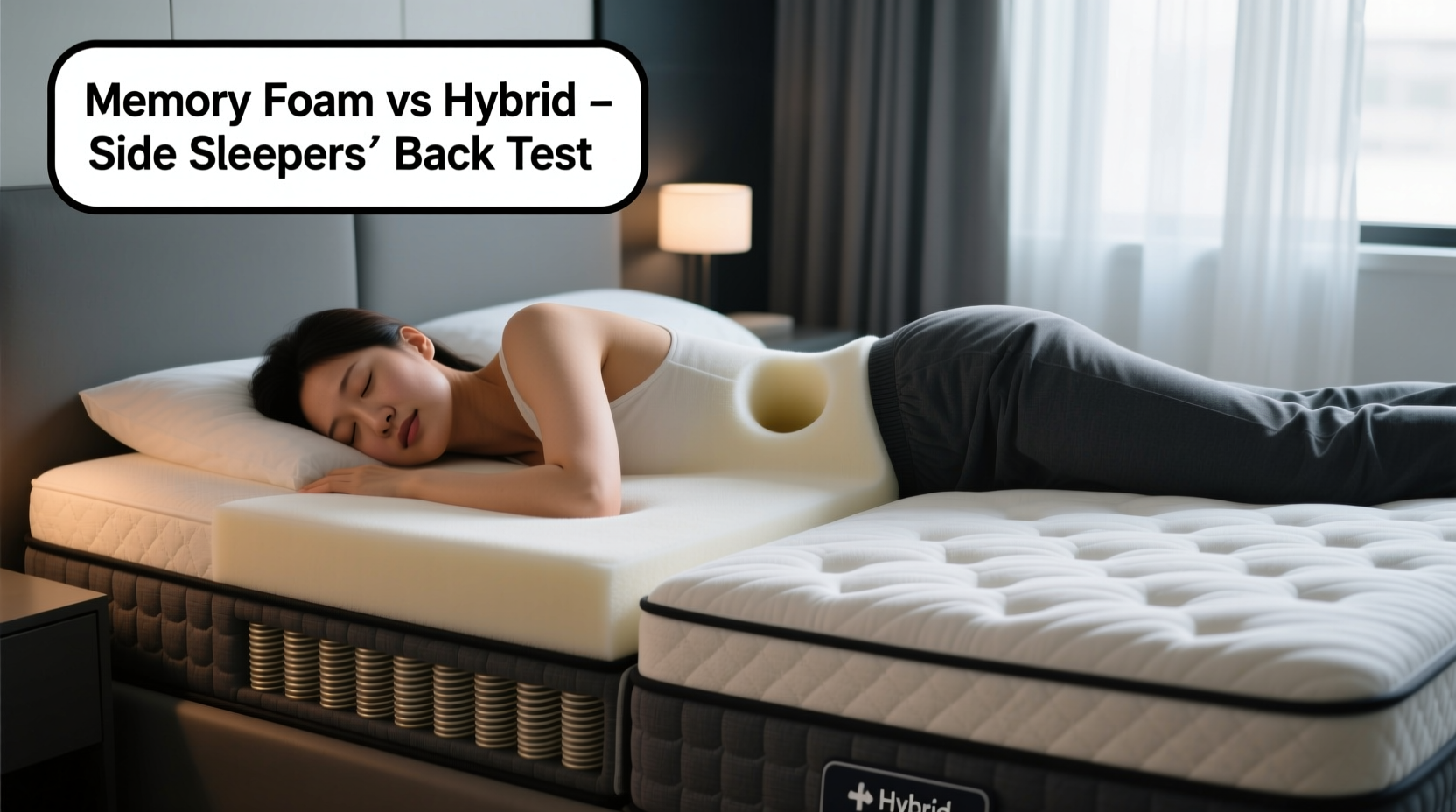
When you sleep on your side, your spine should remain in a neutral position—essentially mimicking the natural S-curve it maintains when standing. The challenge lies in bridging the gap between the shoulder and hip without letting the midsection collapse or the spine twist. If the mattress is too firm, the shoulder and hip bear excessive pressure, leading to discomfort and restricted circulation. If it’s too soft, the body sinks too deeply, misaligning the spine and straining lower back muscles.
The ideal mattress for side sleepers provides targeted contouring at pressure points while maintaining core support. This is where the design differences between memory foam and hybrid models become critical.
“Proper spinal alignment during sleep reduces strain on joints and muscles, which can significantly improve pain symptoms in chronic back sufferers.” — Dr. Lena Patel, Sleep Medicine Specialist
Memory Foam: The Contouring Conundrum
Traditional memory foam mattresses are known for their signature “hug” — a slow-response material that molds precisely to the shape of your body. This deep conforming can be a double-edged sword for side sleepers.
On one hand, high-density memory foam excels at distributing pressure. It cushions the shoulder and hip, reducing painful pressure points that often lead to tossing and turning. For people with joint pain or arthritis, this relief can be transformative.
On the other hand, some memory foam models allow excessive sinking, especially if they lack supportive base layers. When the hips drop too far below the shoulders, the spine tilts laterally, creating an unnatural curve. Over time, this misalignment may contribute to lower back stiffness or soreness upon waking.
Additionally, older or low-density foams tend to retain heat and degrade faster, forming permanent body impressions. These factors can further compromise support and hygiene over time.
Hybrid Mattresses: Balancing Support and Sink
Hybrid mattresses combine pocketed coils with one or more layers of foam (often including memory foam). This construction offers a more balanced feel: the coils provide responsive support and airflow, while the foam layers deliver pressure relief.
For side sleepers, hybrids often strike a better equilibrium. The individually wrapped springs compress independently, allowing the mattress to adapt to body contours without the deep, slow sink associated with all-foam models. This means the hips settle comfortably but not excessively, helping maintain a straighter spine from neck to pelvis.
Another advantage is edge support. Many hybrids reinforce the perimeter with denser coils or foam, preventing roll-off and making it easier to get in and out of bed—a benefit frequently overlooked by side sleepers who move toward the edge during the night.
Ventilation is also superior in hybrids. Coils promote airflow, reducing heat retention that plagues many memory foam beds. Cooler sleep can enhance recovery and reduce inflammation, particularly beneficial for those with chronic back conditions.
Comparing Sink-In: Is It Harmful?
The real issue isn’t sink-in itself—it’s *how* and *where* the body sinks. A mattress that cradles the shoulders and hips slightly is helpful; one that lets the entire torso collapse is problematic.
Memory foam’s slow response can create a sensation of being “stuck,” especially for heavier individuals or those with mobility concerns. While the material conforms closely, it may resist repositioning, forcing the sleeper to exert effort when shifting. In contrast, hybrid models typically offer quicker responsiveness, allowing smoother movement throughout the night.
The key metric is spinal alignment. If your spine remains level when lying on your side—verified by taking a photo or using a mirror setup—the sink-in effect is working in your favor. If your waist sags or your neck tilts downward, the mattress is likely too soft or poorly structured.
“The best mattress doesn’t eliminate movement—it supports alignment regardless of position changes.” — Dr. Marcus Tran, Chiropractic Advisor
Detailed Comparison: Memory Foam vs Hybrid for Side Sleepers
| Feature | Memory Foam | Hybrid |
|---|---|---|
| Pressure Relief | Excellent – conforms closely to shoulder and hip | Very Good – balanced with coil give |
| Spinal Support | Good (if medium-soft to medium firm) | Excellent – stable base prevents excessive sink |
| Motion Isolation | Excellent – minimal transfer | Good – coils may transmit slight movement |
| Cooling | Fair – prone to heat retention | Very Good – enhanced airflow through coils |
| Responsiveness | Fair – slow to rebound | Excellent – quick adjustment to movement |
| Lifespan | 6–8 years (varies with density) | 7–10 years (with quality coils) |
| Ideal For | Lighter sleepers, pain sufferers, motion sensitivity | Heavier individuals, hot sleepers, combo sleepers |
Real-World Example: Sarah’s Transition from Foam to Hybrid
Sarah, a 38-year-old nurse and dedicated side sleeper, had been using a budget memory foam mattress for five years. While she initially loved the soft embrace, she began waking up with lower back tightness and difficulty getting out of bed. Her shoulders felt cradled, but her hips sank so deeply that her spine curved noticeably.
After consulting a physical therapist, she switched to a medium-firm hybrid with zoned support and individually wrapped coils. Within two weeks, her morning stiffness diminished. She reported better sleep continuity and no longer needed to prop herself with pillows to feel aligned. The hybrid allowed enough give at the shoulders while keeping her hips level with her spine.
Her experience illustrates a common pattern: early comfort from deep sink-in can mask long-term alignment issues. Adjusting the support structure made a measurable difference in her daily well-being.
Choosing the Right Firmness and Structure
Firmness is subjective, but for side sleepers, a medium to medium-soft rating (between 4 and 6 on a 10-point scale) generally works best. However, weight plays a crucial role:
- Under 130 lbs: May need softer mattresses to achieve adequate contouring.
- 130–230 lbs: Typically benefit from medium to medium-firm hybrids or high-density foams.
- Over 230 lbs: Require robust support; hybrids with thick coils and dense transition layers are usually preferable.
Avoid mattresses that feel like they’re “bottoming out” after a few minutes. You should feel supported at the waist, not swallowed by the surface.
Actionable Checklist: Picking the Best Mattress as a Side Sleeper
- Measure your body weight to guide firmness selection.
- Look for models with zoned support or reinforced hip zones.
- Prioritize at least 3–4 inches of high-density foam (for memory foam) or quality coils (for hybrids).
- Check return policies and trial periods (ideally 100+ nights).
- Read verified reviews focusing on back pain and alignment.
- Ensure the mattress sleeps cool, especially if you tend to overheat.
- Avoid ultra-soft models marketed as “plush” unless you're lightweight.
FAQ: Common Questions About Mattress Sink-In and Back Health
Is it bad if I sink into my mattress as a side sleeper?
Not necessarily. Some sink-in is essential for relieving pressure on shoulders and hips. What matters is whether your spine stays aligned. If your hips drop below your shoulders, causing a diagonal tilt, the mattress is too soft or lacks support.
Can a memory foam mattress cause back pain?
Yes—if it’s too soft, too old, or poorly constructed. Over time, degraded foam loses its ability to support proper alignment. Additionally, overly conforming foams may restrict movement, leading to muscle stiffness.
Do hybrid mattresses last longer than memory foam?
Generally, yes. High-quality hybrids with tempered steel coils often outlast all-foam models by 2–3 years. Coils resist compression better than foam, and the layered design distributes wear more evenly.
Final Considerations: Beyond Material Type
The choice between memory foam and hybrid isn’t just about materials—it’s about how those materials are engineered. A premium memory foam mattress with adaptive zoning and cooling gel can outperform a cheap hybrid with flimsy coils. Conversely, a well-built hybrid with responsive support layers may offer better long-term spinal health.
Consider additional features like:
- Cooling technologies: Gel infusions, graphite, copper, or phase-change fabrics.
- Edge reinforcement: Critical for side sleepers who use the full surface.
- Warranty and Certifications: Look for CertiPUR-US® certified foams and warranties of 10+ years.
Ultimately, personal preference and body type dictate the best fit. But for most side sleepers concerned about back health, a hybrid model offers a smarter compromise between cushioning and structural integrity.
Conclusion: Make Alignment Your Priority
The sink-in feeling isn’t inherently bad—but unchecked sinking can disrupt spinal balance and lead to discomfort. Memory foam delivers unmatched pressure relief but risks over-conforming without proper layering. Hybrids blend contouring comfort with resilient support, often providing a more sustainable solution for long-term back health.
Your mattress should work quietly in the background, supporting your body without demanding attention. Whether you choose memory foam or hybrid, prioritize alignment, durability, and breathability. Test thoroughly, trust your body’s feedback, and invest in sleep that actively supports your well-being.




 浙公网安备
33010002000092号
浙公网安备
33010002000092号 浙B2-20120091-4
Comments
No comments yet. Why don't you start the discussion?