
For years, memory foam has been praised for its pressure-relieving comfort and motion isolation—ideal for side sleepers and couples. Yet one persistent complaint echoes across reviews and forums: “I sleep hot.” This concern has sparked debate about whether memory foam is inherently flawed for temperature regulation or if modern advancements have solved the issue. Meanwhile, hybrid mattresses have gained popularity as a cooler alternative, blending innerspring support with foam comfort layers. But do they truly outperform memory foam when it comes to staying cool at night?
This article dives deep into the science of sleep temperature, compares memory foam and hybrid constructions, and answers the critical question: Does memory foam really make you sleep hot? You’ll also get practical guidance on choosing the right mattress based on your sleep style, climate, and budget.
The Science Behind Sleep Temperature and Mattress Materials
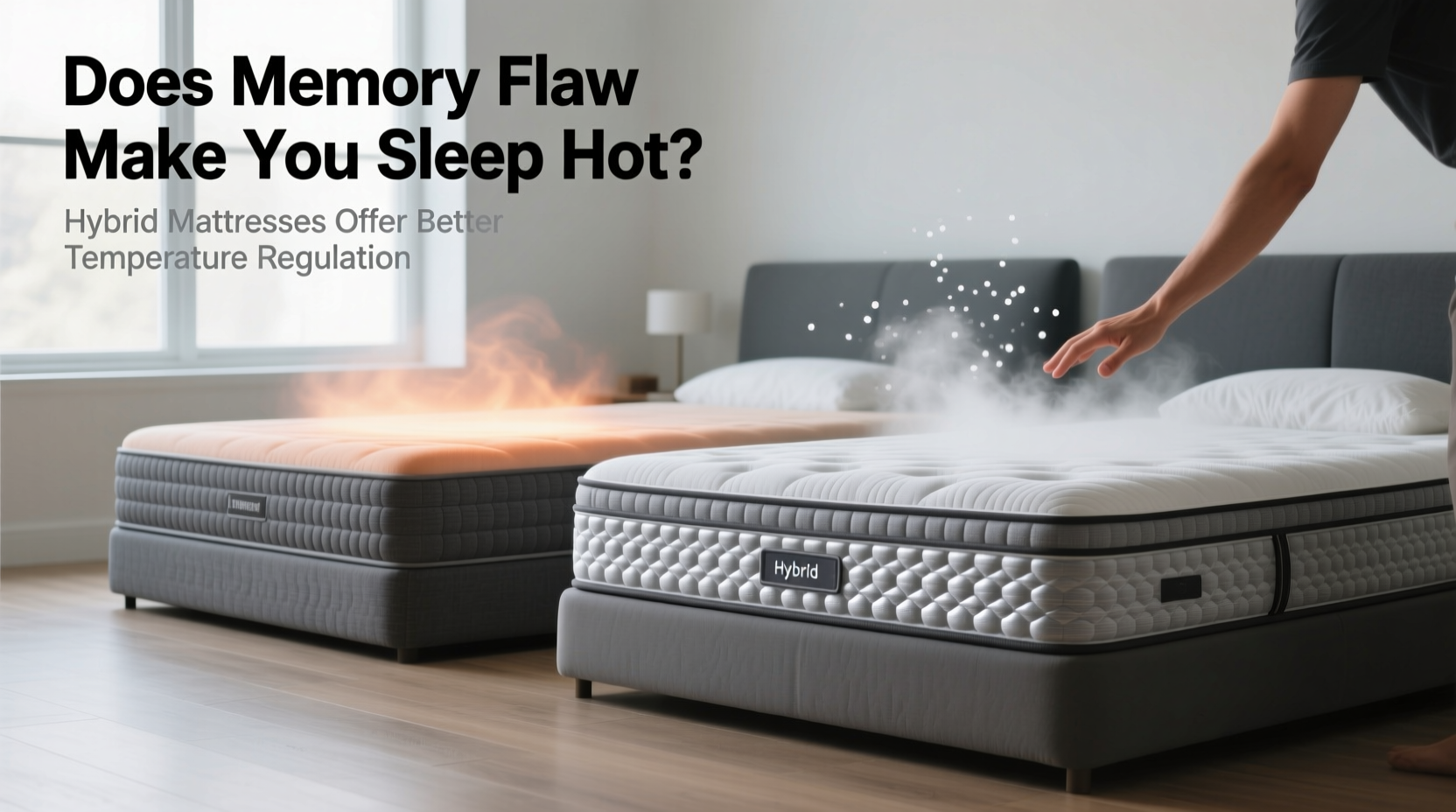
Body temperature naturally drops during sleep, especially during the onset of REM cycles. A mattress that traps heat can interfere with this process, leading to restlessness, frequent awakenings, and reduced sleep quality. The materials used in a mattress play a major role in how well it manages heat.
Traditional memory foam, originally developed by NASA, is made from viscoelastic polyurethane. It responds to body heat and weight by softening and conforming closely to the sleeper’s shape. While this contouring provides excellent pressure relief, it also creates a snug, hugging sensation that some describe as “sinking in.” Unfortunately, that same close contact limits airflow and can trap body heat, particularly in older or denser foam formulations.
In contrast, hybrid mattresses combine a layer of memory or latex foam on top with a supportive core of individually wrapped coils. These coils promote air circulation, reducing heat retention. The open structure allows warm air to escape and cooler air to circulate beneath the sleeper.
“Thermal regulation in mattresses isn’t just about material—it’s about structure. Even high-quality memory foam can sleep hot if it lacks ventilation pathways.” — Dr. Lena Patel, Sleep Biomechanics Researcher, Stanford Sleep Center
Memory Foam vs Hybrid: A Detailed Comparison
To understand which type suits your needs, consider key performance factors. Below is a detailed comparison based on construction, temperature regulation, support, durability, and cost.
| Feature | Memory Foam Mattress | Hybrid Mattress |
|---|---|---|
| Construction | Multiple layers of foam (polyfoam base + memory foam comfort layer) | Foam comfort layers over pocketed coil support system |
| Heat Retention | Higher (especially traditional models); newer gels and graphite help | Lower due to airflow through coils |
| Pressure Relief | Excellent; conforms closely to body curves | Good; depends on foam thickness and type |
| Motion Isolation | Superior; minimal disturbance transfer | Moderate; coils may transmit slight movement |
| Edge Support | Fair to poor; softer edges prone to compression | Better; reinforced coils improve edge stability |
| Durability | 7–10 years (high-density foams last longer) | 8–10+ years (coils add structural longevity) |
| Price Range | $600–$1,800 | $900–$2,500+ |
| Best For | Side sleepers, motion sensitivity, quiet sleep | Hot sleepers, back/stomach sleepers, bounce preference |
The data shows that while memory foam excels in comfort and isolation, hybrids generally offer better breathability and support—particularly beneficial for those who tend to overheat or need more responsive push-back from their bed.
Do Memory Foam Mattresses Really Make You Sleep Hot?
The short answer: *Some do—but not all.* The idea that “memory foam = hot sleep” is an oversimplification rooted in older technology.
First-generation memory foams were dense and non-porous, acting like insulation. Without any mechanism to dissipate heat, body warmth would build up, especially during long nights or in warm climates. However, manufacturers have responded aggressively to consumer concerns with several innovations:
- Gel-infused memory foam: Tiny gel beads absorb and disperse heat away from the body.
- Graphite or copper infusions: These thermally conductive materials draw heat out of the foam.
- Open-cell foam structures: Engineered to increase internal airflow and reduce density.
- Cooling cover fabrics: Phase-change materials (PCMs) and moisture-wicking textiles regulate surface temperature.
A 2021 study published in the *Journal of Sleep Research* found that participants using gel-infused memory foam reported a 23% reduction in perceived sleep heat compared to traditional models. Still, even advanced foams cannot match the passive ventilation offered by coil-based systems.
Real-World Example: Sarah’s Switch from Memory Foam to Hybrid
Sarah, a 38-year-old nurse from Phoenix, Arizona, struggled with night sweats for two years after buying a budget memory foam mattress. Working 12-hour night shifts meant her sleep schedule was already fragile, and the added discomfort from overheating worsened her fatigue.
“I’d wake up drenched around 3 a.m., even with the AC on,” she said. “I tried cooling pillows and cotton sheets, but nothing helped until I switched to a hybrid.”
She invested in a mid-range hybrid with a breathable Tencel cover and zoned coils. Within a week, her nighttime awakenings dropped from 3–4 to just once. “It still feels cushiony where I need it, but now there’s airflow. I don’t feel stuck in a swamp of heat.”
Sarah’s experience reflects a common pattern: individuals in warm environments or those predisposed to higher body temperatures often benefit more from hybrid designs—even if they initially preferred the plushness of foam.
How to Choose the Right Mattress for Your Sleep Needs
Selecting between memory foam and hybrid isn’t just about temperature—it’s about aligning the mattress with your body, habits, and environment. Follow this step-by-step guide to make a confident decision.
- Assess your sleeping position:
- Side sleepers: Benefit from memory foam’s deep contouring to cushion shoulders and hips.
- Back and stomach sleepers: Often prefer the balanced support and responsiveness of hybrids.
- Evaluate your temperature sensitivity:
- If you frequently wake up hot or live in a humid climate, prioritize breathability. Hybrids or advanced cooling foams are better choices.
- Consider partner dynamics:
- Light sleepers or those sharing with a restless partner will appreciate memory foam’s superior motion isolation.
- Hybrids may transfer more vibration but offer better edge support for couples.
- Test firmness preferences:
- Memory foam typically feels softer due to sinkage, even at medium-firm ratings.
- Hybrids often provide a more consistent feel across different weights.
- Check return policies and trial periods:
- Many online brands offer 100-night sleep trials. Use this time wisely—test under real conditions, including seasonal changes.
Checklist: What to Look for in a Cooling Mattress
- ✅ Gel, graphite, or copper infusions in foam layers
- ✅ Open-cell foam construction
- ✅ Breathable cover (Tencel, bamboo, phase-change fabric)
- ✅ Coil base (for hybrids) with good airflow design
- ✅ CertiPUR-US certified foams (ensures low emissions and quality)
- ✅ Customer reviews specifically mentioning temperature performance
Frequently Asked Questions
Can I use a memory foam mattress if I sleep hot?
Yes, but choose carefully. Opt for newer models with cooling technologies like gel infusion, open-cell structure, or breathable covers. Avoid all-foam mattresses with high density (>4 PCF) unless they’re explicitly designed for cooling.
Are hybrid mattresses always cooler than memory foam?
Generally, yes—due to inherent airflow from coils. However, a poorly constructed hybrid with thick, non-breathable foam layers can still trap heat. Always check the top layer composition.
Does room temperature affect how hot a mattress feels?
Absolutely. Ambient temperature plays a significant role. A memory foam mattress in a 75°F (24°C) bedroom will retain more heat than in a 65°F (18°C) room. Keep your bedroom cool and well-ventilated regardless of mattress type.
Final Thoughts: Balancing Comfort, Coolness, and Long-Term Value
The debate between memory foam and hybrid mattresses ultimately comes down to personal priorities. Memory foam remains unmatched for pressure relief and motion absorption, making it ideal for solo sleepers or those with joint pain. However, its historical weakness—heat retention—still affects lower-tier models and older designs.
Hybrids offer a compelling middle ground: the comfort of foam with the breathability of coils. They cater well to combination sleepers, hot sleepers, and those who enjoy a bit of bounce. While typically more expensive, their durability and balanced performance often justify the investment.
Advancements in materials mean that “sleeping hot” is no longer an inevitable consequence of choosing memory foam. But if temperature regulation is a top concern, a high-quality hybrid—or a cooling-focused memory foam—should be at the top of your list.




 浙公网安备
33010002000092号
浙公网安备
33010002000092号 浙B2-20120091-4
Comments
No comments yet. Why don't you start the discussion?