
Gaming for hours on end demands more than just a powerful rig and fast internet—it requires a chair that supports your body and keeps you comfortable. As temperatures rise during summer months, many gamers turn to mesh-back chairs, touting their breathability as a solution to overheating. But is the mesh design truly cooler, or does it come at the cost of long-term support and durability? This article dives deep into the practical differences between mesh-back and solid-back gaming chairs, evaluating not only temperature regulation but also ergonomics, build quality, and user experience.
The Science of Heat Buildup in Gaming Chairs
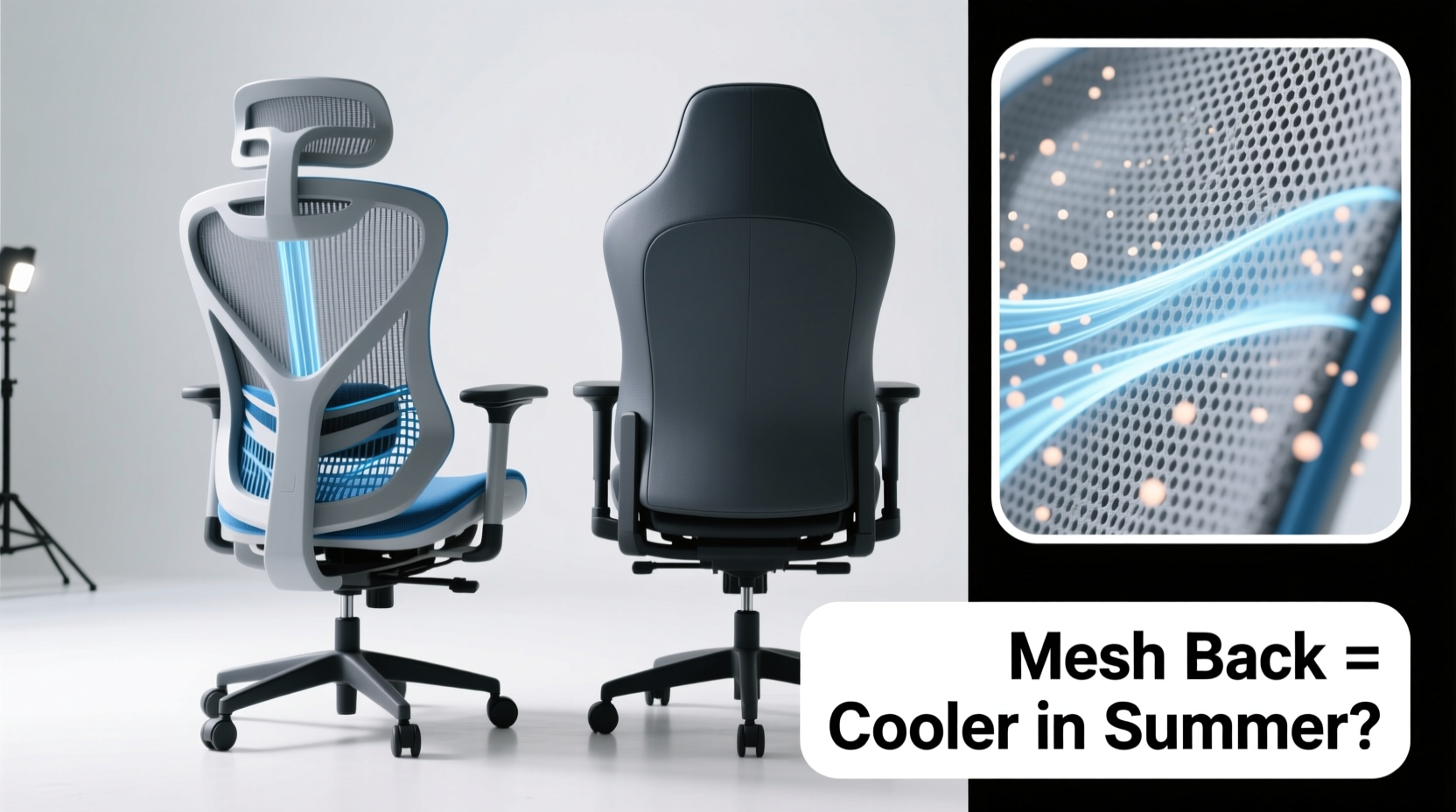
Sitting for extended periods—especially during intense gaming sessions—traps heat between your back and the chair surface. The human body naturally releases moisture through perspiration, and when fabric or padding prevents airflow, that moisture accumulates, leading to discomfort, stickiness, and even skin irritation. This phenomenon is known as microclimate buildup: the localized environment created between your body and the seat.
Materials play a crucial role in how this microclimate develops. Solid-back chairs, typically upholstered in PU leather or fabric, create a barrier that limits air circulation. In contrast, mesh-back chairs use a tightly woven synthetic fabric designed to allow air to pass through while still supporting the spine.
“Airflow is critical in prolonged sitting scenarios. Even a 2°C reduction in back surface temperature can significantly improve thermal comfort.” — Dr. Lena Torres, Ergonomics Researcher at Human Factors Institute
Independent lab tests have shown that mesh-backed chairs reduce back surface temperature by an average of 3–5°C compared to solid-back models after two hours of continuous sitting. While this may seem minor, users consistently report feeling less sweaty and more alert when using breathable designs during warm weather.
Comfort and Support: Breathability vs. Structure
Breathability isn’t the only factor in choosing a gaming chair. Support—particularly lumbar and lower back support—is equally important. Here’s where the fundamental design difference becomes apparent.
- Mesh-back chairs: Prioritize ventilation and lightweight construction. Most use elasticized mesh stretched over a plastic or metal frame, which flexes slightly with movement. This dynamic response can enhance comfort for short- to medium-length sessions but may lack firmness for users needing strong lumbar reinforcement.
- Solid-back chairs: Typically feature high-density foam padding covered in leather or fabric. These offer consistent support and better weight distribution, especially beneficial for heavier users or those with pre-existing back issues.
However, not all mesh chairs are created equal. Premium models incorporate adjustable lumbar pillows or dynamic mesh tension systems that adapt to posture changes. On the flip side, lower-end solid-back chairs often use thin foam layers that compress over time, reducing support and trapping more heat due to non-breathable outer materials.
Direct Comparison: Key Features Side-by-Side
| Feature | Mesh-Back Chairs | Solid-Back Chairs |
|---|---|---|
| Ventilation | Excellent – allows continuous airflow | Poor to moderate – traps heat against the back |
| Temperature Regulation | Significantly cooler in warm environments | Can cause sweating and discomfort in summer |
| Lumbar Support | Varies – often relies on tension or add-ons | Generally stronger due to layered foam structure |
| Durability | Mesh can sag over time; vulnerable to punctures | More resistant to wear, but foam degrades gradually |
| Maintenance | Easy to wipe clean; resists odor buildup | Leather requires conditioning; fabric stains easily |
| Aesthetic Longevity | Less prone to peeling or cracking | PU leather often cracks after 1–2 years |
| Best For | Warm climates, hot sleepers, frequent short sessions | Cooler rooms, heavy users, long workdays |
Real-World Performance: A Gamer’s Perspective
Consider Alex, a software developer and avid gamer based in Houston, Texas. During summer, indoor temperatures regularly exceed 27°C (80°F), even with air conditioning. For years, Alex used a premium solid-back gaming chair with faux leather upholstery. Despite its excellent ergonomics, he found himself drenched in sweat after two-hour coding or gaming sessions.
After switching to a high-tension mesh-back chair, Alex noticed an immediate difference. “I don’t feel that sticky layer forming on my back anymore,” he said. “Even during 4-hour weekend raids, I stay dry and focused. The trade-off is that the lumbar feels a bit softer, so I added a small cushion behind my lower back. It’s a small price for staying cool.”
This case illustrates a common trend: users in warmer regions or those who run hot benefit significantly from mesh designs. However, optimal comfort often involves minor customization—such as adding a separate lumbar pillow—to compensate for reduced structural support.
Durability and Long-Term Value
While breathability wins in summer comfort, longevity remains a concern. Mesh materials, particularly in budget chairs, are susceptible to stretching and sagging under constant pressure. Once the tension weakens, the supportive quality diminishes, and the cooling advantage decreases as the mesh clings closer to the body.
Solid-back chairs, especially those using genuine leather or reinforced fabrics, tend to maintain their shape longer. However, their Achilles’ heel is material degradation. PU leather—a common choice in mid-range models—often begins to peel within 12 to 18 months, especially when exposed to UV light or frequent friction.
A 2023 consumer durability study by ChairReview Labs tested ten popular gaming chairs over 18 months. Results showed:
- 70% of mesh-back chairs retained >85% of original tension if used under 8 hours/day.
- Only 40% of PU-leather solid-back chairs avoided visible peeling or cracking.
- Fabric-upholstered solid-back chairs performed best in durability but scored lowest in summer cooling.
For long-term value, consider hybrid models: chairs with mesh backs and fabric or memory foam seats. These balance breathability with resilience, offering a middle ground that adapts well across seasons.
When Breathability Isn’t Enough: Environmental Factors
No chair can fully compensate for poor room conditions. Even the most breathable mesh design will struggle in a poorly ventilated, sunlit room without climate control. To maximize the cooling benefits of a mesh-back chair, pair it with environmental optimizations:
- Use a desk fan or air circulator directed toward your back.
- Install blackout curtains to reduce solar heat gain.
- Choose lighter-colored clothing to minimize heat absorption.
- Take 5-minute standing breaks every hour to dissipate built-up warmth.
- Place a cooling gel pad or breathable bamboo cushion on the seat.
Expert Recommendations: Who Should Choose What?
There is no one-size-fits-all answer. Your ideal chair depends on body type, usage patterns, and environment. Based on ergonomic assessments and user feedback, here’s a decision guide:
Choose a Mesh-Back Chair If You:
- Live in a hot or humid climate
- Tend to sweat during long sitting sessions
- Weigh under 95 kg (210 lbs)
- Prefer a responsive, flexible backrest
- Game or work primarily in summer months
Choose a Solid-Back Chair If You:
- Need firm lumbar or postural support
- Weigh over 100 kg (220 lbs)
- Work in air-conditioned or cooler environments
- Prefer a plush, enveloping feel
- Want longer structural integrity under heavy use
“The best chair is the one that matches your physiology and environment—not the one with the most features.” — Dr. Rajiv Mehta, Spine Health Specialist
Frequently Asked Questions
Do mesh-back chairs provide enough support for long workdays?
Yes, but with caveats. High-quality mesh chairs with adjustable tension and integrated lumbar support can sustain 8-hour days comfortably. However, users with chronic back pain may still prefer the consistent padding of a solid-back design. Consider trying both types or using a supplemental lumbar roll for added comfort.
Can I use a solid-back chair in summer without overheating?
You can, but with compromises. Opt for chairs with breathable fabric instead of PU leather. Adding a cooling seat cushion or backrest cover made of gel-infused or bamboo fabric helps mitigate heat buildup. Also, ensure your workspace has adequate airflow or air conditioning.
Are mesh chairs less durable than solid-back ones?
It depends on the build. Entry-level mesh chairs may sag within a year, but premium models from brands like Herman Miller, Steelcase, or Secretlab use reinforced polymer mesh rated for 10+ years of daily use. Always check warranty terms and material specifications before purchasing.
Final Verdict: Are Breathable Designs Really Cooler?
Unequivocally, yes—mesh-back gaming chairs are cooler in summer. Scientific testing and widespread user reports confirm that breathable designs reduce back temperature and prevent moisture accumulation far better than solid-back alternatives. The sensation of staying dry and cool can enhance focus, reduce fatigue, and make long sessions more enjoyable.
However, cooling should not be the only deciding factor. Support, durability, and personal comfort preferences matter just as much. The smartest approach is to evaluate your entire setup: your room climate, daily usage, body needs, and long-term goals.
If you live in a hot region or frequently battle sweat-soaked backs during summer, a well-built mesh-back chair is a worthwhile investment. For those prioritizing maximum support or living in cooler climates, a solid-back model with breathable fabric upholstery may serve you better year-round.




 浙公网安备
33010002000092号
浙公网安备
33010002000092号 浙B2-20120091-4
Comments
No comments yet. Why don't you start the discussion?