
When it comes to carrying your laptop through unpredictable weather, choosing the right bag isn’t just about style or comfort—it’s about protection. A sudden downpour can damage electronics in seconds, and not all bags offer equal defense against moisture. Two popular choices—mesh backpacks and padded totes—are often compared for their portability and design, but how do they stack up when rain hits? The answer depends on material composition, construction, and intended use. Understanding the strengths and weaknesses of each will help you decide which option truly safeguards your device during wet commutes, travel, or outdoor work environments.
Understanding Material Differences
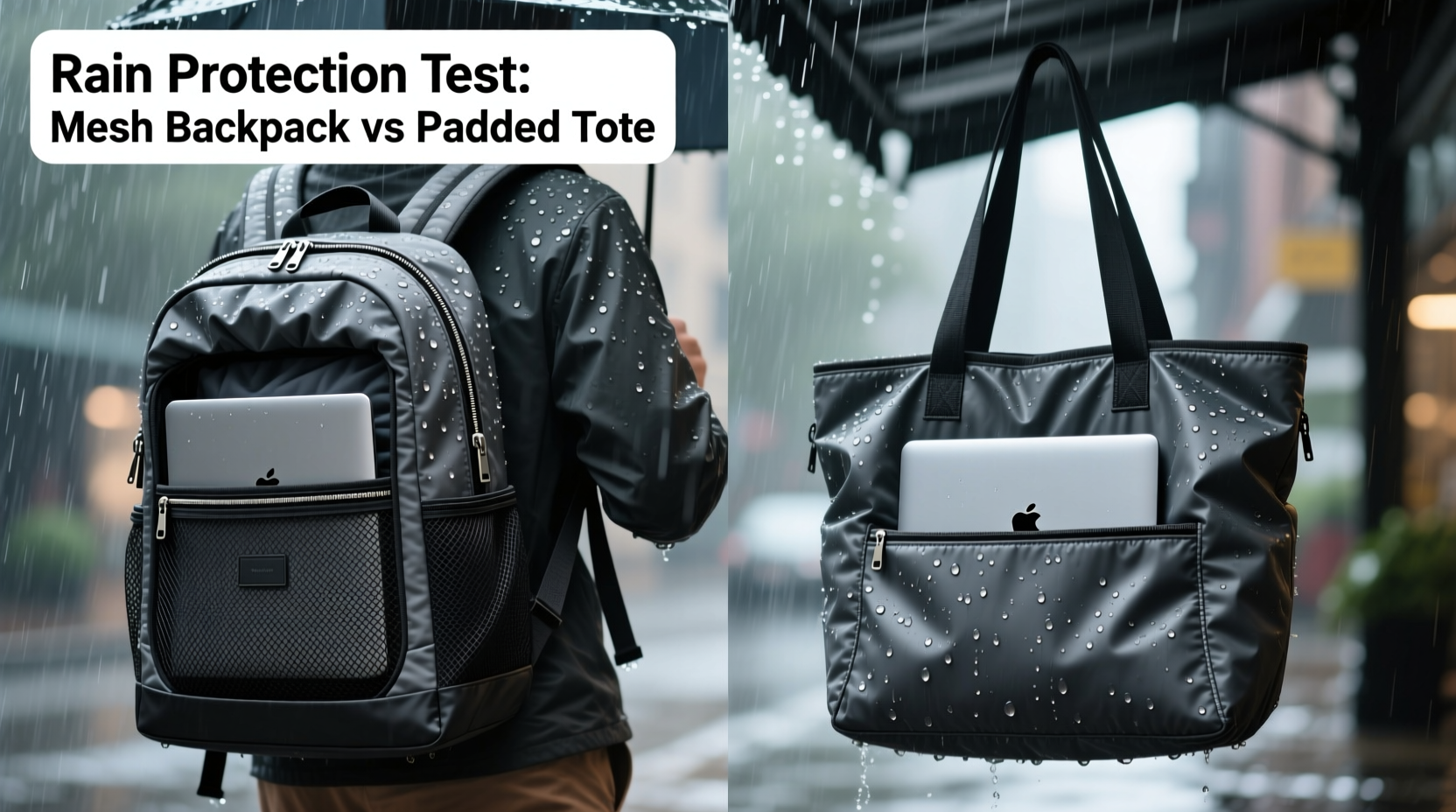
The primary factor determining a bag’s ability to resist rain lies in its fabric. Mesh backpacks are typically constructed with breathable, open-weave synthetic fibers like polyester mesh or nylon netting. This design prioritizes airflow and ventilation, making them ideal for active use such as hiking, cycling, or walking in hot climates. However, this same breathability creates vulnerability when exposed to water. Rain droplets easily penetrate the open gaps in the mesh, reaching internal compartments unless additional protective layers are present.
In contrast, padded totes are usually made from tightly woven fabrics such as ballistic nylon, canvas, or coated polyester. These materials naturally repel light moisture due to their density and often include water-resistant treatments. Many padded totes also feature laminated linings or rubberized undersides that act as barriers against dampness. While not fully waterproof, these constructions provide significantly more immediate protection than mesh panels.
Structural Design and Compartment Protection
Beyond fabric, the way a bag is structured plays a crucial role in shielding your laptop. Mesh backpacks often integrate dedicated laptop sleeves, but these are frequently positioned behind mesh panels or within outer compartments that lack full enclosure. Some models place the tech pocket between two mesh walls for visibility and ventilation, inadvertently exposing devices to sideways splashes or overhead rain.
Padded totes, on the other hand, tend to feature enclosed, zippered main compartments with cushioned dividers. The laptop sleeve is usually located deep inside the central cavity, shielded by multiple layers of fabric and often covered by a flap or magnetic closure. This layered access reduces exposure risk even in heavy drizzle. Additionally, many padded totes come with top-loading designs that minimize openings at the sides and back—key entry points for rain in mesh backpacks.
Consider the following structural comparison:
| Feature | Mesh Backpack | Padded Tote |
|---|---|---|
| Primary Material | Polyester or nylon mesh | Dense nylon, canvas, or coated fabric |
| Natural Water Resistance | Low – allows water penetration | Moderate to high – resists surface moisture |
| Laptop Compartment Location | Often near exterior mesh | Centered, fully enclosed |
| Closure Type | Zipper or drawstring, sometimes open-top | Full-zip or secure flap with magnet/snap |
| Exposure Risk During Rain | High – water enters through mesh and seams | Lower – limited external contact points |
Real-World Performance: A Commuter’s Experience
Sarah, a freelance graphic designer based in Seattle, uses both a mesh backpack and a padded tote for her daily commute. Living in a city known for frequent rainfall, she quickly learned the limitations of her lightweight mesh pack. During a spring morning walk to a client meeting, an unexpected shower lasted only seven minutes—but was enough to leave her laptop sleeve damp and her notebook slightly warped.
“I thought the inner lining would protect my gear. But water seeped through the side mesh, then dripped down into the main compartment. My backup drive survived, but I had to air-dry everything for two days before using it again.”
After that incident, Sarah switched to a padded tote with a water-resistant shell and sealed zippers. Over the next six months, including several rainy weeks, her equipment remained dry—even when caught without an umbrella. She noted that while the tote was heavier and less ventilated, the peace of mind outweighed the trade-offs.
This experience highlights a common reality: mesh backpacks perform well under dry, active conditions but falter when weather turns. Padded totes, though less breathable, offer superior containment and reduced surface exposure.
Expert Insight on Bag Durability and Moisture Management
According to Dr. Lena Torres, materials scientist specializing in textile engineering at the Institute for Wearable Technology, “The key to moisture protection isn’t just thickness—it’s continuity of barrier.”
“Even a thin, continuous layer of polyurethane-coated fabric outperforms thick mesh with gaps. For electronic protection, uninterrupted coverage matters more than padding alone.” — Dr. Lena Torres, Textile Researcher
She emphasizes that while padding provides shock absorption, it does little to stop water unless paired with a sealed structure. “A padded tote with a laminated interior lining creates a micro-environment that delays moisture ingress. Mesh bags, unless lined with a separate rain cover, expose contents almost immediately upon contact with rain.”
Enhancing Protection: Practical Upgrades and Accessories
Neither bag type is inherently waterproof, but both can be upgraded for better rain resistance. Here are actionable steps to improve performance regardless of your current choice:
- Use a waterproof laptop sleeve – A neoprene or waxed canvas sleeve adds an extra moisture barrier inside any bag.
- Invest in a rain cover – Compact, foldable covers designed for backpacks fit over mesh packs and provide instant protection.
- Line the interior with a trash compactor bag – Yes, seriously. These ultra-thin plastic bags are puncture-resistant and completely waterproof. Line your tote or backpack compartment before placing in sensitive electronics.
- Avoid bottom placement – Keep your laptop elevated above other items. If the bag sits on a wet surface, moisture travels upward.
- Carry a microfiber cloth – Wipe down the exterior after exposure to prevent residual dampness from wicking inward.
Step-by-Step Guide: Preparing Your Bag for Rainy Conditions
- Evaluate your current bag – Identify areas with mesh, loose stitching, or uncoated fabric.
- Add internal protection – Insert a waterproof laptop case or seal devices in ziplock bags for emergencies.
- Apply a water-repellent spray – Use a silicone-free DWR treatment on fabric surfaces every 2–3 months.
- Attach a rain cover (if using a backpack) – Store it in a side pocket for quick deployment.
- Adjust packing habits – Place absorbent items like clothes at the bottom to buffer against ground moisture.
- Inspect after exposure – Dry the bag thoroughly in a ventilated area, away from direct heat.
Checklist: Choosing the Right Bag for Wet Weather
Before purchasing or relying on a bag in rainy conditions, ask yourself the following:
- ✅ Does the bag have fully enclosed, zippered compartments?
- ✅ Is the laptop sleeve lined with a non-absorbent material (e.g., vinyl, TPU)?
- ✅ Are there minimal mesh panels near critical storage zones?
- ✅ Does the manufacturer specify water-resistant or weather-treated fabric?
- ✅ Can a rain cover be easily attached or stored with the bag?
- ✅ Is the bottom panel reinforced and non-porous?
If most answers are “no,” especially regarding mesh presence and open construction, the bag likely offers inadequate protection during sustained rain.
FAQ: Common Questions About Laptop Bag Rain Protection
Can I make a mesh backpack rainproof?
You cannot make a mesh backpack fully rainproof due to its open structure, but you can greatly improve its resistance. Use a built-in or aftermarket rain cover, add a waterproof laptop sleeve, and avoid prolonged exposure. Treat the outer fabric with a DWR spray to enhance beading, though this won’t stop water from entering through mesh gaps.
Are all padded totes water-resistant?
No. Padding refers to cushioning, not moisture protection. Some padded totes use absorbent fabrics like untreated cotton canvas, which worsens water damage. Always check whether the tote includes a water-resistant coating, tight weave, or sealed lining. Look for terms like “weather-resistant,” “coated fabric,” or “PU-laminated” in product descriptions.
What should I do if my laptop gets wet inside a bag?
Act quickly. Remove the device immediately and power it off if it’s on. Wipe the exterior with a dry microfiber cloth. Do not charge or restart it. Place it in a sealed container with silica gel packets or uncooked rice for 24–48 hours to draw out moisture. When possible, consult a technician before turning it back on.
Final Verdict: Which Offers Better Rain Protection?
Based on material integrity, structural design, and real-world performance, the padded tote clearly outperforms the mesh backpack in protecting laptops from rain. Its dense fabric, enclosed compartments, and reduced external exposure create a more reliable defense against moisture infiltration. While mesh backpacks excel in ventilation and lightweight mobility, they sacrifice weather resilience due to inherent design compromises.
That said, the best protection comes not from the bag alone, but from how it’s used. A mesh backpack equipped with a rain cover and internal waterproof casing can rival a basic padded tote. Conversely, a poorly maintained or low-quality tote may fail under similar conditions. Ultimately, prioritize construction over category: seek fully enclosed, coated-fabric bags with minimal mesh, regardless of whether it’s labeled a backpack or tote.
Conclusion and Call to Action
Your laptop is an investment worth protecting—not just from drops, but from the silent threat of moisture. Whether you lean toward the airy comfort of a mesh backpack or the structured security of a padded tote, understanding their limitations in wet weather empowers smarter decisions. Upgrade your carry strategy today: assess your current bag, apply protective measures, and choose gear that matches your climate and routine. Don’t wait for a soaked device to reveal a design flaw.




 浙公网安备
33010002000092号
浙公网安备
33010002000092号 浙B2-20120091-4
Comments
No comments yet. Why don't you start the discussion?