
For millions of remote workers, freelancers, and office professionals, the chair they sit on daily plays a critical role in long-term spinal health. Back pain affects nearly 80% of adults at some point in their lives, and prolonged sitting—especially on poorly designed seating—is a major contributor. As people invest more in home offices and workplace wellness, two dominant chair types have emerged: mesh office chairs and fully ergonomic models. But when it comes to reducing or preventing back pain, which one performs better?
This article dives deep into the structural, material, and biomechanical differences between mesh chairs and ergonomic chairs, evaluates their impact on posture and spinal alignment, and provides evidence-based recommendations for those seeking lasting relief from lower back discomfort.
Understanding the Core Differences
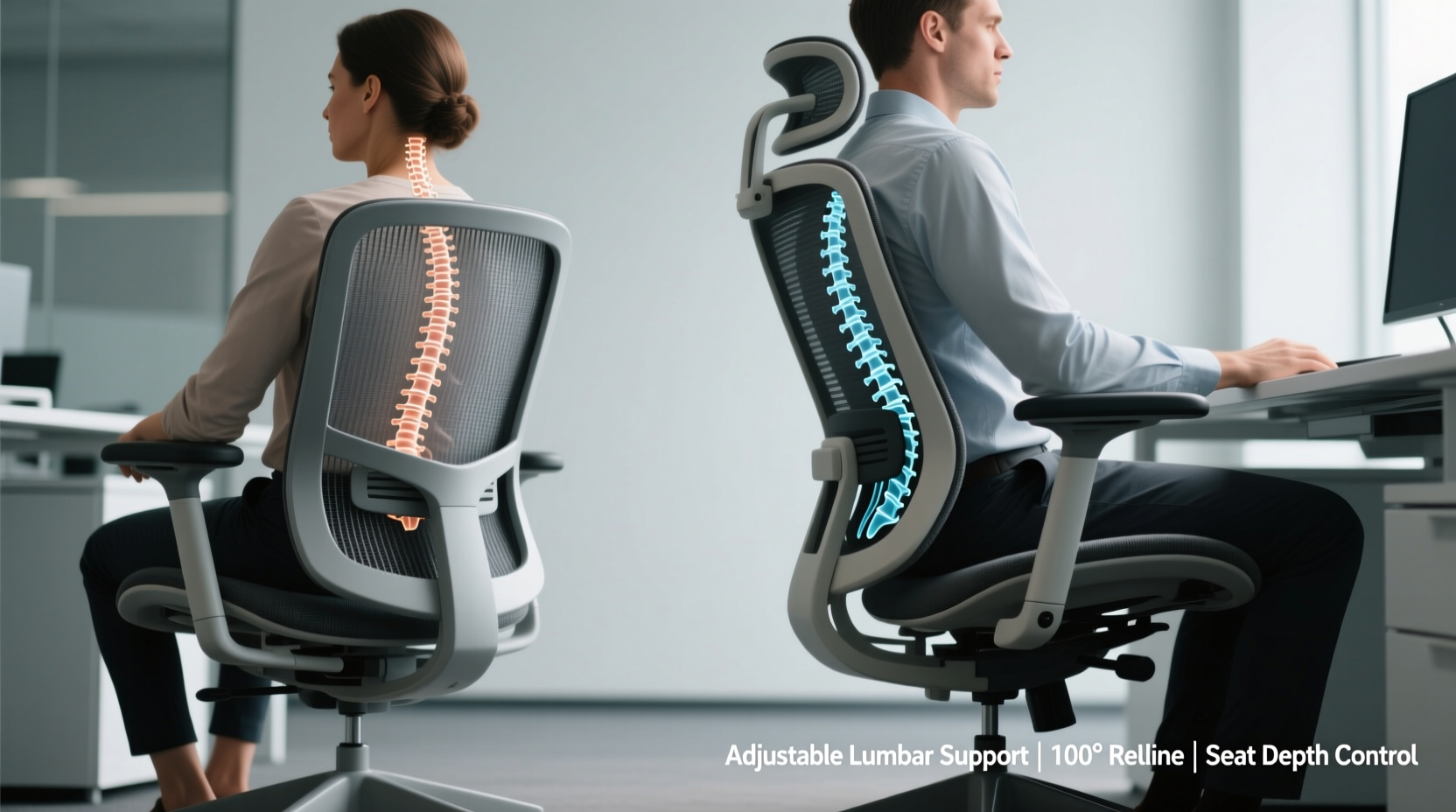
The first step in determining which chair type is better for back pain is understanding what sets them apart. While all ergonomic chairs aim to support the body’s natural posture, not all are built the same way. Mesh chairs are often marketed as breathable, lightweight, and modern, while \"ergonomic\" is a broader term that refers to design principles focused on comfort, adjustability, and injury prevention.
A mesh office chair typically features a taut, flexible mesh stretched across the backrest and sometimes the seat. This material conforms slightly to the user’s shape and allows airflow, making it ideal for warmer environments. In contrast, an ergonomic chair may use foam padding, contoured lumbar supports, multi-layered cushioning, and advanced mechanisms like synchro-tilt or dynamic lumbar adjustment.
Crucially, not all mesh chairs are truly ergonomic, and not all ergonomic chairs use mesh. The key distinction lies in how well each chair supports the spine’s natural S-curve, encourages movement, and adapts to individual body dimensions.
Material Science: How Seat and Back Materials Influence Spinal Support
The materials used in a chair directly affect pressure distribution, heat retention, and postural stability. Foam-padded seats provide softness but can compress over time, leading to reduced support and pelvic tilt. Mesh, on the other hand, offers moderate give without bottoming out, helping maintain a neutral pelvis position—which is essential for minimizing lumbar strain.
However, mesh alone does not guarantee proper support. A study published in *Applied Ergonomics* (2020) found that while mesh-back chairs improved thermal comfort and reduced sweating during extended sitting, they did not significantly reduce lower back muscle fatigue unless paired with adjustable lumbar support.
“Material matters, but mechanics matter more. A breathable mesh back won’t help if the chair doesn’t align with your spine’s curvature.” — Dr. Lena Patel, Physical Therapist & Workplace Ergonomics Consultant
Evaluating Lumbar Support: The Key to Back Pain Relief
Lumbar support is arguably the most critical factor in preventing or alleviating back pain. The lower back (lumbar region) bears the brunt of seated pressure, especially when slouching or leaning forward. Without adequate support, the natural inward curve of the spine flattens, increasing disc pressure and straining muscles and ligaments.
Mesh chairs often feature passive lumbar support—a slight bulge or contour in the mesh structure meant to cradle the lower back. However, this support is fixed and may not match every user’s anatomy. In contrast, high-end ergonomic chairs frequently include dynamic or adjustable lumbar systems that allow vertical and depth adjustments, ensuring precise fit.
A 2022 clinical trial involving 78 office workers with chronic lower back pain found that participants using chairs with adjustable lumbar support reported a 43% greater reduction in pain intensity after six weeks compared to those using standard mesh-back chairs with fixed support.
Adjustability: Where Ergonomic Chairs Shine
True ergonomic chairs excel in customization. Features commonly found in premium ergonomic models include:
- Seat height and depth adjustment
- Armrests adjustable in height, width, and angle
- Tilt tension control and recline lock positions
- Dynamic lumbar support
- Headrests and neck support
These adjustments allow users to tailor the chair precisely to their body proportions, promoting optimal hip-spine alignment. For example, adjusting seat depth ensures there’s about two to four fingers’ width between the edge of the seat and the back of the knees, preventing pressure on the popliteal area and improving circulation.
In contrast, many mesh chairs—even high-end ones—offer only basic adjustments. While they may have pneumatic height control and tilt function, they often lack seat depth or independent lumbar tuning. This limits their effectiveness for individuals outside the average anthropometric range.
Comparative Analysis: Mesh vs. Ergonomic Chairs
| Feature | Mesh Office Chairs | Ergonomic Chairs |
|---|---|---|
| Lumbar Support | Typically fixed or limited adjustment | Fully adjustable (height, depth, firmness) |
| Breathability | Excellent – prevents heat buildup | Varies – foam models may retain heat |
| Pressure Distribution | Moderate – mesh spreads load evenly | High – contoured cushions + adaptive materials |
| Adjustability | Limited (height, tilt) | Comprehensive (seat, arms, back, tilt) |
| Durability | 5–7 years (mesh may sag over time) | 7–10+ years with proper maintenance |
| Ideal For | Shorter sitting sessions, warm climates | Long-duration work, chronic back issues |
While mesh chairs win in breathability and initial comfort, ergonomic chairs consistently outperform in long-term spinal support and adaptability. For individuals already experiencing back pain, the ability to fine-tune support mechanisms often makes the difference between symptom relief and continued discomfort.
Real-World Case: From Chronic Discomfort to Pain-Free Workdays
Consider the case of Marcus T., a software developer who spent 8–10 hours daily at his desk. He initially purchased a popular mesh-back chair praised for its sleek design and cooling properties. Within three months, he began experiencing persistent lower back stiffness and occasional sciatic-like tingling.
After consulting an occupational therapist, Marcus learned his pelvis was tilting posteriorly due to insufficient lumbar support. The mesh back, while comfortable at first, didn’t maintain the necessary inward curve of his spine. He switched to a high-end ergonomic chair with dynamic lumbar adjustment and seat-depth control.
Within two weeks of proper setup—aligning the lumbar support with his L3 vertebra and adjusting armrest height to elbow level—his morning stiffness disappeared. After six weeks, he reported a 70% reduction in back pain and improved focus due to less physical distraction.
His experience underscores a vital point: comfort is not the same as support. A chair can feel good initially but still contribute to poor posture and long-term strain.
Choosing the Right Chair: A Step-by-Step Guide
Selecting the best chair for back pain isn’t about brand names or aesthetics—it’s about matching design features to your body and usage patterns. Follow this step-by-step process to make an informed decision:
- Assess Your Sitting Duration: If you sit for more than four hours daily, prioritize adjustability and active support over breathability.
- Measure Your Body Dimensions: Note your height, weight, and torso length. Taller or shorter individuals often need seat-depth adjustment, which many mesh chairs lack.
- Test Lumbar Fit: Sit in the chair and check if the lumbar support aligns with the inward curve of your lower back. There should be gentle, consistent contact—not pressure or gap.
- Evaluate Adjustability: Ensure the chair offers at least seat height, armrest height, and backrest angle controls. For chronic pain, seek dynamic lumbar and seat-depth options.
- Simulate Your Work Setup: Try the chair with your actual desk and monitor height. Even the best chair fails if your screen is too low or your keyboard too far.
- Allow a Break-In Period: Give yourself 7–14 days to adjust. Minor discomfort may resolve as your body adapts to better posture.
Common Misconceptions About Back-Friendly Chairs
Several myths persist about what makes a chair “good for your back.” Addressing these helps avoid costly mistakes:
- Myth: All ergonomic chairs are expensive. While premium models cost $500+, many mid-range chairs ($200–$350) offer core ergonomic features like adjustable lumbar and seat depth.
- Myth: Softer seats are better. Overly padded seats encourage sinking and pelvic rotation, increasing lumbar stress. Medium-firm support maintains alignment.
- Myth: Mesh is always cooler. While mesh breathes well, some high-density foams now incorporate gel infusions or open-cell structures that dissipate heat effectively.
- Myth: One chair fits all. Body proportions vary widely. A chair perfect for a 5'6\" person may misalign a 6'2\" user’s spine.
Frequently Asked Questions
Can a mesh chair cause back pain?
Yes, if it lacks proper lumbar support or doesn’t fit your body. Mesh itself isn’t harmful, but inadequate spinal alignment from a poorly designed mesh chair can lead to muscle fatigue, disc pressure, and chronic discomfort over time.
Are ergonomic chairs worth the extra cost?
For individuals with existing back pain or those sitting long hours, yes. Studies show that investing in an ergonomic chair can reduce musculoskeletal symptoms by up to 50%, improve productivity, and decrease absenteeism. Over five years, the cost per day is often less than $1—comparable to a cup of coffee for lasting comfort and health.
How do I know if my chair is helping my back pain?
You should notice reduced stiffness, especially in the morning, fewer urges to shift positions constantly, and less reliance on pain relievers or stretching breaks. Track your symptoms weekly. Improvement within 3–6 weeks indicates effective support.
Final Checklist Before Buying
- ✅ Does the lumbar support align with your lower back curve?
- ✅ Can you adjust seat height so feet rest flat on the floor?
- ✅ Is seat depth appropriate (fingers fit behind knees)?
- ✅ Do armrests support elbows at 90° without raising shoulders?
- ✅ Does the backrest recline smoothly with tension control?
- ✅ Is the chair rated for your body weight?
- ✅ Does it come with a trial period or warranty?
Conclusion: Prioritize Support Over Style
When it comes to reducing back pain, ergonomic chairs generally outperform mesh-only models due to superior adjustability, targeted lumbar support, and biomechanical alignment. That said, some high-quality mesh chairs do incorporate true ergonomic principles—and can be excellent choices if properly fitted.
The bottom line is this: breathability and aesthetics should not override spinal health. Whether you choose a mesh-back or a fully padded ergonomic model, ensure it supports your unique posture, allows micro-movements, and integrates seamlessly with your workspace.




 浙公网安备
33010002000092号
浙公网安备
33010002000092号 浙B2-20120091-4
Comments
No comments yet. Why don't you start the discussion?