
When your sneakers get soaked—whether from rain, puddles, or an intense workout—the drying time can significantly impact comfort, odor development, and long-term durability. Two of the most common materials used in modern sneaker uppers are mesh and foam. While both offer distinct advantages in breathability and support, they behave very differently when exposed to moisture. Understanding how each material responds to water helps you make smarter choices about footwear selection, maintenance, and post-wet recovery.
This article compares mesh and foam sneaker uppers in terms of drying speed, moisture retention, airflow, and structural integrity after exposure to water. We’ll also explore real-world scenarios, expert insights, and practical steps to safely dry your shoes without damaging them.
Differences Between Mesh and Foam Uppers
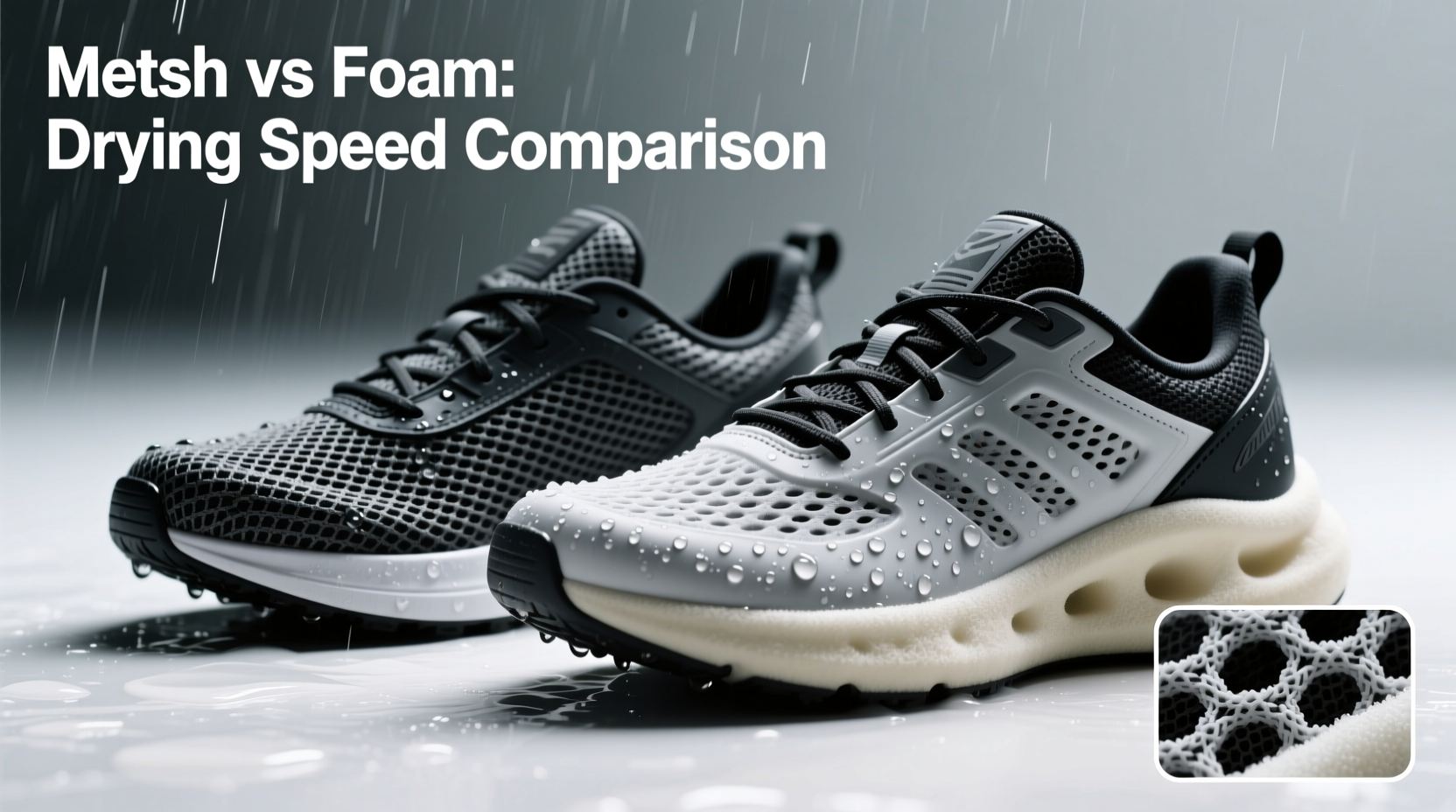
The upper is the part of the shoe that covers the top and sides of the foot. It plays a crucial role in breathability, fit, weight, and protection. Manufacturers use different materials based on performance goals, climate conditions, and intended activity.
Mechanical Properties of Mesh Uppers
Made primarily from synthetic textiles like polyester or nylon, mesh uppers are engineered with open-weave patterns to maximize ventilation. This design allows air to circulate freely, making mesh ideal for running, training, and warm-weather wear. The porous structure also enables quick water drainage and evaporation, contributing to faster drying times.
However, not all mesh is created equal. Some high-density weaves offer more support but slightly reduced breathability, while ultra-thin variants may sacrifice durability for lightness.
Structural Behavior of Foam Uppers
Foam uppers, often found in lifestyle sneakers or performance models with adaptive fit technology (like Nike React or Adidas Primeknit with foam backing), consist of closed-cell or semi-closed polymer layers. These materials provide cushioning, shape retention, and a snug, sock-like fit. Unlike mesh, foam has limited permeability. Water doesn’t pass through easily, but when it does—especially via seams or tongue areas—it tends to be absorbed into internal layers rather than passing through.
Because foam traps moisture within its cellular matrix, drying takes longer and requires more deliberate effort.
Drying Speed: Mesh vs Foam – A Direct Comparison
To determine which material dries faster, several factors must be considered: surface area exposure, internal absorption, ambient airflow, and construction thickness.
| Factor | Mech Uppear | Foam Upper |
|---|---|---|
| Surface Porosity | High – open weave allows rapid evaporation | Low – closed cells resist moisture escape |
| Water Absorption Rate | Low – water passes through quickly | High – retains moisture in inner layers |
| Airflow Penetration | Excellent – air moves through fabric | Limited – blocked by dense foam |
| Typical Drying Time (room temp, moderate humidity) | 2–4 hours | 6–12+ hours |
| Risk of Odor Buildup | Lower due to faster drying | Higher if not dried properly |
The data clearly shows that mesh outperforms foam in drying efficiency. Because mesh allows moisture to evaporate directly from the surface and interior lining, especially when combined with breathable insoles and perforated midsoles, it returns to dry usability much faster.
Foam, by contrast, acts like a sponge at a microscopic level. Even if the outer layer feels dry, trapped moisture inside the foam can persist for hours, creating a breeding ground for bacteria and mildew.
“Materials matter immensely when it comes to moisture management. Mesh provides inherent advantages in drying speed because of its architecture—engineered airflow translates directly to quicker recovery after wet exposure.” — Dr. Lena Torres, Footwear Materials Scientist, Advanced Wear Lab
Real-World Example: Commuting in the Rain
Consider Alex, a city commuter who walks 20 minutes to work each day. One morning, a sudden downpour soaks his sneakers during the journey. He wears two different pairs on separate days: one with a lightweight mesh upper (e.g., Nike Pegasus) and another with a padded foam upper (e.g., New Balance 990v6).
On the mesh day, he removes the insole upon arrival, loosens the laces, and places the shoe near a fan. Within three hours, the shoe is completely dry and ready for evening use.
On the foam day, despite doing the same, the inner collar remains damp the next morning. By midday, a faint odor develops—even though the exterior seemed dry within four hours. This illustrates how internal moisture retention in foam can lead to prolonged drying cycles and hygiene concerns.
This scenario underscores why drying speed isn’t just about convenience—it affects daily comfort, foot health, and shoe longevity.
Best Practices for Drying Wet Sneakers
No matter the upper material, improper drying accelerates wear and can warp the shoe’s structure. Here’s a step-by-step guide to ensure safe and effective drying:
- Remove Insoles and Laces: Take out removable insoles and loosen or remove laces to increase airflow throughout the shoe.
- Blot Excess Moisture: Use a dry towel to gently press against wet areas, especially the tongue and collar. Avoid rubbing, which can damage fibers.
- Use Absorbent Fillers: Stuff shoes with crumpled newspaper or reusable bamboo inserts. These draw moisture from the interior. Replace every few hours as they become damp.
- Aim for Airflow, Not Heat: Place shoes in a well-ventilated area away from direct sunlight or heaters. High heat can degrade adhesives and deform foam midsoles.
- Rotate Position: Turn shoes every few hours to expose all surfaces to circulating air.
- Wait Before Wearing: Ensure complete dryness—especially around the heel and arch—before wearing again. Residual moisture compromises comfort and increases odor risk.
Material-Specific Care Tips
While general drying principles apply universally, tailoring your approach to the upper material yields better results.
Caring for Mesh Uppers
- Mesh dries quickly but can trap dirt and sweat in its weave. Rinse lightly with cool water if visibly soiled before drying.
- Avoid using detergents unless necessary; they can leave residues that attract more moisture.
- After drying, brush gently with a soft-bristle brush to restore texture and remove debris.
Caring for Foam Uppers
- Foam-lined uppers often have hybrid constructions (e.g., knit with foam padding). Focus on drying the interior first.
- Use silica gel packets or specialized shoe dryers with low-heat settings to extract deep moisture.
- Check manufacturer guidelines—some foam models are sensitive to prolonged moisture and may delaminate if improperly dried.
Checklist: How to Dry Sneakers Safely
- ✅ Do:
- – Remove insoles and laces
- – Use absorbent stuffing (newspaper, towels, or commercial inserts)
- – Dry in a cool, airy space with indirect airflow
- – Rotate shoes periodically
- – Allow 8–12 hours for full drying, especially for foam-based models
- ❌ Don’t:
- – Place near radiators, fireplaces, or hairdryers
- – Leave in sealed plastic bags or dark enclosed spaces
- – Wear before fully dry
- – Machine wash unless specified by the manufacturer
Frequently Asked Questions
Does water damage mesh or foam uppers permanently?
Occasional exposure to water typically doesn’t cause permanent damage to either material if dried properly. However, repeated soaking without adequate drying can weaken mesh fibers over time and degrade foam elasticity. Mold growth in foam is a serious concern if left damp for more than 24 hours.
Can I speed up drying with a fan?
Yes, a fan significantly improves drying time for both types, especially mesh. Position the fan to blow across the shoe opening, not directly into it, to avoid forcing moist air deeper into the sole. For foam uppers, combine fan use with absorbent stuffing for best results.
Are there waterproof versions of mesh or foam uppers?
Some manufacturers apply hydrophobic coatings to mesh (e.g., Gore-Tex liners or nano-treatments) to repel water while maintaining breathability. True foam uppers aren’t typically labeled “waterproof,” but their density naturally resists water ingress. However, once water gets inside, it stays longer. Look for models with gusseted tongues or sealed seams for better wet-weather performance.
Conclusion: Choosing Based on Environment and Use
If fast drying after getting wet is a priority—such as for runners, urban commuters, or those in humid climates—sneakers with mesh uppers are the superior choice. Their open structure facilitates rapid moisture escape, reducing downtime and minimizing bacterial growth. Foam uppers, while offering enhanced comfort and structure, require more careful post-wet handling and longer recovery periods.
Your environment and usage pattern should guide your decision. For active lifestyles involving sweat or outdoor exposure, lean toward advanced mesh designs. For casual wear in dry conditions where cushioning matters most, foam-lined models remain excellent options—as long as you commit to proper drying routines.




 浙公网安备
33010002000092号
浙公网安备
33010002000092号 浙B2-20120091-4
Comments
No comments yet. Why don't you start the discussion?