
Sitting for prolonged periods has become a defining feature of modern work life. With that comes an increasing concern about spinal health and chronic back pain. One of the most impactful decisions in managing this issue is choosing the right office chair. Among the top contenders are mesh-back chairs and memory foam-padded chairs—two vastly different designs with distinct benefits and drawbacks. Understanding how each supports your spine, regulates comfort, and responds to long-term use can make all the difference in whether your workday ends with relief or discomfort.
This article dives deep into the biomechanics, materials science, and ergonomic principles behind both types of chairs. By examining real-world performance, user feedback, and clinical insights, we aim to answer the central question: which chair type—mesh or memory foam—more effectively reduces back pain?
The Anatomy of Back Pain in Office Workers
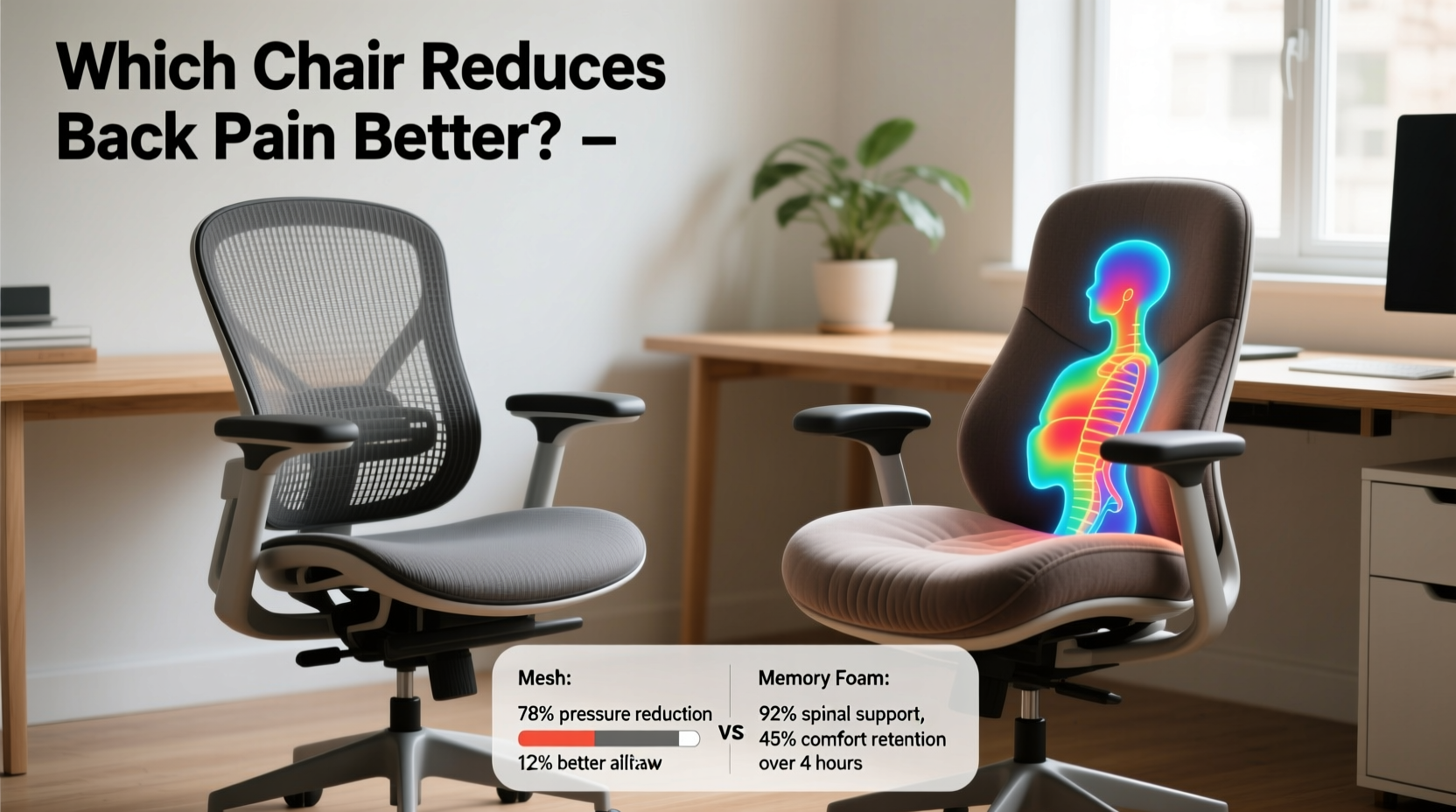
Back pain among desk workers typically stems from poor posture, lack of lumbar support, and sustained pressure on soft tissues. The lower back (lumbar region) bears the brunt of sitting forces, especially when unsupported. Over time, slouching or sinking into a soft seat compresses spinal discs, strains ligaments, and fatigues postural muscles.
According to the American Chiropractic Association, over 31 million Americans experience low back pain at any given time, and sedentary occupations significantly increase risk. A well-designed office chair must counteract these issues by maintaining the natural S-curve of the spine, distributing body weight evenly, and allowing micro-movements to prevent stiffness.
The choice between mesh and memory foam seating isn’t just about comfort—it’s about how each material influences spinal alignment, heat retention, breathability, and dynamic support during hours of continuous sitting.
Mechanics of Mesh Chairs: Support Through Tension
Mechanical mesh chairs utilize a tightly woven polymer fabric stretched across a rigid frame to form the backrest—and sometimes the seat. This design functions like a trampoline: it flexes under pressure but rebounds instantly, offering dynamic resistance that adapts to movement.
High-quality mesh chairs feature zoned tensioning, where different areas of the mesh are calibrated to provide more or less give. For example, the lumbar zone may be tighter to deliver targeted support, while the upper back allows greater flexibility. This promotes active sitting—small shifts and adjustments that engage core muscles and reduce static load on the spine.
One of the standout advantages of mesh is its breathability. Unlike solid padding, mesh allows air to circulate freely, minimizing heat buildup and sweat accumulation—a common complaint with padded chairs in warmer environments.
However, not all mesh chairs are created equal. Lower-end models may use single-layer mesh with uniform tension, leading to sagging over time or inadequate lower back support. Additionally, some users report that mesh seats—when used without cushioning—can create pressure points on the tailbone or thighs, especially after several hours.
Memory Foam Chairs: Cushioned Conformity
Memory foam chairs rely on viscoelastic padding that molds to the body’s shape in response to heat and pressure. Originally developed by NASA, memory foam slowly conforms to the sitter, distributing weight more evenly than traditional foam and reducing peak pressure points.
In office chairs, memory foam is typically layered over denser base foams and encased in fabric upholstery. When seated, the material softens and contours around the pelvis, lower back, and thighs, creating a personalized fit. This can be particularly beneficial for individuals with existing spinal misalignments or asymmetries.
The plushness of memory foam often feels more immediately comfortable than mesh, which some describe as “firm” or “clinical.” This initial comfort can encourage longer sitting durations, but it also poses a risk: excessive sinkage may lead to poor posture if the chair lacks structural reinforcement.
A major drawback of memory foam is heat retention. Because the material insulates and reacts to body temperature, it can trap heat—especially in chairs with non-breathable covers. This leads to increased perspiration and discomfort over time, potentially distracting from focus and contributing to restlessness.
“While memory foam provides excellent pressure distribution, it can promote passive sitting if not paired with strong lumbar support and proper seat pan design.” — Dr. Lena Patel, Ergonomics Researcher at Cornell University Human Factors Lab
Comparative Analysis: Key Features Side by Side
| Feature | Mesh Chair | Memory Foam Chair |
|---|---|---|
| Lumbar Support | Dynamic, responsive; often adjustable via tension or position | Passive; depends on foam density and underlying structure |
| Breathability | Excellent; promotes airflow, reduces sweating | Poor to moderate; traps heat unless perforated or ventilated |
| Pressure Distribution | Even but firm; relies on tension rather than cushioning | Superior; conforms closely to body contours |
| Durability | High; resists sagging for 7–10 years with quality construction | Moderate; foam degrades over time, especially in high-heat areas |
| Postural Feedback | Encourages active sitting and posture correction | May encourage slouching due to deep cushioning |
| Best For | Hot climates, active sitters, those needing firm support | Cooler environments, people with pressure sensitivity, short-term comfort seekers |
Real-World Example: Two Users, Two Outcomes
Consider two professionals working similar desk jobs but using different chairs:
- Sarah, a software developer in Texas, switched from a memory foam executive chair to a high-end mesh model after experiencing persistent lower back tightness and overheating during summer months. Within two weeks, she reported improved posture awareness and reduced midday fatigue. The breathable mesh kept her cool, and the built-in lumbar zone helped maintain spinal curvature without constant adjustment.
- James, a writer with sciatica, found mesh chairs too rigid and uncomfortable on his coccyx. He transitioned to a hybrid memory foam chair with a contoured seat pan and medium-firm density. The cushioning alleviated pressure on his tailbone, and he experienced fewer flare-ups. However, he added a cooling gel pad during summer to offset heat buildup.
Their experiences highlight a crucial truth: there is no universal solution. Individual physiology, climate, work habits, and pre-existing conditions heavily influence what works best.
Actionable Checklist: Choosing the Right Chair for Back Pain
Before purchasing, evaluate your needs with this checklist:
- ✅ Assess your primary symptom: Is it stiffness, sharp pain, or dull ache? Stiffness may benefit from mesh’s active support; dull ache from pressure may respond better to memory foam.
- ✅ Test adjustability: Look for chairs with height-adjustable lumbar support, seat depth, armrests, and recline tension.
- ✅ Consider climate: If you work in a warm environment or tend to overheat, prioritize breathability—mesh wins here.
- ✅ Check seat pan design: Even in memory foam chairs, ensure the front edge is waterfall-shaped to avoid cutting off circulation.
- ✅ Evaluate long-term durability: Read reviews about sagging, frame strength, and warranty coverage (ideally 5+ years).
- ✅ Try before you buy: Sit for at least 20 minutes. Pay attention to lower back support, hip angle, and overall comfort.
Hybrid Solutions and Emerging Trends
The line between mesh and memory foam is blurring. Some premium chairs now combine both: a breathable mesh backrest with a memory foam seat cushion. This hybrid approach leverages the strengths of each material—spinal support from mesh, pressure relief from foam.
Additionally, smart chairs equipped with posture sensors and adaptive lumbar systems are entering the market. These use real-time feedback to guide users toward healthier sitting habits, regardless of material.
Another innovation is phase-change materials (PCMs) embedded in memory foam to regulate temperature. While still niche, they address one of the biggest limitations of foam-based seating.
Frequently Asked Questions
Can a mesh chair cause back pain?
Yes—if poorly designed. A mesh chair without adequate lumbar support or with uneven tension can fail to support the natural curve of the spine, leading to muscle strain. However, high-quality mesh chairs with ergonomic zoning are generally effective at preventing pain.
Do memory foam chairs lose their shape over time?
Yes. All memory foam degrades with prolonged use, especially in warmer environments. High-density foam lasts longer (5–7 years), but eventually compresses and loses its ability to rebound. Look for chairs with replaceable cushions or extended warranties.
Which is better for sciatica or disc issues?
It depends. Sciatica sufferers often benefit from memory foam’s pressure distribution, especially if the seat pan is contoured to relieve ischial tuberosity (sit bone) pressure. However, those with disc-related pain may prefer the structured support of a tensioned mesh backrest that maintains spinal alignment without encouraging slouching.
Final Recommendation: Match Material to Need
When it comes to reducing back pain, mesh chairs generally have the edge for long-term ergonomic support. Their ability to maintain posture, promote airflow, and resist deformation makes them ideal for full-day use in most environments. They encourage movement, provide consistent lumbar reinforcement, and age more gracefully than foam.
That said, memory foam chairs are unmatched in immediate comfort and pressure relief. For individuals with specific sensitivities—such as tailbone pain, pelvic imbalances, or neuropathy—the conforming nature of foam can offer therapeutic benefits that mesh cannot replicate.
The key is not to treat this as a binary choice, but to understand your body’s signals. Back pain isn’t just about the chair—it’s about how the chair integrates with your posture, workspace setup, and movement habits. Pair your seating choice with regular standing breaks, stretching, and monitor alignment to maximize results.




 浙公网安备
33010002000092号
浙公网安备
33010002000092号 浙B2-20120091-4
Comments
No comments yet. Why don't you start the discussion?