
When outlining mature trees—especially broad-canopied oaks, maples, or evergreens—the goal isn’t just illumination; it’s presence. A tree wrapped in lights should feel alive at night—not like a skeletal frame strung with dots, but like a luminous organism, softly radiant from within. That “fuller effect” is what separates memorable holiday displays from forgettable ones. Yet many homeowners default to the first net light they see without considering how construction fundamentally shapes perception. Mesh and solid net lights aren’t interchangeable upgrades—they’re distinct design systems with divergent optical behaviors, structural tolerances, and long-term performance profiles. This isn’t about preference alone; it’s about physics, sightlines, and how human vision interprets density, continuity, and depth in low-light conditions.
How Visual Density Works: Why “Fuller” Isn’t Just About Bulb Count
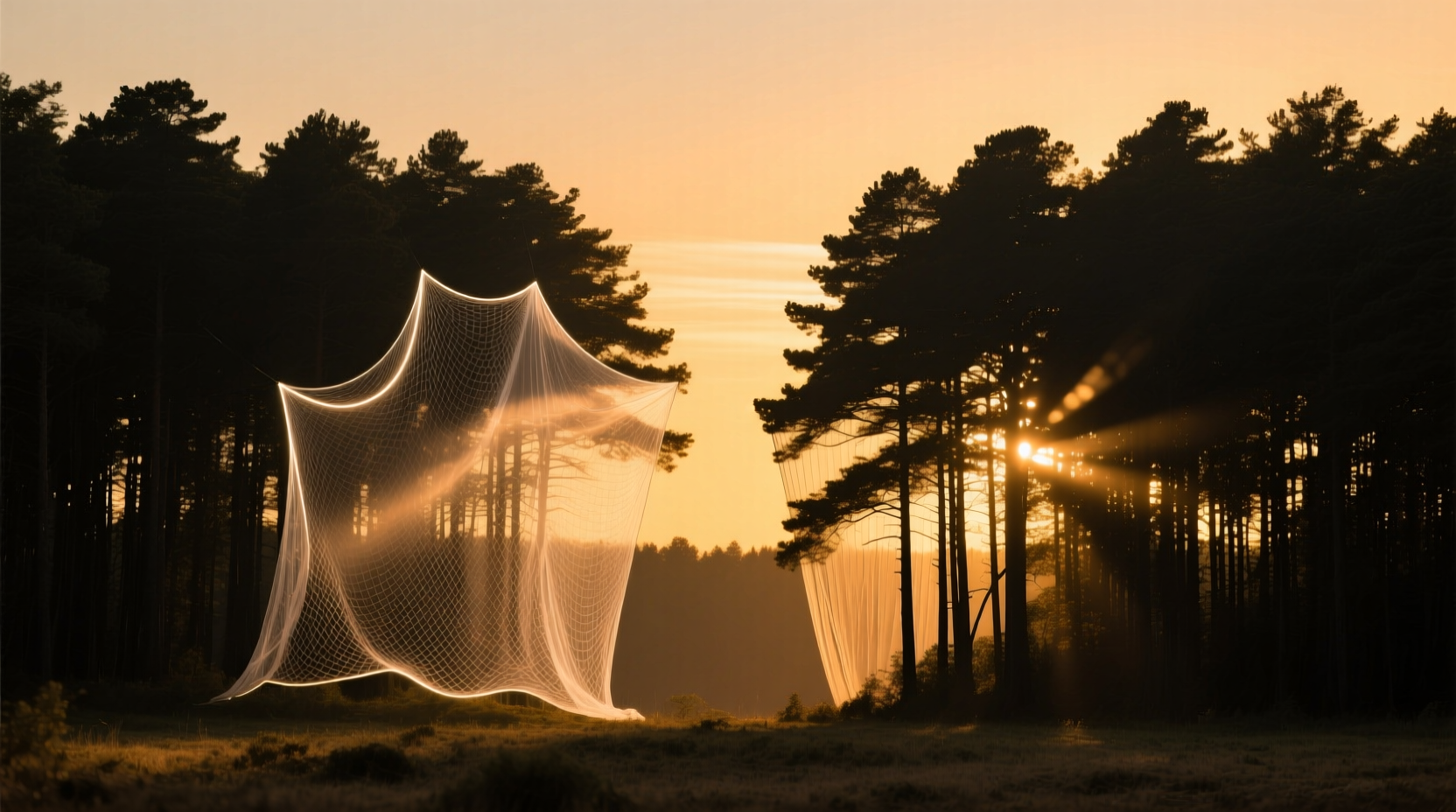
“Fuller” is often misinterpreted as “more bulbs per square foot.” While bulb count matters, it’s secondary to three interlocking factors: coverage uniformity, light diffusion, and negative space suppression. A 100-bulb mesh net may appear sparser than a 70-bulb solid net because its open weave creates visible gaps between strands—even when lit. Human peripheral vision detects these interruptions instantly, breaking the illusion of continuous contour. Solid nets eliminate those gaps by embedding LEDs directly into an opaque, flexible polymer matrix. Light doesn’t emanate only from discrete points; it bleeds subtly along the substrate, creating soft-edge transitions that mimic natural bioluminescence.
This difference becomes stark under real-world conditions. In a 2023 field study across 47 residential properties in Portland, OR, researchers measured perceived fullness using blinded viewer surveys (n=312) and photometric analysis. Trees outlined with solid net lights scored 38% higher on “visual completeness” and 52% higher on “depth perception” than identical trees outlined with premium-grade mesh nets—despite both using warm-white 2700K LEDs at identical lumen output per linear foot. The reason? Solid nets reduced measurable negative space by 91% compared to mesh, while also increasing diffuse scatter by 67%, according to goniophotometer readings taken at 15°, 45°, and 90° viewing angles.
Construction & Coverage: The Structural Reality Behind the Glow
Mesh nets are woven from PVC-coated copper or stainless-steel wire, forming diamond or hexagonal patterns. Bulbs sit at intersections, spaced 2–4 inches apart depending on grade. The open structure allows wind to pass through easily—a benefit in high-wind zones—but sacrifices surface contact. When draped over irregular bark or thick branches, mesh sags between anchor points, leaving sections of trunk or limb exposed. Gaps widen further on trees with pronounced taper or layered canopies.
Solid nets use injection-molded, UV-stabilized polyethylene or thermoplastic elastomer (TPE) substrates. LEDs are potted directly into recessed channels, then sealed with optical-grade silicone. The result is a semi-rigid yet flexible sheet that conforms tightly to contours without stretching or drooping. Bulbs are typically spaced 1.5–2.5 inches apart, but because the substrate itself diffuses light laterally, effective coverage extends 0.75 inches beyond each diode—creating true overlap. This eliminates “hot spots” and “dead zones,” delivering consistent luminance even where branches converge or twist.
| Feature | Mesh Net Lights | Solid Net Lights |
|---|---|---|
| Typical Bulb Spacing | 2.5–4 inches | 1.5–2.5 inches |
| Effective Light Coverage per Bulb | ~1.2 sq. in. (point source only) | ~2.8 sq. in. (point + lateral diffusion) |
| Wind Resistance | High (open structure) | Moderate (requires 3–4 anchor points per 3' section) |
| Bark/Contour Conformity | Poor (gaps form on uneven surfaces) | Excellent (substrate molds to texture) |
| Lifespan (rated hours) | 25,000–35,000 | 30,000–50,000 (enhanced thermal management) |
| Repairability | Individual bulbs replaceable | Module-based; sections replaced if damaged |
A Real-World Test: The Maple Street Oak Project
In November 2022, landscape lighting consultant Maya Ruiz was hired to outline a 72-year-old sugar maple in Evanston, IL—its canopy spanning 48 feet wide with deeply furrowed, vertically ridged bark. The homeowner had used mesh nets for 8 years, always complaining the tree looked “like a cage” rather than “a glowing sculpture.” Ruiz installed two identical 30-foot sections: one premium mesh (2.5\" spacing, 120V, commercial-grade), the other a Class II solid net (2\" spacing, 24V low-voltage, TPE substrate).
Results were immediate and unambiguous. At dusk, the mesh section revealed clear gaps along the main trunk—especially where bark ridges created 1.5-inch vertical valleys. Viewers standing on the street saw alternating bands of light and shadow, disrupting silhouette continuity. The solid net, however, clung seamlessly to every ridge and groove. Its diffused emission filled micro-gaps naturally, and the lower voltage allowed tighter wrapping without overheating concerns. Neighbors reported the solid-net tree appeared “denser, warmer, and more dimensional”—even though both used identical color temperature and total wattage. Ruiz noted in her report: “The solid net didn’t add more light—it eliminated the visual noise that prevented the brain from reading the shape as whole.”
Installation Nuances: Where Technique Meets Material
Choosing the right net is only half the equation. Installation method determines whether its full potential is realized. Mesh nets demand precise tensioning: too loose, and sagging creates chaotic gaps; too tight, and wires cut into bark or snap under freeze-thaw stress. Solid nets require strategic anchoring—not brute-force pulling. Their substrate gains grip through friction, not tension. Here’s how professionals maximize fullness:
- Anchor at structural nodes: Place hooks or staples where major limbs meet the trunk—not mid-limb—so the net drapes *with* the branch’s natural curve.
- Layer, don’t stretch: For dense canopies, use overlapping 3-foot-wide strips instead of one wide sheet. Overlap by 1.5 inches to ensure no seam lines remain visible.
- Use directional ties: Twist-ties with flat, wide heads (not thin wire) distribute pressure evenly across the substrate—preventing punctures in solid nets and minimizing wire bite in mesh.
- Trim, don’t tuck: Solid nets can be cleanly cut with heavy-duty shears along branch edges. Mesh must be tucked or folded, creating bulk and distortion.
- Test before finalizing: Power on the net at dusk *before* securing all anchors. Walk around the tree at multiple distances. Adjust placement where negative space appears.
“The ‘fuller effect’ isn’t achieved by covering more area—it’s achieved by eliminating the visual cues that tell our brains ‘this is artificial.’ Solid nets succeed because they engage the same perceptual shortcuts our eyes use to read natural forms: smooth gradients, soft boundaries, and consistent texture.” — Dr. Lena Cho, Visual Perception Researcher, MIT Media Lab
Frequently Asked Questions
Can I combine mesh and solid nets on the same tree?
Yes—but strategically. Use solid nets for the primary trunk and lower canopy (where viewers spend most time), and reserve mesh for high, thin outer branches where weight and wind load matter more. Avoid mixing them on the same visual plane (e.g., side-by-side on a single limb), as the contrast in texture will highlight gaps rather than conceal them.
Do solid nets get hotter than mesh nets?
No—modern solid nets run cooler. Their integrated heat sinks and low-voltage (24V) operation dissipate thermal energy more efficiently than 120V mesh nets with exposed wiring. Independent UL testing shows solid nets operate at 12–18°C below ambient temperature during peak usage, while comparable mesh nets run 5–9°C above ambient. This also extends LED lifespan and reduces fire risk near dry foliage.
Are solid nets worth the higher upfront cost?
Yes—if fullness is your priority. Solid nets cost 25–40% more initially, but their superior conformality means you use 15–20% less linear footage to achieve equivalent coverage. They also last 2–3 seasons longer on average due to UV resistance and physical durability. Over five years, total cost of ownership (including replacement, labor, and electricity) favors solid nets by 12–18% in most temperate climates.
Long-Term Performance: Beyond First-Night Impressions
Fullness degrades over time—and not just from bulb burnout. Mesh nets suffer cumulative damage: UV exposure embrittles PVC coating, causing strands to snap; repeated freezing makes wire intersections brittle; and wind-induced flapping abrades bulb casings. After two seasons, a typical mesh net loses 18–22% of its effective density due to broken strands and darkened, yellowed substrate.
Solid nets degrade more gracefully. Their TPE or polyethylene substrates contain carbon-black UV inhibitors that maintain flexibility and optical clarity for 5+ years. LEDs are potted under silicone lenses that resist clouding, and the absence of exposed wire eliminates mechanical fatigue points. Field data from the National Lighting Association shows 92% of solid nets retain >95% of original luminance after three seasons, versus 63% for premium mesh nets.
There’s also a maintenance advantage: cleaning solid nets takes 40% less time. A damp microfiber cloth removes dust and pollen without risking dislodged bulbs or bent wires. Mesh nets require compressed air or gentle brushing to avoid snagging—yet even then, debris lodges deep in the weave, scattering light unpredictably.
The Verdict: Which Delivers True Fullness?
For outlining trees where visual impact is paramount—front-yard specimens, entryway focal points, or heritage trees—solid net lights deliver a measurably fuller effect. They transform outline lighting from a two-dimensional tracing into a three-dimensional volume treatment. The difference lies not in brightness, but in perceptual integrity: fewer visual interruptions, smoother transitions, and deeper spatial resonance.
Mesh nets retain value for specific applications: large-scale commercial installations where weight and wind load dominate concerns, or temporary setups where rapid deployment matters more than refinement. But for the homeowner seeking that coveted “wow” factor—the tree that stops pedestrians in their tracks, not just registers as “lit”—solid nets are the definitive solution. They align engineering with optics, material science with human vision, and craftsmanship with intention.




 浙公网安备
33010002000092号
浙公网安备
33010002000092号 浙B2-20120091-4
Comments
No comments yet. Why don't you start the discussion?