
When it comes to crafting custom lighted holiday arrangements, the foundation you choose can make or break your final display. Two of the most popular bases—mesh wreaths and foam forms—offer distinct advantages and limitations depending on your project goals. Whether you're a DIY enthusiast preparing for the season or a professional decorator aiming for repeatable, high-impact designs, understanding the functional differences between these materials is essential. From durability and ease of lighting integration to reusability and seasonal adaptability, each option serves different creative needs.
Understanding the Core Differences
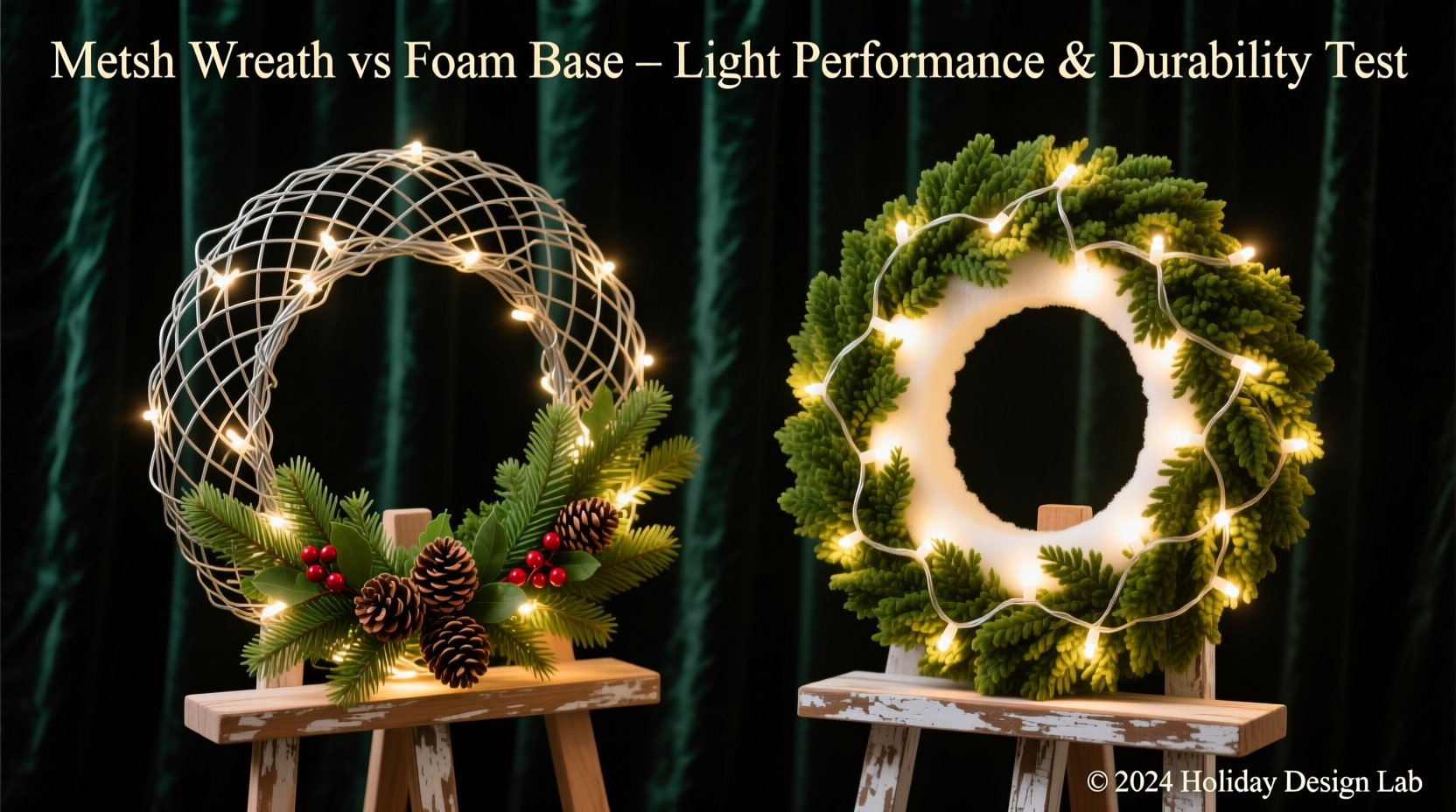
A mesh wreath is typically constructed from a wire frame wrapped in flexible metal or plastic mesh, often layered with tinsel or ribbon for visual effect. It’s designed primarily as a decorative structure that allows lights and embellishments to be woven directly into its open-grid surface. In contrast, a foam base—commonly made from oasis, floral foam, or polystyrene—is a solid form used to anchor stems, picks, and battery packs securely. While both serve as starting points for holiday decor, their structural properties lead to very different workflows and outcomes.
The key distinction lies in accessibility and modularity. Mesh wreaths are inherently open, making them ideal for wrapping string lights evenly and integrating large ornaments without obstruction. Foam bases, while excellent at holding delicate greenery and floral elements in place, require more precision when embedding lights and risk damage if over-punctured.
Design Flexibility and Aesthetic Range
Mesh wreaths shine when bold, dimensional designs are desired. Their open framework supports voluminous ribbon swirls, oversized ornaments, and cascading light strings that catch the eye from multiple angles. Because the base doesn’t obscure any part of the arrangement, decorators can build outward freely, creating dramatic silhouettes perfect for front doors, mantels, or outdoor displays.
Foam-based arrangements, on the other hand, excel in realism and botanical fidelity. They allow for precise placement of faux pine sprigs, holly berries, cinnamon sticks, and other naturalistic elements. When combined with mini lights or fairy lights tucked beneath foliage, foam forms produce a soft, glowing effect reminiscent of candlelit centerpieces. However, this subtlety comes at the cost of bulk—adding too many heavy items can cause the foam to crack or lose structural integrity.
If your goal is a traditional, lush, “fresh-cut” appearance, foam may be the better choice. But if you’re aiming for modern flair, maximalist sparkle, or themed decor (like candy cane stripes or snowflake motifs), a mesh base offers far greater creative freedom.
“With mesh, I’m not fighting to hide wires or balance weight. I can focus entirely on color, rhythm, and movement in my design.” — Lila Montgomery, Seasonal Display Designer
Lighting Integration: Ease and Longevity
One of the most critical considerations in any lighted arrangement is how seamlessly illumination integrates with the base. Here, mesh wreaths have a clear advantage. The open grid allows string lights to be threaded through, wrapped around, or clipped onto the frame with minimal effort. This ensures consistent brightness across the entire piece and reduces dark spots common in dense foam arrangements where lights get buried under foliage.
Foam bases require more strategic planning. Lights must either be inserted stem by stem or laid along the surface before adding greenery. Battery packs and plug-in cords need careful routing to avoid being pinched or exposed. Over time, repeated insertion and removal can degrade the foam, especially if metal-tipped lights are used.
Moreover, heat dissipation differs significantly. LEDs generate little heat, but incandescent bulbs can warm up enclosed spaces. Foam traps heat more than metal mesh, increasing fire risk slightly if non-LED lights are used. For safety and efficiency, always use cool-burning LEDs—especially with foam cores.
Step-by-Step: Installing Lights on a Foam Base
- Choose flexible LED string lights with thin, bendable wires.
- Lay the foam form flat and begin coiling lights from the outer edge toward the center.
- Use floral pins or U-wires to secure light nodes every 3–4 inches.
- Test the lights before adding greenery to ensure all bulbs function.
- Incorporate picks and foliage gradually, tucking stems between light strands to hold them in place.
- Route the power cord discreetly through the back using a small notch or clip.
Durability, Reusability, and Storage
Reusability is a major factor for decorators who invest time and money into seasonal pieces. Mesh wreaths, particularly those made from galvanized wire and weather-resistant tinsel, can last five years or more with proper care. They’re lightweight, collapse-resistant, and easy to disassemble. After the holidays, simply remove decorations, gently wipe down the frame, and store flat or hung in a climate-controlled space.
Foam bases are less durable. Most are brittle and prone to cracking when dropped or stored improperly. Even minor pressure during packing can cause fractures that compromise future projects. While some high-density foams are marketed as reusable, they rarely survive more than two or three seasons unless handled with extreme caution.
Storage also differs. Mesh wreaths take up more space due to their rigid shape but maintain form without support. Foam forms can be packed more compactly but should never be stacked or compressed. Both should be kept away from moisture and pests—foam, in particular, can attract mold and insects if stored in damp areas.
Real Example: A Community Center Holiday Makeover
Last winter, a local community center tasked volunteer decorator Mara Chen with upgrading their entryway display. She needed eight large wreaths—one for each main window—that would remain lit nightly for six weeks. Her options: reuse old foam forms or invest in new mesh frames.
Mara tested both. The foam wreaths took nearly 90 minutes each to rewire and restyle, and two cracked during assembly. By contrast, the mesh versions were pre-lit and ready in under 30 minutes per unit. She added coordinating ribbons and large snowflakes, which she could easily attach through the mesh grid. At season’s end, the mesh wreaths were cleaned and stored in labeled bins; the foam ones were discarded due to fragmentation.
“The time savings alone justified the upfront cost,” Mara said. “And knowing they’ll look just as good next year? That’s peace of mind.”
Cost and Accessibility Comparison
Initial cost varies based on quality and size. Basic foam rings (12–18 inch) range from $3 to $8 at craft stores, while premium reusable foam can reach $15. Mesh wreaths start around $10 for plain wire grids and go up to $30+ for pre-lit, decorated models.
However, long-term value shifts the equation. If you decorate annually, a $25 mesh wreath used for five seasons costs just $5 per year. A $6 foam ring replaced yearly totals $30 over the same period—with diminishing quality each time.
| Feature | Mesh Wreath | Foam Base |
|---|---|---|
| Initial Cost (Avg) | $10–$30 | $3–$15 |
| Lifespan | 4–7 years | 1–3 years |
| Lighting Ease | High – wraps easily | Medium – requires pinning |
| Weight Capacity | High – supports heavy décor | Low – cracks under stress |
| Storage Space | Large – rigid shape | Compact – but fragile |
| Ideal For | Bold, illuminated displays | Naturalistic, botanical looks |
Care and Maintenance Tips
To extend the life of either base, follow these best practices:
- Always unplug lights before handling or storing.
- Dust regularly during use with a microfiber cloth or soft brush.
- Inspect wiring annually for fraying or corrosion.
- Label storage containers with contents and year of purchase.
- Keep away from direct sunlight to prevent fading and material degradation.
FAQ
Can I combine mesh and foam in one arrangement?
Yes—many designers use a mesh wreath as the primary structure and insert small foam pads in specific sections to hold floral picks or lightweight figurines. This hybrid approach leverages the strengths of both materials: stability from mesh and precision from foam.
Are foam bases safe outdoors?
Standard floral foam is not weather-resistant and will degrade quickly when exposed to rain or humidity. If using outdoors, seal it completely with waterproof spray or opt for closed-cell foam alternatives. Even then, prolonged exposure will shorten its lifespan. Mesh wreaths with UV-protected materials are far better suited for exterior use.
Which is easier for beginners?
Mesh wreaths are generally easier for first-time decorators. The process is more forgiving—mistakes can be undone without damaging the base—and the results are immediately visible. Foam requires more patience and attention to detail, especially when balancing light coverage and fullness.
Final Checklist: Choosing the Right Base
- Define your aesthetic: Do you want bold sparkle or natural elegance?
- Assess lighting needs: Will you use many string lights? If yes, lean toward mesh.
- Consider longevity: Are you decorating annually? Invest in reusable mesh.
- Evaluate storage: Do you have room for rigid shapes? If not, handle foam carefully.
- Budget for long-term use: Calculate cost per season, not just upfront price.
- Plan for maintenance: Can you commit to annual cleaning and inspection?
Conclusion
Selecting between a mesh wreath and a foam base isn't about which is universally better—it's about aligning your materials with your vision, workflow, and commitment level. Mesh wreaths deliver unmatched versatility, durability, and lighting efficiency, making them ideal for vibrant, repeatable displays. Foam bases offer a tactile, organic foundation perfect for subtle, nature-inspired arrangements—but demand more care and replacement over time.
No matter your choice, thoughtful planning transforms holiday decorating from a chore into a joyful expression of creativity. Choose wisely, build intentionally, and let your light shine brightly through the season.




 浙公网安备
33010002000092号
浙公网安备
33010002000092号 浙B2-20120091-4
Comments
No comments yet. Why don't you start the discussion?