
For those with fine or thin hair, achieving a messy bun that stays in place can feel like an impossible task. Too often, the style collapses within minutes, leaving behind flyaways and frustration. The issue isn’t your skill—it’s the mismatch between traditional techniques and the unique needs of thinner strands. Unlike thick or coarse hair, fine hair lacks natural grip and volume, making it prone to slipping out of elastics and bobby pins. But with the right approach, tools, and styling tricks, you *can* master messy buns that look effortlessly chic and stay put all day—or night.
This guide focuses exclusively on methods proven to work for thin hair. From strategic sectioning and texturizing hacks to smart product use and pin placement, we’ll walk through real-world solutions used by stylists and everyday wearers alike. Whether you’re heading to work, a workout, or a dinner date, these techniques will give you confidence and hold without sacrificing the undone, lived-in look you love.
The Root Challenge: Why Thin Hair Struggles with Buns
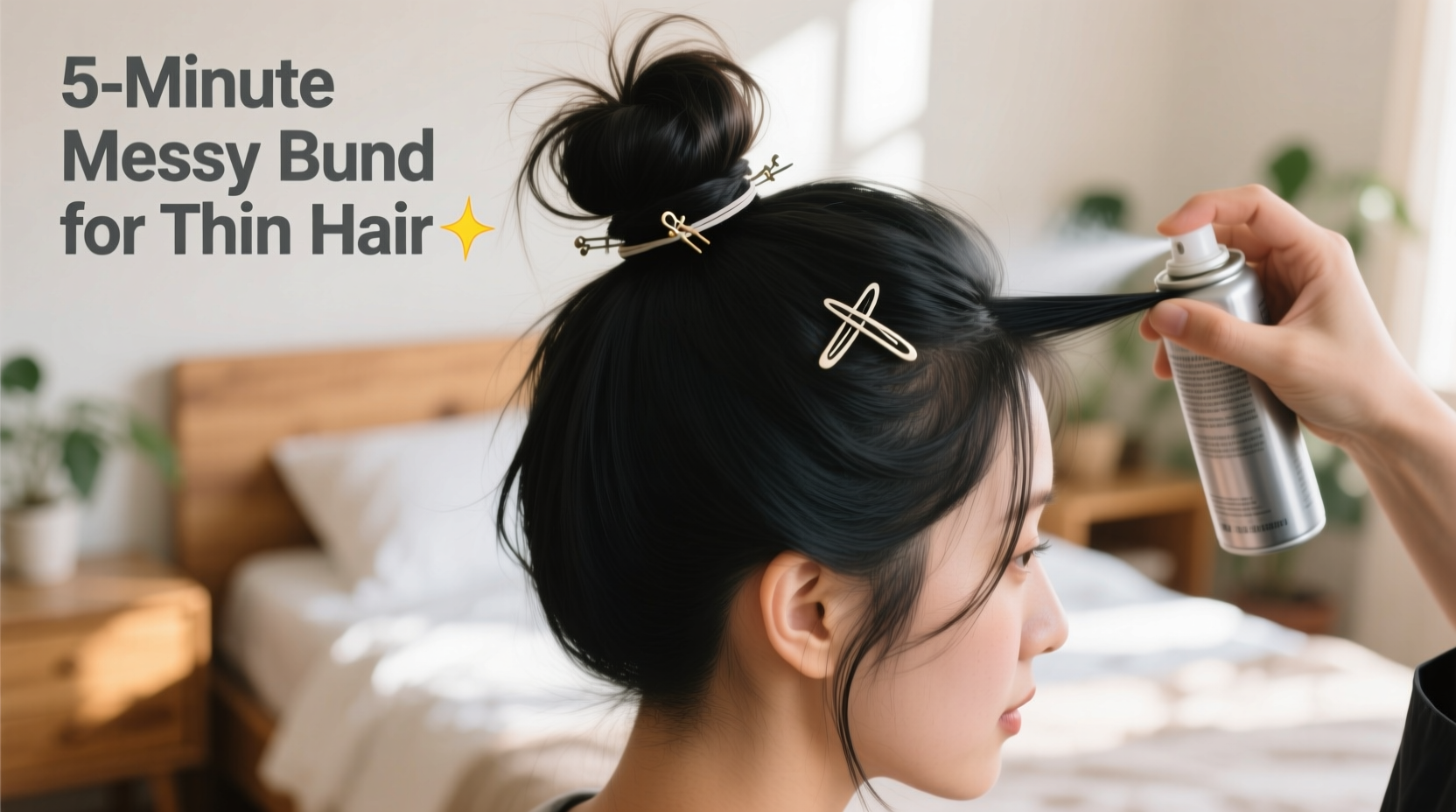
Thin hair doesn’t just lack volume—it often lacks friction. Fine strands are smoother and lighter, which means they slide more easily through hair ties and over each other. When you pull thin hair into a bun, there's less mass to anchor the style, so even minor movement can cause unraveling. Additionally, many people with thin hair avoid teasing or backcombing due to concerns about damage, which limits their ability to build internal support.
Another common mistake is relying solely on standard hair ties. While cute and convenient, silicone-coated or smooth elastics don’t provide enough traction. Similarly, using too few bobby pins—or placing them incorrectly—leads to early failure. The solution isn’t more force; it’s smarter mechanics.
“With fine hair, success comes from layering texture, grip, and structure—not brute force.” — Lena Tran, Celebrity Stylist and Texture Specialist
Understanding the physics of your hair type allows you to work *with* it rather than against it. Instead of fighting slippage, you build redundancy: multiple points of contact, increased surface area, and controlled messiness that disguises thinness while enhancing staying power.
Essential Tools and Products for Hold Without Damage
Using the right tools makes a dramatic difference. These aren’t luxury upgrades—they’re functional necessities when working with thin hair.
| Tool/Product | Purpose | Recommended Type |
|---|---|---|
| Texturizing Spray | Adds grit and body | Salt-based or dry shampoo formulas (e.g., Bumble and Bumble Surf Spray, Living Proof Full Dry Volume Blast) |
| Velvet Scrunchies | Prevents slippage, reduces breakage | Fabric-covered with inner rubber grip |
| U-Pins (also called double-pronged pins) | Secure large sections silently | Matte-finish, medium thickness |
| Teasing Comb | Builds root lift safely | Narrow tail with fine teeth |
| Light-Hold Hairspray | Locks style without stiffness | Flexible formula with UV protection |
Avoid heavy gels or waxes, which weigh down fine strands. Instead, opt for aerosol mists that distribute evenly without buildup. For extra security, keep a travel-sized texturizer in your bag to refresh the bun midday.
Step-by-Step Guide: The 5-Minute Secure Messy Bun for Thin Hair
This method combines volume-building, secure anchoring, and aesthetic imperfection for a bun that looks casual but lasts. Follow these steps in order:
- Prep with texture: Flip head upside down and spray texturizing spray at the roots, focusing on the crown and nape. Massage gently to distribute.
- Create height at the roots: Take a small section at the crown. Hold vertically and tease lightly 2–3 times with a comb. Smooth top layer only—don’t flatten. Repeat on sides if needed.
- Gather into a high ponytail: Use fingers (not a brush) to gather hair loosely. Position slightly higher than center for better balance. Secure with a velvet scrunchie in two wraps.
- Twist, don’t loop: Instead of wrapping hair around the base, twist the length tightly until it coils naturally. Let it fall into a loose spiral.
- Anchoring twist: Take the twisted coil and wrap it around the base once. Don’t tuck end under yet. Slide one U-pin horizontally through the outer edge of the coil into the ponytail base. Repeat on opposite side.
- Loosen strategically: Gently tug small pieces near the face and back of bun to create softness. Pull crown slightly upward for added fullness.
- Final lock: Mist lightly with flexible-hold hairspray. Insert one bobby pin vertically at the bottom of the bun if extra security is needed.
This technique relies on twisting tension and dual-pin anchoring rather than tight pulling. The result is a bun with dimension, movement, and resilience—even during commutes or workouts.
Real Example: How Sarah Nailed Her Wedding Guest Look
Sarah has shoulder-length, fine, straight hair. She was invited to a summer wedding and wanted an elegant-but-relaxed updo that would survive outdoor heat and dancing. Previous attempts at buns failed within two hours.
She followed the above method, adding one modification: she clipped in a subtle, matching-texture hairpiece (just 2 inches wide) at the nape before gathering her hair. This boosted volume without being visible. After twisting and pinning, she used a tiny dot of clear wax on stray baby hairs near her temples.
The bun stayed intact for 10 hours—from ceremony through dessert. “I kept touching the back expecting it to be falling apart,” she said. “But it held. Even after dancing, I only needed a quick spritz to refresh it.”
Her key takeaway? “The little bit of extra bulk from the extension made all the difference. And the U-pins didn’t show or snag my dress.”
Do’s and Don’ts: Common Mistakes That Sabotage Thin-Hair Buns
Avoid these pitfalls to improve your success rate immediately.
| Do | Don’t |
|---|---|
| Use finger-combing instead of brushing for a looser grip | Brush hair sleekly before styling—it increases slip |
| Tease only at the roots, not the ends | Backcomb the entire length—causes tangling and breakage |
| Choose matte-finish bobby pins (they grip better) | Use shiny or plastic-coated pins—they slide easily |
| Refresh with dry shampoo midday instead of redoing the whole style | Take the bun down completely and start over—it weakens hair |
| Opt for lower buns at the nape for more surface contact | Force high buns if your hair lacks length—prioritize stability |
Alternative Styles for Different Occasions
Not every day calls for a classic high messy bun. Here are three variations tailored to thin hair and different settings:
- The Low Twisted Knot (for work): Gather hair at the nape. Twist both sides toward the center before combining into a low ponytail. Twist the length, wrap once, and secure with crossed bobby pins. Sleek yet soft, and won’t come undone during video calls.
- The Half-Up Pretzel (for brunch): Take two front sections, cross them back, and clip temporarily. Tease crown lightly. Release clips and twist the top sections into a mini pretzel shape. Pin flat with U-pins. Leaves length down but keeps hair off the face securely.
- The Double Mini Bun (for gym or errands): Split hair into two high sections. Make small twisted buns on each side using the same method. Ideal for very short or layered thin hair. Stays put during movement and adds playful volume.
All three styles leverage the same principles: texture, twist tension, and strategic pinning. They also minimize stress on the scalp, which matters if you wear updos frequently.
FAQ: Answering Your Top Concerns
Can I make a messy bun with chin-length hair?
Yes—if you embrace micro-buns. Use the half-up pretzel or a single small knot at the crown. Texturizing spray and tiny clear elastics help. Consider magnetic clip-ins for temporary length if desired. Focus on the illusion of fullness rather than actual bulk.
How do I prevent headaches from tight buns?
Avoid pulling hair taut. Use loose gathers and rely on pinning, not tension, for hold. Place the elastic at a comfortable height—often slightly below the natural hairline—and opt for fabric-covered ties. If pain occurs, switch to a looser style like a twisted chignon at the nape.
Are hair donuts suitable for thin hair?
Only if used subtly. A full foam donut creates an obvious base that highlights thinness. Instead, try a sock bun hack: cut the foot off a black athletic sock, roll into a ring, and slide over the ponytail. Wrap your hair around it thinly to conceal. Adds volume without looking fake.
Checklist: Your Next-Time Success Plan
Before attempting your next messy bun, run through this checklist:
- ☑ Applied texturizing spray or dry shampoo at roots
- ☑ Used fingers, not a brush, to gather hair
- ☑ Selected a velvet scrunchie or fabric-covered tie
- ☑ Teased only the root area for lift
- ☑ Chose twist-over-loop method for wrapping
- ☑ Secured with at least two U-pins or crossed bobby pins
- ☑ Loosened edges for a natural look
- ☑ Finished with light-hold mist
Following these steps consistently builds muscle memory and dramatically improves results. Track what works best for your specific hair pattern and length.
Conclusion: Style With Confidence, Not Compromise
Having thin hair shouldn’t mean giving up on trendy updos. The messy bun isn’t reserved for thick manes—it’s adaptable, versatile, and entirely achievable with the right strategy. By focusing on texture, intelligent anchoring, and gentle techniques, you can create styles that last, flatter, and feel authentic.




 浙公网安备
33010002000092号
浙公网安备
33010002000092号 浙B2-20120091-4
Comments
No comments yet. Why don't you start the discussion?