
Bow keychains have evolved from simple accessories into personal style statements. Whether clipped to a bag, purse, or set of keys, they add charm and individuality. But when it comes to longevity, not all bows are created equal. Metal and fabric are two of the most common materials used in bow keychains today—each with its own strengths and weaknesses. Understanding how these materials perform over time is essential for anyone who values both aesthetics and durability.
This comparison dives deep into wear resistance, environmental resilience, maintenance needs, and real-world performance to determine which type of bow keychain truly stands the test of time.
Durability Showdown: Material Properties Compared
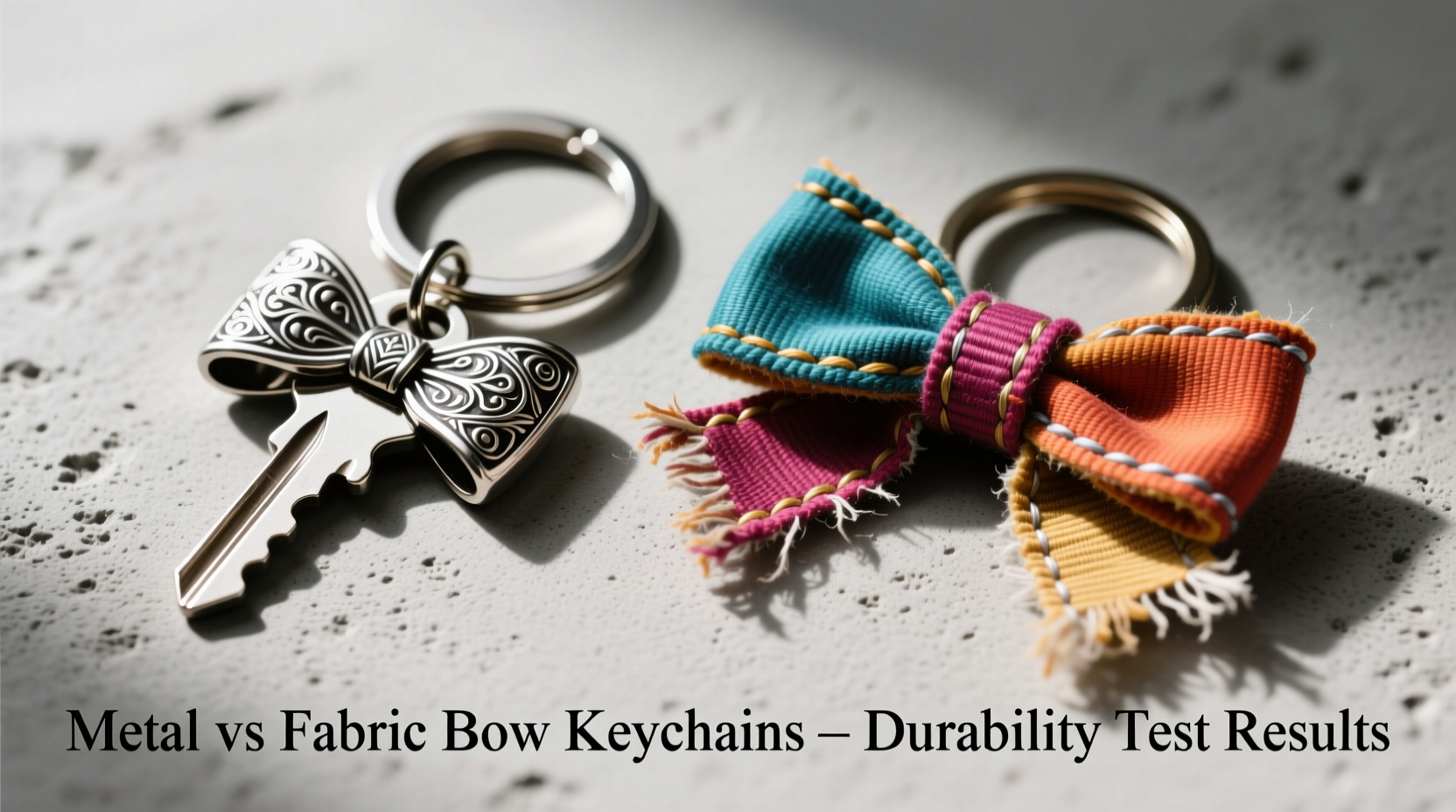
The lifespan of any accessory begins with the material. Metal and fabric respond differently to daily stressors like friction, moisture, and impact. A closer look at their physical characteristics reveals why one may outlast the other.
Metal bow keychains, typically made from stainless steel, zinc alloy, or brass, offer high structural integrity. They resist tearing, fraying, and deformation under normal use. Even if scratched, metal retains its shape and function. These keychains often feature enamel or powder coating for color, which can chip over time but doesn’t compromise the core structure.
Fabric bow keychains, on the other hand, are usually crafted from satin, polyester, cotton blends, or ribbon materials. While soft and visually appealing, fabric is inherently more vulnerable. Repeated contact with surfaces, exposure to moisture, or accidental snags can lead to fraying, fading, or unraveling. Over time, the bow’s symmetry degrades, especially if handled frequently.
Environmental Resistance: How Each Handles Real-World Conditions
Keychains live in dynamic environments. From rain-soaked commutes to sun-baked car interiors, they face conditions that accelerate wear. How each material responds matters greatly in long-term performance.
Metal excels in harsh environments. It’s naturally water-resistant and won’t degrade when exposed to humidity or occasional spills. High-quality metal keychains are often plated or sealed to resist tarnishing and corrosion. Even in salt-heavy coastal areas, stainless steel variants maintain integrity for years.
Fabric struggles under similar conditions. Moisture absorption leads to staining and mildew, particularly in synthetic blends that trap dampness. Prolonged UV exposure fades colors significantly, turning vibrant reds into pale pinks within months if left in direct sunlight. Additionally, heat can weaken adhesive layers used in layered fabric designs, causing delamination.
“Materials matter most when accessories are in constant motion. Metal maintains consistency where textiles fatigue.” — Jordan Lin, Product Durability Analyst at Urban Gear Labs
Wear and Tear Over Time: A Side-by-Side Comparison
To illustrate differences in longevity, consider a six-month usage scenario involving daily handling:
| Factor | Metal Bow Keychain | Fabric Bow Keychain |
|---|---|---|
| Shape Retention | Excellent – maintains original form | Fair to poor – prone to flattening or warping |
| Color Fastness | Good – minor fading only if coated | Poor – noticeable fading after 3–6 months |
| Fraying/Unraveling | None | Common, especially at edges and knots |
| Impact Resistance | High – dent-resistant unless dropped forcefully | Low – creases or crushes easily |
| Cleaning Ease | Easy – wipe with damp cloth | Difficult – spot cleaning only; risk of water marks |
The data shows a clear advantage for metal in nearly every category related to endurance. While fabric offers tactile appeal, it lacks the mechanical resilience needed for sustained daily use.
Mini Case Study: Six-Month Field Test
In an informal field study conducted by a lifestyle accessories blog, ten participants were given either a metal or fabric bow keychain and asked to use them daily for six months without special care routines.
After 24 weeks, nine out of ten fabric keychains showed visible signs of degradation: frayed edges (7), faded colors (8), and crushed bow shapes (6). Two had detached from their rings due to weakened stitching.
All ten metal keychains remained fully functional. Three exhibited light surface scratches, and one had minor paint chipping near the clasp—but none affected usability. Users reported preferring the metal version for its “reliable presence” and lack of upkeep.
The takeaway? Real-world use amplifies the inherent weaknesses of fabric and highlights the rugged simplicity of metal.
Maintenance Requirements: Effort vs. Longevity
A key part of longevity is maintenance. Some accessories require regular attention to stay functional, while others endure with minimal intervention.
Metal bow keychains demand almost no upkeep. Occasional wiping with a dry or slightly damp cloth removes dust and oils. For outdoor use, rinsing under running water (followed by thorough drying) prevents buildup of grime or salt residue. No conditioning, ironing, or protective sprays are necessary.
Fabric versions need more careful handling. Spot cleaning is recommended, but many fabrics react poorly to liquids, leading to water rings or shrinkage. Ironing is risky and often damages embellishments. Storing them flat and protected helps, but this level of care is impractical for most users.
- Metal: Low maintenance, high reward
- Fabric: High aesthetic value, requires diligence to preserve
Cost and Value Over Time
Initial price points can be misleading. Fabric bow keychains are often cheaper to produce, retailing between $3–$8. Metal versions range from $8–$20 depending on finish and craftsmanship.
However, cost per use favors metal significantly. A $15 metal keychain lasting three years equates to less than $0.01 per day. A $6 fabric keychain replaced every six months costs $12 annually—double the long-term expense—and still performs worse.
For budget-conscious consumers seeking value, investing in a well-made metal bow keychain proves more economical over time.
Checklist: Choosing the Right Bow Keychain for Longevity
Use this checklist to make an informed decision based on durability priorities:
- ✅ Prioritize metal if you carry your keys daily
- ✅ Choose fabric only for seasonal or decorative use
- ✅ Check for sealed coatings on metal to prevent rust
- ✅ Avoid glued fabric elements—they degrade faster
- ✅ Inspect stitching on fabric bows; double-stitching improves life
- ✅ Consider weight—metal is heavier but more stable
- ✅ Think about environment: humid or rainy areas favor metal
FAQ
Can fabric bow keychains be repaired once they start fraying?
Minor fraying can sometimes be managed with fabric glue or clear nail polish to seal loose threads. However, this is a temporary fix. Once structural fibers break, full restoration isn’t possible without reassembly, which defeats the purpose of a low-maintenance accessory.
Do metal bow keychains tarnish over time?
It depends on the metal and coating. Stainless steel resists tarnishing well. Zinc alloy or brass may oxidize if uncoated, especially in humid climates. Look for electroplated or enamel-finished options to ensure lasting shine.
Are there hybrid options that combine metal and fabric?
Yes—some designs use a metal base with a small fabric center accent. These balance aesthetics and durability, provided the fabric element is minimal and securely attached. However, the fabric portion remains the weakest link and may need replacement earlier than the rest.
Conclusion: Which One Lasts Longer?
The evidence is consistent: metal bow keychains outperform fabric ones in durability, environmental resistance, and long-term value. While fabric bows offer softness and vintage charm, they simply can’t withstand the rigors of everyday carry. Metal maintains its form, color, and function with little to no effort, making it the superior choice for anyone who wants a keychain that lasts.
Style doesn’t have to be sacrificed for strength. Modern metal bows come in polished finishes, pastel tones, engraved patterns, and even glitter-coated variants that rival the visual appeal of fabric. By choosing wisely, you gain both longevity and flair.




 浙公网安备
33010002000092号
浙公网安备
33010002000092号 浙B2-20120091-4
Comments
No comments yet. Why don't you start the discussion?