
When it comes to organizing and carrying your keys, the choice between a metal hook keychain and a split ring might seem trivial. But in practice, this decision can significantly impact how secure your keys are, how easily they detach, and how long your keyring lasts. Whether you're attaching house keys, car fobs, or work access cards, understanding the strengths and weaknesses of each design helps prevent lost keys, accidental drops, and even break-ins. This guide dives deep into both options, comparing their construction, security, durability, and real-world use cases.
Understanding the Designs: What Sets Them Apart?
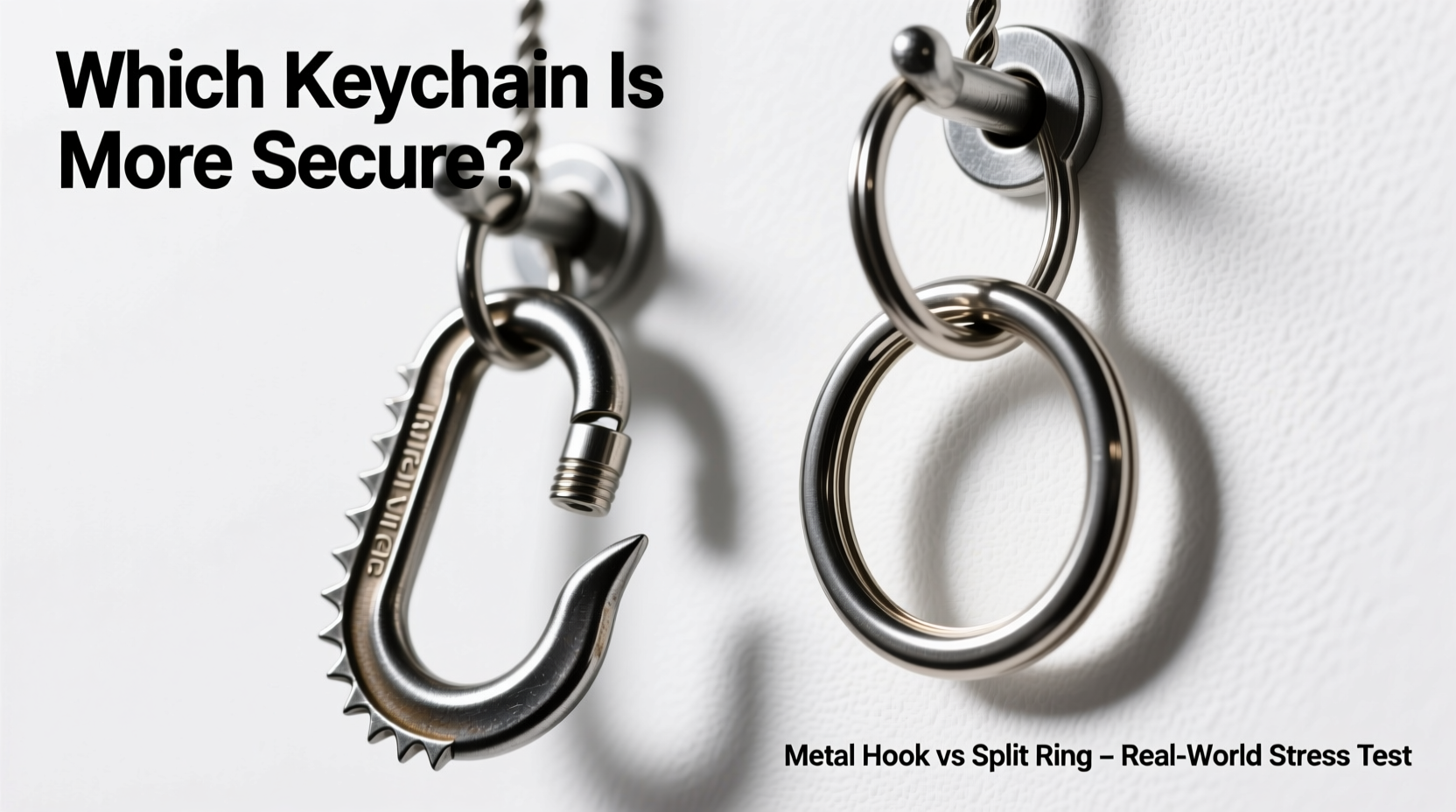
The fundamental difference between a metal hook keychain and a split ring lies in their structure and method of attachment.
A split ring is a double-coiled wire loop that resembles a small Slinky. It opens by twisting apart the coils, allowing keys to be slid on and secured once closed. Split rings have been a staple in key organization for decades due to their simplicity and reliability.
A metal hook keychain, often called a “key clip” or “swivel hook,” typically features a spring-loaded gate or a fixed open hook. Keys are attached via small key rings or directly onto the hook. These are common on backpacks, belts, or lanyards where quick access and visibility matter.
Security Comparison: Which One Keeps Keys Safely Attached?
Security in a keychain means resistance to accidental detachment, tampering, and environmental wear. Let’s evaluate both types under these criteria.
- Split Ring Security: When properly closed, split rings form a nearly seamless loop. The tight coil design makes it difficult for keys to slide off unless deliberately manipulated. Their mechanical strength comes from the tension in the metal coils, which resist lateral pressure and vibration.
- Metal Hook Keychain Security: Most metal hooks rely on a small gate or opening. Even with a spring closure, repeated jostling—like during jogging or travel—can cause the gate to pop open. Fixed hooks without gates offer no retention mechanism, meaning any key not clipped securely could fall out easily.
“From a security standpoint, the split ring remains one of the most reliable passive retention systems available. Its lack of moving parts gives it an edge over clips with gates.” — Daniel Reeves, Industrial Design Consultant specializing in hardware systems
In high-movement environments—such as running, cycling, or working in industrial settings—split rings consistently outperform hook-style keychains in preventing accidental loss.
Durability and Long-Term Performance
Beyond immediate security, longevity matters. A keychain should last years without degrading.
| Feature | Split Ring | Metal Hook Keychain |
|---|---|---|
| Material Stress Points | Evenly distributed across coils | Concentrated at hinge or gate mechanism |
| Corrosion Resistance | High (especially stainless steel) | Variable (depends on plating quality) |
| Wear Over Time | Minimal; maintains tension | Springs weaken; gates loosen |
| Key Retention After 6+ Months | Excellent | Fair to poor (gate fatigue) |
Split rings, especially those made from nickel-plated or stainless steel, resist rust and maintain structural integrity far longer than many hook designs. Metal hooks with moving parts tend to degrade faster—springs lose tension, hinges crack, and coatings chip, exposing base metals to moisture.
Real-World Case: The Commuter’s Dilemma
Consider Mark, a software engineer who commutes daily by bike and subway. He used a sleek metal hook keychain attached to his belt loop for easy access. Within three months, two keys had fallen off unnoticed—one being his apartment key. After retrieving them from a lost-and-found, he switched to a compact split ring setup stored inside a pocket.
Over the next year, despite rough handling and frequent use, not a single key was lost. The tighter coil prevented snagging, and the enclosed design eliminated accidental drops. While less accessible than a clip, the trade-off in security was well worth it.
This scenario reflects a broader trend: users prioritizing convenience often overlook retention risks until a loss occurs.
When Each Type Makes Sense: Practical Use Cases
Neither option is universally superior. Context determines the best choice.
Choose a Split Ring If:
- You carry multiple keys and want them grouped securely.
- You’re active—running, biking, or working in dynamic environments.
- Long-term durability is a priority.
- Keys are stored in pockets or bags where snagging isn’t a major concern.
Choose a Metal Hook Keychain If:
- Quick access is essential (e.g., janitors, delivery personnel).
- You attach keys to external gear like backpacks, tool belts, or lanyards.
- Aesthetic appeal or minimalist design matters (many hooks have polished finishes).
- You frequently add or remove keys and dislike untwisting coils.
Step-by-Step: How to Maximize Keychain Security
Regardless of your choice, follow these steps to reduce the risk of losing keys:
- Inspect Regularly: Check for worn springs, bent hooks, or loosened coils at least once a month.
- Use Secondary Retention: Add a silicone key ring or rubber O-ring around a hook to prevent slippage.
- Limit Weight: Avoid overloading hooks—excess weight stresses hinges and increases drop risk.
- Store Securely: Keep keychains away from moisture and extreme temperatures to prevent corrosion.
- Upgrade Materials: Choose brass, stainless steel, or titanium components over cheap zinc alloys.
FAQ: Common Questions About Keychain Security
Can a split ring really come apart on its own?
Not if properly closed. However, low-quality split rings with weak tension or manufacturing flaws may loosen over time. Always ensure the coils are fully twisted shut after adding keys.
Are there secure metal hook alternatives?
Yes. Some premium key clips feature locking mechanisms or magnetic closures. Tactical-grade carabiners with screw-lock gates also offer excellent security while maintaining hook-like accessibility.
Which is better for car key fobs?
Split rings are generally safer. Fobs are bulky and prone to snagging—if attached to a hook, the force can pry the gate open. A split ring distributes pressure evenly and reduces detachment risk.
Final Verdict: Which Is Actually More Secure?
The evidence points clearly toward the **split ring** as the more secure option. Its passive design, absence of moving parts, and proven track record make it the preferred choice for anyone serious about keeping their keys intact. While metal hook keychains offer convenience and style, they introduce failure points—especially at the gate or hinge—that split rings simply don’t have.
That said, security isn’t the only factor. If you value speed of access and external mounting, a metal hook can still serve well—especially when reinforced with secondary retention methods or upgraded to a locking model.
Take Action: Audit Your Keychain Today
Don’t wait for a lost key to rethink your system. Take a moment to examine how your keys are organized. Are they on a flimsy hook that’s seen better days? Could a simple switch to a split ring prevent future headaches?
Upgrading doesn’t require spending much—high-quality split rings cost just a few dollars and can last decades. Combine them with thoughtful habits, and you’ll drastically reduce the chance of misplacing something irreplaceable.




 浙公网安备
33010002000092号
浙公网安备
33010002000092号 浙B2-20120091-4
Comments
No comments yet. Why don't you start the discussion?