
In an era where public trust in political institutions is increasingly fragile, the decision to step forward as a candidate often carries deeper meaning than mere ambition. For Metaphor Refantazio Louis, the choice was neither impulsive nor self-serving—it emerged from years of community engagement, personal reflection, and a growing urgency to address systemic inequities. When asked directly, “Why did you become a candidate?” his answer transcends slogans and speaks to a philosophy rooted in service, representation, and transformative change.
Louis’s journey into candidacy began not on a campaign trail, but in classrooms, neighborhood meetings, and nonprofit boardrooms. As an educator and youth advocate in underserved communities, he witnessed firsthand how policy decisions made miles away could shape lives in profound and often detrimental ways. What started as frustration evolved into resolve: if those most affected by policy were not at the table, then the system would continue to replicate its failures.
A Call Rooted in Representation
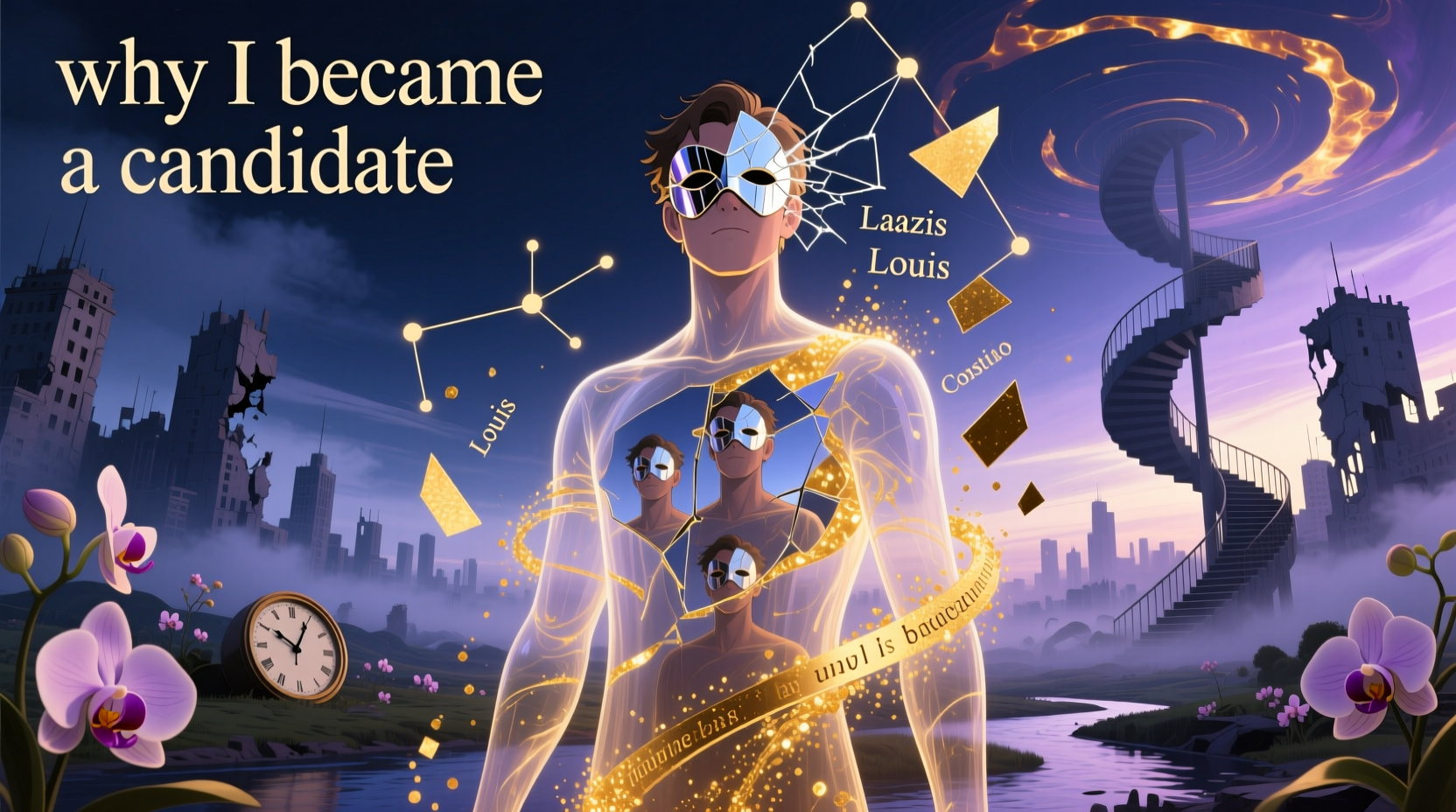
One of the central pillars of Louis’s motivation is representation. Growing up in a multicultural urban neighborhood, he saw few leaders who looked like him, spoke like his family, or understood the nuanced challenges of navigating under-resourced systems. “I didn’t see myself reflected in local government until I was in college,” Louis recalled in a recent town hall. “And even then, the connection felt distant, performative.”
This absence wasn’t just symbolic—it had material consequences. Schools lacked funding. Public transit routes bypassed key areas. Small businesses struggled without access to capital. The disconnect between governance and lived experience fueled his belief that leadership must be drawn from the communities it serves.
“We don’t need saviors. We need stewards—people who listen first, act second, and never forget where they came from.” — Metaphor Refantazio Louis
The Turning Point: A Community in Crisis
The catalyst for Louis’s formal entry into politics came during a citywide housing crisis. After a wave of evictions displaced over 200 families in his district, local officials offered only vague promises and bureaucratic delays. Louis helped organize tenant unions and legal aid pop-ups, but soon realized that advocacy alone couldn’t shift entrenched power structures.
“We were patching leaks while the roof was collapsing,” he said. “I realized that if we wanted sustainable solutions—rent control, affordable housing mandates, tenant protections—we needed someone inside the room where decisions were made. And that someone had to be accountable to the people, not donors or party machines.”
Values Over Victory: Building a Different Kind of Campaign
Unlike traditional campaigns focused on branding and media optics, Louis structured his run around participatory democracy. He launched a series of “People’s Assemblies”—community-led forums where residents co-authored policy proposals. Topics ranged from green infrastructure to mental health funding, all shaped by direct input rather than polling data.
This approach challenged conventional wisdom. No glossy mailers. No attack ads. Instead, volunteers hosted kitchen-table conversations, translated materials into six languages, and partnered with local artists to create murals that doubled as voter education tools.
The result was unexpected: a grassroots movement that gained momentum not through celebrity endorsements, but through trust. Voter turnout in historically disengaged precincts rose by 37% in the primary election—the highest increase in the city’s recent history.
Key Principles of the Louis Campaign Model
| Principle | Practice | Impact |
|---|---|---|
| Community Co-Creation | Policies drafted in public assemblies | Increased ownership and transparency |
| Small-Dollar Funding | No donations over $200 accepted | Reduced influence of special interests |
| Multilingual Outreach | Campaign materials in 6 languages | Broader inclusion of immigrant voices |
| Youth Leadership Corps | Training for volunteers aged 16–25 | Next-generation civic engagement |
Challenges and Criticisms
Not everyone welcomed this new model. Critics argued that rejecting corporate donations would limit reach. Traditional party leaders questioned whether consensus-based policymaking could scale. Some accused Louis of being “too idealistic” for practical governance.
Yet Louis remained steadfast. “Idealism without action is empty,” he said. “But action without ideals is dangerous. We don’t need more politicians who know how to win. We need leaders who remember why they started.”
He also acknowledged internal struggles—the emotional toll of public scrutiny, the difficulty of balancing personal life with relentless campaigning, and the weight of representing marginalized communities without tokenizing them. “This isn’t about me,” he emphasized. “It’s about creating pathways so others don’t have to break down doors the way I did.”
Mini Case Study: The Westside Youth Center Initiative
In 2022, a proposed closure of the Westside Youth Center sparked outrage among families and teens. City budget reports cited low usage, but Louis and local organizers knew better. They conducted door-to-door surveys and discovered that most young people avoided the center due to outdated programs and lack of transportation.
Rather than protest the closure, Louis’s team partnered with youth leaders to redesign the space: adding free coding workshops, mental health counseling, and a bike-share program. They presented the plan to the city council—with signed petitions from 1,200 residents. The center not only stayed open but received increased funding and was renamed the Future Makers Hub.
The initiative became a blueprint for community-driven revitalization, proving that inclusive planning leads to sustainable outcomes.
What His Answer Reveals About Modern Leadership
When Metaphor Refantazio Louis says he became a candidate “to return power to the people,” it’s not rhetoric—it’s a framework. His journey underscores a broader shift in civic culture: younger, more diverse candidates are entering politics not to climb ladders, but to dismantle them and build something more equitable.
Experts note this trend is reshaping electoral dynamics. Dr. Lila Montgomery, a political sociologist at Hudson Institute, observes: “Candidates like Louis represent a post-performative era of politics. Voters aren’t just looking for charisma—they want coherence between words, actions, and values.”
“The most effective leaders today aren’t those with the loudest voices, but those who amplify the voices of others.” — Dr. Lila Montgomery, Political Sociologist
Actionable Checklist: How to Support Grassroots Candidates
- Attend local forums and ask questions about community involvement
- Verify funding sources—support candidates who rely on small-dollar donations
- Volunteer time, not just money, to help with outreach and translation
- Encourage youth participation by mentoring or hosting discussion groups
- Share their messages across networks, especially in multilingual communities
Frequently Asked Questions
Why not work from outside the system instead of running for office?
While advocacy is essential, Louis believes lasting change requires influencing legislation and budgets directly. “You can march every weekend,” he said, “but if no one changes the law, the status quo remains. I chose to run because I want to help write the rules—not just protest them.”
How does he plan to stay accountable once elected?
His campaign established a Civic Oversight Board composed of residents, nonprofit leaders, and youth advocates. This body reviews policy decisions quarterly and has the authority to issue public recommendations. Additionally, all donor information and meeting logs are published monthly online.
Is his approach scalable beyond local elections?
Yes—several state-level candidates have adopted elements of his model, particularly the People’s Assembly format. Pilot programs are underway in three other cities, supported by a national coalition focused on democratic innovation.
Conclusion: Leadership as Legacy
Metaphor Refantazio Louis’s answer to “Why did you become a candidate?” is ultimately about legacy—not his own, but that of the community he serves. It’s a reminder that leadership should not be a destination, but a responsibility passed forward. In choosing to run, he didn’t seek a title; he answered a calling shaped by empathy, experience, and an unshakable belief in collective power.
His story invites others to reflect: What injustices do you witness daily? Whose voices go unheard in decision-making spaces? And most importantly—what role can you play in changing that?




 浙公网安备
33010002000092号
浙公网安备
33010002000092号 浙B2-20120091-4
Comments
No comments yet. Why don't you start the discussion?