
Minecraft is more than just a game—it’s a cultural phenomenon that has evolved across platforms, audiences, and technologies since its debut in 2009. One of the most common points of confusion among players, especially newcomers, is the existence of two distinct editions: Java and Bedrock. At first glance, it may seem redundant to maintain two versions of the same game, but the reasons are rooted in history, technical infrastructure, and strategic platform expansion. Understanding the distinction between Minecraft: Java Edition and Minecraft: Bedrock Edition clarifies not only how the game operates today but also how it has adapted to an ever-changing digital landscape.
The Origins: How Two Versions Came to Be
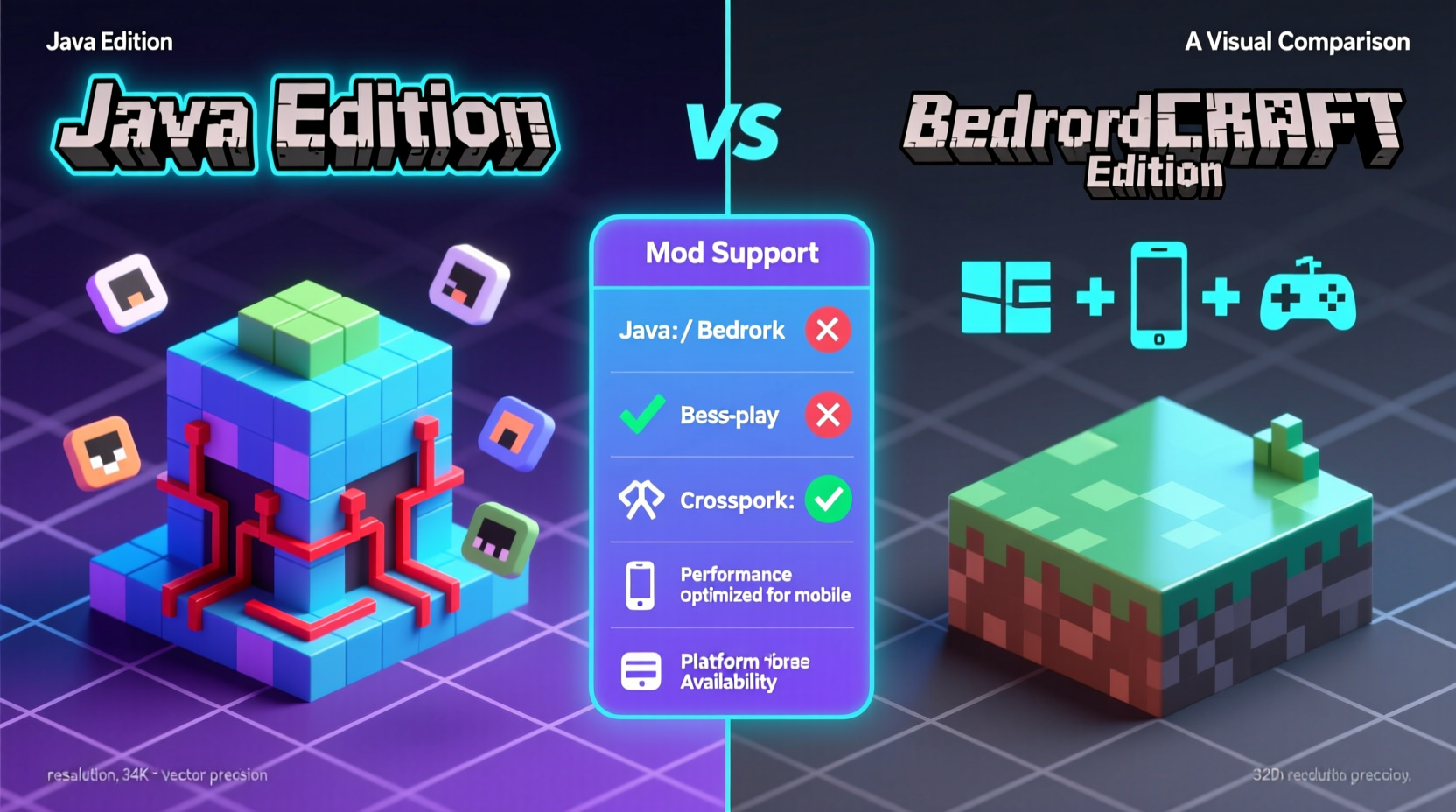
Minecraft began as a personal project by Swedish developer Markus \"Notch\" Persson in 2009. The original version was built using Java, a versatile programming language well-suited for cross-platform desktop applications at the time. This initial release became known as Minecraft: Java Edition, available exclusively on Windows, macOS, and Linux. Its open architecture allowed for deep modding, server customization, and a thriving community-driven ecosystem.
When Microsoft acquired Mojang in 2014, they inherited a game with immense potential—but also technical limitations. The Java codebase, while powerful, wasn’t optimized for mobile devices or consoles. To expand Minecraft’s reach beyond PC users, Mojang developed a new version using C++, a language better suited for performance across diverse hardware. This re-engineered version—Minecraft: Bedrock Edition—was designed from the ground up to run efficiently on smartphones, tablets, Xbox, PlayStation, Nintendo Switch, and even augmented reality devices like HoloLens.
In essence, the two versions exist because they serve different technological and strategic purposes. Java Edition preserves the original vision and moddability, while Bedrock Edition prioritizes accessibility, performance, and cross-platform play.
Key Differences Between Java and Bedrock
The divide isn’t merely technical; it affects gameplay, features, and community interaction. Below is a detailed comparison highlighting major distinctions:
| Feature | Java Edition | Bedrock Edition |
|---|---|---|
| Platform Availability | Windows, macOS, Linux | iOS, Android, Xbox, PlayStation, Switch, Windows 10/11 |
| Programming Language | Java | C++ |
| Mod Support | Extensive (via mods, resource packs, data packs) | Limited (add-ons only) |
| Server Customization | Full control (plugins, custom software like Spigot) | Restricted (only official servers or Realm add-ons) |
| Cross-Platform Play | No (except via third-party tools) | Yes (between all Bedrock platforms) |
| Performance Optimization | Varies by system; less consistent | Highly optimized for low-end devices |
| Community Size & Focus | PC-centric, modders, redstone engineers | Families, younger players, console/mobile gamers |
Why Not Just Merge the Two?
Many fans have long asked: why doesn’t Mojang simply merge Java and Bedrock into one unified version? The answer lies in complexity and legacy systems. Rewriting Java Edition in C++ would break thousands of existing mods, plugins, and custom servers. Entire communities—like those running complex survival multiplayer networks or intricate redstone contraptions—rely on the stability and flexibility of the current Java environment.
Conversely, porting Bedrock’s features back into Java would compromise its lightweight performance and could introduce instability on mobile and console platforms. While Mojang has made efforts to align both versions—such as introducing similar biomes, mobs, and UI elements in recent updates—the core architectures remain too divergent to unify without massive disruption.
“We’re committed to bringing feature parity where possible, but we also respect the unique strengths of each edition.” — Helen Chiang, Head of Minecraft at Mojang Studios
Real-World Example: A Family's Gaming Experience
Consider the Thompson family: parents use PCs for work and leisure, their teenage son owns a PlayStation, and their younger daughter plays on an iPad. Before Bedrock Edition existed, they couldn’t play together. The parents used Java Edition on their laptops, but couldn’t join their kids’ worlds. When they switched to Bedrock, everything changed. Now, all four can build, explore, and survive together in the same world, regardless of device. For them, Bedrock isn’t just convenient—it’s transformative.
This scenario illustrates why maintaining two versions makes sense. While the Thompsons benefit from Bedrock’s inclusivity, another user—say, a computer science student building automated farms with command blocks and mods—would find Java Edition indispensable. Different needs, different tools.
Choosing the Right Version: A Practical Checklist
Still unsure which version suits you? Use this checklist to decide:
- Do you want to play with friends on phones, consoles, or Windows 10/11? → Choose Bedrock
- Are you interested in installing mods, texture packs, or custom shaders? → Choose Java
- Do you plan to run your own server with plugins like WorldEdit or Essentials? → Choose Java
- Is your primary device a smartphone, tablet, or gaming console? → Choose Bedrock
- Do you care about participating in large modded communities (e.g., SkyBlock, Tekkit)? → Choose Java
- Are you playing with young children or casual gamers? → Bedrock is more intuitive and stable
Future Outlook: Will the Gap Close?
Mojang continues to narrow the gap between the two editions. Features once exclusive to Java—like raids, pillagers, and copper mechanics—have been added to Bedrock. Similarly, Bedrock’s responsive touch controls and real-time co-op invitations have influenced quality-of-life improvements in Java. However, full convergence remains unlikely in the near term.
Instead, Mojang appears to be pursuing a strategy of “harmonized divergence”—keeping both editions alive, updating them in parallel, and ensuring neither becomes obsolete. With the rise of cloud gaming and cross-play ecosystems, Bedrock may eventually dominate in terms of player count, but Java will likely endure as the preferred choice for tinkerers, creators, and purists.
FAQ
Can I transfer my worlds from Java to Bedrock?
Direct transfers aren’t supported due to technical differences in world format. However, some third-party conversion tools exist, though they may result in data loss or corruption. It’s safer to recreate builds manually if needed.
Is Bedrock Edition a downgrade of Java?
Not inherently. While Bedrock lacks deep mod support, it excels in performance, accessibility, and multiplayer integration. It’s a different flavor of Minecraft, optimized for broader audiences rather than advanced customization.
Do I need to buy both versions?
If you own Java Edition purchased before 2019, you can claim a free copy of Bedrock on Windows 10/11 through your Mojang account. Otherwise, they are sold separately. Owning both allows maximum flexibility across devices.
Conclusion
The existence of two Minecraft versions isn’t a flaw—it’s a reflection of the game’s evolution and ambition. Java Edition honors the past, empowering players to reshape the game through code and creativity. Bedrock Edition embraces the future, breaking down barriers between devices and inviting everyone to play together. Rather than seeing them as competitors, think of them as complementary expressions of the same sandbox philosophy: freedom, exploration, and endless possibility.




 浙公网安备
33010002000092号
浙公网安备
33010002000092号 浙B2-20120091-4
Comments
No comments yet. Why don't you start the discussion?