
Carrying your daily essentials shouldn’t mean sacrificing comfort or style. As urban lifestyles demand mobility and minimalism, two bag types have risen in popularity: the mini backpack and the crossbody tote. Both promise portability and practicality, but they serve different needs, body types, and routines. Choosing between them isn’t just about aesthetics—it’s about how well each supports your lifestyle while keeping weight, clutter, and strain at bay.
The goal is simple: transport what you need—phone, wallet, keys, maybe a small notebook or lip balm—without feeling weighed down. Yet even within this narrow scope, design differences create meaningful distinctions in accessibility, balance, and long-term wearability. Understanding these nuances helps you make an informed decision that aligns with how you move through your day.
Understanding the Core Differences
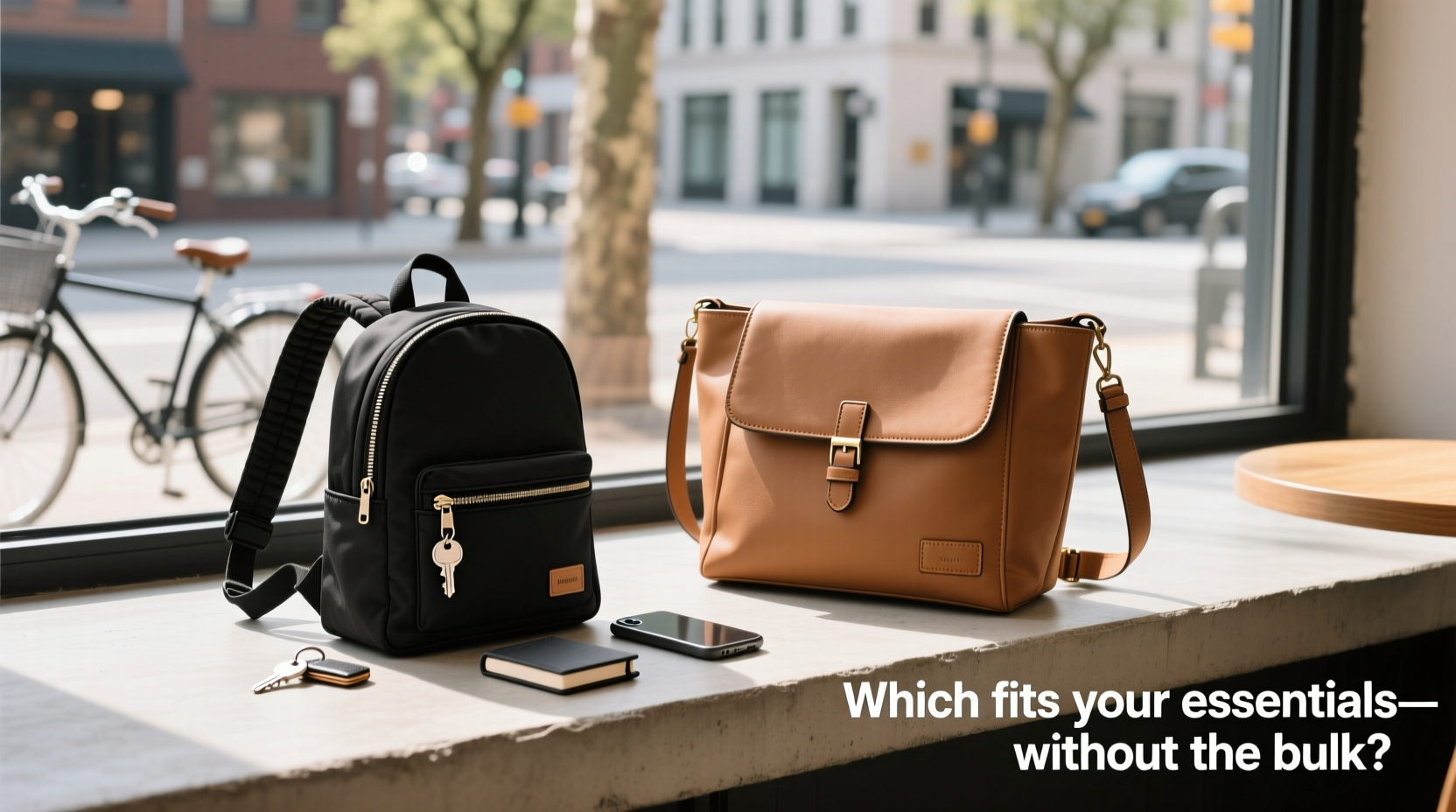
At first glance, mini backpacks and crossbody totes may seem interchangeable—both are compact, often made from lightweight materials, and designed for on-the-go use. But their structural designs lead to divergent experiences.
A mini backpack typically features two shoulder straps and rests centered on the back. It distributes weight evenly across both shoulders, reducing strain during extended wear. Most models include a main compartment, sometimes with internal organization like zip pockets or slip sleeves. Their shape tends to be boxier, offering slightly more structured volume despite smaller external dimensions.
In contrast, a crossbody tote usually has a single adjustable strap worn diagonally across the torso. This design keeps the bag in front of the body when worn tightly, allowing quick access to contents. Crossbody totes often prioritize sleek silhouettes over internal structure, favoring soft leather or canvas with minimal compartments. They’re designed to complement outfits while staying functional.
These fundamental differences affect not only comfort but also security, posture, and situational usability.
Weight Distribution and Comfort Over Time
One of the most overlooked aspects of bag selection is ergonomics. Even light loads can cause discomfort if poorly distributed.
Mini backpacks excel here. By using both shoulders, they align closely with natural spinal positioning. This balanced load reduces pressure on any single point, making them ideal for walking commutes, cycling, or all-day wear. For individuals prone to neck or shoulder tension, this even distribution can prevent aggravation caused by carrying uneven weight on one side.
Crossbody totes, however, shift weight to one shoulder and hip. While fine for short durations, prolonged use can lead to postural imbalance. The diagonal pull may cause users to lean or twist unconsciously, especially as fatigue sets in. Designers attempt to mitigate this with padded straps and contoured shapes, but physics remains a limiting factor.
That said, crossbody bags offer superior immediacy. Need your phone or transit pass? It’s right in front of you. Mini backpacks require removing the bag or reaching behind, which can be inconvenient in crowded spaces or while standing.
“From a biomechanical standpoint, dual-strap bags reduce musculoskeletal strain significantly—even with loads under two pounds.” — Dr. Lena Torres, Physical Therapist & Ergonomic Consultant
Capacity and Organization: What Fits Where?
Both styles aim to carry “the essentials,” but definitions vary. A standard set includes:
- Smartphone (5–6.5 inches)
- Wallet (bi-fold or cardholder)
- Keys
- Hand sanitizer (travel size)
- Lip balm or compact mirror
- Folded umbrella (compact)
- Earbuds case
To evaluate real-world utility, consider how each bag organizes these items.
| Feature | Mini Backpack | Crossbody Tote |
|---|---|---|
| Average Interior Volume | 8–12 liters | 5–9 liters |
| Main Compartment Access | Top or front zipper | Top open or flap closure |
| Internal Pockets | Common (zipper, slip, tech sleeve) | Rare; limited to one slip pocket |
| External Storage | Sometimes rear zip pocket | Rare |
| Security Level | High (closed back, zippers) | Moderate (open tops, flap risks) |
| Quick-Access Items | Less convenient | High (front-facing) |
Mini backpacks generally provide better organization. Multiple pockets allow separation of items—keeping your power bank distinct from receipts or sunglasses. Some even include RFID-blocking slots or water-resistant linings. However, accessing anything mid-walk requires pausing to unzip or reach around.
Crossbody totes win in visibility and speed. With the bag resting near your hip or lower chest, opening it is a matter of lifting a flap or unzipping a top. No twisting or removing necessary. But this ease comes at the cost of structure—items tend to jumble unless packed deliberately.
Real-World Scenario: The Urban Commuter
Meet Jordan, a graphic designer living in downtown Seattle. Their typical day involves biking to a café, working remotely for three hours, attending a client meeting, then grabbing groceries before heading home. Weather is unpredictable, so rain protection matters. They carry a phone, AirPods, wallet, reusable water bottle (collapsible), sketchbook, and occasionally a thin sweater.
Initially, Jordan chose a minimalist crossbody tote for its sleek look. But after two weeks, they noticed recurring left shoulder pain and found themselves constantly adjusting the strap. Retrieving their sketchbook required dumping half the bag onto the table. During rain, the open-top design allowed moisture to seep in.
Switching to a mini backpack with a padded laptop sleeve (used for the sketchbook) and water-resistant fabric solved most issues. Weight felt neutral, access was manageable, and peace of mind improved knowing everything stayed dry. The trade-off? Less instant access to their phone while walking—but acceptable given the overall gains in comfort and protection.
Durability and Material Considerations
Functionality also depends on construction quality. Neither bag type inherently lasts longer—material choice and craftsmanship determine longevity.
Mini backpacks often use technical fabrics like nylon, polyester, or Cordura—materials chosen for abrasion resistance and weather resilience. Zippers are typically heavy-duty YKK models, and stitching reinforces stress points. These traits make them suitable for active use, including travel or outdoor activities.
Crossbody totes lean toward fashion-forward materials: genuine leather, suede, or textured synthetics. While stylish, these can degrade faster when exposed to moisture or friction. Leather may scratch or darken over time; suede stains easily. That said, high-end versions with reinforced bases and protective coatings perform well with care.
For those prioritizing durability without compromising elegance, hybrid options exist—water-resistant vegan leather with internal lining and secure closures.
Style and Versatility Across Outfits
Fashion plays a significant role in accessory choices. A bag should complement—not clash with—your wardrobe.
Mini backpacks have evolved from schoolyard staples to streetwear icons. In neutral tones like black, beige, or olive, they pair effortlessly with athleisure, casual jeans, or layered fall looks. Sleek leather versions bridge the gap into semi-formal settings, though rarely appropriate for business meetings.
Crossbody totes shine in versatility. A slim black leather version transitions seamlessly from daytime errands to dinner dates. Gold hardware elevates simplicity; colorful canvas adds playful flair. Because they sit prominently on the torso, they become part of the outfit’s visual balance—ideal for making a subtle statement.
However, fit matters. Petite individuals may find large crossbody bags overwhelm their frame. Conversely, taller users might feel mini backpacks look undersized unless properly proportioned.
Checklist: Choosing Based on Your Lifestyle
Use this guide to match your routine with the right bag:
- Do you walk or bike frequently? → Choose mini backpack for balanced support.
- Do you value immediate access to items? → Opt for crossbody tote.
- Are you carrying more than six essential items? → Lean toward mini backpack for space and organization.
- Is weather a concern? → Prioritize mini backpacks with weather-resistant materials.
- Do you switch between casual and dressy outfits? → Crossbody tote offers broader stylistic range.
- Do you experience shoulder or back discomfort? → Avoid single-strap designs; go for dual-shoulder support.
- Is theft a concern in your area? → Mini backpacks are harder to snatch unnoticed.
FAQ: Common Questions Answered
Can a mini backpack be too small for essentials?
Yes. While marketed as “mini,” some models sacrifice functionality for trendiness. Check interior dimensions before buying—ensure your phone and wallet fit side-by-side without forcing. If you carry a tablet or larger journal, confirm there’s a dedicated sleeve or enough depth.
Are crossbody totes safe in crowded areas?
They can be, but vigilance is required. Worn loosely, they’re vulnerable to pickpockets. To improve security, choose a model with a locking zipper or magnetic snap, wear the strap tight across your body, and position the bag in front when in dense crowds.
Which bag type is better for travel?
For airport navigation and city exploration, mini backpacks are superior. Hands-free movement, TSA-friendly layouts, and compatibility with carry-on limits make them ideal. Crossbody totes work best as secondary bags—worn over a backpack to hold passports and phones.
Final Verdict: Function Meets Form
There’s no universal winner between mini backpacks and crossbody totes. The answer lies in your priorities.
If comfort, balance, and protection matter most—especially for active days, variable weather, or heavier loads—the mini backpack is the smarter long-term investment. Its ergonomic advantages outweigh minor inconveniences in access speed.
If style, immediacy, and adaptability to social or professional environments take precedence, the crossbody tote earns its place. Just be mindful of strap length, material durability, and how much you realistically carry.
Many people ultimately benefit from owning both. Rotate based on the day’s demands: the backpack for errands and transit, the tote for brunches and evening outings. This approach maximizes utility without compromising personal expression.
“The best bag isn’t the trendiest one—it’s the one you forget you’re wearing because it works so well.” — Marcus Lin, Product Designer at Urban Carry Co.
Take Action Today
Before your next purchase, conduct a simple test: lay out everything you carry daily. Measure the bundle. Try packing it into sample bags (in-store or via return policies). Walk around for 15 minutes with each style. Notice where pressure builds, where access frustrates, and where confidence grows.
Your ideal bag should disappear into your routine—light, reliable, and perfectly suited to how you live. Whether you lean toward the balanced efficiency of a mini backpack or the effortless elegance of a crossbody tote, let function guide form. Make the choice that supports your movement, protects your belongings, and reflects your rhythm.




 浙公网安备
33010002000092号
浙公网安备
33010002000092号 浙B2-20120091-4
Comments
No comments yet. Why don't you start the discussion?