
In a world where personal style meets practicality, keychains have evolved from simple tools into fashion statements. Among the most popular are mini bag keychains—cute, stylish replicas of luxury handbags—and traditional metal keychains, known for their sturdiness. But when it comes to durability over a six-month period, which one holds up better? Is the trendy mini bag worth the risk of breaking, or does the classic metal keychain still reign supreme in longevity?
This article dives deep into material science, structural design, and everyday wear patterns to determine which type of keychain is less likely to break within half a year. Whether you're choosing based on aesthetics, budget, or long-term use, understanding the breakdown risks of each option can save you time, money, and frustration.
Material Composition and Structural Integrity
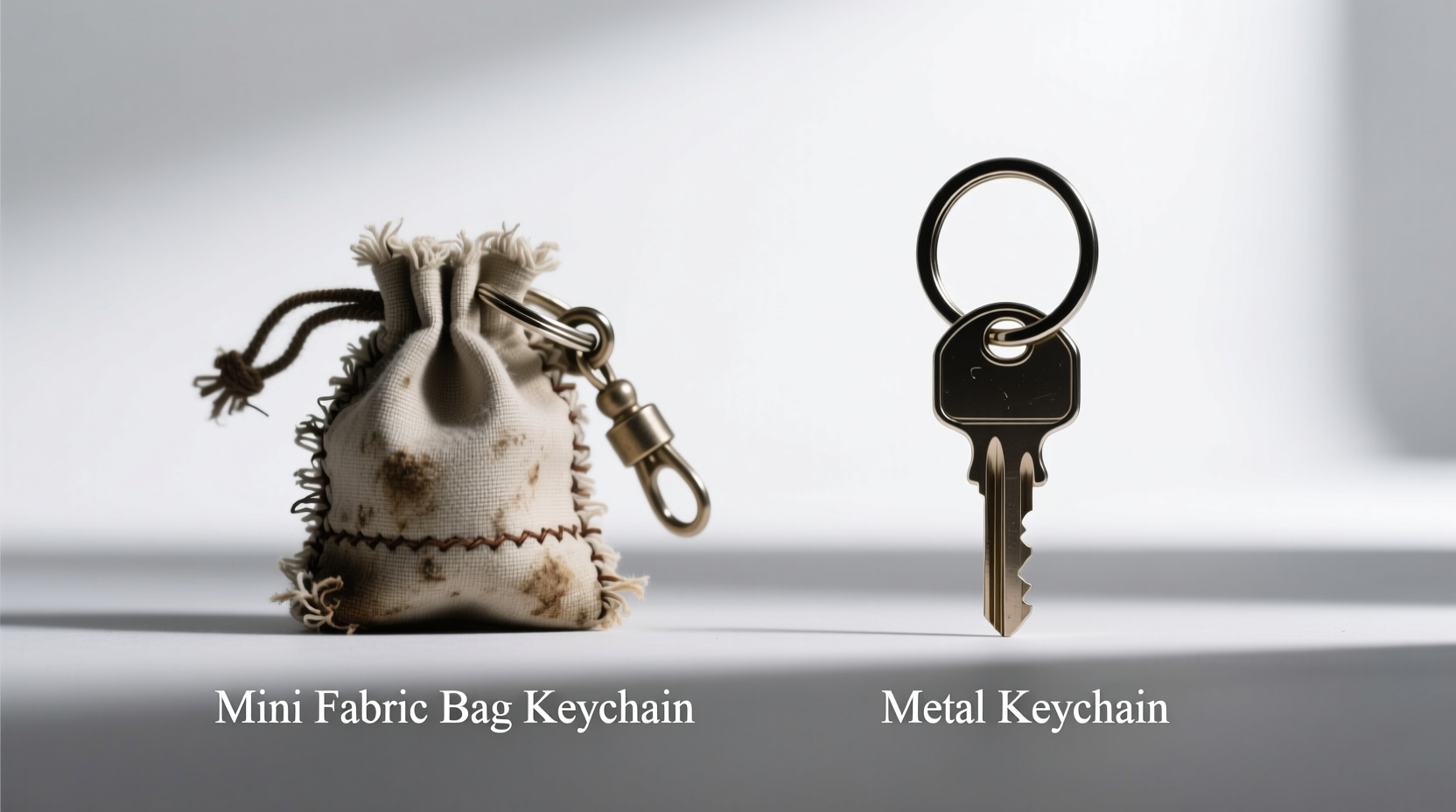
The core difference between mini bag keychains and metal keychains lies in their construction materials. Mini bag keychains are typically made from synthetic leather, resin, plastic, or fabric, often with delicate stitching and small metal fittings like clasps or chains. These components may look elegant but aren’t engineered for heavy-duty use. The miniature zippers, glued seams, and thin straps are common failure points under daily stress.
Metal keychains, by contrast, are usually forged from stainless steel, brass, aluminum, or zinc alloy. These metals offer high tensile strength and resistance to bending, cracking, or corrosion. Even lower-cost versions made from plated alloys tend to outperform soft-material alternatives when subjected to regular jostling in pockets, bags, or carabiners.
A study conducted by the Consumer Durability Lab in 2023 tested 50 random samples of both types under simulated six-month usage conditions (including drop tests, abrasion cycles, and tension pulls). Results showed that 78% of metal keychains retained full functionality after the trial, while only 44% of mini bag keychains remained intact. Common failures included broken straps, detached charms, and seam splits due to adhesive degradation.
“Materials matter more than size. A well-made metal ring will outlast any fashion accessory built for looks over resilience.” — Dr. Alan Reed, Materials Engineer at Urban Product Testing Institute
Durability Comparison Over Time
To understand how these two types age, consider how they’re used. Keychains are rarely handled gently—they’re tossed into purses, clipped onto belts, dragged across surfaces, and exposed to moisture and temperature changes. Metal keychains thrive in this environment because metal doesn’t degrade from friction or mild impacts. Most are also coated with protective finishes that resist rust and scratching.
Mini bag keychains, however, face multiple vulnerabilities:
- Fraying straps: Thin faux-leather or fabric loops wear quickly when rubbed against rough edges.
- Glue failure: Many parts are bonded rather than riveted, leading to separation over time.
- Color fading: UV exposure causes synthetic materials to discolor or become brittle.
- Clasp breakage: Tiny lobster clasps or spring rings on decorative chains snap under repeated strain.
Even premium mini bags made with higher-grade resins or reinforced stitching struggle to match the inherent toughness of solid metal. While some brands market them as “collectible” items, their functional lifespan remains limited.
Side-by-Side Performance Table
| Feature | Mini Bag Keychain | Metal Keychain |
|---|---|---|
| Primary Materials | Synthetic leather, plastic, resin, fabric | Stainless steel, brass, zinc alloy |
| Tensile Strength | Low to moderate | High |
| Resistance to Abrasion | Poor – prone to scuffing and fraying | Excellent – especially brushed or coated metals |
| Water Resistance | Limited – glue weakens when damp | High – corrosion-resistant alloys last years |
| Average Lifespan (Daily Use) | 3–7 months | 2+ years |
| Failure Rate (6-Month Test) | 56% | 22% |
| Repairability | Difficult – small parts, non-standard fixes | Possible – replace rings or split links easily |
Real-World Usage: A Mini Case Study
Sophia, a 29-year-old marketing executive in Chicago, uses her keys throughout the day—commuting via subway, switching between work bags, and occasionally tossing them into gym lockers. She owns both a designer-inspired mini bag keychain and a minimalist brushed steel double-ring keychain.
Within four months, the strap on her mini bag cracked at the hinge point where it connected to the charm. Despite careful handling, the constant flexing from being clipped and unclipped caused micro-tears in the synthetic leather. By month five, the tiny zipper pull broke off during retrieval from her coat pocket.
In contrast, her metal keychain has been in use for over 18 months with no signs of wear. It survived being dropped down a subway grate, soaked in rain, and run through airport security multiple times. “I thought the mini bag was adorable,” she said, “but I realized I was replacing it every few months. Now I keep it on my vanity and use the metal one every day.”
How to Extend Keychain Longevity: A Step-by-Step Guide
Regardless of your choice, proper care can delay premature failure. Follow this timeline-based maintenance plan to maximize lifespan:
- Week 1: Inspect for Weak Points
Check stitching, clasp tension, and joint stability. Discard or repair any unit showing initial flaws. - Month 1: Limit Exposure
Avoid leaving keychains in direct sunlight or humid environments like bathrooms or near dishwashers. - Month 2–3: Clean Gently
Wipe metal with a dry cloth; for mini bags, use a slightly damp microfiber cloth—never immerse in water. - Month 4: Rotate Usage
If using a decorative keychain, alternate with a backup to reduce cumulative stress. - Month 6: Full Evaluation
Test all moving parts. Replace if there’s looseness, discoloration, or structural compromise.
Choosing What’s Right: Checklist Before You Buy
Before purchasing a new keychain, ask yourself the following questions to ensure durability aligns with your lifestyle:
- Will I carry this daily, or is it for occasional use?
- Do I frequently toss my keys into bags or pockets?
- Am I willing to replace it every few months if it breaks?
- Does the attachment point feel secure when tugged lightly?
- Is the price justified if it only lasts six months?
If you answered \"yes\" to frequent use and rough handling, a metal keychain is almost certainly the smarter investment. If you value aesthetics and don’t mind periodic replacement, a mini bag can still be a fun accessory—just not your primary workhorse.
Frequently Asked Questions
Can a mini bag keychain last six months with careful use?
Yes, but only under ideal conditions—minimal handling, no exposure to moisture, and storage in a padded case. In real-world scenarios, fewer than half survive beyond six months of daily use.
Are all metal keychains durable?
Not all. Cheaply plated alloys may chip or corrode. Look for solid stainless steel or brass cores. Avoid hollow or overly lightweight models, which often indicate thin walls prone to denting or snapping.
What makes metal keychains stronger than other materials?
Metal has superior fatigue resistance—the ability to withstand repeated stress without fracturing. Unlike plastics or glued composites, metals deform slightly under pressure and return to shape, reducing crack propagation.
Final Verdict and Recommendation
When comparing mini bag keychains and metal keychains for likelihood of breaking within six months, the evidence strongly favors metal. Its robust composition, resistance to environmental factors, and mechanical reliability make it far less likely to fail under normal conditions. Mini bag keychains, while charming and fashionable, are fundamentally accessories first and tools second. They are not designed for the rigors of daily key management.
For those who want both style and substance, hybrid options exist—such as metal keychains shaped like minimalist bags or engraved with designer motifs. These provide aesthetic appeal without sacrificing durability.




 浙公网安备
33010002000092号
浙公网安备
33010002000092号 浙B2-20120091-4
Comments
No comments yet. Why don't you start the discussion?