
In the age of minimalist fashion and functional design, every square inch of your bag matters. As mini bags grow in popularity—thanks to their sleek profiles and on-trend silhouettes—the challenge of fitting essentials becomes more pressing. One common pain point? Keys. They’re necessary, bulky, and prone to scratching other items or getting lost in the abyss of a small interior. Enter the key organizer: a compact solution marketed as a space-saver and clutter-reducer. But does it actually free up room, or is it just another accessory adding bulk? Let’s examine the real impact of key organizers when paired with mini bags.
The Mini Bag Dilemma: Style vs. Functionality
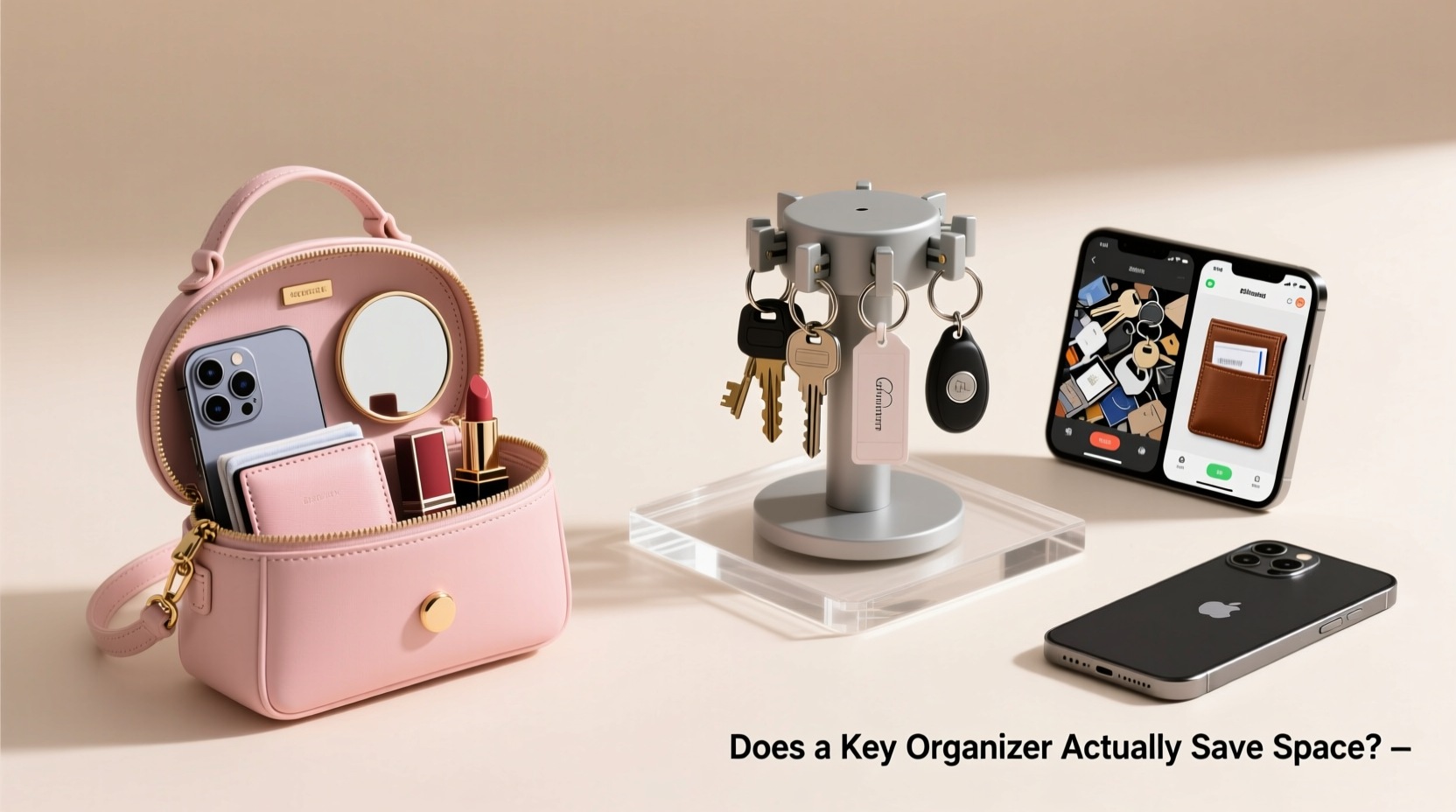
Mini bags are undeniably stylish. From structured clutches to slouchy crossbodies, they’ve become staples in urban wardrobes. However, their charm often comes at the cost of practicality. Most mini bags offer limited internal space—sometimes barely enough for a phone, lipstick, and folded cash. When keys are tossed in loose, they create noise, damage delicate linings, and complicate retrieval.
Many users report that even small metal keyrings take up disproportionate mental and physical space. The jingle alone can be irritating, and digging through a tiny compartment for the right key wastes time. This friction has led to the rise of dedicated key organizers—compact cases designed to consolidate keys into a flat, silent, and protected format.
Do Key Organizers Reduce Bulk?
The answer isn’t straightforward. A key organizer replaces a jangling ring with a solid block—typically made of aluminum, stainless steel, or durable plastic. While this eliminates loose movement, the device itself has volume. For someone with three to five keys, a well-designed organizer may actually use less space than a traditional keyring due to tighter packing and elimination of gaps between keys.
However, if you only carry one or two keys, the organizer might add unnecessary thickness. In such cases, the “space-saving” claim falls apart. The real benefit emerges not from pure volume reduction, but from **efficiency of space usage**—keeping keys flat, contained, and out of the way of other essentials.
Comparing Space Efficiency: Organizer vs. Loose Keys
To understand the spatial dynamics, consider how keys behave inside a confined space. Loose keys on a ring shift and rotate, creating dead zones where nothing else can fit. They also require clearance for turning and access. A key organizer, by contrast, maintains a fixed shape—often rectangular or oval—making it easier to tuck into corners or slide behind a phone.
Additionally, many organizers feature quick-access mechanisms (like sliding panels or rotating drums) that eliminate the need to remove all keys to find one. This reduces fumbling and keeps the bag interior organized, indirectly preserving space by minimizing disarray.
“Space isn’t just about cubic inches—it’s about usability. A well-contained item frees up cognitive and physical room.” — Daniel Park, Urban Lifestyle Designer
Key Organizer Pros and Cons in Mini Bags
| Aspect | Advantage | Drawback |
|---|---|---|
| Space Utilization | Flatter profile allows better stacking with phone/wallet | Thicker than a single key on a loop |
| Noise Reduction | Eliminates jingling in quiet settings | None significant |
| Protection | Prevents scratches to phone screens and bag lining | Some models can scratch softer materials if uncoated |
| Accessibility | Quick-release designs speed up key selection | Poorly designed models can be slower than a ring |
| Weight | Metal versions feel premium but add heft | Can tip balance in ultra-light bags |
Real-World Example: Commuter’s Dilemma
Sophie, a graphic designer in Brooklyn, uses a mini shoulder bag for her daily commute. Her essentials: phone, cardholder, lip balm, and four keys (apartment, office, bike lock, and gym). Initially, she kept keys on a standard ring. Every time she reached for her phone, the keys would snag the screen protector, causing micro-scratches. She also wasted time searching for the right key while holding coffee.
After switching to a slim key organizer, she noticed immediate improvements. The keys no longer shifted around, allowing her phone to sit flush against the side of the bag. The organizer’s magnetic flap let her flip to the correct key in under two seconds. Though the organizer added slight thickness, it created a more predictable interior layout—so much so that she was able to remove a redundant card, streamlining further.
In Sophie’s case, the organizer didn’t reduce total volume, but it optimized space usage and reduced friction—proving that \"saving space\" isn't always about size, but about control.
How to Choose the Right Key Organizer for a Mini Bag
Not all key organizers are created equal. To truly enhance space efficiency in a mini bag, select one with the following features:
- Low profile: Look for models under 0.5 inches thick.
- Compact footprint: Should fit within the width of a smartphone.
- Tool-free key loading: Avoid organizers requiring screws or tools for setup.
- Smooth exterior: Prevents scratching of phone screens or leather interiors.
- Secure closure: Magnetic or snap lids prevent accidental opening.
Materials matter too. Aluminum offers durability without excessive weight. Silicone-coated versions add grip and protection but may increase bulk slightly. Avoid bulky drum-style organizers if space is critical—they save mental clutter but consume more room.
Step-by-Step: Optimizing Your Mini Bag with a Key Organizer
- Inventory your keys: Remove duplicates or rarely used ones.
- Measure your bag’s interior: Note depth and width constraints.
- Select a low-profile organizer: Prioritize dimensions over features.
- Load keys securely: Follow manufacturer instructions to avoid loss.
- Test the layout: Place organizer with phone and wallet—ensure everything fits without pressure.
- Adjust placement: Store the organizer along the bag’s edge for easy access.
Frequently Asked Questions
Can a key organizer really make my mini bag feel bigger?
Yes—but indirectly. By containing keys into a predictable shape, you reduce chaos inside the bag. This makes it easier to fit and retrieve other items, creating the sensation of more space even if volume remains unchanged.
Are there lightweight alternatives to metal key organizers?
Absolutely. Polycarbonate, reinforced nylon, and silicone-based organizers offer similar functionality at lower weights. Some foldable fabric sleeves are ultra-light but provide less protection and slower access.
Do key organizers work with smart keys or fobs?
Most do not accommodate bulky electronic fobs. If you carry a car key fob, look for organizers with external clips or expandable compartments. Alternatively, keep the fob separate and only organize traditional house keys.
Final Verdict: Is It Worth It?
For owners of mini bags, a key organizer isn’t just a convenience—it’s a strategic tool for maximizing limited space. While it may not shrink your bag’s contents in literal terms, it brings order, protects valuables, and improves daily usability. The space it \"saves\" is not measured in millimeters, but in fewer frustrations, quicker access, and a cleaner interior.
If you carry more than two keys, the odds are high that a well-chosen organizer will improve your experience. The key is selecting one designed for minimalism, not just novelty. Focus on thinness, smooth edges, and intuitive access. When integrated thoughtfully, a key organizer doesn’t just fit in your mini bag—it helps the entire system work better.




 浙公网安备
33010002000092号
浙公网安备
33010002000092号 浙B2-20120091-4
Comments
No comments yet. Why don't you start the discussion?