
As urban living becomes more compact and minimalist design gains popularity, many homeowners face a recurring holiday dilemma: should they go with a traditional floor-standing Christmas tree or opt for a smaller, space-saving alternative? The answer isn’t always obvious. While grand floor models evoke nostalgia and festive grandeur, mini Christmas trees offer practicality and charm—especially in apartments, studios, or homes with limited square footage.
The choice between a mini and full-size floor model involves more than just physical dimensions. It touches on aesthetics, storage, budget, ease of decoration, and even emotional resonance. For those navigating tight corners, narrow hallways, or shared living areas, understanding the real trade-offs is essential. This guide breaks down every factor that matters when choosing between a mini and floor model Christmas tree for small-space living.
Space Efficiency: Measuring What Matters
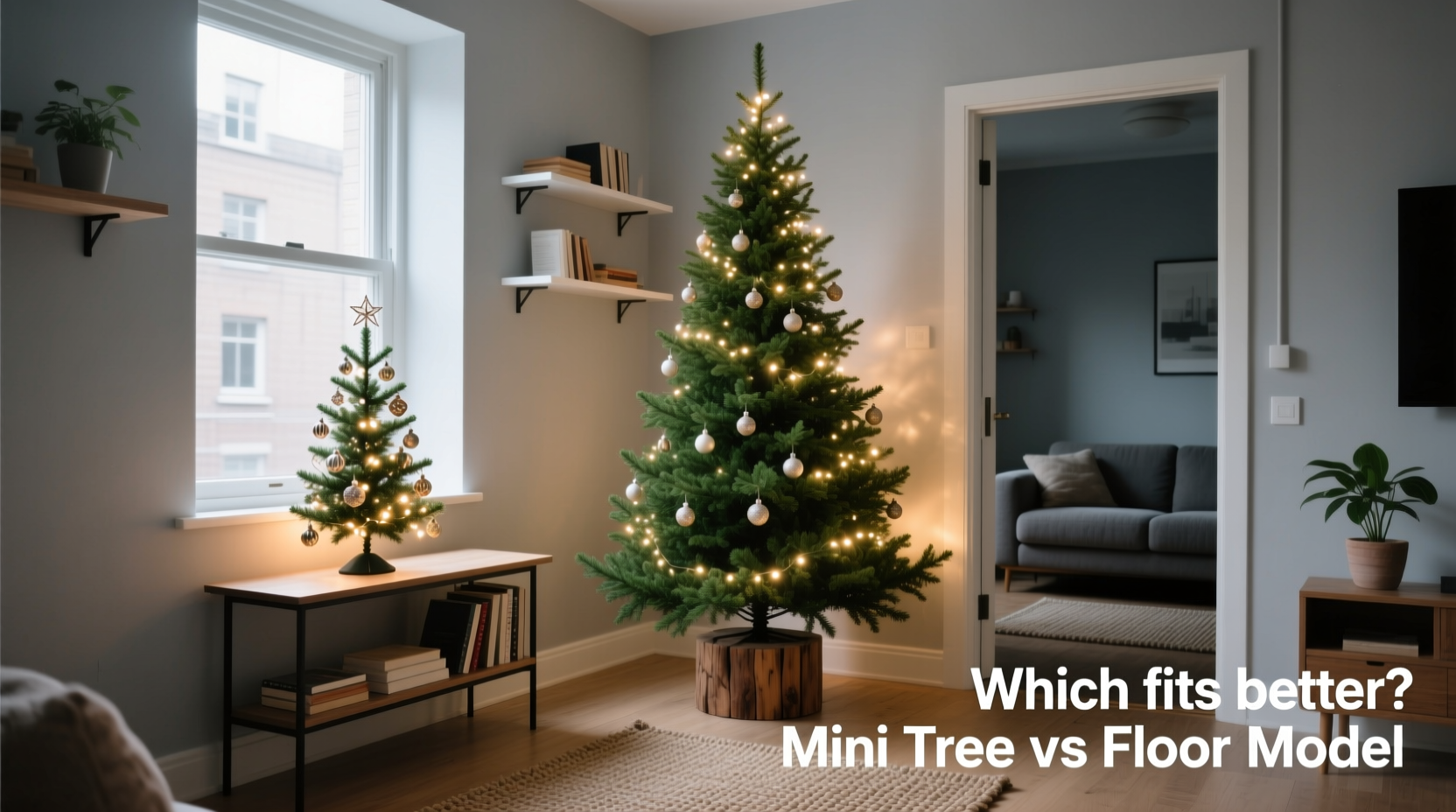
When square footage is at a premium, every inch counts. Floor models typically range from 6 to 9 feet in height and require a base diameter of at least 3 to 5 feet to maintain visual balance and stability. Even a \"slim\" floor tree occupies significant floor space—often equivalent to a small armchair or coffee table.
In contrast, mini Christmas trees usually stand between 12 inches and 4 feet tall. Many are designed specifically for tabletops, shelves, or unused corners. A 2-foot-tall tree, for example, may only take up 12 inches of floor diameter—less than a houseplant. This makes them ideal for studio apartments, dorm rooms, or homes where open space doubles as a walkway.
But it’s not just about footprint. Vertical clearance is equally important. In homes with low ceilings, sloped roofs, or hanging light fixtures, a tall tree can feel oppressive or physically impossible. Mini trees avoid these issues entirely, allowing placement under windows, beside bookshelves, or on mantels without disrupting room flow.
Aesthetic Impact: Presence vs. Practicality
There’s no denying the emotional weight of a towering evergreen draped in lights and ornaments. Floor models command attention, serving as a central focal point during gatherings and family moments. They support heavier decorations, multiple strands of garland, and elaborate toppers like stars or angels.
However, mini trees have evolved beyond mere novelty. Modern designs mimic the proportions and fullness of larger trees, often featuring realistic branch tips, warm LED lighting, and elegant finishes. When styled thoughtfully, a mini tree can radiate warmth and holiday spirit without dominating the room.
Interior designers increasingly favor mini trees in contemporary settings. “A well-placed small tree can create intimacy and coziness,” says interior stylist Leah Monroe. “It invites people in rather than blocking their path.” She recommends clustering multiple mini trees of varying heights on a console table or staircase landing to create a layered effect—offering visual interest without sacrificing space.
“A well-placed small tree can create intimacy and coziness. It invites people in rather than blocking their path.” — Leah Monroe, Interior Stylist
Comparison Table: Mini Tree vs Floor Model
| Feature | Mini Christmas Tree (Under 4 ft) | Floor Model (6–7.5 ft) |
|---|---|---|
| Average Height | 12” – 48” | 72” – 90” |
| Base Diameter | 10” – 24” | 36” – 60” |
| Best Placement | Tabletop, shelf, corner, entryway console | Living room center, large corner, open foyer |
| Decoration Capacity | Light ornaments, micro-lights, small picks | Full ornament sets, garlands, large toppers |
| Storage Size | Fits in small closet or under bed | Requires large box or bag; attic/basement storage |
| Average Price | $25 – $80 | $80 – $250+ |
| Setup Time | 5–15 minutes | 30–60+ minutes |
| Mobility | Easy to move or reposition | Bulky; difficult to relocate once assembled |
Real-Life Scenario: Decorating a Studio Apartment
Jamie lives in a 450-square-foot downtown studio in Seattle. Each November, she wrestles with the same question: how to celebrate the holidays without turning her home into an obstacle course. Last year, she attempted a 6.5-foot pre-lit tree. It looked beautiful—but consumed nearly a third of her main living zone. Walking from the kitchen to the couch required awkward sidestepping, and guests had nowhere to sit comfortably during movie nights.
This year, Jamie adopted a new strategy. She purchased two mini trees: a 3-foot frosted spruce for her dining nook and a 15-inch light-up silver pine for her bedroom dresser. She added string lights around the windows, hung a wreath on the door, and used decorative trays with candles and pinecones to enhance the seasonal vibe. The result? A festive atmosphere that didn’t compromise functionality. Her space felt joyful, not cluttered.
“I realized I didn’t need one big statement piece,” she said. “Multiple small accents gave me the same warmth without the spatial cost.”
Practical Considerations Beyond Size
Choosing between a mini and floor model isn’t just about current space—it’s also about long-term logistics. Consider these often-overlooked factors:
- Storage: Full-size artificial trees require durable boxes, rod protection, and dedicated storage space. If you don’t have access to a basement, attic, or large closet, this becomes a real burden. Mini trees often come with their own compact cases or can be stored inside drawers or under furniture.
- Assembly Time: Floor models can take over an hour to fluff branches, align tiers, and secure the stand. Mini trees, especially pre-lit ones, are often ready in minutes. For busy professionals or parents, this time difference adds up.
- Safety: In homes with pets or young children, a tall tree poses tipping risks. Even with anchoring, curious hands or wagging tails can bring it down. Mini trees placed on high surfaces reduce this danger significantly.
- Ease of Decoration: Decorating a 7-foot tree requires step stools, patience, and good lighting. With mini trees, everything is within arm’s reach. This accessibility encourages daily enjoyment and easier maintenance.
- Flexibility: Mini trees can be moved seasonally—a kitchen counter in December, a guest room in January. Floor models tend to stay put, limiting design flexibility.
Step-by-Step Guide: Choosing the Right Tree for Your Space
- Measure Your Area: Use a tape measure to record the height and width of your intended display zone. Mark ceiling obstructions, furniture, and foot traffic paths.
- Determine Primary Function: Is the tree mainly decorative, a centerpiece for gift display, or a family tradition? This helps decide scale and prominence.
- Assess Storage Options: Do you have a large storage bin and off-site space? If not, lean toward compact, easy-to-store models.
- Set a Budget: Factor in not just the tree, but stands, lights, ornaments, and replacement costs over time. Mini trees often cost less upfront and over the years.
- Test Placement Ideas: Use cardboard cutouts or a broom handle to simulate tree height and width. Live with the mockup for a day to assess impact on movement and lighting.
- Shop with Dimensions in Hand: Bring your measurements when shopping online or in-store. Don’t rely on product images alone—check exact specs.
- Consider Multi-Tree Strategy: Instead of one large tree, use two or three mini trees in different rooms to distribute holiday ambiance.
Checklist: Is a Mini Tree Right for You?
- ✅ Living in an apartment, condo, or home under 800 sq ft
- ✅ Limited vertical clearance (under 8 feet)
- ✅ No dedicated storage space for large items
- ✅ Frequent movers or renters
- ✅ Prioritize ease of setup and takedown
- ✅ Prefer subtle, curated holiday decor over bold statements
- ✅ Have pets or small children (safety consideration)
- ✅ Want to decorate multiple rooms without duplication costs
Frequently Asked Questions
Can a mini Christmas tree still feel festive?
Absolutely. Festivity comes from personalization, not size. A well-decorated mini tree with warm lights, meaningful ornaments, and complementary accents (like candles or stockings) can evoke just as much holiday spirit as a larger model. Layering with other décor elements enhances the overall atmosphere.
Do mini trees come pre-lit?
Yes, most modern mini Christmas trees come pre-lit with LED lights. Many feature energy-efficient, battery-operated options with timers, making them safe and convenient for shelves or tables without nearby outlets.
Are floor models worth it in small spaces?
Rarely—if space is truly constrained. However, if holiday tradition is deeply important and you’re willing to temporarily reconfigure your layout, a slim-profile floor tree (30–36” wide) might work. Just be prepared for reduced mobility and longer setup/storage demands.
Conclusion: Making Space for Joy
The decision between a mini Christmas tree and a floor model ultimately reflects lifestyle priorities. In small spaces, function must coexist with feeling. While floor models carry emotional weight, they aren’t always practical—or necessary—for a meaningful holiday experience.
Mini trees have matured from simple novelties into sophisticated, stylish alternatives that suit modern living. They offer flexibility, affordability, and safety while still delivering the warmth and ritual so central to the season. By embracing scale-appropriate choices, you’re not downsizing joy—you’re optimizing it.
Whether you choose a single elegant tabletop spruce or a collection of themed minis throughout your home, the goal remains the same: to create moments of connection, reflection, and celebration. Sometimes, the smallest tree casts the longest shadow of comfort and cheer.




 浙公网安备
33010002000092号
浙公网安备
33010002000092号 浙B2-20120091-4
Comments
No comments yet. Why don't you start the discussion?