
Earphones are among the most frequently used personal tech accessories today—whether for commuting, working out, or taking calls on the go. But their compact size makes them vulnerable to tangles, damage, and loss. That’s where protective cases come in. The market offers two dominant options: mini earphone bags and larger hard-shell cases. While both serve the same basic purpose, they differ significantly in design, functionality, and user experience. The real question isn’t just which one protects better—it’s whether the added protection of a larger case justifies the extra bulk.
Understanding the Core Differences
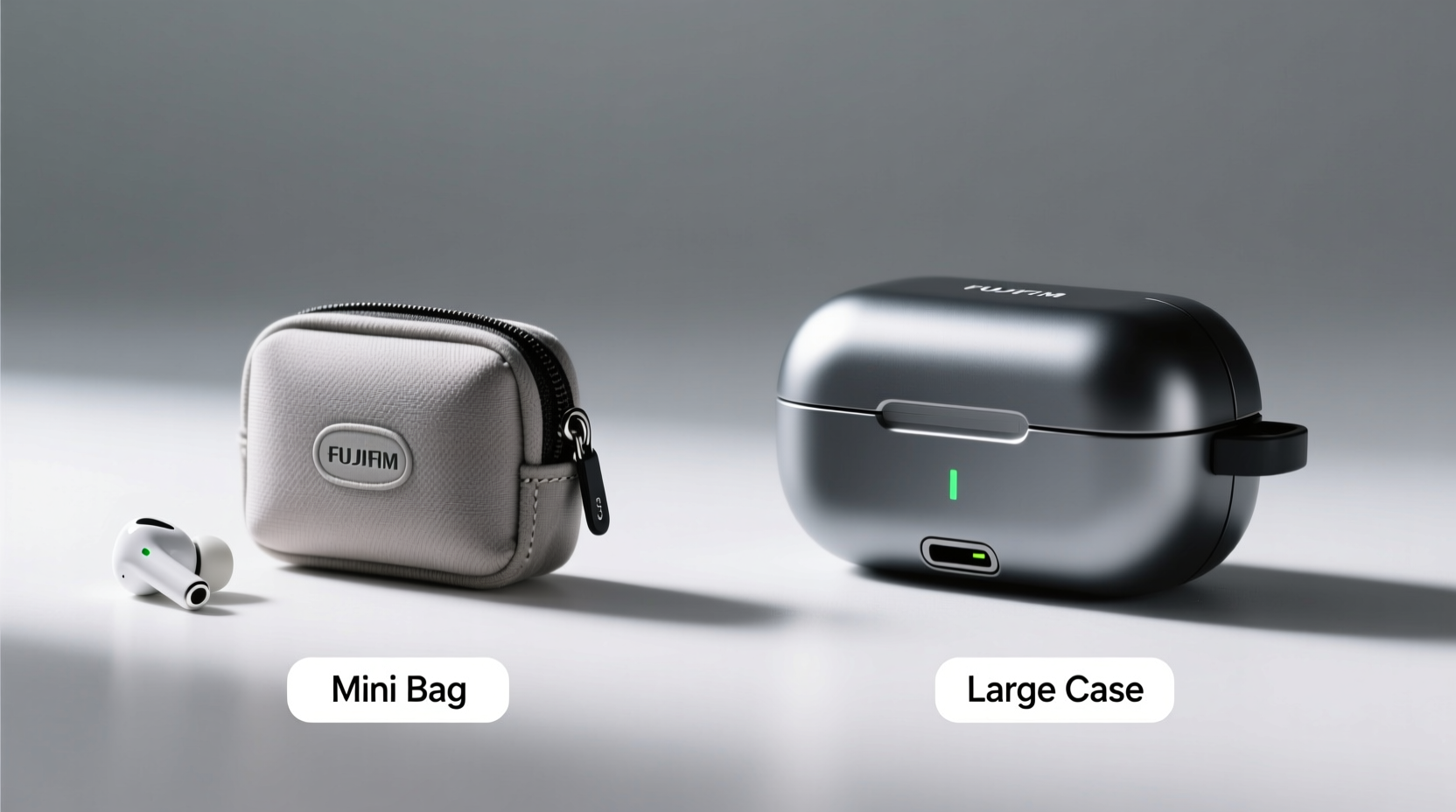
The primary distinction between mini earphone bags and large earphone cases lies in form factor, material, and intended use. Mini bags are typically soft, fabric-based pouches designed to slip into pockets effortlessly. They prioritize portability and minimalism. In contrast, large earphone cases are often rigid, molded plastic or silicone enclosures with dedicated compartments for cables, adapters, and even cleaning tools. These emphasize maximum protection over compactness.
Choosing between them isn’t merely about preference—it reflects how you use your earphones daily. A commuter who values pocket space might lean toward a mini bag, while an audiophile carrying high-end wired IEMs (in-ear monitors) may opt for the security of a larger case.
Portability: The Weight of Convenience
When it comes to everyday carry, every gram counts. Mini earphone bags typically weigh under 15 grams and measure less than 3 inches in any dimension. They fold flat and take up no more space than a key fob. This makes them ideal for users who already juggle multiple devices—smartphones, wallets, keys—and want to avoid adding clutter.
Large earphone cases, by comparison, can weigh 50–100 grams and occupy the footprint of a small power bank. While they offer superior impact resistance, their size can be prohibitive in tight jeans pockets or minimalist bags. For travelers or those using backpacks regularly, this may not matter. But for urban commuters squeezing onto crowded trains, the extra bulk becomes noticeable.
Protection Levels Compared
Protection is where large cases shine. Their hard shells absorb shocks from drops, resist crushing in luggage, and shield against moisture and dust. Many include foam inserts or custom-cut interiors that cradle earphones precisely, minimizing internal movement during transit.
Mini bags, usually made of neoprene, nylon, or microfiber, provide only light cushioning. They guard against scratches and minor abrasions but offer little defense against compression or impact. Drop a mini bag from waist height onto concrete, and your earphones could still suffer internal damage—even if the exterior looks fine.
Consider this: high-fidelity wired earphones, especially balanced-armature models, contain delicate drivers and wiring. Audiophiles investing $200+ in IEMs often cite case durability as a top concern. As David Lin, senior audio technician at SoundGear Review, notes:
“Physical stress is the leading cause of premature failure in premium earphones. A well-designed case isn’t luxury—it’s insurance.” — David Lin, Senior Audio Technician
Real-World Example: The Festival Goer’s Dilemma
Take Maya, a music journalist who attends outdoor festivals year-round. She carries multiple pairs of earphones: one for stage monitoring, another for interviews, and a third for personal listening. At a recent event, her mini fabric pouch was tossed into a backpack filled with cameras, cables, and water bottles. By day two, her favorite pair had frayed cables and muffled sound—likely due to compression and vibration.
After switching to a large Pelican-style case with foam cutouts, she reported zero issues across three subsequent events, despite rough handling and exposure to rain and dust. The trade-off? The case now lives in her main bag rather than her jacket pocket. For her workflow, the added protection far outweighed the inconvenience of slightly slower access.
Feature Comparison: What You Gain (and Lose)
| Feature | Mini Earphone Bag | Large Earphone Case |
|---|---|---|
| Weight | Light (5–15g) | Moderate to heavy (50–100g) |
| Dimensions | ~2.5” x 2” x 0.8” | ~5” x 3.5” x 1.5” |
| Impact Protection | Low (soft shell only) | High (rigid exterior + padding) |
| Storage Capacity | Earphones only | Earphones, cables, tips, tools |
| Pocket-Friendly | Yes | Rarely |
| Water Resistance | Limited (fabric-dependent) | Often sealed, splash-proof |
| Average Price | $5–$12 | $18–$40+ |
Who Should Choose What?
The decision ultimately hinges on usage patterns, device value, and lifestyle. Here’s a quick checklist to help determine the best fit:
- ✅ Do you own budget earbuds (<$50)? → Mini bag likely sufficient.
- ✅ Are your earphones high-end or custom-molded? → Prioritize a large case.
- ✅ Do you travel frequently with gear in checked luggage? → Hard case recommended.
- ✅ Do you prefer keeping everything in your jacket pocket? → Mini bag wins for convenience.
- ✅ Do you carry additional accessories (cables, DACs, tips)? → Large case offers organized storage.
For casual listeners using wireless earbuds like AirPods or Galaxy Buds, a mini bag adds just enough protection without disrupting daily routines. However, professionals, frequent travelers, or owners of specialized audio gear should seriously consider upgrading to a large case—even if it means adjusting how and where they carry their equipment.
Step-by-Step: Choosing and Using the Right Case
- Assess your earphone value: Higher investment = greater need for protection.
- Evaluate your carry habits: Do you use a backpack, briefcase, or rely solely on pockets?
- Measure your available space: Test-fit potential cases in your most-used bag or pocket.
- Check for interior customization: Look for foam inserts or dividers that prevent movement.
- Test accessibility: Can you open the case quickly when needed? Magnetic clasps beat zippers for speed.
- Inspect closure quality: Ensure zippers or latches are durable and won’t fail mid-travel.
Frequently Asked Questions
Can I use a mini bag for expensive earphones?
You can, but it's not advisable for long-term protection. While a mini bag prevents surface scratches, it won't protect against drops, crushing, or environmental exposure. If you're traveling or storing high-value earphones for extended periods, upgrade to a hard case.
Are large cases overkill for wireless earbuds?
Sometimes. Most true wireless earbuds come with charging cases that already offer decent protection. A large external case may be redundant unless you’re transporting multiple pairs, live in a dusty/humid climate, or need EDC (everyday carry) organization.
Do large cases damage earphone cables?
Not if used correctly. Poorly designed cases with sharp edges or tight bends can stress cables over time. Opt for models with smooth, rounded interiors and cable management loops to maintain cable integrity.
Final Verdict: Is the Bulk Worth It?
The answer depends on what you’re protecting and how much risk you’re willing to accept. For disposable or low-cost earphones, the minimalism of a mini bag aligns perfectly with practical needs. But for anyone relying on durable, high-performance audio gear, the added bulk of a large case pays dividends in longevity and peace of mind.
Think of it like smartphone protection: you *could* go without a case, but one drop could cost hundreds. Similarly, a $30 case preserving $250 earphones is not excess—it’s smart stewardship of your tech.




 浙公网安备
33010002000092号
浙公网安备
33010002000092号 浙B2-20120091-4
Comments
No comments yet. Why don't you start the discussion?