
When moving into a dorm room, apartment, or studio, one of the first decisions students and young professionals face is what type of refrigerator to buy. The choice often comes down to a mini fridge versus a full-size dorm fridge. While both serve the basic function of keeping food and drinks cold, their ability to hold daily essentials varies significantly. Understanding the differences in capacity, layout, energy use, and practicality can help you avoid running out of space by mid-week — or overspending on an appliance that’s too large for your needs.
The term “dorm fridge” can be misleading. Some people assume it means any small refrigerator suitable for student housing, but in reality, “full-size dorm fridge” typically refers to models between 3.1 and 4.5 cubic feet — larger than traditional mini fridges, which usually range from 1.7 to 2.5 cubic feet. This seemingly small difference in volume translates into real-world consequences when storing milk, leftovers, snacks, and beverages.
Capacity Comparison: How Much Can Each Actually Hold?
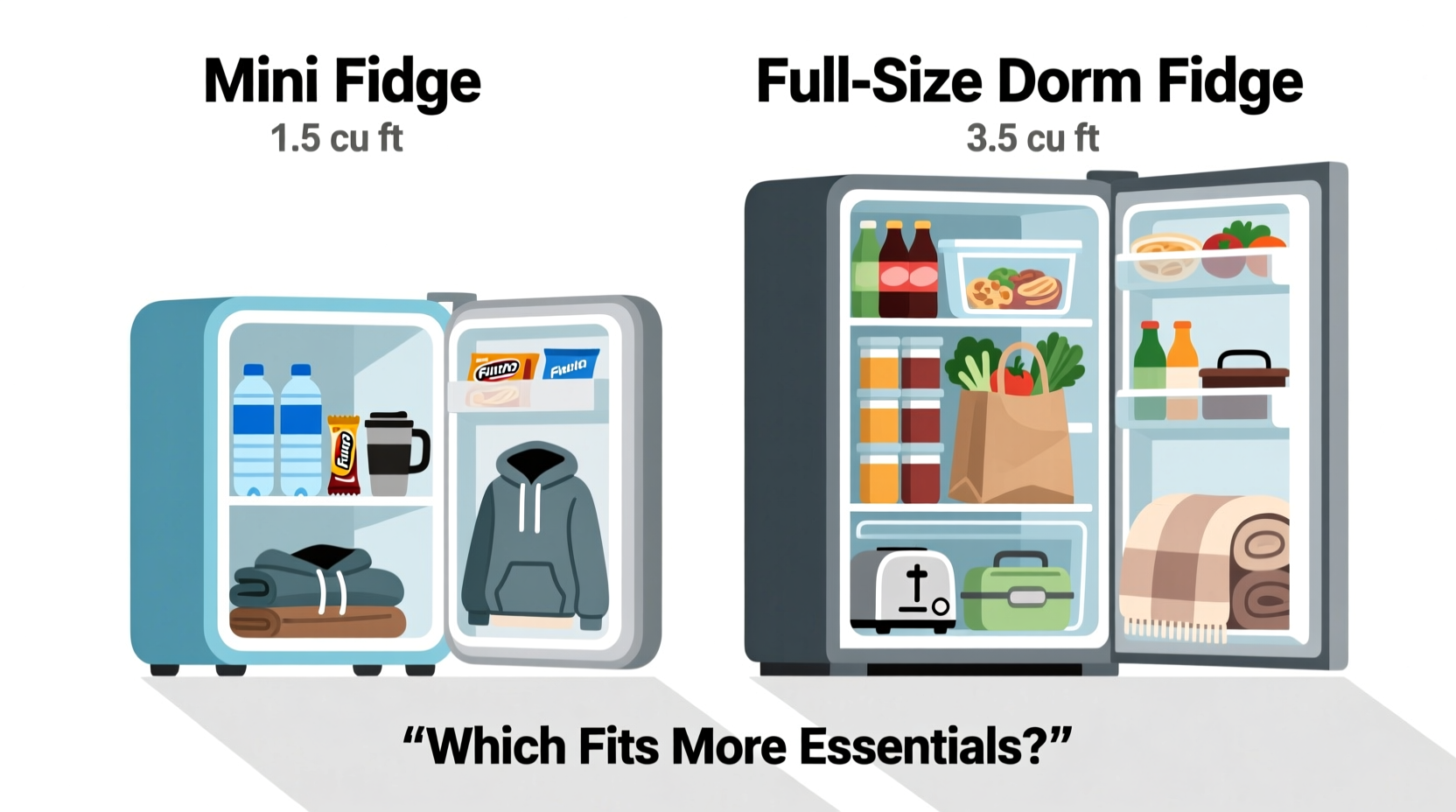
The most critical factor in determining which fridge holds more essentials is internal capacity, measured in cubic feet. But raw numbers don’t tell the whole story. Shelves, door bins, and freezer compartments affect usable space.
| Fridge Type | Average Capacity (cu ft) | Typical Items It Can Store | Freezer Size |
|---|---|---|---|
| Mini Fridge | 1.7 – 2.5 | 6-pack of soda, small milk jug, 2–3 meal containers, yogurt, butter | Small top compartment (0.5 cu ft or less) |
| Full-Size Dorm Fridge | 3.1 – 4.5 | 12-pack of drinks, half-gallon milk, 5+ meal prep containers, fruits, cheese, condiments | Larger freezer section (up to 1 cu ft), sometimes with ice cube tray |
A mini fridge may suffice for someone who eats out frequently and only needs space for drinks and a few snacks. However, if you’re meal prepping, storing dairy, or sharing the fridge with a roommate, the limitations become apparent quickly. A full-size dorm fridge offers nearly double the interior volume, allowing for better organization and fewer trips to the campus dining hall.
Real-World Storage: What Students Actually Keep Inside
To understand which fridge truly supports daily living, consider what college students typically store:
- Milk or plant-based alternatives (half-gallon or quart)
- Leftovers in meal prep containers (often 3–5 at a time)
- Soda, water, or energy drinks (individual cans or small bottles)
- Yogurt, cottage cheese, and other chilled snacks
- Cheese, butter, eggs
- Frozen items: ice cream, frozen meals, or ice packs
In a mini fridge, fitting even half of these items simultaneously is a challenge. Most models have only one adjustable shelf and limited door bins. Once you add a gallon of milk (which barely fits upright), there’s little room left for anything else. The freezer compartment is often too small for more than a few ice cubes or a single frozen snack bar.
In contrast, a full-size dorm fridge commonly features multiple shelves, deep door bins, and a dedicated crisper drawer. You can store a full-sized juice bottle on one door bin, condiments on another, and still have room for jars and small bottles. The wider base allows two meal containers side by side, and the larger freezer can handle frozen dinners or a small bag of vegetables.
“Students who cook or meal prep need at least 3.5 cubic feet to realistically store a week’s worth of food without constant rotation.” — Dr. Linda Chen, Campus Nutrition Advisor at University Housing Services
Energy Efficiency and Long-Term Practicality
While capacity matters, so does energy consumption — especially in dorms where electricity may be metered or limited. Many assume that smaller fridges use less power, but efficiency depends on model, insulation, and compressor technology.
Modern full-size dorm fridges are designed with energy-saving compressors and improved thermal seals. ENERGY STAR-certified models consume as little as 300–400 kWh per year, comparable to older mini fridges. In contrast, outdated mini fridges without proper insulation can cycle more frequently, using more energy over time.
Another consideration is longevity. Mini fridges are often built with cost-saving materials and weaker cooling systems. They may struggle in warm rooms or when overloaded, leading to inconsistent temperatures and potential food spoilage. Full-size dorm fridges generally offer better temperature control, maintaining a steady 37°F (3°C) even during peak usage.
If you plan to keep the fridge beyond your dorm years — say, in an apartment or home office — investing in a full-size model makes more sense. It’s less likely to need replacement and adapts better to changing storage needs.
Mini Case Study: Two Roommates, Two Fridges
Consider Sarah and Mia, roommates in a university residence hall. Sarah brought a 2.2 cubic foot mini fridge she bought for $80. Mia invested $160 in a 4.2 cubic foot full-size dorm fridge, ENERGY STAR-rated.
By the second week, Sarah was struggling. Her fridge held only four drink cans, a small yogurt cup, and a single meal container. She couldn’t fit a standard milk carton unless she laid it on its side, which risked leakage. Her butter and cheese had to be stored in the tiny freezer, leaving no room for ice.
Mia, meanwhile, organized her fridge efficiently: a half-gallon of almond milk stood upright, three meal prep bowls fit on the lower shelf, and the door bins held sauces, juice, and eggs. The freezer stored frozen waffles and a small ice pack for her lunch bag.
After a month, Sarah upgraded to a shared full-size fridge. The initial cost was higher, but the long-term convenience — fewer grocery runs, reduced food waste, and better meal flexibility — justified the investment.
Step-by-Step Guide: Choosing the Right Fridge for Your Needs
Follow this decision-making process to determine whether a mini fridge or full-size dorm fridge suits your lifestyle:
- Assess your eating habits: Do you eat out daily, or do you cook and store meals? If you prepare food regularly, lean toward a full-size model.
- Measure your space: Check width, height, and depth allowances. Most dorms allow fridges up to 4.5 cubic feet, but verify with housing rules.
- List your essential items: Write down what you’ll store weekly (e.g., milk, drinks, snacks). Try arranging them mentally in each fridge type.
- Check energy ratings: Look for ENERGY STAR certification to reduce long-term costs and environmental impact.
- Compare prices and warranties: Full-size models cost more upfront ($120–$200) but often come with longer warranties (up to 5 years).
- Think long-term: Will you use this fridge after college? If yes, prioritize durability and capacity.
Checklist: What to Verify Before Buying
- ✅ Confirmed dorm size and electrical restrictions
- ✅ Measured available floor space (including clearance for door swing)
- ✅ Listed all regular food and drink items to store
- ✅ Checked for ENERGY STAR label or low kWh/year rating
- ✅ Verified noise level (should be under 45 dB for quiet rooms)
- ✅ Compared warranty length and customer reviews
- ✅ Considered portability — will you move it frequently?
FAQ
Can a mini fridge hold a gallon of milk?
No, most mini fridges cannot accommodate a standard gallon jug upright. Even if forced in sideways, it takes up nearly the entire interior, leaving no room for other items. A full-size dorm fridge can typically hold a gallon vertically with space to spare.
Do full-size dorm fridges require special outlets?
No. Both mini and full-size dorm fridges operate on standard 110–120V household outlets. However, avoid using extension cords or power strips, as they can overheat. Plug directly into the wall.
Are mini fridges worth it for dorms?
Only if your needs are minimal — for example, storing drinks, snacks, and a few condiments. If you plan to keep perishable meals, dairy, or frozen foods, a mini fridge will quickly prove inadequate.
Conclusion
When comparing a mini fridge versus a full-size dorm fridge, the answer to “which fits more essentials?” is clear: the full-size model wins decisively. With nearly twice the capacity, better organization, and improved energy efficiency, it supports a healthier, more independent lifestyle — especially for students who cook, meal prep, or want reliable access to fresh food.
The mini fridge has its place: as a secondary cooler, in very tight spaces, or for temporary use. But for anyone serious about comfort and convenience in their living space, upgrading to a full-size dorm fridge is a smart, long-term decision. It reduces grocery frequency, minimizes food waste, and enhances daily quality of life.




 浙公网安备
33010002000092号
浙公网安备
33010002000092号 浙B2-20120091-4
Comments
No comments yet. Why don't you start the discussion?