
In an age where minimalism defines style and function, the humble wallet has undergone a quiet revolution. For decades, the bifold ruled as the default choice—sliding into back pockets with familiar heft. But today, a new contender has emerged: the mini key wallet. Compact, sleek, and often integrated with key organizers, these minimalist alternatives challenge whether the traditional bifold’s added thickness still serves a purpose. As daily carry essentials evolve, so too must our expectations for convenience, comfort, and practicality.
The debate isn’t just about size—it’s about lifestyle alignment. With digital payments rising, fewer cards in circulation, and more people embracing slim-fit clothing, the justification for carrying a bulky bifold grows thinner by the year. So, is that extra pocket space truly necessary—or is it time to downsize?
Understanding the Core Differences
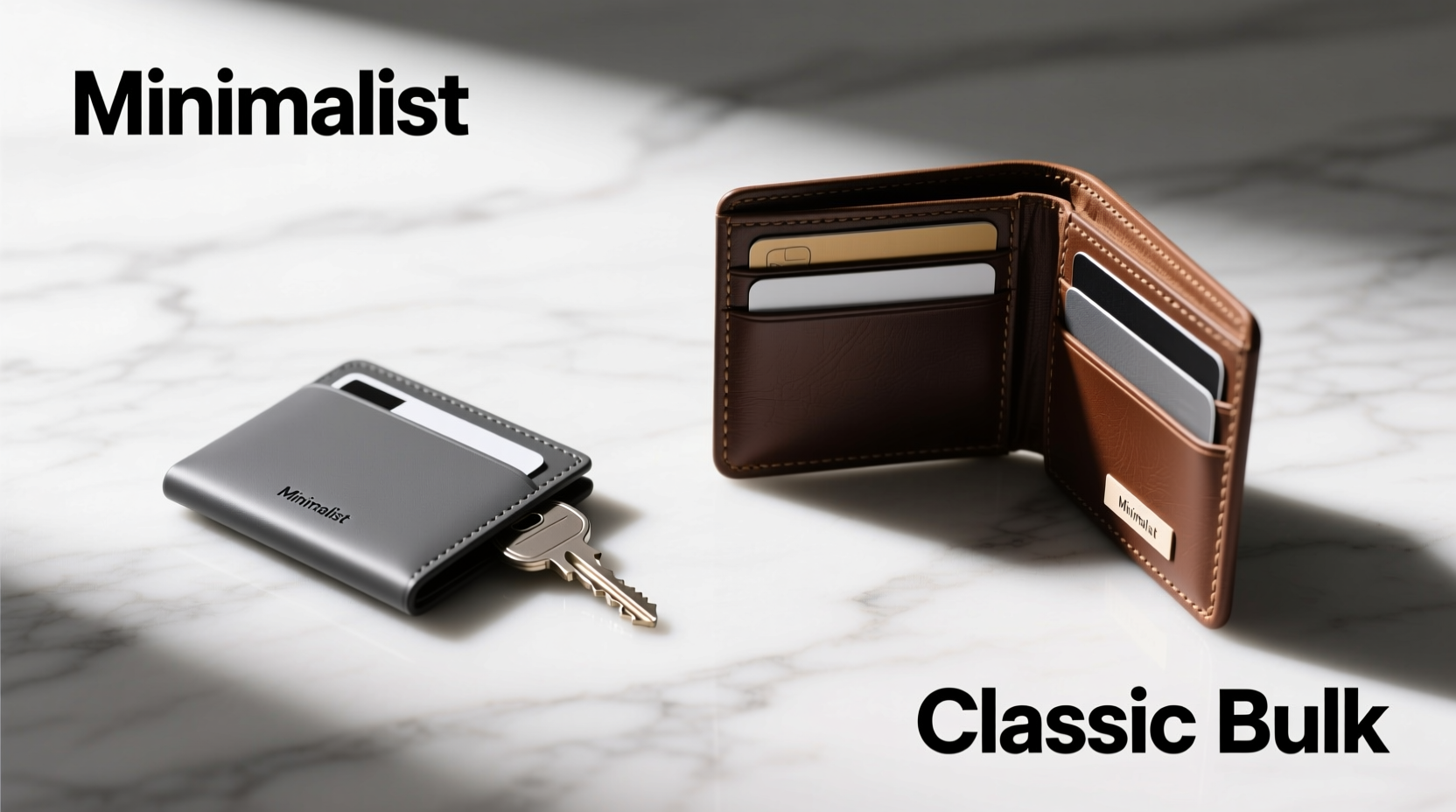
At first glance, both wallets serve the same purpose: holding cash, cards, and IDs. But their design philosophies diverge sharply. The classic bifold folds in half, typically offering multiple card slots, a clear ID window, and a central bill compartment. It's a full-featured solution designed for maximum storage. In contrast, the mini key wallet strips everything down to the essentials—often accommodating only 3–6 cards and some folded bills, sometimes integrating a keychain loop or carabiner clip.
Where the bifold emphasizes capacity, the mini key wallet prioritizes portability. This fundamental trade-off shapes every aspect of user experience—from how it feels in your pocket to how quickly you can access your metro card during rush hour.
Bulk vs. Functionality: A Real-World Trade-Off
Bulk isn't just about aesthetics—it affects posture, comfort, and long-term habits. Sitting on a thick bifold for extended periods can contribute to piriformis syndrome or lower back strain, a concern increasingly recognized by chiropractors and ergonomic experts.
“We’re seeing more patients with hip and sciatic discomfort directly linked to wallet placement,” says Dr. Alan Torres, a spine health specialist. “Even a half-inch of material in the back pocket alters pelvic alignment over time.”
“We’re seeing more patients with hip and sciatic discomfort directly linked to wallet placement.” — Dr. Alan Torres, Spine Health Specialist
Mini key wallets eliminate this issue almost entirely. Their ultra-slim profiles make them ideal for front-pocket carry, reducing pressure on the sciatic nerve while improving balance. However, they demand discipline: no spare receipts, expired gift cards, or emergency cash stashes. Every item must earn its place.
Feature Comparison: Mini Key Wallet vs Bifold
| Feature | Mini Key Wallet | Bifold |
|---|---|---|
| Average Thickness | 0.2–0.4 inches | 0.7–1.2 inches |
| Card Capacity | 3–6 cards | 6–12+ cards |
| Cash Storage | Limited (1–2 folded bills) | Full compartment |
| Key Integration | Often built-in | Rarely included |
| Pocket Comfort | Excellent (front or back) | Fair to poor (especially back pocket) |
| Durability | High (fewer moving parts) | Moderate (creasing, stitching wear) |
| Ideal For | Minimalists, urban commuters, runners | Traditionalists, frequent drivers, those needing receipts/cash |
A Day in the Life: Two Commuters, Two Choices
Consider two professionals navigating the same city commute:
- Sarah, a graphic designer, uses a titanium mini key wallet clipped to her belt loop. She carries her phone, one credit card, her transit pass, and house keys—all consolidated into a single unit. During her bike ride to work, she never worries about items slipping out. At coffee shops, she taps her wristband-style wallet against the terminal and moves on.
- James, an insurance agent, relies on his leather bifold. He keeps business cards, three client-related credit cards, membership rewards, and folded cash for small vendors. While he appreciates the organization, he admits the wallet “sticks out” of his jeans and often leaves a crease in his suit pants after meetings.
Sarah values speed and discretion; James needs versatility and backup options. Neither is wrong—but their tools reflect fundamentally different priorities. The rise of the mini key wallet doesn’t signal the death of the bifold, but rather a shift toward intentional design.
When the Bifold Still Makes Sense
Despite the trend toward minimalism, there are legitimate scenarios where the bifold remains superior. Frequent travelers may need multiple currencies, boarding passes, and hotel keys. Field technicians might carry tool access cards, union badges, and insurance documents. Parents often keep kids’ vaccination records or emergency contacts on hand.
Moreover, tactile users who distrust digital storage still prefer physical backups. For these individuals, the bifold isn’t outdated—it’s essential infrastructure.
That said, even heavy users can benefit from reevaluation. How many of those cards are used weekly? Could some be stored at home or scanned digitally? Reducing clutter within a bifold improves usability without sacrificing capability.
How to Transition to a Mini Key Wallet (If You’re Ready)
Switching isn’t just about buying new gear—it’s a behavioral shift. Follow this step-by-step guide to ensure a smooth transition:
- Audit your current wallet contents. Remove expired cards, old receipts, and rarely used items.
- Digitize what you can. Add payment cards to Apple Pay, Google Wallet, or Samsung Pay. Store digital copies of IDs and memberships.
- Select a primary card. Choose one credit/debit card for daily use based on rewards, contactless support, and fraud protection.
- Test a slim wallet temporarily. Use a simple cardholder for a week to gauge comfort and functionality.
- Choose your mini key wallet. Look for secure closures, RFID protection, and durable materials like aerospace-grade aluminum or reinforced nylon.
- Integrate keys thoughtfully. Use a compact key organizer or paracord wrap to avoid jangling noise or snagging.
- Monitor usage for two weeks. Note any friction points—do you miss having cash? Need another card frequently? Adjust accordingly.
Frequently Asked Questions
Can a mini key wallet hold cash securely?
Yes, but selectively. Most models accommodate one or two folded bills tucked behind the cards. If you regularly carry larger amounts, a bifold or separate money clip may be better suited.
Are mini key wallets more secure than bifolds?
In some ways, yes. Their compact size makes them less likely to fall out of pockets, and front-carry reduces pickpocket risk. However, if made from thin fabric or lacking RFID shielding, they may offer less protection against electronic theft.
What happens if I lose my mini key wallet?
Because it combines keys and cards, losing it means losing both access points. Always have a backup house key stored safely and enable remote lock/wipe features on digital payment apps. Consider keeping one spare card at home.
Final Verdict: Is the Extra Bulk Worth It?
For most people in 2024, the answer is increasingly “no.” The average user simply doesn’t need the storage capacity of a bifold. Digital wallets have absorbed much of the burden once carried physically. Contactless payments dominate transactions under $50. And fashion trends favor slimmer silhouettes that reject visible wallet bulges.
The mini key wallet isn’t just a gadget—it’s a philosophy. It forces intentionality, reduces physical strain, and streamlines daily interactions. That said, utility trumps ideology. If your job, lifestyle, or location demands more robust carry solutions, the bifold retains its relevance.
The real question isn’t which wallet is objectively better, but which one aligns with your life today—not the habits of ten years ago.




 浙公网安备
33010002000092号
浙公网安备
33010002000092号 浙B2-20120091-4
Comments
No comments yet. Why don't you start the discussion?