
When decorating a slim Christmas tree—whether it’s a space-saving pre-lit model in a corner or a tall, narrow real tree—the choice between mini lights and macro lights can dramatically affect the final look. Coverage, sparkle, warmth, and even perceived fullness are all influenced by your lighting decision. While both types have their strengths, one may be better suited to a narrow silhouette than the other. Understanding the physical differences, visual effects, and practical considerations helps ensure your tree doesn’t end up looking sparse or overwhelmed.
Understanding Mini Lights and Macro Lights
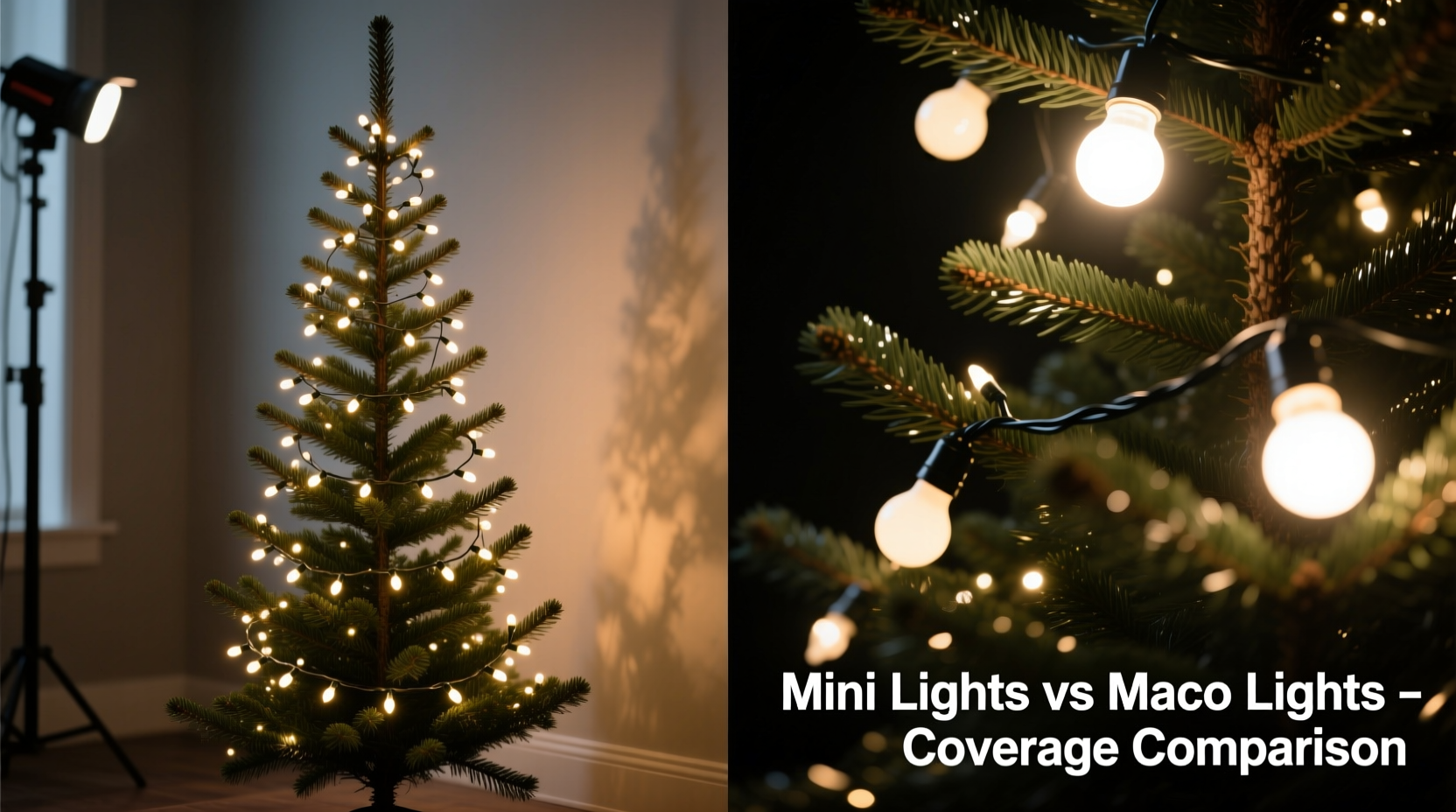
Before comparing performance on a slim tree, it’s essential to define what sets these two popular light styles apart.
Mini lights, also known as fairy lights or twinkle lights, are small incandescent or LED bulbs typically measuring 1/4 to 3/8 inch in diameter. They are spaced closely along the wire—usually 4 to 6 inches apart—and come in strands ranging from 50 to 200+ bulbs. These lights are often associated with traditional holiday decor and offer a delicate, dense glow.
Macro lights, sometimes called C7 or C9 bulbs (though those refer specifically to base size), are larger—often over an inch long—with wider spacing between bulbs, commonly 12 inches apart. They produce a bolder, more prominent illumination and are frequently used outdoors or on large display trees where visibility from a distance matters.
The difference isn't just aesthetic; it's functional. On a slim tree, where branch depth is limited and surface area is reduced, how each type of light interacts with the structure becomes critical.
Coverage Comparison: Density vs. Visibility
Coverage refers not only to how much of the tree is lit but also to how evenly and fully the light appears to fill the space. For a slim tree—typically under 3 feet in diameter at the base—coverage must compensate for lack of volume.
Mini lights, with their tighter bulb spacing, naturally provide greater density. When wrapped properly around a narrow frame, they create a continuous shimmer that mimics starlight. Because the eye perceives multiple points of light close together, the brain interprets this as a fuller, more illuminated tree—even if the branches themselves remain thin.
In contrast, macro lights cover fewer linear feet per strand and leave larger gaps between bulbs. On a wide tree, this spacing allows each bulb to stand out without overcrowding. But on a slim tree, the same spacing can result in noticeable dark zones between lights, especially when viewed head-on. The larger bulbs draw attention to themselves rather than blending into a cohesive glow.
Visual Impact and Aesthetic Considerations
Beyond raw coverage, consider the mood you want to create. Mini lights emit a softer, more diffused ambiance. Their subtlety works well in cozy living rooms, apartments, or minimalist settings where elegance trumps spectacle. When paired with warm white LEDs, they enhance the natural green tones of foliage and complement delicate ornaments.
Macro lights, by comparison, deliver high visual impact. Each bulb acts like a spotlight, creating bold focal points. This can be effective for themed trees—like retro-inspired displays or outdoor window setups—but risks making a narrow tree appear top-heavy or unbalanced. The strong contrast between lit and unlit areas can exaggerate the tree’s slenderness, drawing attention to its lack of girth.
Color temperature also plays a role. Many macro light sets come in vibrant, cool-toned whites or bright colors designed for outdoor use. On an indoor slim tree, such harsh tones can feel jarring. Mini lights, especially modern LED versions, are widely available in warm white (2700K–3000K), which blends seamlessly with home interiors.
“On narrow-profile trees, density wins over drama. You want the illusion of abundance, not isolated bursts of light.” — Daniel Reeves, Holiday Lighting Designer & Author of *The Art of Christmas Illumination*
Practical Factors: Installation, Safety, and Durability
Installing lights on a slim tree presents unique challenges. Branches are often shorter and more flexible, requiring careful handling to avoid breakage. Here’s how mini and macro lights compare across key practical dimensions:
| Factor | Mini Lights | Macro Lights |
|---|---|---|
| Installation Ease | Easy to wrap tightly; conforms to narrow shapes | Bulky connectors may snag; harder to route precisely |
| Weight | Lightweight; won’t weigh down slender branches | Heavier per strand; risk of drooping tips |
| Heat Output (Incandescent) | Lower heat per bulb; safer near dry foliage | Higher heat; increased fire risk if poorly ventilated |
| Energy Efficiency (LED) | High efficiency; longer run times, lower cost | Moderate to low; more power draw per strand |
| Lifespan (LED) | Up to 50,000 hours; rarely needs replacement | 30,000–40,000 hours; more frequent maintenance |
For renters, apartment dwellers, or anyone using artificial trees year after year, mini LED lights offer superior longevity and safety. Modern versions are shatterproof, cool-running, and often come with end-to-end connectors allowing multiple strands to be linked without overloading circuits—a crucial advantage when covering vertical height with minimal branch depth.
Step-by-Step Guide: Wrapping a Slim Tree for Maximum Coverage
To get the most out of your chosen lights—especially mini lights—follow this professional wrapping technique:
- Start at the base: Plug the strand into an outlet behind the tree, then begin wrapping from the bottom-up. This prevents dangling cords and ensures even distribution.
- Aim inward: Angle each bulb slightly toward the trunk so light reflects off inner branches, reducing shadows.
- Follow a spiral path: Move upward in a consistent helix, keeping about 4–6 inches between vertical passes. Avoid horizontal rows, which create banding.
- Favor depth over width: Weave lights deep into the tips, not just along the outer edge. This builds dimension.
- Layer if needed: For very tall or exceptionally narrow trees (e.g., pencil pines), use two strands—one on each side—for balanced illumination.
- Test before finishing: Turn on the lights midway through to check for dark spots or tangling.
Real-World Example: A Brooklyn Apartment’s Holiday Transformation
Sophie M., a graphic designer in Brooklyn, owns a 7.5-foot pre-lit slim tree with a 28-inch base. Last year, she tried replacing the factory-installed mini lights with a set of vintage-style macro bulbs for a “retro diner” theme. Despite the charm of the large amber globes, photos showed stark lighting gaps and an unintended effect: the tree looked like a pole with ornaments.
After consulting a local decorator, she switched back to warm-white mini LED lights, adding a second 350-bulb strand for extra density. The change was immediate. Her tree appeared fuller, the room felt cozier, and social media comments praised the “magical glow.” She kept the macro lights for her outdoor railing—a context where their scale made sense.
This case illustrates a broader principle: lighting should match both the object and the environment. What works outdoors often overwhelms indoors, especially on narrow forms.
Checklist: Choosing the Right Lights for Your Slim Tree
- ✅ Measure your tree’s widest point—if under 36”, lean toward mini lights
- ✅ Opt for warm white (2700K–3000K) for indoor ambiance
- ✅ Choose LED over incandescent for cooler operation and energy savings
- ✅ Check bulb spacing—4” or less ideal for slim profiles
- ✅ Calculate total bulb count: aim for 100 bulbs per foot of tree height
- ✅ Test coverage before adding ornaments—adjust as needed
- ✅ Avoid mixing macro and mini lights on the same tree unless intentionally layered
Frequently Asked Questions
Can I use macro lights on a slim tree if I use more strands?
Technically yes, but it’s inefficient. Even with multiple strands, the wide spacing creates inconsistent coverage. The bulky bulbs may also crowd short branches, making ornament placement difficult. Mini lights will always give denser, more balanced results on narrow trees.
How many strands of mini lights do I need for a 6-foot slim tree?
A good rule is 100 bulbs per foot of height. For a 6-foot tree, that’s 600 bulbs. If using standard 50-light strands, you’ll need 12 strands. However, many modern LED mini light sets come in 350-bulb lengths, so two strands would suffice. Always test visually—some trees need more depending on opacity and color.
Do macro lights use more electricity?
Yes, especially incandescent versions. A single C7 bulb can use 5 watts versus 0.04 watts for an LED mini light. Over 50 bulbs, that’s 250 watts vs. 2 watts. Even LED macro lights consume more due to larger diodes. For extended nightly use, mini LEDs are far more economical.
Final Recommendation: Mini Lights Win for Slim Trees
While macro lights have their place in festive displays, they are poorly suited to slim Christmas trees. Their size, spacing, and visual weight work against the delicate proportions of narrow evergreens. Mini lights, particularly warm-white LEDs with tight spacing, provide superior coverage, safety, and aesthetic harmony.
The goal of holiday lighting isn’t just brightness—it’s atmosphere. On a slim tree, the magic lies in creating the illusion of abundance. Mini lights achieve this by enveloping the form in a seamless cascade of glow, turning a modest silhouette into a luminous centerpiece.




 浙公网安备
33010002000092号
浙公网安备
33010002000092号 浙B2-20120091-4
Comments
No comments yet. Why don't you start the discussion?