
For renters, holiday decorating comes with a unique set of challenges. You want to create a festive atmosphere without risking your security deposit, violating lease terms, or spending hours untangling wires every season. One of the most debated choices today is whether to use traditional physical string lights or switch to modern mini projector Christmas lights. Each option offers distinct advantages and drawbacks—especially in rental environments where flexibility, ease of installation, and non-permanence are critical.
This guide breaks down both options from the renter’s perspective, comparing safety, cost, aesthetics, portability, and long-term value. Whether you live in an apartment, shared housing, or a short-term rental, understanding these differences can help you make a smarter, more sustainable decision this holiday season.
Why Renters Face Unique Holiday Decorating Challenges
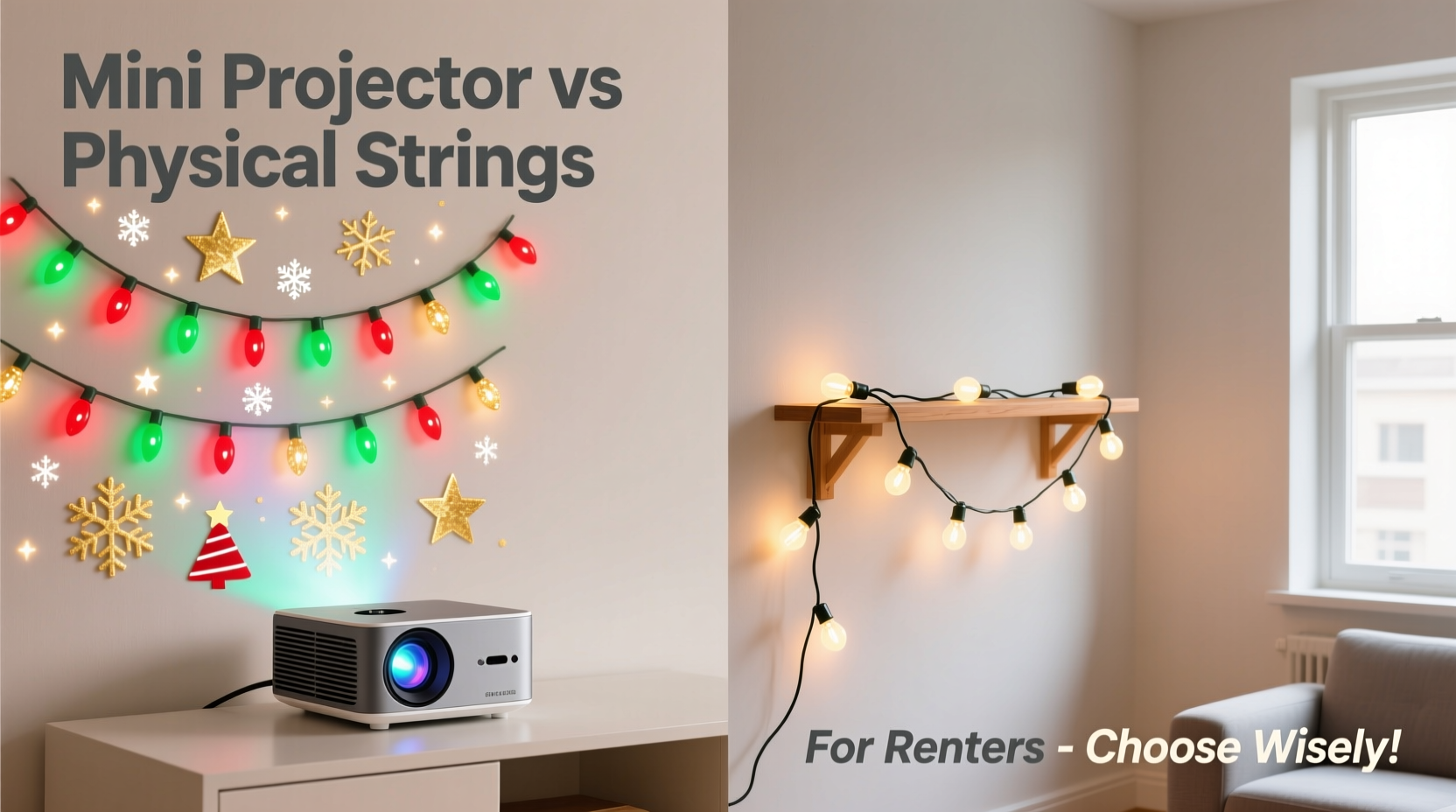
Renters often operate under strict guidelines that limit permanent modifications. Nails, screws, tape residue, and electrical overloads can all lead to deductions from your deposit or even formal warnings from landlords. Traditional holiday decorations—especially physical string lights—can inadvertently cross these boundaries.
Many leases explicitly prohibit drilling into walls or using adhesives that could damage paint. Even if not stated, excessive light strands plugged into limited outlets may raise concerns about fire hazards or circuit overloads. These restrictions push many tenants toward low-impact alternatives like projection lighting.
Additionally, renters frequently move. Physical decor that requires careful storage, untangling, and reinstallation each year becomes more of a burden than a joy. The ideal solution should be lightweight, portable, easy to store, and quick to deploy—without sacrificing visual impact.
Physical String Lights: Tradition With Trade-offs
Physical Christmas lights have been a staple of holiday décor for generations. They offer warmth, depth, and a tactile charm that many people associate with nostalgia and family traditions. Available in incandescent or LED varieties, they come in multiple colors, lengths, and styles—from fairy lights to C9 bulbs.
For renters, however, their appeal is tempered by practical limitations:
- Installation difficulty: Hanging lights safely across windows, ceilings, or railings often requires clips, adhesive hooks, or tape—all of which risk surface damage.
- Storage and maintenance: Tangled wires are a common frustration. Poorly stored strings degrade faster, leading to flickering or dead sections.
- Energy use: While LED versions are efficient, running dozens of strands for hours daily adds up on electric bills—especially in older buildings with metered utilities.
- Safety risks: Overloaded outlets or frayed cords pose fire hazards, particularly in units with outdated wiring.
Despite these issues, physical lights provide unmatched three-dimensional sparkle. Their glow wraps around objects, creating shadows and reflections that feel organic and immersive. For those who prioritize ambiance over convenience, they remain a compelling choice—if managed carefully.
“Physical string lights deliver emotional warmth, but renters must balance sentimentality with responsibility. A single nail hole can cost $100 at move-out.” — Marcus Tran, Property Management Consultant
Mini Projector Christmas Lights: Innovation Meets Convenience
Mini projector lights represent a shift toward smart, space-efficient holiday décor. These compact devices project animated patterns—like falling snowflakes, twinkling stars, or classic multicolored dots—onto walls, ceilings, or outdoor surfaces using LED lasers or diode arrays. Most models plug into standard outlets or run on batteries, offering flexible placement.
From a renter’s standpoint, projector lights solve several pain points:
- No installation required: Simply place the unit on a shelf, windowsill, or floor and aim it at the desired surface.
- No wall damage: Since nothing adheres to walls or windows, there's zero risk of marks, peeling paint, or residue.
- Easy storage: Most projectors fit in small boxes and require no untangling.
- Quick setup: Many models activate automatically via timers or remotes, reducing annual prep time.
Modern projectors also include features like remote controls, multiple light modes (steady, pulse, fade), sound activation, and weather-resistant casings for balcony or window use. Some even sync with music or change colors based on ambient noise.
The trade-off lies in realism. Projected lights lack physical presence—they don’t wrap around trees or railings, nor do they cast interactive shadows. On uneven walls or cluttered backgrounds, effects can appear distorted or washed out. Bright ambient light also diminishes visibility, limiting effectiveness during daylight or in well-lit rooms.
How Projector Lights Work: A Quick Breakdown
Most mini projector lights use one of two technologies:
- Laser diodes: Produce sharp, focused beams ideal for outdoor use or large indoor spaces. Can cover up to 50 feet with high brightness.
- LED + lens system: Use diffused LEDs behind rotating pattern discs to create dynamic effects like swirling snow or floating orbs. Better suited for cozy interiors.
Both types consume minimal power—typically between 3–10 watts—and generate little heat, making them safe for extended operation. Many include auto-shutoff functions (e.g., 6 or 8 hours) to conserve energy.
Direct Comparison: Projector vs Physical Strings
| Feature | Mini Projector Lights | Physical String Lights |
|---|---|---|
| Installation Effort | Low – place and aim | High – hang, clip, secure |
| Wall Damage Risk | None | Moderate to High |
| Portability | Excellent – fits in palm | Fair – bulky when coiled |
| Storage Space | Minimal | Large (tangles common) |
| Ambiance Quality | Decorative, atmospheric | Warm, immersive, tactile |
| Outdoor Use | Limited (weather-dependent models only) | Good (if rated for exterior) |
| Energy Efficiency | Very high | Moderate (LED better than incandescent) |
| Lifespan | 5+ years (solid-state components) | 2–5 years (wiring degrades) |
| Initial Cost | $25–$60 per unit | $10–$40 per strand |
| Replacement Frequency | Rare | Annual repairs common |
While physical strings may seem cheaper upfront, their cumulative costs—replacement bulbs, storage containers, potential deposit deductions—add up over time. Projectors, though pricier initially, often prove more economical within three seasons due to durability and reuse.
Real Renter Experience: A Mini Case Study
Jamie L., a graphic designer renting a one-bedroom apartment in Chicago, switched from physical lights to a dual-mode projector after her first holiday season in a new building. “I spent six hours hanging lights along my living room ceiling with adhesive clips,” she recalls. “By January, removing them left tiny dents and sticky residue. My landlord charged me $75 for ‘surface restoration.’”
The following year, Jamie bought a $45 indoor/outdoor projector with snow and starlight settings. She placed it on her coffee table, aimed it at the far wall, and used the timer function. “It took two minutes to set up. No tools, no damage. Guests thought I’d hired a decorator. Best part? I packed it into my carry-on when I moved cities last spring.”
Her experience reflects a growing trend among urban renters: prioritizing temporary, high-impact visuals over labor-intensive installations. As mobility increases and lease durations shorten, solutions like projectors align better with modern lifestyles.
Step-by-Step: Choosing & Using the Right Option for Your Rental
Follow this timeline to decide and implement your holiday lighting strategy efficiently:
- Week 1: Review Lease Terms (10 minutes)
Check clauses related to decorations, electrical usage, and property modifications. Note any restrictions. - Week 2: Assess Your Space (15 minutes)
Determine key display areas—windows, balconies, interior walls. Measure distances and note outlet locations. - Week 3: Compare Options Based on Needs
Ask:- Do I need outdoor visibility?
- Will I move within 12 months?
- Am I willing to repair tangles annually?
- Is ambient light low in target areas?
- Week 4: Purchase & Test (One evening)
Buy one projector or a single strand of LED lights. Test brightness, coverage, and ease of use. Return if unsatisfactory. - Holiday Season: Deploy & Monitor
Use timers to limit runtime (4–6 hours nightly). Check for overheating or tripped breakers. - Post-Holidays: Store Properly
Coil physical lights with care (use a spool or cardboard). Keep projector in original box with remote.
Checklist: Rent-Friendly Holiday Lighting Do’s and Don’ts
- ✅ Do choose LED-only lights (cooler, safer, more efficient)
- ✅ Do use surge protectors with overload protection
- ✅ Do label cords and keep instruction manuals
- ✅ Do photograph your unit pre-decoration for move-in comparison
- ❌ Don’t use nails, screws, or permanent adhesives
- ❌ Don’t daisy-chain more than three light strands
- ❌ Don’t leave lights unattended overnight
- ❌ Don’t assume “holiday exceptions” apply without written permission
Frequently Asked Questions
Can I use a projector light outdoors in cold weather?
Only if the model is specifically rated for outdoor or winter use (look for IP44 or higher water resistance). Most budget indoor projectors fail below 32°F due to condensation and reduced battery performance.
Are projector lights visible through windows from the street?
Generally no—glass reflects internal projections poorly. For curb appeal, position the projector outside (on a covered porch) or combine it with a few discreet window-mounted LED strands.
Do physical string lights increase fire risk in rentals?
Potentially, yes. According to the National Fire Protection Association, decorative lighting causes an estimated 7% of home fires during December and January. Faulty wiring, overloaded circuits, and proximity to flammable materials are primary factors. Always inspect cords for fraying and avoid covering them with fabric or insulation.
Final Recommendation: Match Solution to Lifestyle
There’s no universal answer—only the right fit for your situation.
If you value tradition, have stable housing, and enjoy hands-on decorating, physical string lights can still work. Opt for commercial-grade LED strands, use removable clips, and document your setup process. Treat them like an investment: maintain, store properly, and respect electrical limits.
If you're mobile, time-constrained, or wary of lease violations, mini projector lights offer a smarter alternative. They’re faster to deploy, safer to operate, and easier to preserve across moves. Pair them with battery-powered candles or fabric décor to round out the festive feel without compromising your tenancy.
The holidays should bring joy—not stress over deposits or tangled messes. By choosing wisely, renters can celebrate beautifully while staying responsible.




 浙公网安备
33010002000092号
浙公网安备
33010002000092号 浙B2-20120091-4
Comments
No comments yet. Why don't you start the discussion?